
Toyota is the world’s top-selling carmaker. In 2015, it committed to a 10-year deal to become one of the International Olympic Committee’s top-tier sponsors.
In September 2024, shortly after the Paris Games, chairman Akio Toyoda said the company would not renew. Why?
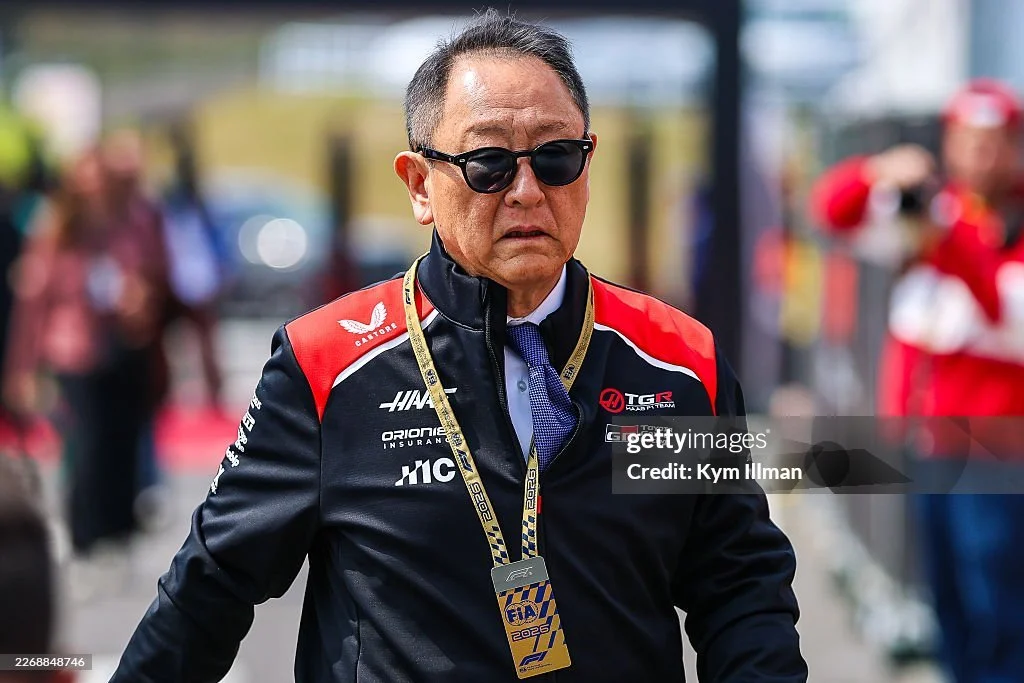
Akio Toyoda at the 2026 F1 race in Japan // Getty Images / Kym Illman
“I’ve wondered for a while now whether the event is truly putting athletes first,” he said.
He is far from alone, and the won’t-go-away controversy over new IOC president Kirsty Coventry’s assertion that she is not a proponent of prize money at the Olympics underscores the disconnect — the chasm, really — between the vision of the modern Games as they have been, a chase for glory, and glory only, as memorably depicted in “Chariots of Fire,” and the way they need to evolve to be now, in our 21st century.
Nothing moves without money, and the time has come for the IOC to take the logical (next) steps and, at the least, make sure that athletes who come to the Games get paid (an appearance fee, if you will) and that those who win medals get paid even more. And those who break Olympic or world records? More still.
And, for the sake of all that is decent, at long last give the athletes access to their images.
—
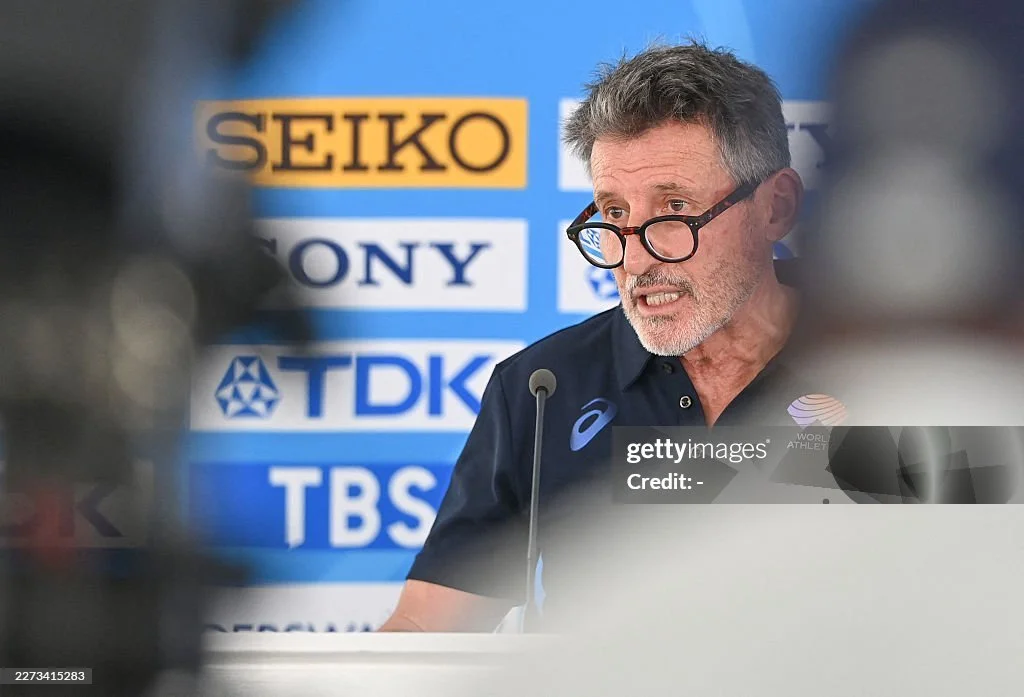
World Athletics president Seb Coe at the World Relays in Botswana in May // Getty images
This column follows one written in April 2024. Then, World Athletics president Seb Coe announced there would be prize money not just at the track and field world championships, as usual, but at the 2024 Paris Games: $50,000 for gold.
The IOC establishment, under the direction of then-president Thomas Bach, reacted with a ferocious chorus of no-way no-how, and the prize money initiative almost surely contributed to Coe’s poor showing at the IOC presidential election in March 2025 — Coventry winning in a first round of balloting that saw Coe with but eight votes.
This coming September in Budapest, the World Athletics ‘Ultimate Championship’ will see a $10 million prize pot; first-place will be worth $150,000; every single track and field runner who competes will, at the least, get $2,000, even those who don’t make the finals. Moreover: athletes will be allowed to actively promote their personal corporate sponsors, and, critically, not only be allowed but encouraged to create — with the idea of monetizing — digital content.
In one of the several posts the federation has made over the past two years seeking to promote the event, it’s worth noting this quote from last November from World Athletics chief executive Jon Ridgeon: “We are working to develop the sport at grassroots level, but we also want to ensure that professional athletes can earn a sustainable living from the sport.”
Which makes it all the more relevant to revisit now what Coe said two years ago:
“I have to accept the world has changed,” he said in an interview with Steve Scott at ITV.
“If you had asked me that question 30 or 40 years ago,” whether paying athletes was appropriate, “I might have given you a different answer.”
—
In ancient Greece, athletes competed for an olive wreath.
When the modern Games were launched, the ethos was much the same — gold, silver, bronze, but no more.
In the 1990s, under the direction of the greatest IOC president, Juan Antonio Samaranch, common sense finally prevailed — bringing the NBA “Dream Team,” tennis stars and, since, golf standouts. Maybe a few NFL players will show for flag football at the LA28 Games.
To be clear: the Olympics are not for amateurs. The athletes at the Games now are — must be — professionals. They not only get paid. They deserve to be paid.
Which is why it’s time for a new bout of common sense.
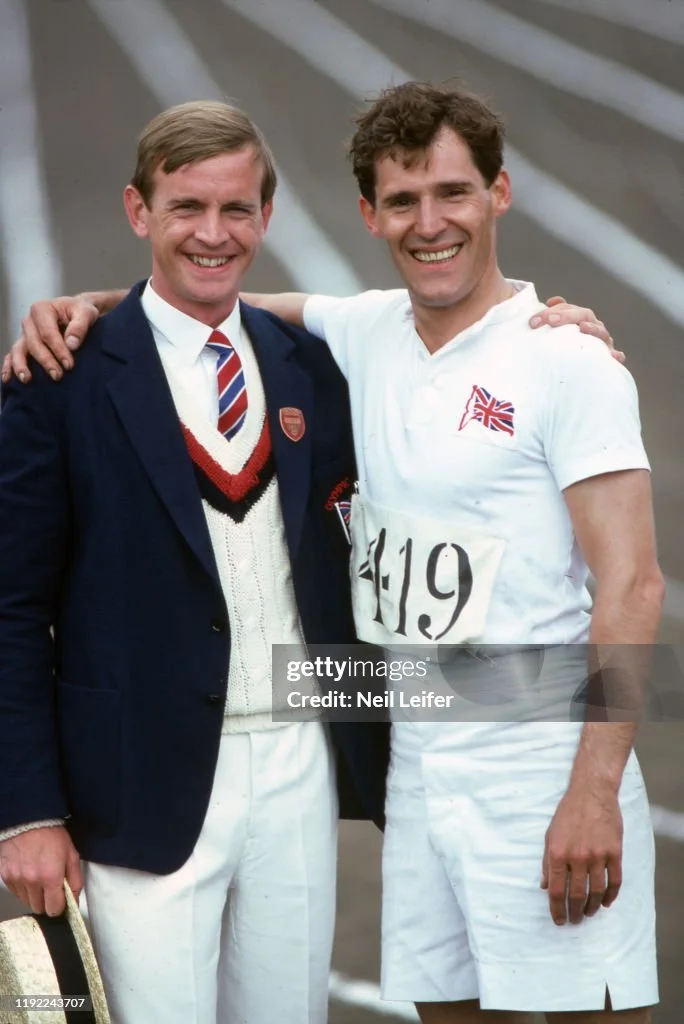
Filming in 1980 for 1981’s “Chariots of Fire,” a tale from the 1924 Olympics: Ian Charleson, left, as Eric Liddell and Ben Cross as Harold Abrahams // Neil Leifer /Sports Illustrated/Getty Images
The IOC needs to develop its own plan for, as Ridgeon put it, ensuring that professional athletes can earn a sustainable living, in part by paying athletes for appearing and winning at the Games.
If it does not, the IOC will — there can be no doubt about this — be overtaken by events.
When the Australian swimmer Cam McEvoy, the Paris 2024 gold medalist, in the event, broke the world record in the 50 meters and got no money …
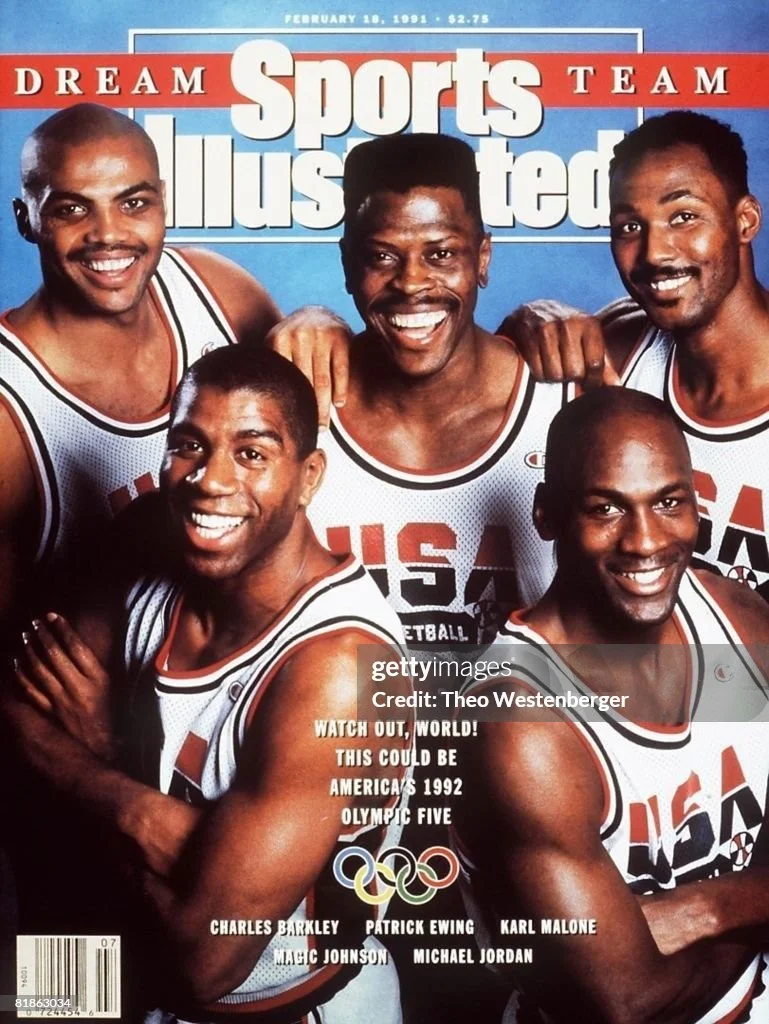
From the wayback machine — 1992 and the Dream Team // Getty Images / Theo Westenberger
When, in the same event at the Enhanced Games, the Greek swimmer Kristian Gkolomeev got a flat $1 million for going faster …
When the Enhanced Games (whatever one might think of it) is now offering $10 million for a world record … World Athletics is paying prize money … so, too, the International Boxing Association …
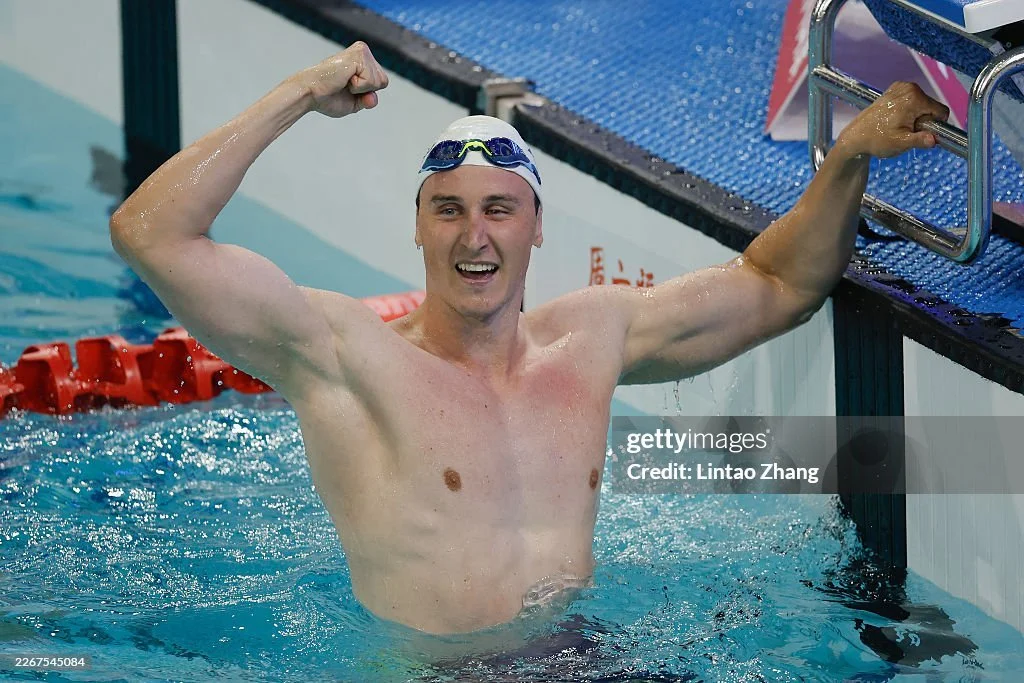
Australia’s Cam McEvoy in March after setting a new world record, 20.88 seconds, in the men’s 50m free // Getty Images / Lintao Zhang
When basketball players can see a 50% revenue share in the NBA … when the women’s tennis tour and the Saudi Ministry of Sport take the WTA Finals to Riyadh for guaranteed prize money of some $15 million …
The question among athletes anywhere and everywhere is both inevitable and logical: why not me?
—
Baron Pierre de Coubertin conceived the modern Olympics in the late 19th century. In 1908, he delivered these famous lines:
“The most important thing in the Olympic Games is not to win but to take part, just as the most important thing in life is not the triumph but the struggle. The essential thing is not to have conquered but to have fought well.”
The Olympics represent an aspirational ideal — that giving our best is what matters, no matter the result, and that when the athletes of the world come together every four years, they show each and every one of us that, and give us hope for a better tomorrow.
This notion can — does — explain why Coventry can assert, as she did, in remarks to Alex Chapman at Sport Nation in New Zealand, “I don’t believe in paying athletes,” adding elsewhere in the interview, words that to many, and understandably, seemed patronizing in the extreme, “Well, they get beautiful venues. They get beautiful villages. They get a beautiful experience. And all of that comes from the money that we raise.”
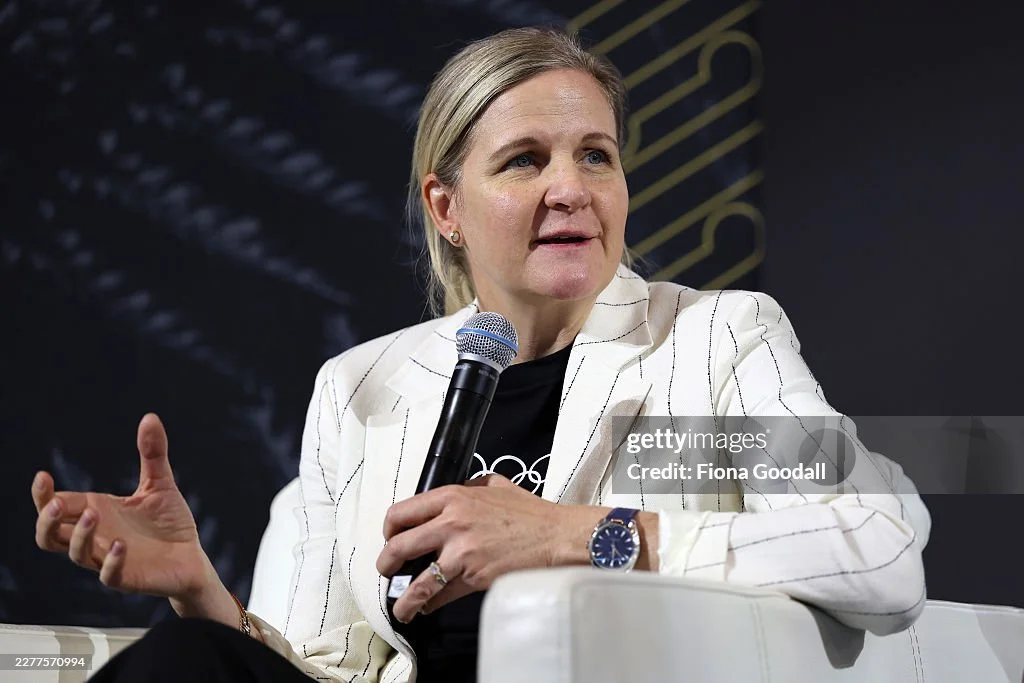
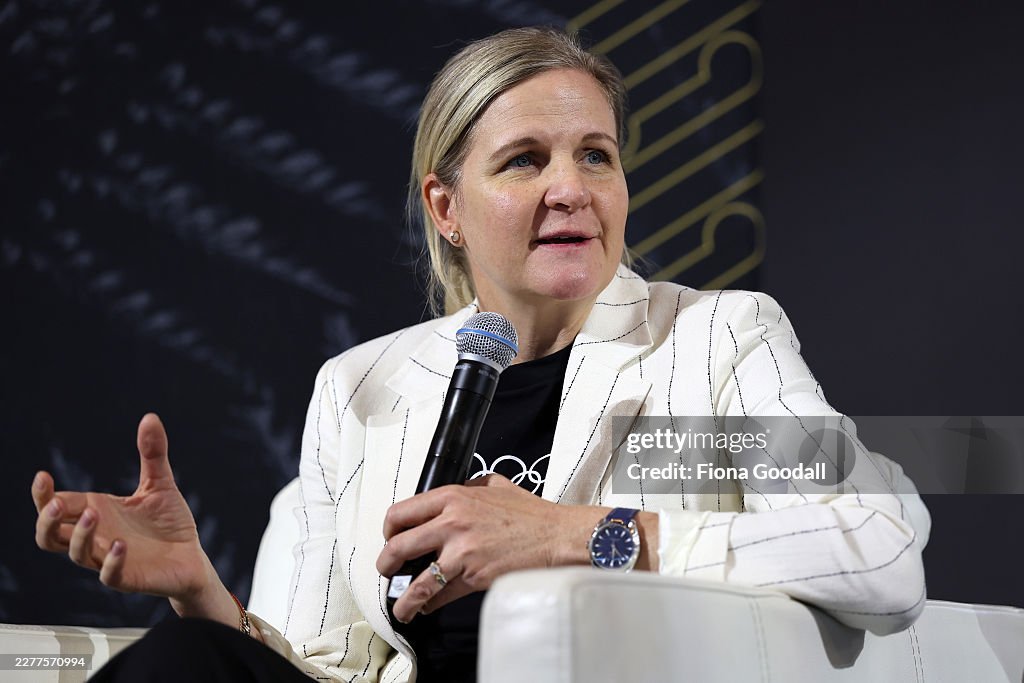
IOC president Kirsty Coventry on her New Zealand tour // Getty Images / Fiona Goodall
Putting aside the not-insignificant technicality of who the “we” is in that last sentence — since it is on a local organizing committee to provide the venues, not the IOC, often at considerable taxpayer expense — it’s no longer enough to offer a “beautiful” village.
Especially when, because of financial concerns, athletes are now routinely kicked out as soon as their competition days are over.
Higher, faster, stronger — together?
More like thanks for coming, feel free to (pay to) get your commemorative five-ringed tattoo and go back home — alone, to figure out what’s what. Meantime, as ProPublica details, IOC administrators are making millions and consultants are getting paid handsomely, too. All off the Games.
It’s not right.
—
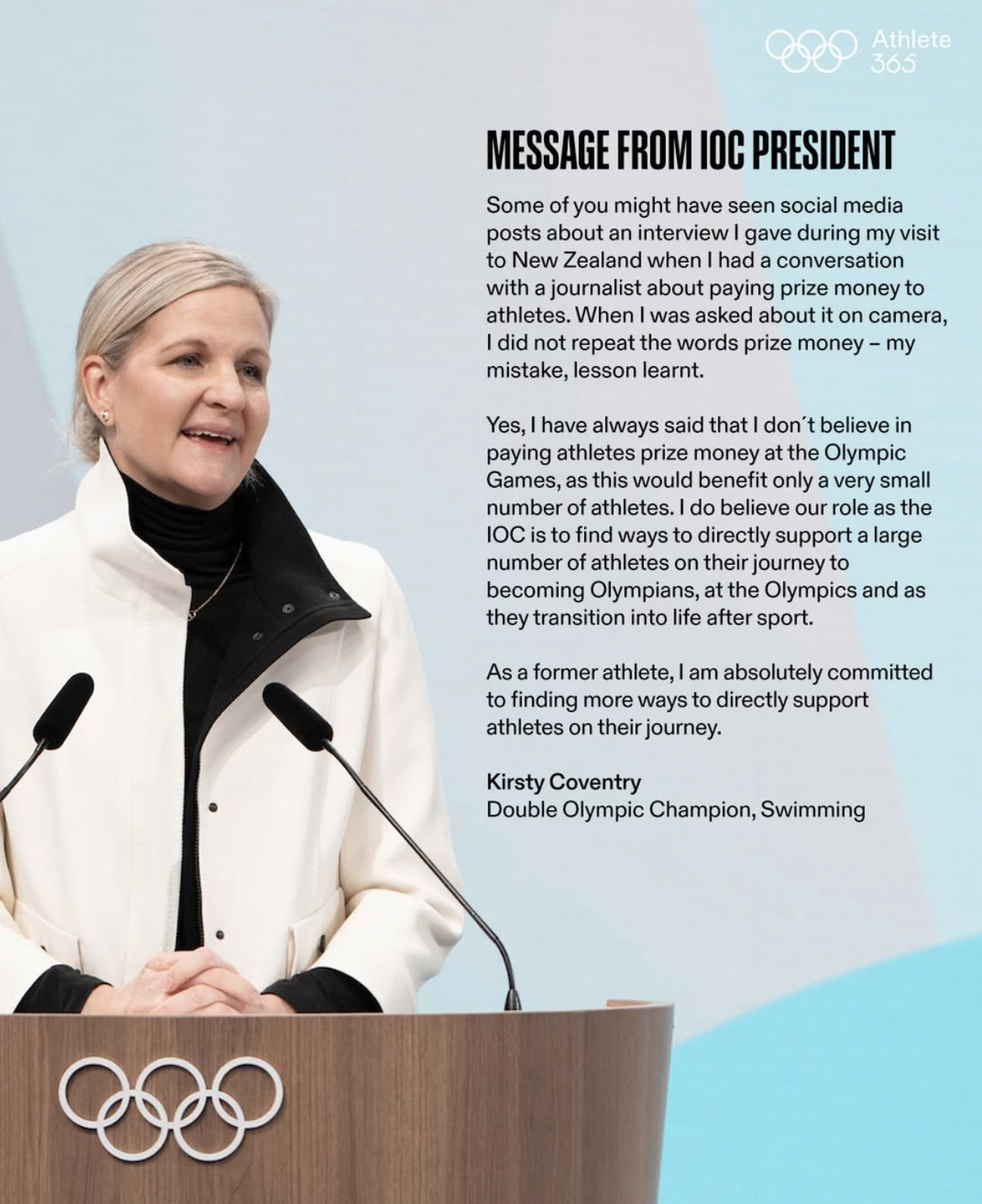
Coventry statement a few days later on the IOC Athlete365 Instagram channel // screenshot
In virtually every piece since Coventry sparked this controversy with her remarks in New Zealand, it is framed as an either/or — either a/ there is prize money or b/ there is not because the IOC is busy underwriting Solidarity scholarships for athletes in developing nations and (see note above) an Olympic village.
Why can’t it — shouldn’t it — be both?
It seems difficult to believe that some sponsor wouldn’t be willing to pony up $180 million for the right to fund prize money, and only that.
How we get to $180 million:
On Instagram, McEvoy, among the many comments to Coventry’s Athlete 365 damage-control statement, proposed gold/silver/bronze 100k/60k/25k. Using his numbers and, to make the math simple, 350 medal events in Los Angeles for 2028 (it’s 351, for the record):
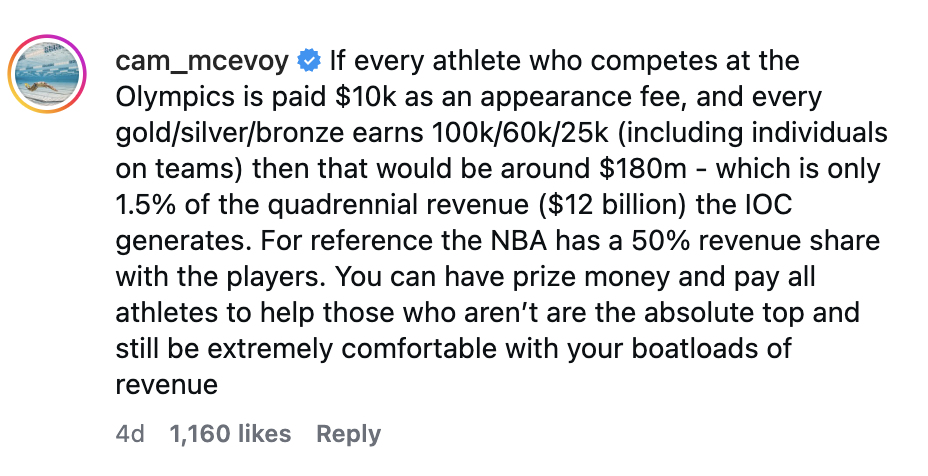
McEvoy’s comment in response to Coventry’s Athlete365 statement // screenshot
350 x 100,000 = $35 million
350 x 60,000 = $21 million
350 x 25,000 = $ 8.75 million
A Games nominally sees 10,500 athletes. In Los Angeles, that number will be 11,200 (for the record, 11,198: 10,500 + 698 for the five new sports). If simply making the Games is worth $10,000:
11,200 x 10,000 = $112 million
So:
MAKING THE GAMES $112 million
GOLD $ 35 million
SILVER $ 21 million
BRONZE $ 8.75 million
——————-
TOTAL $176.75 million
Oh, and there can, and should, be a separate conversation/math exercise for breaking Olympic and/or world records at a Games. It would hardly threaten the IOC bank balance.
—
Michael Payne, the former IOC marketing director, has a number of well-taken thoughts on what ought to be done.
To be clear, Payne is not a fan of participation fees nor prize money. In a telephone interview on Tuesday, he said:
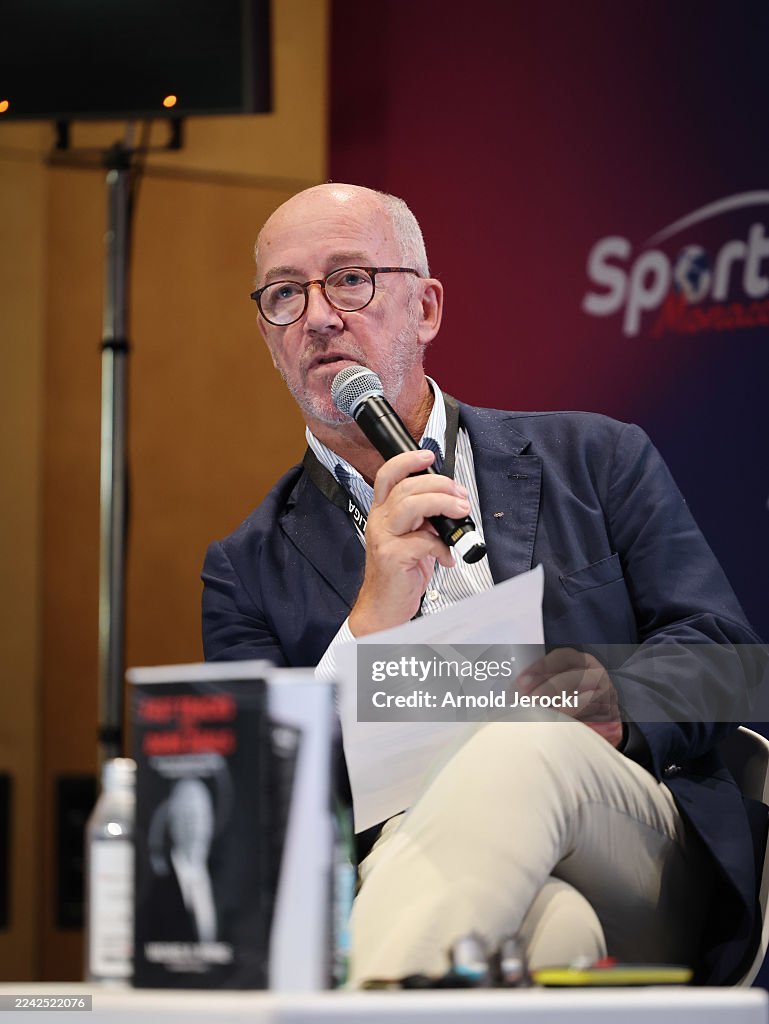
Former IOC marketing director Michael Payne at the Sportel conference last October in Monaco. In the foreground, Payne’s new book: ‘Fast Tracks and Dark Deals: How Sport Became Business and Business Became Sport” // Getty Images/ Arnold Jerocki
“There is an awful lot of stuff that could be done to directly support the athletes. Start with giving them access to their images. It is inconceivable that 50 years after an athlete has competed, he is still not allowed access to his athletic performance. If you were to release the images, you would overnight create 100,000 ambassadors in the digital social space who have way more followers than any institution. This is what it’s all about. Move on.
“Instead of pissing about trying to introduce branding on the fringe of the venue, engage them with the athlete on a whole new digital social ecosystem. Empower the athletes.”
He also said:
“What is being missed here is Lausanne having a clear strategic vision. Whether it starts with the president, whether the previous regime treated a culture where people did not want to stand out — although, frankly, if you sat down with Thomas [Bach] and said, here is the win-win and here is how we fix it, he would have embraced it — the administration now is wired to avoid risk.
“De Kepper,” he said, a reference to the IOC director general, Christophe de Kepper, the institution’s day-to-day director, “has done a very good job making sure the IOC does not slip on banana skins.”
Payne summed up:
“They’ve got to re-find their sense of innovation. The product — you come off Paris, brilliant Games, you come off Milan, exceeded everybody’s expectation — the product is fundamentally bloody solid. It’s very relevant. But everything is now focused on delivery as opposed to creating the magic. The creation of the magic today is more relevant than it has ever been and will resonate more than ever.”
—
Two years ago, I wrote:
“Will there be advertising on Olympic uniforms? In and around the Olympic fields of play? Should there be? If the IOC revenue stream is already north of $7 billion, and athletes are at the center of everything, should there be a far more direct connection between revenue and the athlete?
“What other revenue sources might also be at issue now? Gambling? It’s inevitable.
“Before the IOC ends up in the gambling version of a 1998 Festina doping scandal, wouldn’t it be better to get ahead of the curve? To figure out how to use the immense value of that sort of revenue constructively?
“Because money talks, always.”
All of that is all the more true now.
Coventry’s first year has been devoted to an exercise dubbed “Fit for the Future” — the IOC purportedly trying to figure out its way forward. In three weeks, that exercise is due to figure prominently at the annual IOC assembly.
Modern society is all about empowerment and transparency, ethical investment and transparent returns to stakeholders that are clean and free of unethical practices.
In today’s world, anything less than total transparency is unacceptable.
Otherwise, the wider public sees such brands as delivering ill-gotten gains. Perhaps this is why the athletes are becoming increasingly vocal about those in Lausanne who administer the movement.
Essentially, what the athletes are now saying is the Olympic movement forces them into something akin to modern-day slavery — the IOC a/ controlling all commercial programs with an iron fist b/ while limiting entry to a global product that might well be described as a monopoly with c/ structures created globally but inserted into the fabric of local society, meaning taxpayers.
Everyone deserves better.
Especially the athletes.
Here’s an idea: invite Akio Toyoda to the assembly. Let’s all hear what he might say about the Olympics, how to make them not just better but all the more meaningful for the world we live in, now, with an eye toward keeping the Games relevant — if you will, fit — for the future.