
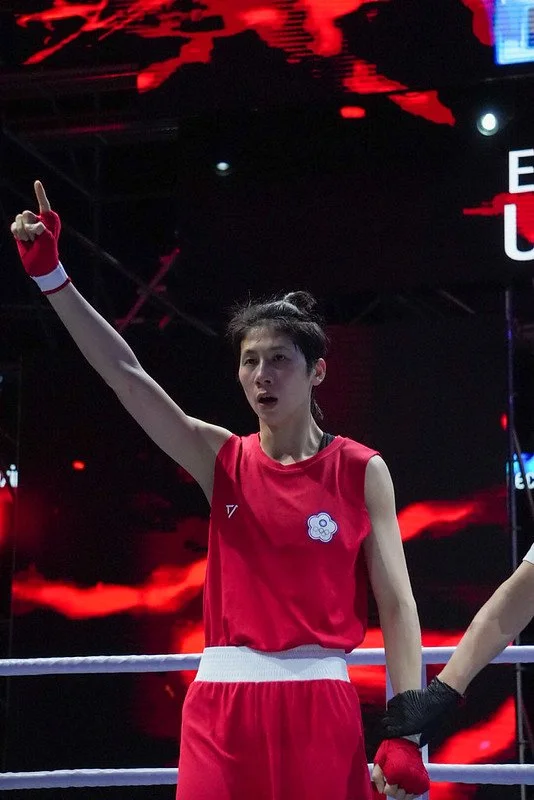
Yu-Ting Lin of Chinese Taipei, a gold medalist in women’s boxing at the 2024 Paris Olympics, took bronze Monday in the 2026 Asian continental boxing championships.
In Paris, Lin won the 57-kilogram class (just over 125 pounds) to become Taiwan’s first Olympic boxing champion. Heading toward two years later, Lin is now fighting at 60 kilos (132 pounds). The Asian championships were held in the capital of Mongolia, Ulaanbaatar.
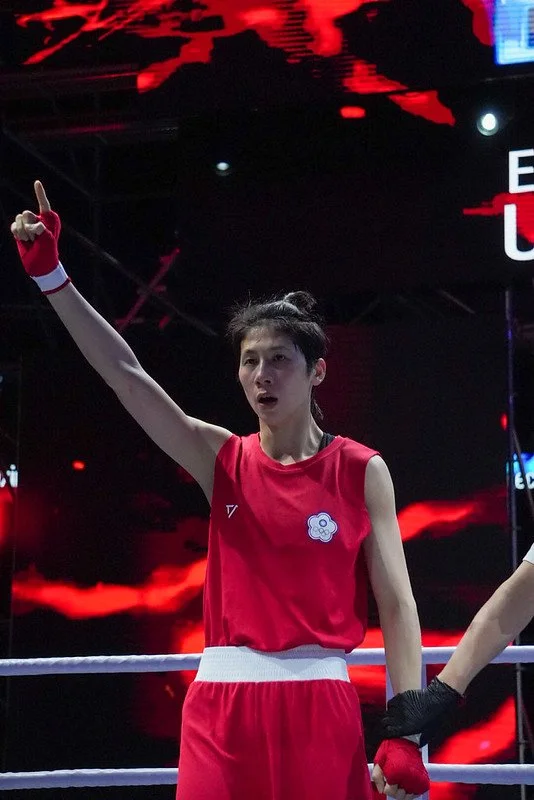
Yu-Ting Lin of Chinese Taipei at the 2026 Asian continental boxing championships // Asian Boxing
After Monday’s action, Lin’s coach, Tzu-Chiang Tseng, emphasized for the China News Agency the value of Lin fighting up a category: “After all, this is our first time competing in the 60-kilo division after the Olympics. The opponents’ skills, strategies and styles are all new to us, so we used this opportunity to observe and learn.”
This is not the story.
The story is, rather, how this could have been allowed to happen in the first instance.
How is Yu-Ting Lin, whose screens at the 2022 and 2023 world championships indicated an XY genetic makeup, whose 2023 test said, “Chromosomal analysis reveals Male karyotype,” eligible for women’s boxing? The question is all the more pointed given the International Olympic Committee’s March 26 announcement that the women’s category is for athletes who are biologically female. That means XX, not XY.
Lin and Algeria’s Imane Khelif, Paris gold medalist at 66 kilos (145 pounds), were at the center of an eligibility controversy at those 2024 Games. The brightest spotlight, then and mostly since, has been trained on Khelif.
Now, though, the Lin case promises to test both the credibility and legitimacy of the new IOC policy and, as well, the management and direction of World Boxing, which — in a switch driven in significant measure by the IOC, and then-president Thomas Bach — last year replaced the International Boxing Association.
And to ask, now in reference to Yu-Ting Lin: who is women’s boxing for?
—
Bach’s 12 years as president ended last June. The new IOC president, Kirsty Coventry, is the first female leader in the organization’s history, which dates to 1894.
At the Paris Games, Bach, at a news conference, said, “Let’s be very clear here. We are talking about women’s boxing.
“We have two boxers, who are born as a woman. Who have been raised as a woman. Who have a passport as a woman. And who have competed for many years as a woman. This is the clear definition of a woman. There was never any doubt,” which is not true, “about them being a woman.”
The IOC, after kicking the IBA to the Olympic sidelines on June 22, 2023, oversaw Olympic boxing in Paris in 2024. The IOC position then was that “the gender and age of the athletes are based on their passport.”
Key word there in defining eligibility by passport: gender.
Not sex.
Bach, continuing at that Paris news conference:
“What we see now is that some want to own the definition of who is a woman, and there I can only invite them to come up with a scientific-based new definition of who is a woman and how can somebody being born, raised, competed and having a passport as a woman cannot be considered a woman?
In announcing the March 26 policy, entitled “Protection of the Female (Women’s) Category in Olympic Sport,” the IOC moved away from passport eligibility — which was always highly dubious — to, as Bach put it, “a scientific-based new definition” that relies not on gender but sex.
It applies from the LA28 Games onward. It is not, the IOC said, retroactive.
Coventry released a video in which she said, in part:
“The scientific evidence is very clear. Male chromosomes give performance advantages in sports that rely on strength, power or endurance. At the Olympic Games, even the smallest margins can be the difference between victory and defeat.
“So, it is absolutely clear it would not be fair for biological males to compete in the female category. In addition, in some sports, it simply would not be safe.”
—
This is precisely what IBA officials, led by Umar Kremlev of Russia, then and now its president, have been saying for years — the IBA warning about Khelif in particular in a letter sent June 5, 2023, to the IOC that said the situation “epitomizes the importance of protecting both safe sport and the integrity of sport.”
Kremlev, in a March 26 IBA statement released upon the announcement of the new IOC policy, called it a “victory for common sense,” saying, “The IOC simply had no other choice. For years, they turned a blind eye to what was destroying the very meaning of women’s sports, and now they are forced to correct their own mistakes.”
It’s a victory for common sense, though, only if in the application of the new IOC policy there’s common sense.
Which leads to the Lin matter.
And to World Boxing, which in February 2025, in literally the last weeks of the Bach years, was granted provisional IOC recognition as the governing body for Olympic boxing. It is due to run the men's and women's competitions at the Los Angeles 2028 Games.
—
On May 30, 2025, World Boxing announced its SRY testing policy. That policy, which formally took effect in the summer of 2025, says national federations are responsible for testing — a position that clearly creates, at the least, the potential for abuse or conflict of interest. As a news release at the time noted in regards to an appeal from a screen that turns up a Y chromosome, “Support will be offered to any boxers that provide an adverse test result,” which, again, raises any number of questions when the issue at hand is, to be straightforward, eligibility.
In that same announcement, World Boxing expressly said Khelif would not be eligible for any World Boxing event “until Imane Knelif” — note the avoidance of the female pronoun — “undergoes genetic sex screening in accordance with” federation rules and procedures. That news release has since been changed to remove reference to Khelif.
A few days later, the then-president of World Boxing, Boris Van der Vorst, reached out to the Algerian Boxing Federation to apologize for calling Khelif out by name. In September, Khelif lodged an appeal with the Swiss-based Court of Arbitration for Sport against World Boxing’s demand for testing; the matter is ongoing.
Meantime, on Feb. 5, in an interview with the French news outlet L’Equipe — in remarks that affirmed the results of the tests at the IBA world championships, tests that Bach and IOC spokesman Mark Adams in Paris sought to discredit as “flawed,” “not legitimate” and a Russian-led “defamation campaign” targeting the IOC — Khelif confirmed the presence of the SRY gene:
“Yes, and it’s natural,” Khelif said, as if that was a positive instead of exactly the crux of the eligibility issue, adding, “For the Paris Games qualifying tournament … I lowered my testosterone levels to zero.”
Khelif also said in that interview, “I am not a trans woman. I am a girl. I was raised as a girl, I grew up as a girl, the people in my village have always known me as a girl.”
In September, Van der Vorst announced he would not seek re-election, a move widely believed to have been prompted by IOC pressure. In November, Gennady Golovkin of Kazakhstan, the two-time middleweight world champion and Athens 2004 silver medalist, was confirmed — he was the only one standing — as the new World Boxing president.
Van der Vorst had been elected World Boxing’s first president in 2023. The year before, amid a complicated sequence, Van der Vorst — the preferred candidate of a group of mostly Western nations — ended up losing out to Kremlev for the IBA presidency.
Six days before the IOC’s late March 2026 policy announcement, World Boxing announced Lin had been cleared to compete at the Asian championships in Mongolia, March 29 through April 10.
—
The World Boxing news release starts out this way: “Following a statement by the Chinese Taipei Boxing Association (CTBA) which says that Paris 2024 gold medalist Lin Yu-ting ‘will make her return to the ring at the Asian Boxing Championships,’ World Boxing can confirm that, following an appeal by the National Federation, the boxer is eligible to compete” in Mongolia.
To reiterate, the World Boxing release is dated March 20. The CTBA release: March 21. This discrepancy — World Boxing “following” a release that is a day later — has not been explained.
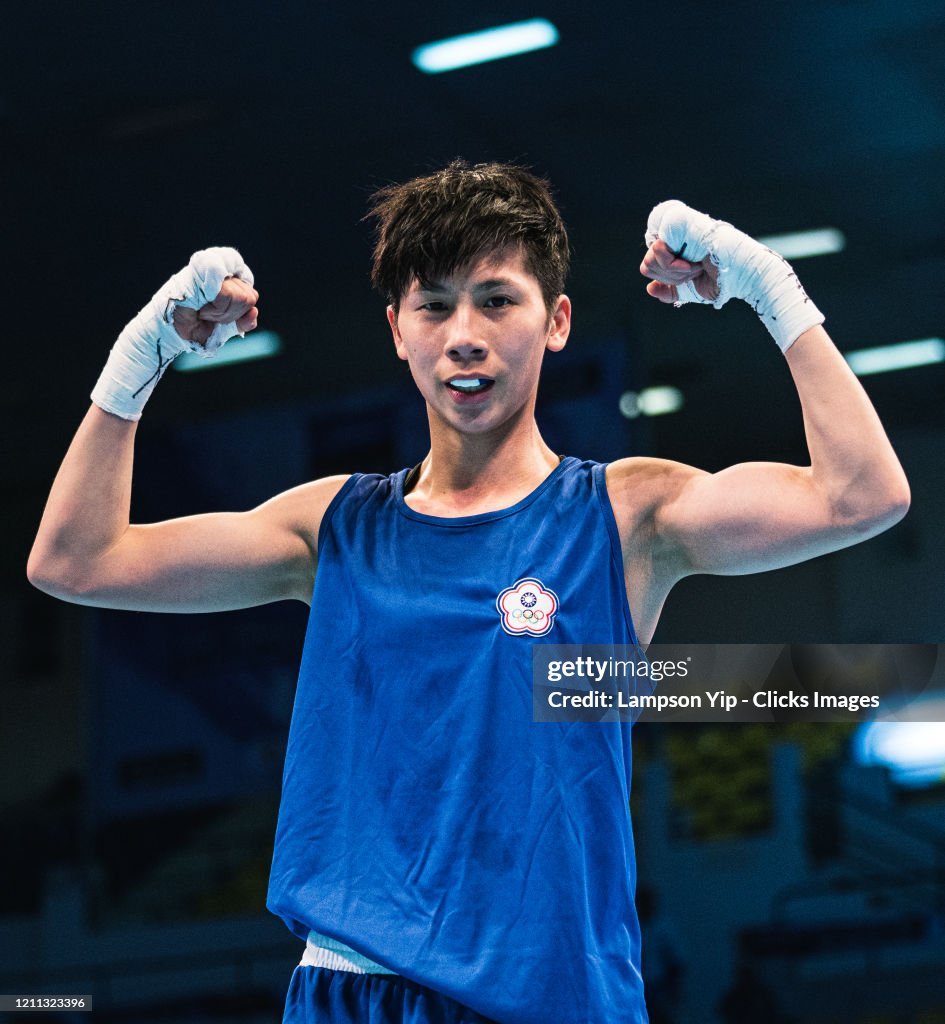
Lin at a 2020 Games qualifier in Amman, Jordan // Lampson Yip/Clicks Images/Getty Images
The CTBA release says, referring to Lin, “We are pleased that World Boxing’s independent medical experts thoroughly reviewed all evidence and confirmed that she” — here, the pronoun — “has been female since birth, meeting the requirements, with no competitive advantage, and ensuring her rightful place in the women’s category.”
The World Boxing and IOC policies are essentially the same. An athlete undergoes a one-time-only test, typically by cheek swab, that either turns up, or doesn’t, what’s called the SRY gene.
To make the complicated science easy:
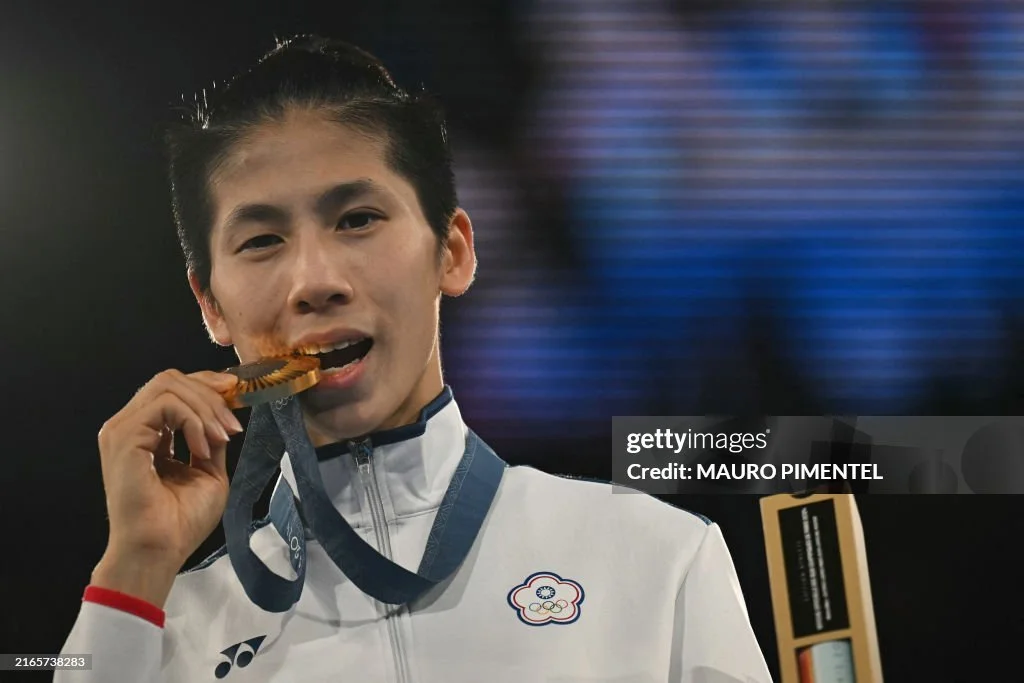
Lin on the podium at the 2024 Paris Games // Mauro Pimentel AFP via Getty Images
The SRY gene is typically found on the Y chromosome. The Y chromosome means the presence of testes/testicles. The testicles produce testosterone. Testosterone is what makes XY people bigger and stronger than XX people.
It is that combination, the Y chromosome and testosterone that, as the IOC said, provides performance advantage in sports.
Lin underwent the test in 2025, World Boxing said. After that came an appeal lodged by the CTBA.
Logic dictates there can be only one reason for an appeal: evidence of the Y chromosome.
—
The IBA had Lin (and Khelif) tested amid its 2022 world championships in Istanbul and, then again, at its 2023 world championships in New Delhi.
In both athletes and on both screens (2022 and 2023), the tests indicated evidence of the Y chromosome.

Page 1 of 3 of the 2023 test
The World Boxing SRY appeal process, as the federation’s March 20 release notes, is detailed in its rules beginning with section 5.1.4.
That section makes plain why a federation would lodge an appeal:
“Where Y chromosome genetic material (i.e., SRY gene) is detected with suspicion of chromosomal abnormalities or an undetected difference of sexual development (DSD), a boxer’s initial screens will be immediately referred to clinical specialists for genetic screening, hormonal profiles, anatomical examination, or other evaluation of endocrine profiles or markers by medical specialists to secure a diagnosis.”
The next section, 5.1.5, says eligibility is to be “informed by the absence of male androgenization for the female category.”
The IOC policy is, again, much the same.
It says “no athlete with an SRY-positive screen is eligible” with the “rare exception” of athletes with a condition called CAIS, meaning “complete androgen insensitivity syndrome,” or with “other rare differences/disorders in sex development (DSDs) who do not benefit from the anabolic and/or performance-enhancing effects of testosterone.”
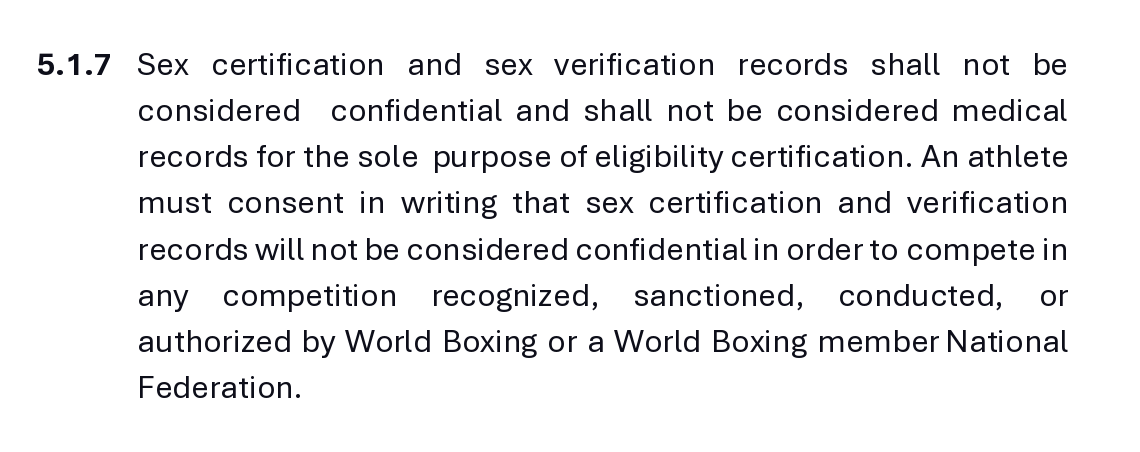
World Boxing section 5.1.7, meantime, says “sex certification and sex verification records shall not be considered confidential and shall not be considered medical records for the sole purpose of eligibility certification.”
That section adds that an athlete “must consent in writing” that sex certification and verification records “will not be considered confidential” in order to compete.
Again, common sense — is Lin’s a case of CAIS? Or another DSD characterized by the “absence of male androgenization”?
Because, though the CTBA news release might assert that Lin “has been female since birth,” the test evidence suggests otherwise. In which case — what?
—
In a series of posts to X after the IOC's March 26 announcement, the South African sports scientist Ross Tucker said, in regard to “the CAIS issue,” that “sport has to get this right with transparent technical standards.”
He also called, again in reference to the CAIS exception, for “clear, detailed, robust guidance.”
Meantime, on the front page of its website, World Boxing’s vision statement declares it seeks to be “a sustainable, inclusive and transparent international sports federation based on honesty, integrity and excellence that puts the interests of boxers first and ensures the sport of boxing remains at the heart of the Olympic movement.”
Its mission, it further says, relies on part on “strong governance and” — the t-word again — “transparent financial management …”
In its March 21 news release, the CTBA asserted that Lin’s return purportedly reinforces the “principles of fairness, transparency, and athlete welfare in international boxing,” and in this context, note again — transparency.
With transparency purportedly such a key value, World Boxing secretary general Tom Dielen was asked in a March 27 email to explain the Lin appeal and for copies of “all the relevant records in this matter,” given the common-sense meaning of the first part of section 5.1.7.
The federation PR department replied in an email three days later, saying Dielen “has a full schedule and is not available for a conversation.”
After conferring “with colleagues who have clarified [its] purpose,” the PR team asserted that 5.1.7 means disclosure to medical experts.
It went on: “This is why the policy states: ‘sex verification records shall not be considered confidential and shall not be considered medical records for the sole purpose of eligibility certification.’ (The underlining has been added here to emphasize this point.)”
World Boxing policy
The PR note went on, “It means there is no obligation for the athlete’s medical records to be disclosed beyond the necessary disclosure to World Boxing’s medical experts.”
A reasonable person might well read it otherwise — the first part of that sentence in 5.1.7 declaring the records not confidential, the second part adding that in assessing eligibility they ought not to be medical records. All the more so given the requirement for athlete consent in writing to the notion that sex certification and verification records “will not be considered confidential.”
The Chinese Taipei boxing federation did not respond to an email asking for a “detailed explanation” of the appeal.
Without an explanation, the common-sense question that wraps up all of this is elemental — on what grounds was Yu-Ting Lin cleared to compete?
Without that answer, Lin seems sure going forward to be shadowed by questions about eligibility; World Boxing, its commitment to transparency and governance; and the IOC, about how “protection” gets implemented.
Lin’s fights in Ulaanbaatar marked the athlete’s first action in the ring not just at 60 kilos but, indeed, first international competition since the Paris Olympics. In the quarterfinals, Lin scored a 5-0 decision over Ayaka Taguchi of Japan, the division’s No. 1 seed. The 5-0 score means Lin won every round on all five judges’ scorecards. Earlier, Lin beat Thananya Somnuek of Thailand, again 5-0.
The semifinals saw North Korea’s Won Un Gyong stop Lin, 4-1.
Afterward, Tseng, Lin’s coach, said the fighter’s main goal this year is the Asian Games, set for the early fall in Japan.
“It’s not bad that we lost this time,” he said. “At least it means we have room for improvement.”