
The 2026 Milano-Cortina Paralympic Games drew Sunday to a close, with China atop the medals table, the United States second and — what’s this — Russia third.
China had 44 overall, 15 gold; the Americans 24 and 13; Russia, 12 and, if you read the medals table the traditional way, with gold more important than overall, eight. Other nations finished with more overall medals than Russia: Ukraine, 19; Germany, 17; Italy, 16; Canada, 15; Austria, 13.
China sent 70 athletes, its largest-ever delegation for an overseas Winter Paralympics. The Americans, 72 (including four guides). The Russians? Six, four men and two women, in three sports — for, again, 12 medals, eight gold.
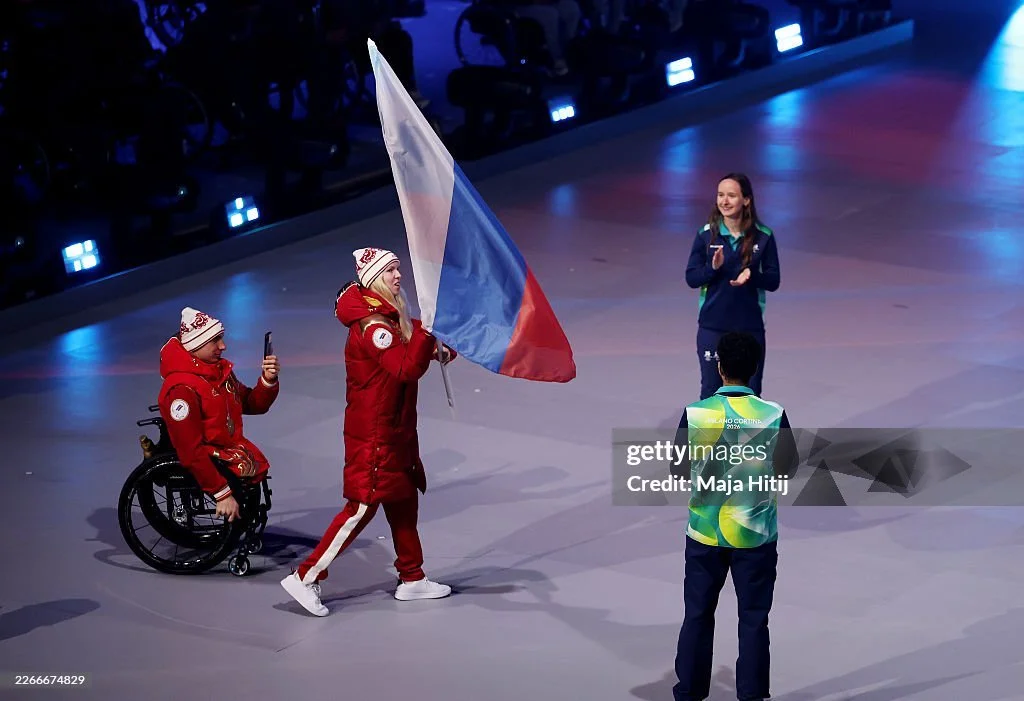
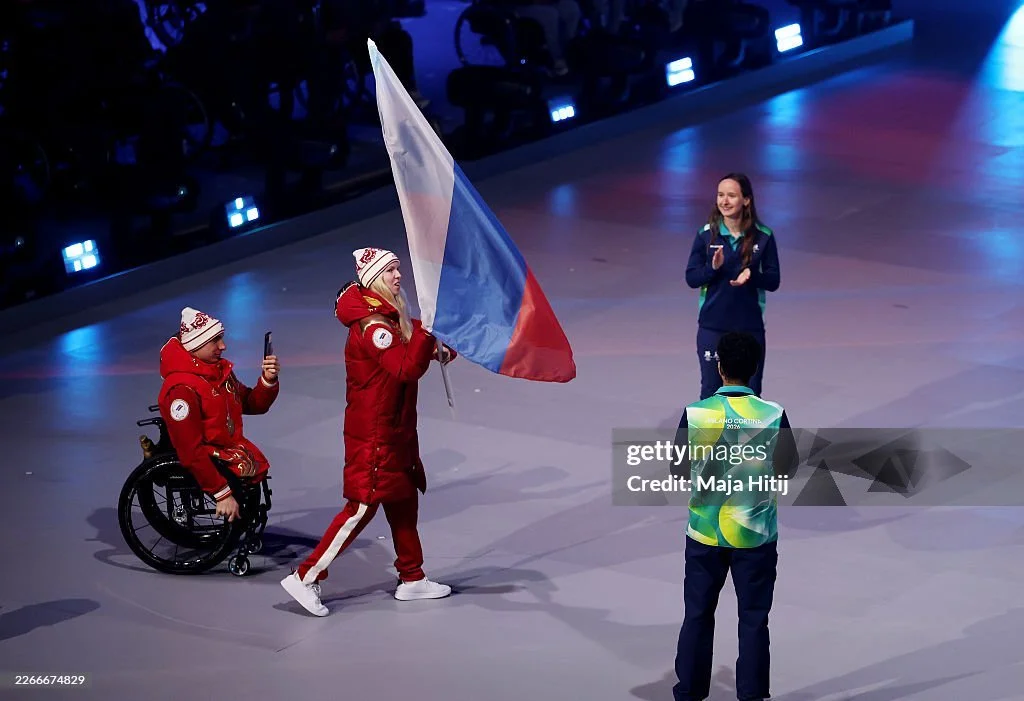
Ivan Golubkov and Anastasiia Bagiian, Russian flagbearers, at the Milano-Cortina 2026 Winter Paralympic Games closing ceremony // Getty Images / Maja Hitij
The successful — no other word for it — reintegration of the Russians at the Paralympics foreshadows, almost certainly, not only what is likely but what should most certainly be the case at the Olympics, presumably if not probably as soon as the next edition, the Los Angeles Games in 2028.
Only a few, and in the big picture minor, incidents marked the return of the Russians — back at the Paralympics with their flag, colors and anthem for the first time since 2014. The International Paralympic Committee assembly had, last September, lifted Russia’s suspension.
The opening ceremony, for instance, was marked by a boycott of sorts — Ukraine, the Czech Republic, Estonia, Finland, Latvia, Poland and Lithuania not taking part. For Sunday’s closing, some nations, including those that boycotted the opening ceremony, were “attending” but with a “volunteer” as flag bearer, not an athlete.
At the medal ceremony last Tuesday for the women’s sprint classic vision impaired event, won by Russian Anastasiia Bagiian with guide Sergei Siniakin, the silver medalists, Germany’s Linn Kazmaier with guide Florian Baumann, turned their backs as the Russian national anthem played. When pictures were taken, the Germans stood apart.
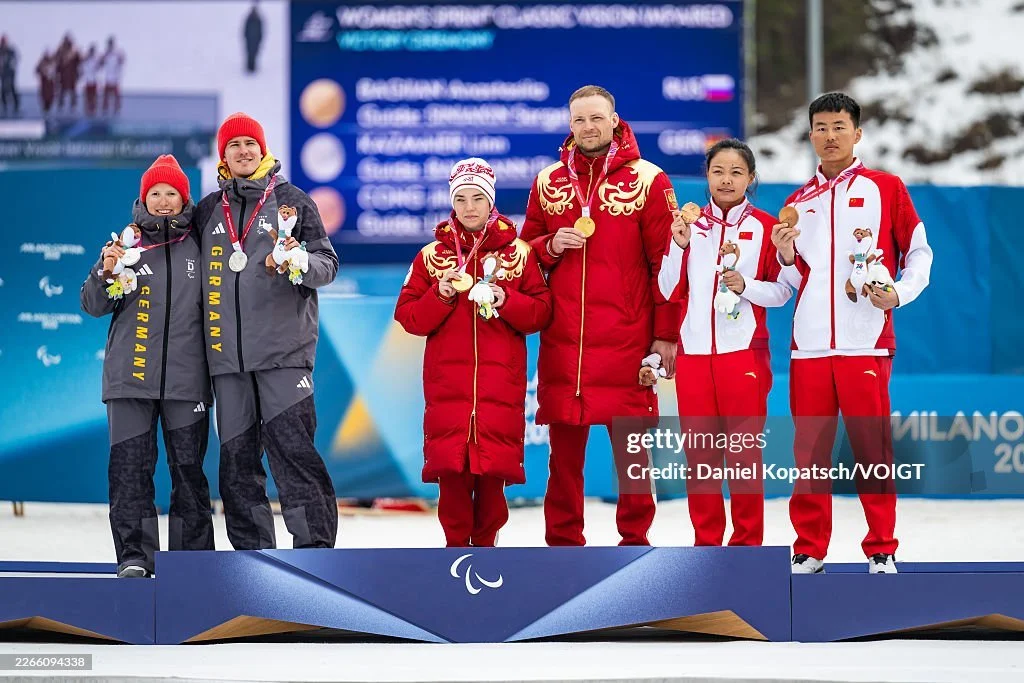
The Germans, apart from the Russians and Chinese on the medals stand // Getty Images / Daniel Kopatsch/VOIGT
“Perhaps they are really nice people, who we could be friends with,” Kazmaier said, the BBC reported, quoting the German outlet Bild. “That it is totally overshadowed by politics is simply a complete shame.”
The Germans, in an impaired vision event, are the ones who cannot see. They made no effort to treat their competitors as human beings just like them. That — that — is the shame.
Kudos to IPC president Andrew Parsons, not particularly widely known as a friend of Russia. In simple terms, he did not mix sports and politics.
Parsons, in a wrap-up interview Sunday with Associated Press, said he was “super empathetic” with the situation in Ukraine but nonetheless called it “disappointing” the Paralympic committee from Ukraine — and a few others — sought to take the focus away from sports.
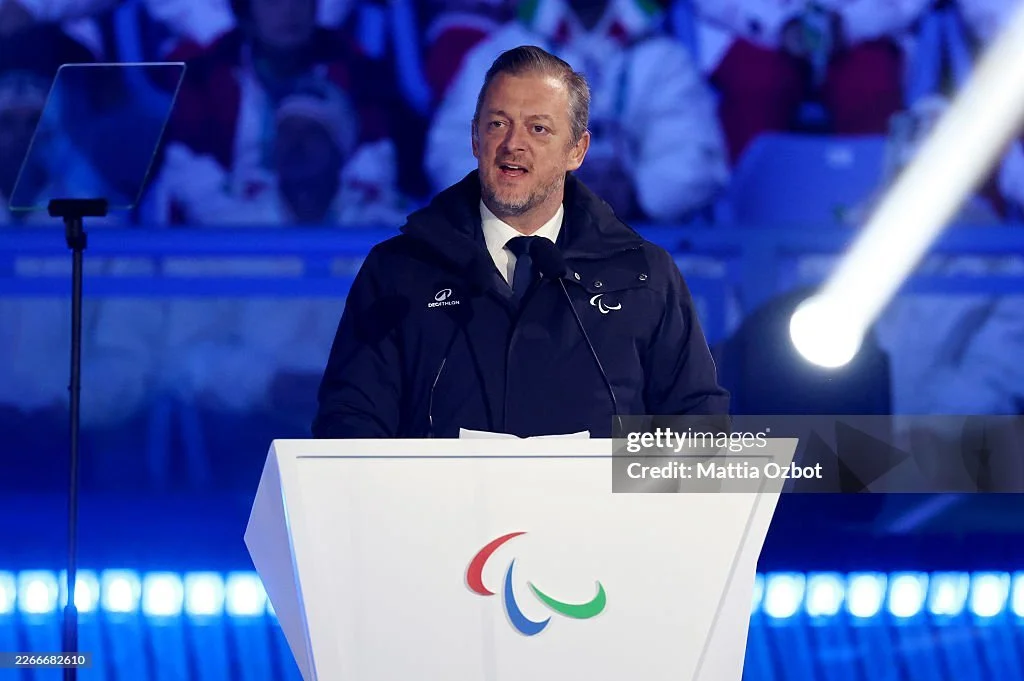
IPC president Andrew Parsons at the 2026 closing ceremony // Getty Images / Mattia Ozbot
“I do hope this is a lesson learned also for those [Paralympic committees] that have chosen to focus more on the political side than on the sport side because,” he said, “sport has prevailed.”
At Sunday’s closing ceremony, he said, in part, “These Games offered something powerful and refreshing: proof that sport can unite us through respect, fairness and human achievement.”
This is the way forward. For everyone across the Olympic and Paralympic landscapes.
As has been noted in this space before, the Russian matter is all the more complicated because the Russians themselves have made it so complex.
The Russian invasion in February 2022 stands as a clear violation of the United Nations-adopted Olympic Truce. Before that came years of Russian doping matters.
In fall 2023, the IOC suspended the Russian Olympic Committee after it moved to include four regional sports organizations in eastern Ukraine. Moreover, it’s widely believed at IOC headquarters that the Russians are to blame for interference of all sorts.
The Russian cause does not readily lend itself to reconciliation.
This, though, to reiterate what has also been said in this space, is not really about the Russians.
It’s about the Olympics, and what the Olympics are supposed to mean. As well, it’s a test of whether the IOC and the Olympics really stand for the notion that celebrating humanity means … everyone.
For many in the West, particularly in Europe, keeping the Russians out assuredly strikes a resonant emotional chord.
As Nathalie Tocci, director of the Institute for International Affairs, told the Wall Street Journal in a piece published March 1, “In Europe, we read the world through the lens of the Ukraine war, and for a good reason, as this is the most important issue for Europeans.”
That read — that emotion — is no longer sufficient.
If it ever was.
Keeping the Russians out smacks of hypocrisy and makes for the worst sort of double standard.
The arguments in favor of sidelining the Russians? Each fails.
Does Europe read the world through a particular lens? For the sake of argument, OK — but the Olympics, concededly Eurocentric, are not limited to Europe. Not hardly. The first African president of the International Olympic Committee, Kirsty Coventry, would understand there is a world well beyond Europe.
Letting the Russians in would advance state propaganda in international sport? Please. Everyone does this. Here is Robert O’Neill, the former U.S. Navy Seal Team 6 member widely credited with killing Osama bin Laden in 2011, delivering a motivational speech in Team USA’s clubhouse just a few days ago before the Americans played Canada in the World Baseball Classic:
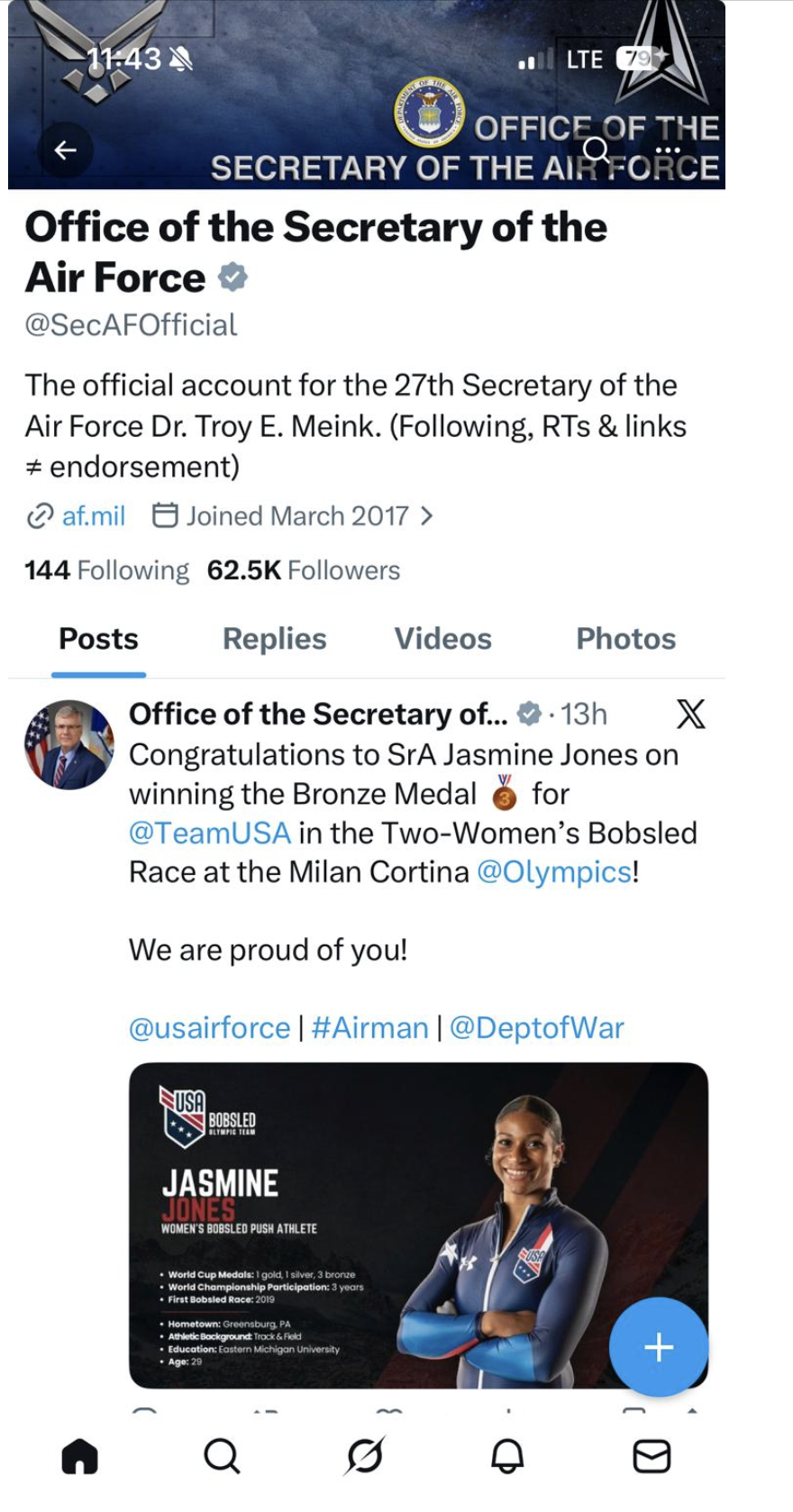
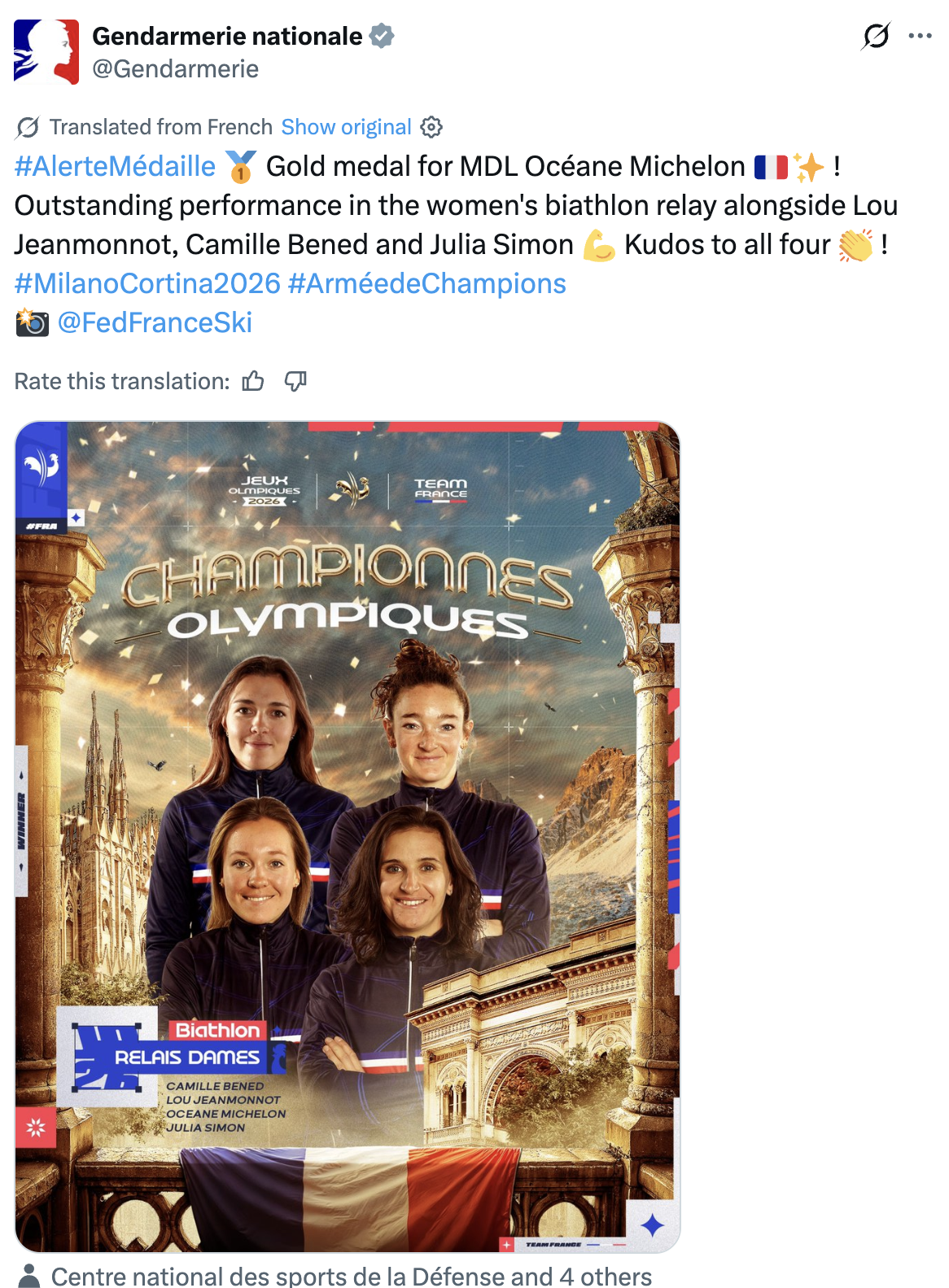
Any Russian athletes must not be part of their military or police apparatus? Please. Everyone does this. The Americans, French and others not only sent military members to the Winter Olympics in Italy but celebrated their successes.
The Russians attacked Ukraine during the period of the Olympic Truce? For sure. The American and Israeli strikes in Iran that commenced Feb. 28? During the period of the Olympic Truce.
Russian President Vladimir Putin is, many in the West would declare, and probably vehemently, objectionable. So what? Opposition — make that “resistance” — to the U.S. president is so widespread it has its own name, Trump Derangement Syndrome, but no one with legitimate standing is calling for a boycott of the Americans.
It is clear that the groundwork is being laid for a Russian 2028 return.
In January, it was announced that the IOC awarded rights for the 2026 Winter Olympics to Okko, a Russian streaming service based in St. Petersburg.
Typically, broadcast rights announcements come with an IOC PR release. Here, no.
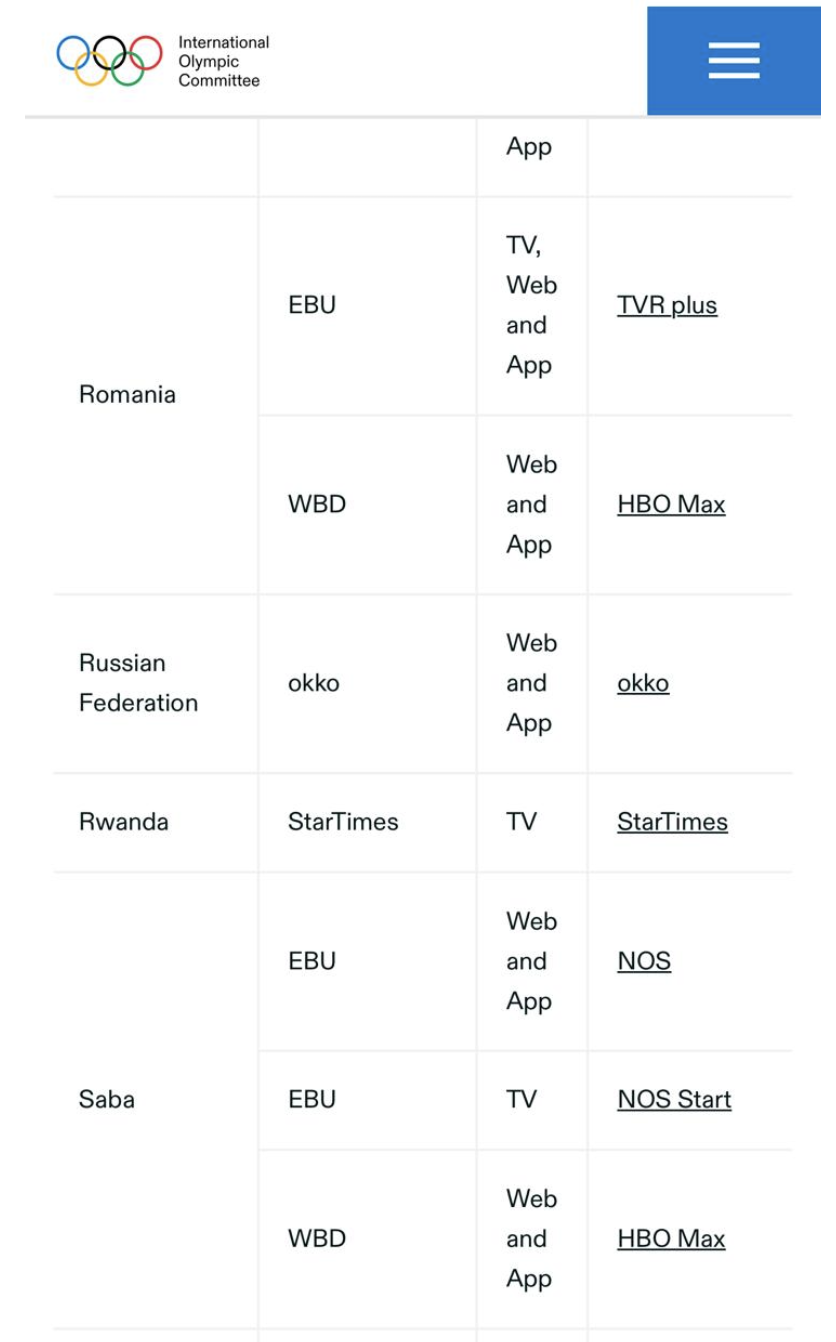
Despite the no-PR, the arrangement was hardly a secret. The Moscow Times reported the deal.
To be clear, the 2026 Milano-Cortina Olympic Games were not shown on state television. Indeed, those Winter Olympics marked the first time in Russia that a streaming service exclusively held the rights.
Okko Sport nonetheless understood what it had. A promotional poster said Russians could and would be “rooting for our own at the Olympics.”
What the Moscow Times did not report — what is all the more significant, since there was no Paris 2024 broadcast of any sort in Russia — is that someone very high up at the IOC had to sign the 2026 deal, which, of course, means that at the most senior levels, it got the IOC's OK.
In December, meanwhile, the IOC signaled to the various international sports federations that youth athletes from Russia (and Belarus) ought to be back, in individual and, critically, team events.
The 2026 Youth Olympic Games this fall in Dakar will thus likely serve as a test event for the IOC — to see whether, like the Paralympics, the IOC, too, can keep the focus on sports.
In December, an IOC statement said, in part, that “athletes have a fundamental right to access sport across the world, and to compete free from political interference or pressure from governmental organizations.”
It also said, and this is essential in reading the IOC, because the organization came back at the end of that long statement to reiterate much the same point, but making reference to the thing that underpins the entire Olympic framework.
“… Athletes, and in particular youth athletes, should not be held accountable for the actions of their governments – sport is their access to hope, and a way to show that all athletes can respect the same rules and each another.”
The aquatics championships last summer in Singapore — which included 62 Russians as “neutrals,” about half on the swim team alone — showed that athletes can respect the rules and each other. There, without violent rhetoric or worse, the Russians competed as individuals and as pairs or teams, Russian neutrals winning medals in swim relays, synchronized diving and artistic swimming.
The International Judo Federation moved last November to re-admit the Russians fully. Under a headline that read, “Sport: The Last Bridge for Reconciliation and Peace,” the IJF said, “Athletes have no responsibility for the decisions of governments or other national institutions, and it is our duty to protect the sport and our athletes.”
That is the point.
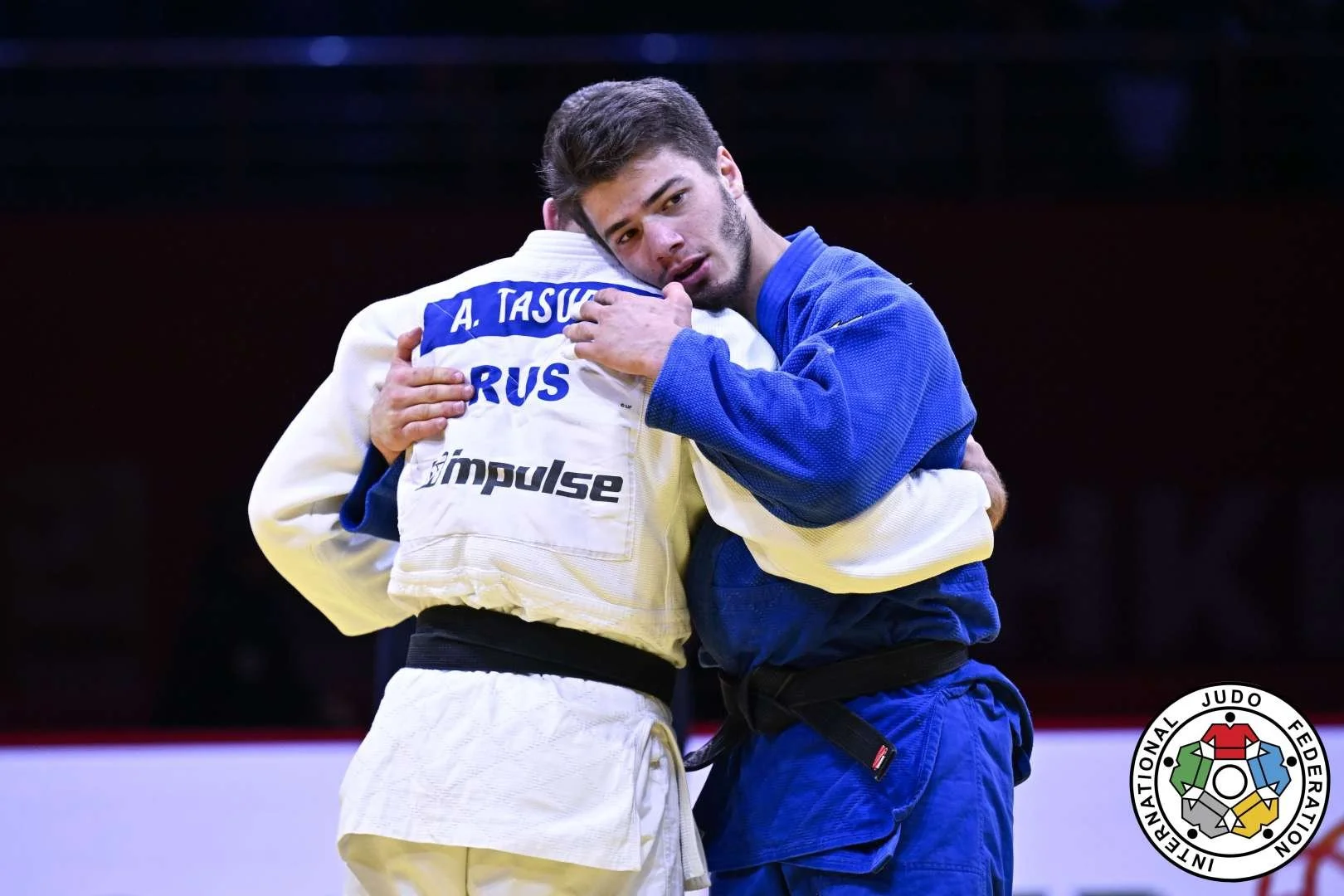
Russia’s Abdul-Kerim Tasuev, in white, and Azerbaijan’s Omar Rajabli embrace at the conclusion of the Feb. 28 Tashkent Grand Priz men’s 81-kilogram final, won by Rajabli // IJF / Tamara Kulumbegashvili
Athletes have no responsibility for whatever their governments do — this lesson painfully made clear by the U.S.-led boycott of Moscow 1980 — and the mission of the Games is to bring athletes from all 206 national Olympic committees together in the service of humankind.
All means all.
The Olympics are not what Europe says they are or ought to be, any more than they are or ought to be what the United States says they are or ought to be. Or anyone anywhere.
The IOC can only fulfill its mission of celebrating humanity if, once more, all means all.
Let the Russians compete.
And here is to all of us, mindful of our common humanity, crossing that bridge of reconciliation and peace in the spirit of hope for a better world. As the Olympic motto now says — together.