
For more than a century, the Olympic Games and the FIFA World Cup have represented the pinnacle of sporting achievement and global unity.
They have inspired generations of athletes, connected billions of fans and created extraordinary commercial value. The International Olympic Committee and FIFA have transformed themselves into two of the world’s most powerful sporting organizations, controlling assets that generate billions of dollars through broadcasting rights, sponsorships, licensing, hospitality and global partnerships.
But that success has created a new challenge.
The time has come – now, literally now – to consider external regulation.
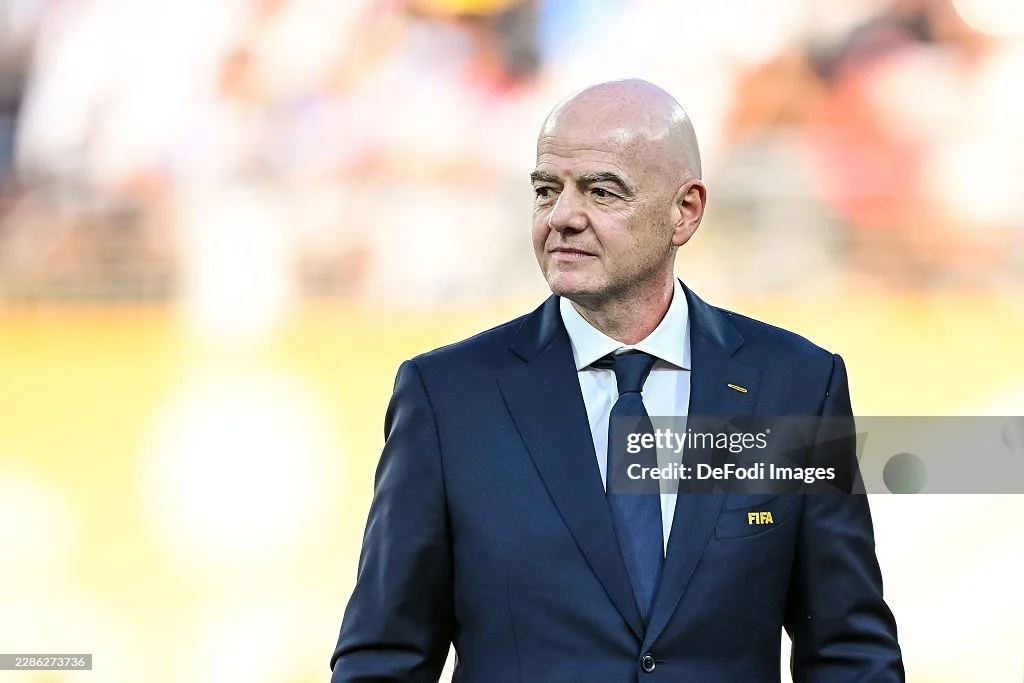
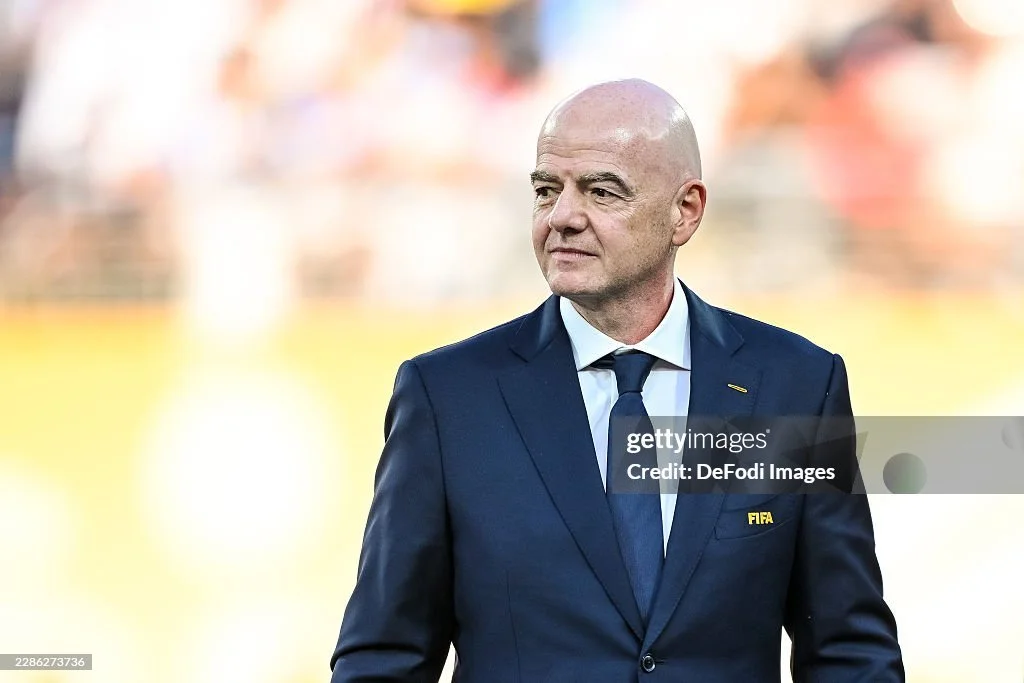
Gianni Infantino at the FIFA men’s World Cup final // Getty Images / DeFodi Images
Indeed, the commercial ecosystems surrounding the Olympic Games and the World Cup have become so large, so influential and so interconnected that the traditional model – self-regulation – is increasingly difficult to defend.
To be clear, over the past several decades FIFA and the IOC have proven themselves successful.
The question, though, is whether entities with the level of economic, cultural and social influence that each exerts should continue to oversee their own commercial operations without independent external regulation.
The argument is not against FIFA or the IOC.
For emphasis: not.
Instead, it is about protecting their future.
A new era of commercial complexity
Recent developments have highlighted why this issue is now, to use the term of art, ripe.
Just days after the FIFA World Cup final in the New Jersey Meadlowlands, the news broke of president Gianni Infantino’s plan to sell a minority stake in a new commercial entity to run the World Cup and other competitions.
The proposal, as detailed in countless news reports, would create what would be called FIFA Forward Enterprise, or FFE, and sell a 20% stake in it to private investors — with Joshua Kushner's Thrive Eternal leading the investor group. He is the brother of Jared Kushner, the son-in-law of U.S. President Donald Trump.
The Trump connection has of course generated considerable noise.
The focus here is the signal.
Because this proposal marks nothing less than a fundamental moment in the history of soccer governance.
Football, if you prefer.
The possibility of introducing private investors into the commercial ownership structure of soccer’s greatest asset raises important questions.
Who determines whether such decisions serve soccer’s long-term interests?
Who protects the interests of players, national associations, supporters, broadcasters, sponsors and governments?
Who independently assesses whether a transaction of this scale represents value for global soccer?
To the point: why should the organization itself be the central if not primary if not only decision-maker?
These sorts of questions are far from unique. They are hardly limited to sports. These sorts of questions arise whenever a global asset of such importance undergoes major commercial restructuring.
The same principle applies to the Olympic movement.
The Olympic movement faces similar questions
Under president Kirsty Coventry, in office for a year now, the IOC has also entered a period of significant change under an agenda she has dubbed "Fit for the Future."
One of the most important recent developments has been the – truly historic – decision to introduce a direct financial benefit for athletes through the a grant that will provide $10,000 to every eligible Olympian beginning with Milano-Cortina 2026.
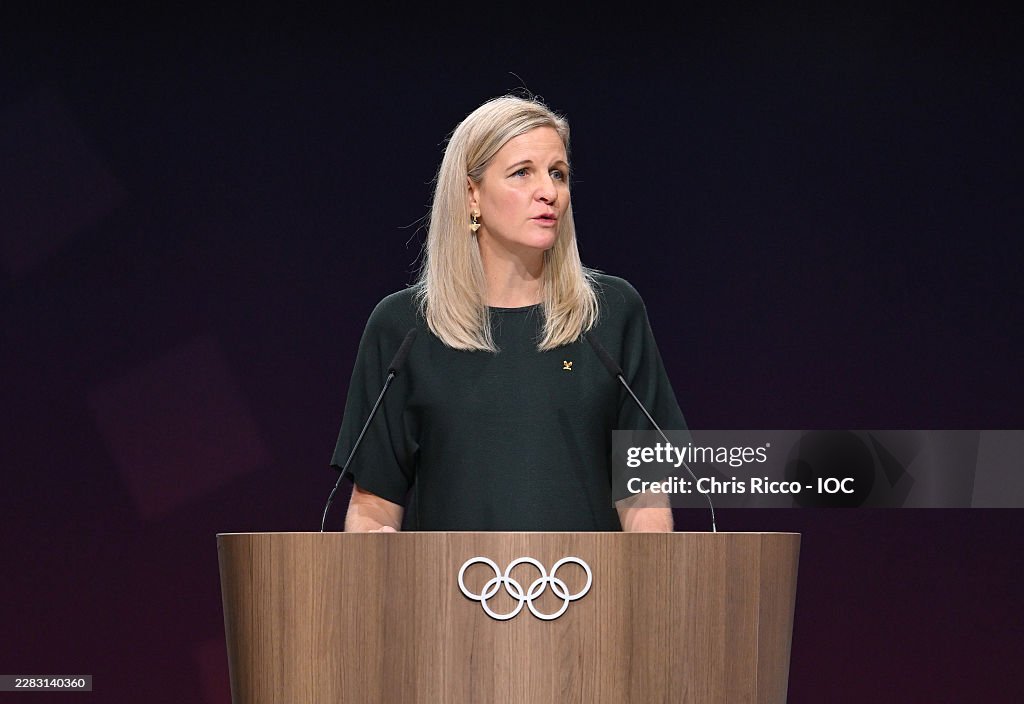
Kirsty Coventry, the IOC president, at the organization’s assembly in June // Getty Images/Chris Ricco-IOC
For the first time, the IOC has formally recognized that every athlete competing at the Games contributes directly to the global value and success of the Olympic product.
The initiative deserves recognition.
However, it also highlights the wider conversation about the relationship between athletes and the commercial model of the Games.
The question is not whether $10,000 is meaningful. For literally thousands of athletes, it will mean real support.
The larger questions:
Is the distribution of Olympic commercial value sufficiently transparent?
Do the athletes, purportedly the center of the entire ecosystem, have an appropriate voice in finance?
Do the international federations, who oversee the sports between editions of the Olympics and then at the Games themselves, similarly have appropriate voice in how value is shared?
The debate is therefore not about one payment.
It is about governance and transparency of both revenue and the cost base of the IOC in its administration and programs.
The growing trust gap
Across both FIFA and the IOC, you can see a similar pattern.
Athletes are asking whether they receive a fair share of the value they create.
Sponsors are asking how their investments are being managed.
Governments and taxpayers are asking why hosting major sporting events increasingly involves enormous financial commitments.
International federations in the Olympic context are rightly asking for greater certainty around revenues and commercial arrangements.
And fans are asking whether the sports they love are being protected for future generations.
Fans are not simply consumers.
They are both the foundation of global sport and taxpayers in markets that underwrite these massive events.
Their passion, loyalty and emotional connection create the audiences that drive broadcasting revenues, sponsorship value and commercial growth. Without supporters filling stadiums, watching broadcasts, buying merchandise and inspiring future generations, the commercial value of the Olympic Games and FIFA World Cup does not exist.
Yet fans have almost no formal voice in the major governance decisions that shape the future of the sports they dedicate their lives to following.
And, if we are honest, in the Olympic space, at present the athletes hold – at best – token voice.
When ticket prices rise, when competition formats change, when commercial decisions alter access to events or when sporting traditions are challenged, supporters are often among the last – clunky corporate-speak word next but nothing else will do – stakeholders consulted.
A sustainable future for global sport must recognize fans as a fundamental stakeholder group alongside athletes, the federations, sponsors and governments.
These questions do not necessarily suggest that FIFA or the IOC have failed.
This is the key:
They suggest that the scale of their operations has outgrown the governance systems that emerged – not strictly by design – to oversee them.
Governance challenges cannot, should not, be ignored
The Olympic movement has experienced significant governance challenges in recent years.
It’s tempting to reach all the way back to the Salt Lake bid scandal some 25 or so years ago. That is hardly, however, all there is.
To pick just one more current example: the criminal convictions arising from procurement and bid-rigging involving Tokyo 2020 organizing committee contracts exposed weaknesses in oversight.
That’s so in the past? OK. For future Games, questions remain surrounding Olympic organizing committee structures, procurement processes and transparency.
The issue is not simply individual misconduct.
The issue is whether complex commercial ecosystems require stronger independent safeguards.
FIFA has experienced similar challenges.
The organization has undertaken significant governance reforms in response to its well-documented corruption scandals, but the continuing expansion of its commercial operations highlights the need for transparency and its partner, accountability.
As FIFA grows the World Cup, expands competitions and explores new commercial structures, the importance of independent oversight increases.
Why self-regulation is no longer enough
In almost every major global industry, organizations with significant market power operate alongside independent regulators.
Financial institutions have financial regulators.
Energy companies operate under regulatory frameworks.
Technology companies face competition authorities.
Telecommunications companies operate within independent oversight systems.
And on and on.
The reason is simple.
When an organization becomes too important to fail, independent oversight protects both the public interest and the organization itself.
Now, in 2026 … global sport has reached that point.
The IOC and FIFA are no longer simply event organizers.
They are global commercial institutions whose decisions affect governments, economies, athletes and billions of fans.
That level of influence requires governance structures that match their importance.
The case for a world sport commercial regulatory agency
The solution is not, repeat not, for governments to control sport.
It is essential that sport retains its independence — again, to use the term, its autonomy.
However, independence should not mean operating without accountability.
A new independent body could provide oversight of the commercial operations of global sport.
Such an organization could be responsible for:
Reviewing major commercial transactions
Making sure deals are not anticompetitive
Ensuring transparent financial reporting
Monitoring procurement standards
Assessing conflicts of interest
Protecting athlete and stakeholder representation
Establishing consistent governance standards
Considering the interests of fans, cities, nations and regions affected by major sporting decisions.
It could – likely should – include representation from athletes, federations, national associations, sponsors, broadcasters, supporters, host governments, governance experts and competition authorities.
Its role would not be to run sport.
Its role would be to ensure that the commercial foundations of sport remain trustworthy.
Here, a pause. It’s clear any such regulatory agency would necessarily involve all kinds of details that need to be figured out. It’s also plain that the introduction of such an agency necessarily holds different sorts of risks.
Those issues can be worked out.
The larger risk, at this moment, is … doing nothing.
To understand why, we only have to look back at one of the defining events of the world we now live in.
A lesson from the financial markets
The global financial crisis of 2008 demonstrated the risks that occur when complex systems become too interconnected and insufficiently supervised.
The problem was not only individual decisions.
It was the absence of sufficient visibility and independent oversight across the entire ecosystem.
Global sport has many similar characteristics.
The Olympic Games and the FIFA World Cup involve governments, sponsors, broadcasters, athletes, organizing committees, commercial partners and billions of dollars in investment.
Yet no single independent body holds oversight of the entire commercial ecosystem.
Common sense: that should be a concern for everyone involved.
Including FIFA and the IOC themselves.
Protecting the future of sport
The proposed introduction of private investment into FIFA's commercial structure and the IOC's decision to provide direct athlete grants make for examples of organizations adapting to our changing world. With the advent of artificial intelligence, we can be sure more change – perhaps constructive, perhaps fraught – is on the near horizon.
Reactive individual reforms cannot replace systemic governance.
The future of global sport depends on trust.
Trust from athletes who dedicate their lives to competition.
Trust from sponsors investing billions.
Trust from governments funding infrastructure.
Trust from broadcasters building global audiences.
And perhaps most importantly, trust from fans who give sport its meaning.
Fans do not own the commercial rights to the Olympic Games or the FIFA World Cup, but without them those assets have no value.
Independent regulation should not be viewed as a threat to FIFA or the IOC.
It should be viewed as protection for their legacy and for the millions of people around the world who believe these events belong to something greater than commercial transactions.
And, too, for those providing the significant monies that drive all of it.
The greatest sporting institutions in the world deserve governance systems equal to their global importance.
The next generation of sport cannot rely solely on self-regulation.
It requires transparency, accountability and independent oversight.
Because the ultimate stakeholders of sport are not only those who administer it, invest in it or compete in it
They are the athletes who perform, the communities that host and the fans who fill stadiums, watch from home and keep the spirit of sport alive.