
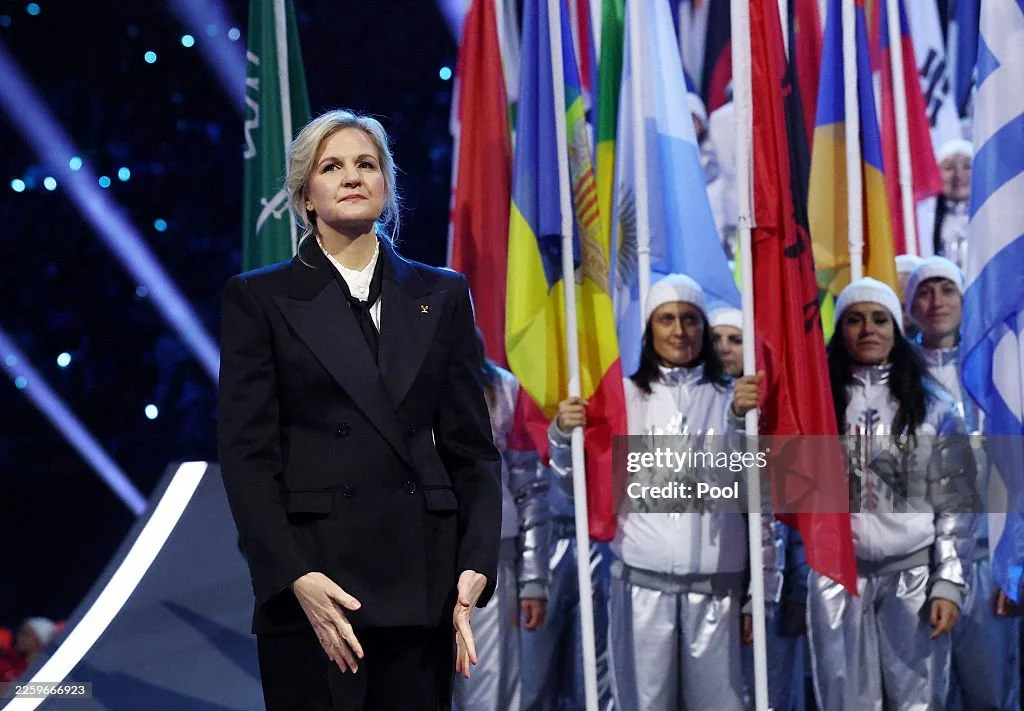
MILAN — If your attention, understandably, was captured at Friday night’s opening ceremony by the likes of Mariah Carey or Andrea Bocelli, you missed the hiding-in-plain-sight clue about the direction of the International Olympic Committee under new president Kirsty Coventry.
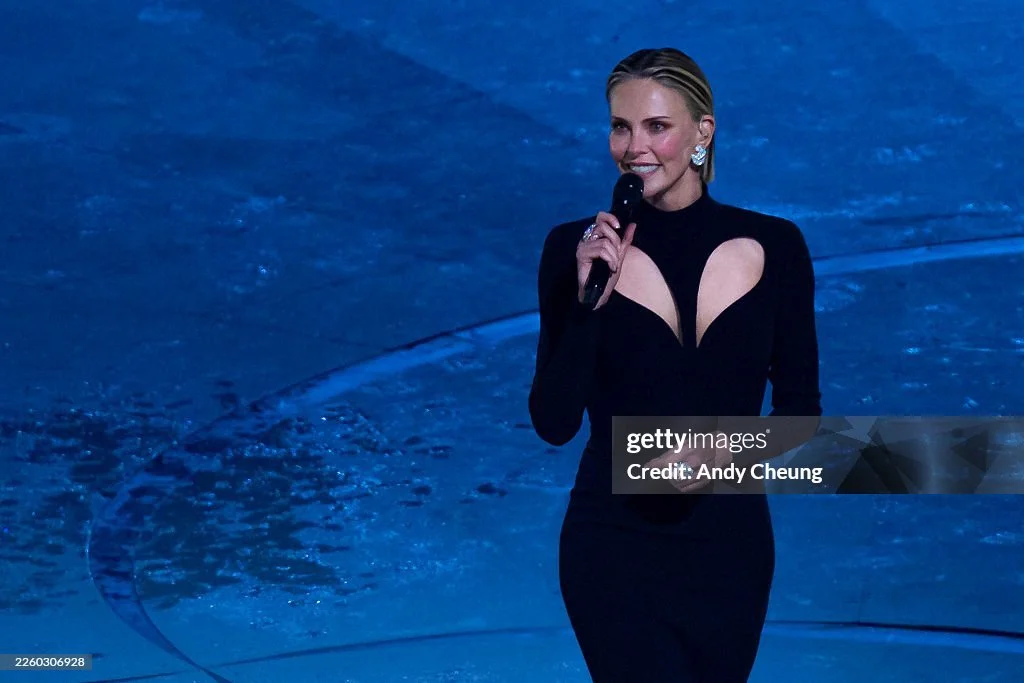
All eyes Friday night at the iconic San Siro stadium on Charlize Theron // Getty Images / Andy Cheung
Or did you think it was just a, huh, that the actress Charlize Theron took center stage at the iconic San Siro stadium to recite a passage from Nelson Mandela?
Theron is from South Africa. Coventry is from Zimbabwe. Coventry is the first female and first African president of the IOC, elected last March, formally assuming the office last June. Of all the movie stars in the world who could have been thrust into the global spotlight at a Winter Games ceremony, here, unexpectedly for most, was Charlize Theron. Do Coventry and Theron know each other? What do you think?
The rest of the show Friday night was all about Italy. Even Mariah Carey sang in Italian.
It is said in this space repeatedly that the IOC speaks in code. The trick is to pick up the codes.
And here we turn to the word ubuntu.
It is around this word that Coventry’s speech Friday night, her first center stage as president, turned.
The essence of ubuntu is that one’s humanity is inextricably connected to the humanity of everyone else.
To grossly oversimplify: we not me.
Is it any wonder the incredibly successful open-source Linux computer system is called — ubuntu?
What might ubuntu mean for the way the IOC operates, as a touchstone for key decisions, the way the organization — which dates to 1894 — positions itself in these middle years of the 21st century?
And — can it deliver?
The issue at hand for Coventry and the IOC is easy to define, more problematic to answer: can she get ubuntu buy-in? The IOC, based in Lausanne, Switzerland, is — has always been — decidedly Eurocentric. And now this rooted-in-Africa philosophy?
No question ubuntu can, emphasis can, work as a powerful motivator — and unifier.
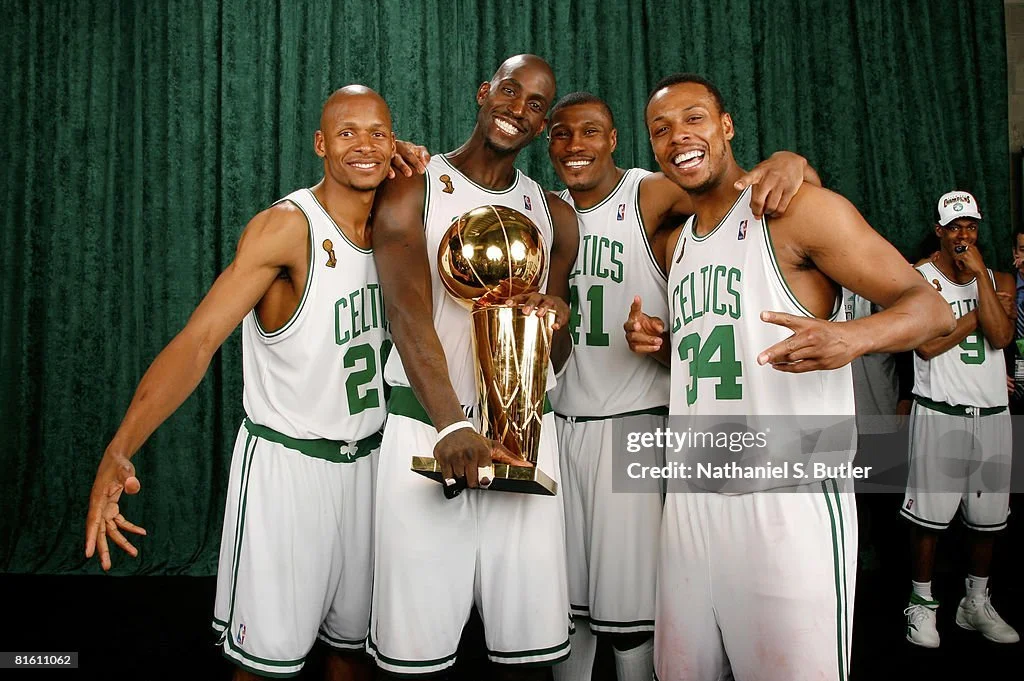
Ray Allen, Kevin Garnett, James Posey and Paul Pierce with the Larry O'Brien NBA championship trophy in June 2008 // Getty Images // Nathaniel S. Butler
As Kevin Garnett would say during the Boston Celtics’ run to the 2007-08 NBA championship, the team’s first since 1986, “Ubuntu on three.” Doc Rivers, then the Celtics coach, would say the philosophy meant, “I can’t be all I can be unless you are all you can be. I can never be threatened by you because you’re good, because the better you are, the better I am.”
In her ceremony remarks, Coventry said:
“In Africa, where I’m from, we have a word: ubuntu. It means, I am because we are. That we can only rise by lifting others. That our strength comes from caring for each other.
“No matter where you come from, we all know this spirit – it lives and breathes in every community.
“I see this spirit most clearly at the Olympic Games. Here, athletes from every corner of our world compete fiercely – but also respect, support and inspire one another. They remind us that we are all connected, that our strength comes from how we treat each other, and that the best of humanity is found in courage, compassion and kindness.
“So let these Games be a celebration of what unites us – of everything that makes us human.
“This is the magic of the Olympic Games: inspiring us all to be the best that we can be – together.”
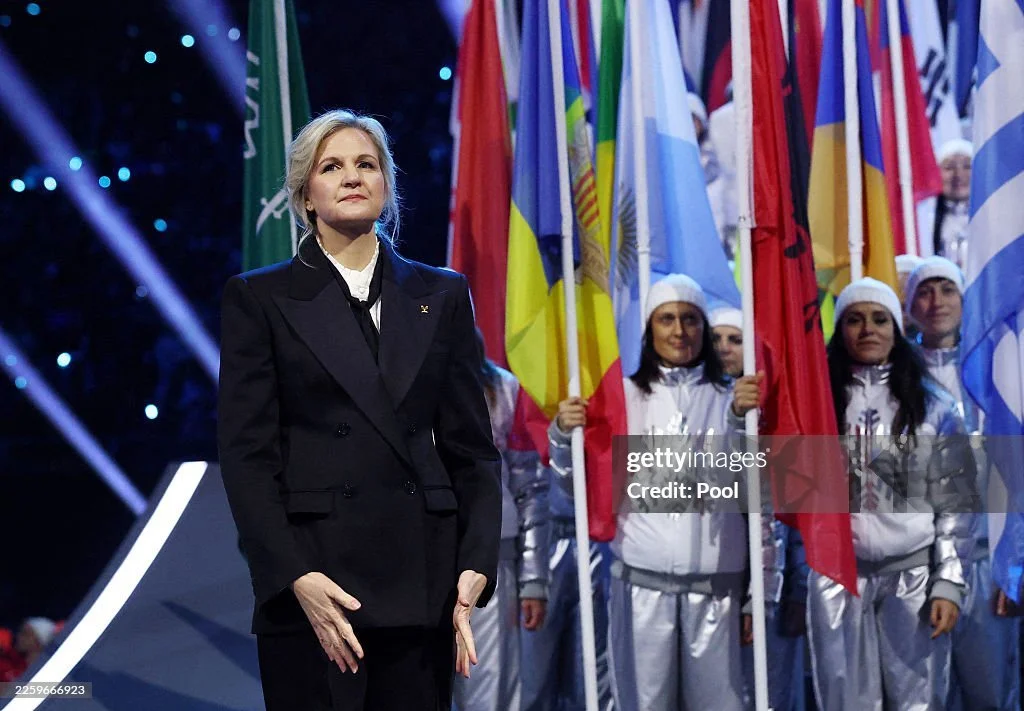
IOC president Kirsty Coventry at Friday’s opening ceremony // Getty Images
Both Coventry and Theron are white. Both came of age in southern Africa amid tectonic change — Mandela, Archbishop Desmond Tutu and ubuntu defining a generation amid the campaign for post-apartheid reconciliation.
Coventry is 42. She was born three years after the era of white-minority rule ended, Rhodesia becoming Zimbabwe.
Theron is 50. The apartheid era in South Africa ended formally in 1994, when Theron was 19.
Tutu, who chaired South Africa’s Truth and Reconciliation Commission, would frequently contrast ubuntu with a, if not the, core expression of Western individualism from the 17th-century philosopher René Descartes: “I think, therefore I am.”
Tutu said ubuntu offers the very different worldview that Coventry reiterated, “I am because we are,” and that we all learn to be human through others, especially by belonging and sharing.
Among the many famed quotes attributed to Mandela, this:
“In Africa, there is a concept known as ubuntu — the profound sense that we are human only through the humanity of others; that if we are to accomplish anything in this world it will in equal measure be due to the work and achievement of others.”
This is what Theron said Friday night, quoting Mandela from the 2004 Global Convention on Peace and Non-Violence in New Delhi:
“Peace is not just the absence of conflict. Peace is the creation of an environment where all can flourish regardless of race, color, creed, religion, gender, class, caste or any other social markers of indifference.”
She added, “Let these Games be more than just sport. Let them be a reminder of our common humanity, our respect for one another and a resounding call for peace, everywhere.”
The American skier Mikaela Shiffrin, in a news conference Saturday, referred to Theron’s remarks and said:
“For me, as it relates to the Olympics, I’m really hoping to show up and represent my own values. Values of inclusivity, values of diversity and kindness and sharing. Tenacity, work ethic, showing up with my team every single day …
“My greatest hope for this OG from a broader perspective is that it is a beautiful show of cooperation and of competition.”
Through the IOC presidential race last winter and since, Coventry has frequently invoked ubuntu. Her campaign manifesto, for instance, declared: “My mission to drive empowerment, strengthen engagement and ensure we remain relevant is guided by the ubuntu philosophy: ‘I am because we are.’”
The ceremony, however, watched by millions if not billions worldwide, marked a distinct choice: the first time Coventry emphasized ubuntu for such a significant audience.
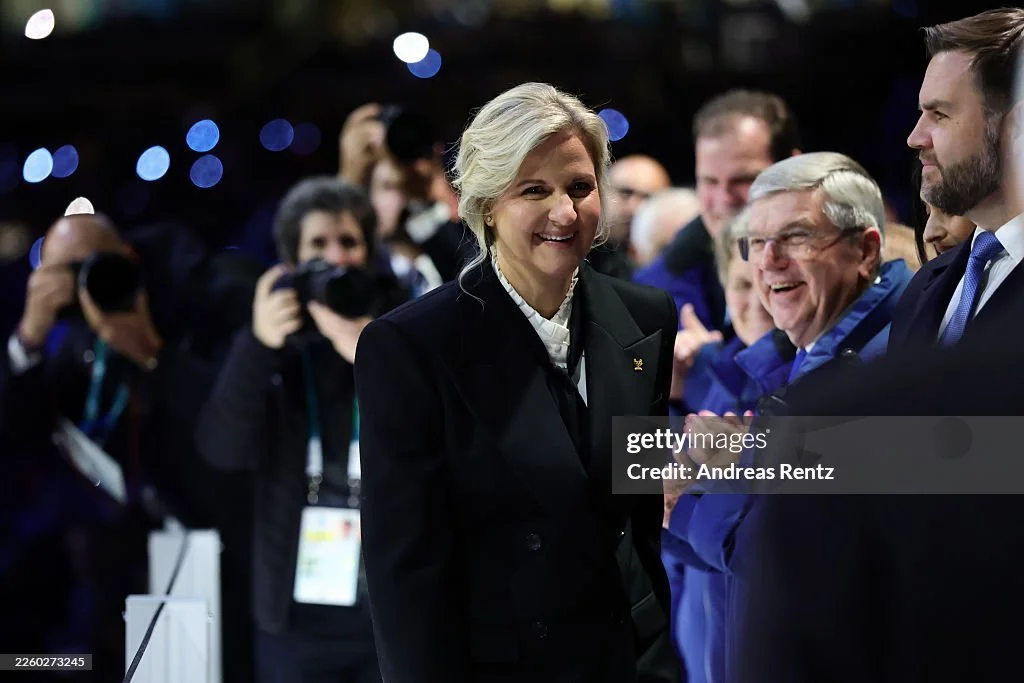
Coventry off center stage at Friday’s opening ceremony. To her left: former IOC president Thomas Bach, U.S. vice president JD Vance // Getty Images / Andreas Rentz
The prior IOC president, Thomas Bach, a German lawyer, came to be known, particularly in the later years of his 12-year tenure, as a top-down, if not unitary, executive. Consensus meant agreeing with whatever it was Bach was proposing, and it became widely believed within the Olympic universe that one dared to cross Bach — much less confronted him with, say, no — at one’s peril.
Bach’s presidency was also marked by a strong turn toward IOC involvement in global politics.
In her remarks earlier this week here to the IOC assembly, Coventry said the IOC needs to focus on what it is — a sports organization with a mission to inspire.
“Of course,” she said, “sport plays a wider role in health, inclusion, and education — and we will continue to support this. But our first responsibility is to keep the Games strong and meaningful, so that they remain a source of hope and inspiration for generations to come. That’s where our strength lies. That’s what makes us different. And that’s what the world needs from us.”
To Bach’s credit, it was abundantly clear he wanted Coventry to succeed him. Meanwhile, 12 years is a long time, and no one can say how Coventry’s management style might evolve. All the same, for the IOC, ubuntu — and with it the notion of decision rooted in consensus — would seem very different from the first half of the 2020s.
In that campaign manifesto, Coventry said, “In this increasingly connected world, our relevance and revenue growth depends on staying authentic, being consistently innovative and delivering more personalized experiences.”
Coventry’s first months have been marked, mostly, by a listening tour she has dubbed Fit for the Future. One result — the IOC spokesman, Mark Adams, said Saturday at a news conference that “protecting the female category” is “one of the key reforms she wants to bring in,” announcing a new policy likely “in the first half of this year.” No details were immediately forthcoming.
Beyond that policy, the IOC faces a wide array of challenges — financial, programmatic and more to, in her words, “make sure that we are evolving with our times.”
What kind of evolution? The Winter Games, for example, revolve around ice and snow. Is that still relevant? If you were reimagining Winter Games for our 21st century, where to start? Just to pick one possibility: Olympic 6-on-6 volleyball is played — indoors.
Are such questions all the more urgent when considering not just where but if there will be reliable snow by 2050? Does reliable snow matter when Saudi Arabia has put forth a bid (since put on hold) to stage the Asian Winter Games?
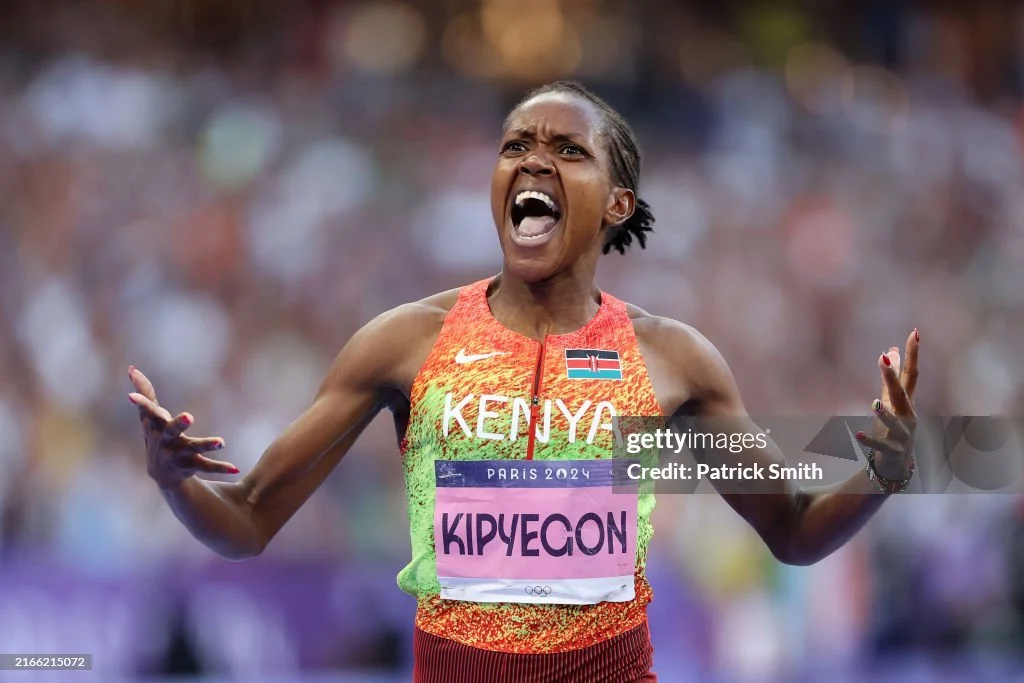
Kenya’s Faith Kipyegon winning the Paris 2024 women’s 1500 meters in an Olympic record 3:51.29 // Getty Images / Patrick Smith
To continue: Winter Games television ratings are typically well below Summer numbers. Why? Is it for the most obvious of reasons? The Summer Games draw athletes from all 206 national Olympic committees. Here, 92. India, a nation of 1.4 billion, sent two athletes to Milano — two. So did Kenya — two.
Over the years, Kenya has won 124 Olympic medals. It won 11 in Paris, Kenyan women dominating longer runs on the track, golds for Faith Kipyegon (1500 meters) and Beatrice Chebet (5k, 10k). Historic Winter Games Kenya medals count: zero.
If you were an IOC president from southern Africa, what would you make of those numbers?
And these: Eritrea here, one athlete. Ethiopia, Uganda — not here, zero.
For the record: Zimbabwe did not send a team to the 2026 Winter Games.
Coventry has promised “uncomfortable” conversations. How uncomfortable? How can — how will — ubuntu jibe with uncomfortable?
Back to the new president’s speech at the IOC assembly.
“The challenges ahead are real,” Coventry told the 100 or so IOC members. “But so is our collective strength. When we listen to one another, when we act with empathy and purpose, there is no challenge we cannot face. This is the Olympic spirit that defines us. That is what will keep our movement strong, united and,” she summed up, “truly fit for the future.”