
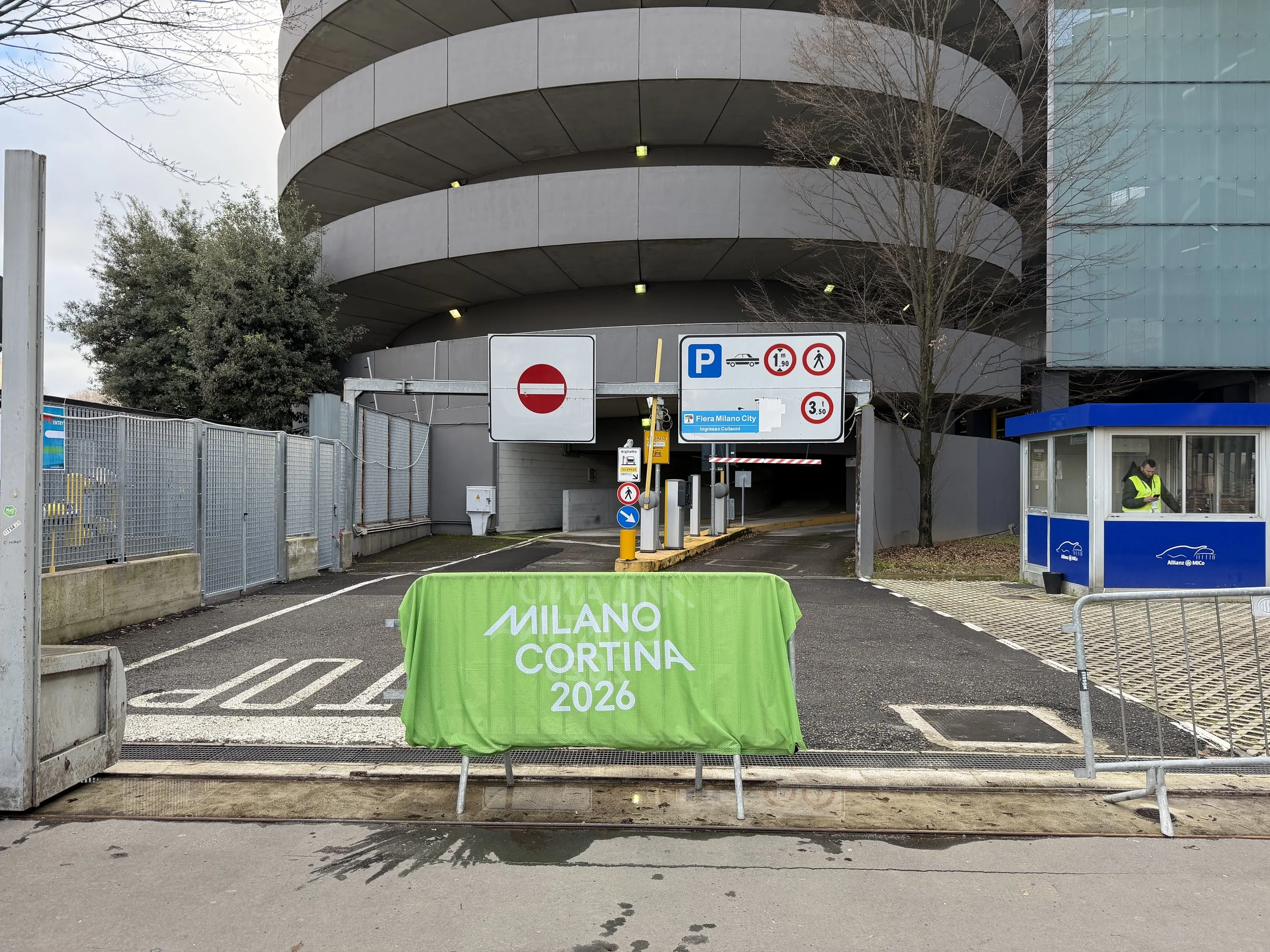
MILAN — For those who know about California, and those who don’t: Oakland is east of San Francisco, across the Bay Bridge. The author Gertrude Stein grew up in Oakland. She would later write, famously, about her hometown: there is no there there.
In Milan, as it relates to the 2026 Winter Games: there is no here here.
These Games have, like, zero buzz.
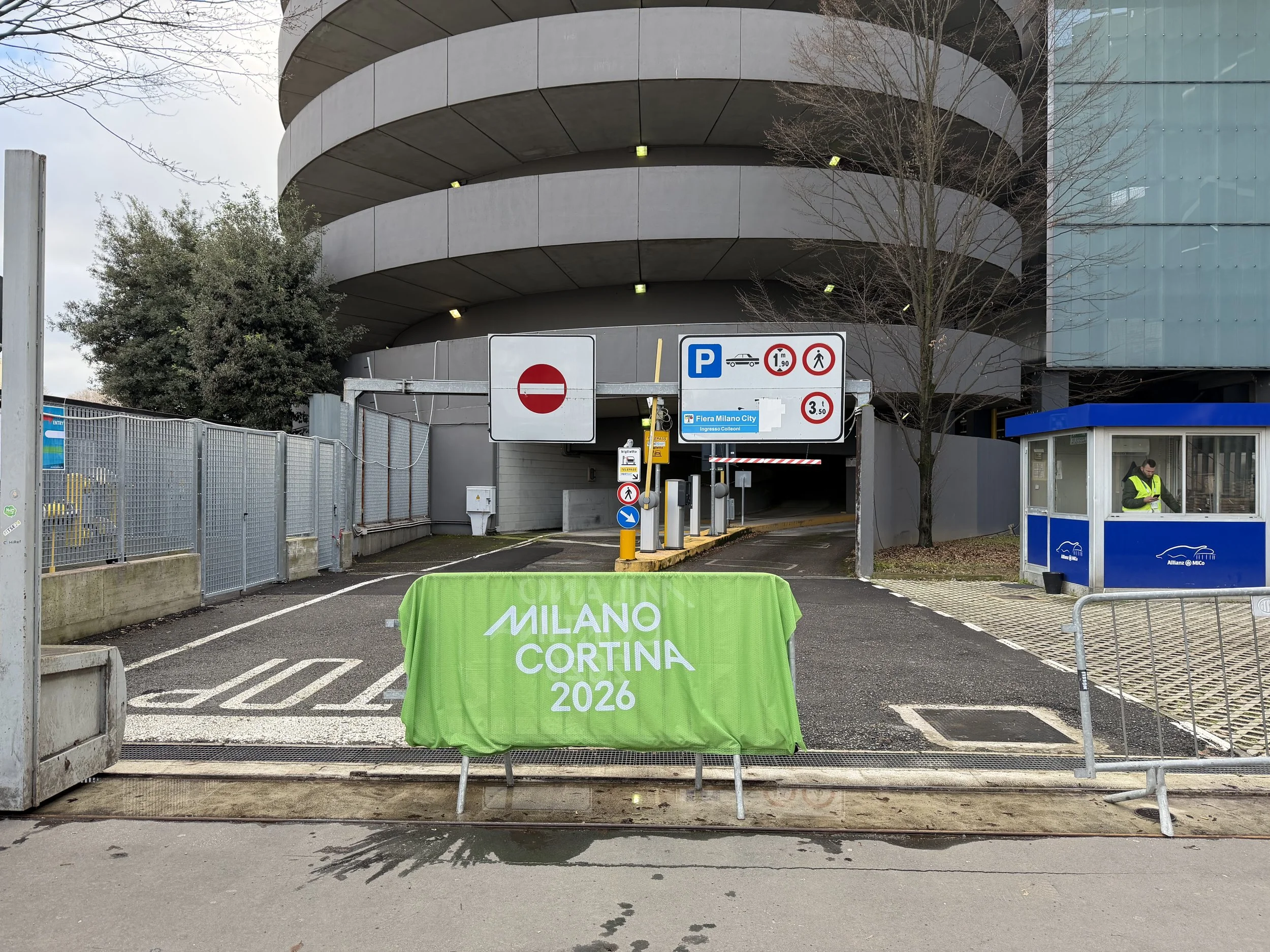
Riveting excitement on the streets of Milan
If Phil Collins was singing about the 2026 Winter Games, and amid that dramatic drum bang the question was put to him, can you feel it coming in the air tonight — the answer would be a hard no.
Oh, lord, why?
Because, to keep with the riff, the athletes of these Games, most of them, have been waiting for this moment all their lives. The Olympics are supposed to be transformative — for them and, when things are going right, for the city and country hosting them.
These 2026 Winter Games, now in Day Six of 17, offer a potent lesson about the Olympics, in particular the Winter Games, as the International Olympic Committee confronts financial realities, sustainability issues and the blunt fact that there simply aren’t that many cities in our world who can — or want to — host the Winter Olympics.
It’s also, point blank, about the IOC.
These Games feel like what happens when you settle. When something is supposed to be a big deal but turns out just not what it should — exemplified by the Olympic medals that keep breaking.
This is not to say that, for instance, the Norwegian cross-country skier Johannes Høsflot Klæbo isn’t a big deal. Six-mile pace, uphill, on skis, in the snow? Come on.
But where is the buzz in and around town marveling at this guy, who might win six gold medals? On social media, sure. But in town? Or widespread celebration of the winning Italian mixed short-track speed skating team featuring Arianna Fontana, in her sixth Winter Games, now with a 12th Olympic medal?
The biggest news out of RAI, the Italian state broadcaster, is that staff have called a one-day byline strike for Friday to protest on-air mistakes at last Friday’s opening ceremony from the head of the RAI’s sports division.
The biggest takeaway of these Games is easy — who didn’t see this coming? This is Torino 2006 déjà vu all over again.
The common denominator among every Games is easy, too.
The IOC is the franchisor of the Olympic Games. Who puts more thought into its next franchise — the IOC or Chick-fil-A? When you walk into a Chick-fil-A, you can be guaranteed the chicken is going to be the same as anywhere else. How come the Games aren’t that consistent?
This, all this, is on — the IOC.
The IOC is the constant variable in every messed-up equation. It all flows from understanding that.
To begin, the fundamental tension about any edition of the Olympics is that it is, on one hand, a television show, and on the other, an event purportedly rooted to a place and time during which the IOC seeks to advance its key mission, bringing the young people of the world together in service of — maybe — building peace.
When it comes to the Summer Games, the IOC has had no lack of interest from cities and countries all over — the next Summer Games in Los Angeles in 2028, in Brisbane in 2032 and a crowd lining up to vie for 2036 and 2040.
The Winter Games have been a considerably harder sell, and that’s why we find ourselves here in Milan.
It’s also why the 2030 project, in the French Alps, now just four years away, is struggling to get its act together — even after the considered success of Paris in 2024.
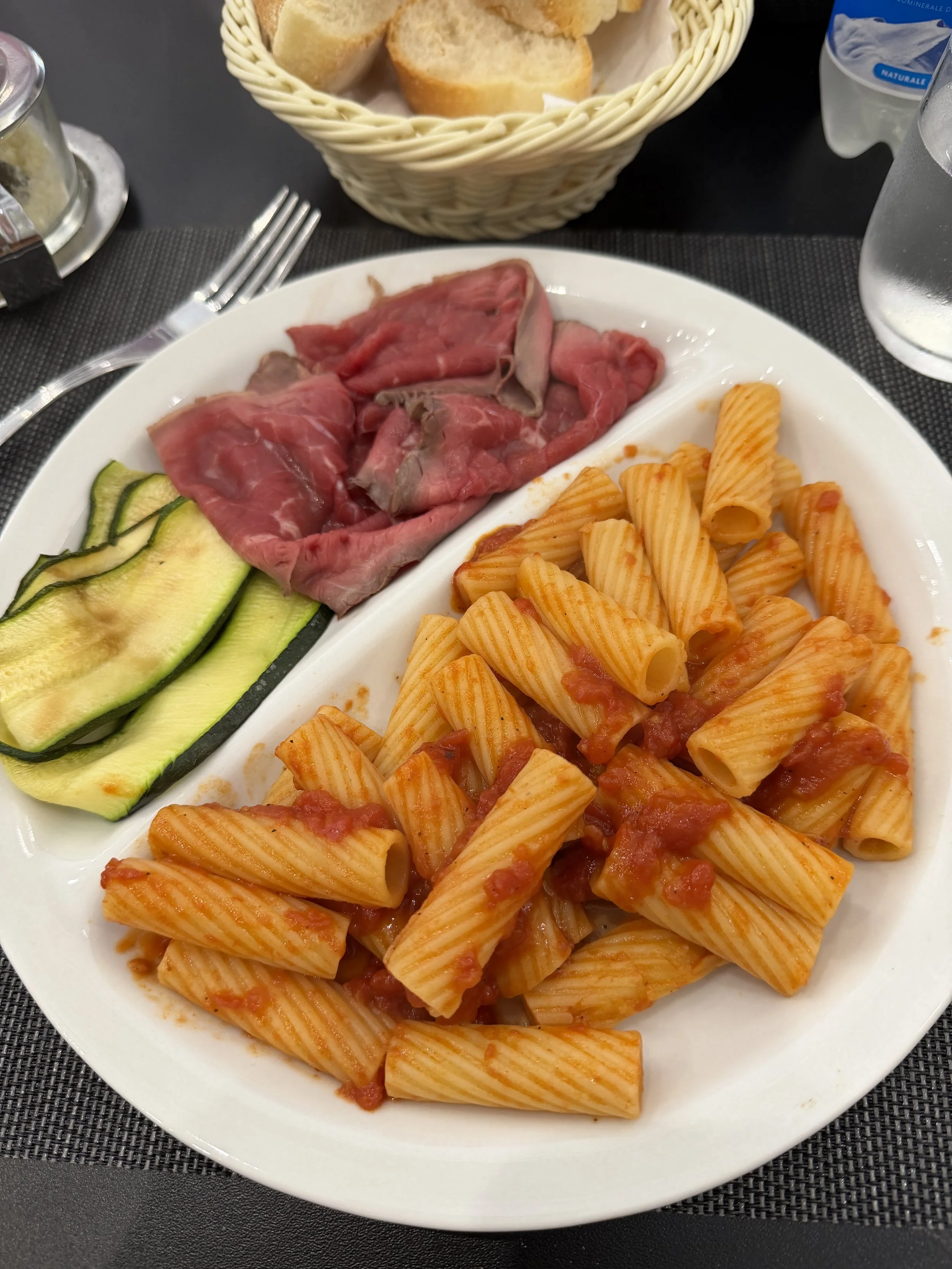
We can all agree: the food in Italy is great
These Games were awarded to Milan in 2019. The IOC had only two choices: Milan and Stockholm.
One might ask whether the IOC kept Stockholm in the race just to assure there was a choice.
Stockholm had a great bid. But the food in Milan is Italian, the shopping is w-a-y better and thus a slam-dunk majority of IOC members made the calculated decision that they would rather eat Italian, drink Italian vino and shop at the iconic Galleria Vittorio Emanuele II than spend three weeks in Sweden.
From that perspective, the decision is entirely defensible.
It also came with certain hard realities.
The ice sports would be centered in Milan. The snow sports, however, would have to be farmed out over hundreds of miles across northern Italy — men’s alpine in Bormio, women’s alpine (and sliding sports) in Cortina d’Ampezzo, cross-country ski in Tesero, snowboard and freestyle ski in Livigno, and so on.
The opening ceremonies last Friday sought to turn this into a positive. For instance, Erin Jackson led the American delegation into the iconic San Siro stadium in Milan while bobsledder Frank del Duca did the same for a smaller chunk of the U.S. team in Cortina.
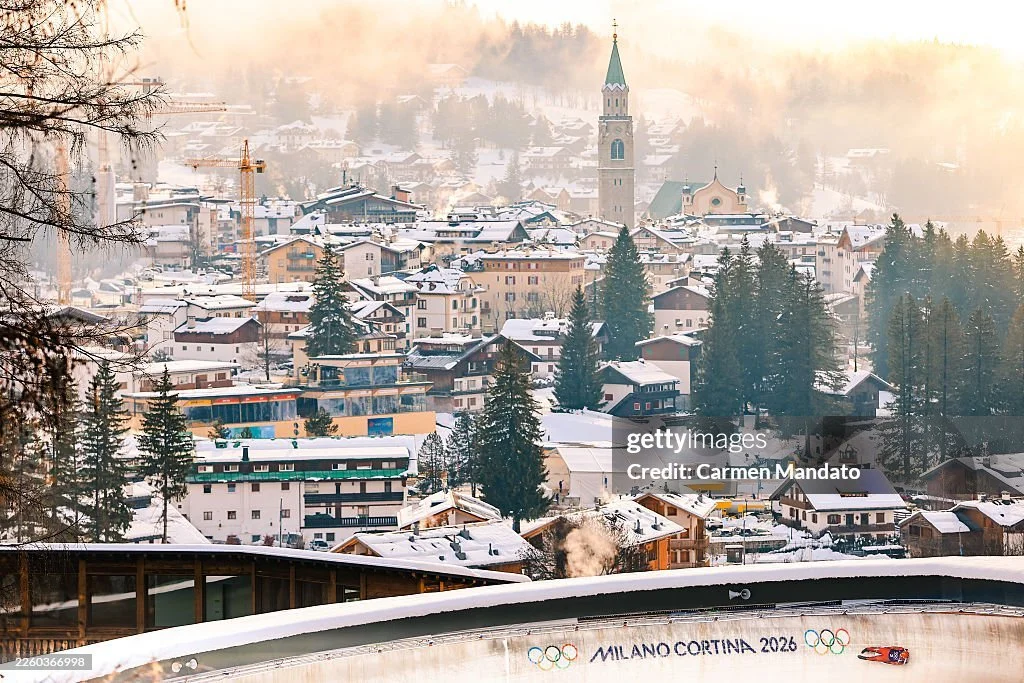
It’s pretty in Cortina // Getty Images / Carmen Mandato
Cortina, where the IOC staged the 1956 Winter Games, is a dream — a postcard-picture village way up in the Dolomites.
And there’s no question such a beautiful locale lends itself — like Paris — to being pretty on television.
Is that enough?
The athletes are supposed to be the focal point of this Olympic play. But when you split the athletes of “the world” — the 90-something delegations at a Winter Games in a world that’s made up of 206 national Olympic committees — into four or more different parts, as the geography of these Games has done, what you end up with is a rando collection of simultaneous world championships.
Without the feel, the buzz, of a transformative Games.
Complicated in this time and place by regional and national politics, and certain financial difficulties.
As Giovanni Malago, the head of the organizing committee, said at the San Siro opening ceremony:
“Tonight, this unique celebration means so much to me because I know how hard we have all struggled to make this happen.
“To be honest, the road has not been without challenges …”
So many challenges that they bit Malago, who, in the days before the Games, ran for a slot on the IOC’s policy-making executive board. A “pioneering” Games, as Malago also called it? If so, the organizing committee’s No. 1 would seem a shoo-in for election. Malago lost to Neven Ilic of Chile.
So many challenges that one logically asks, what has the IOC — which purportedly has supervisory duty — been doing for seven years at the recurring meetings of the so-called coordination commission? PowerPoint decks? Nice hotels? Shopping? Dinners?
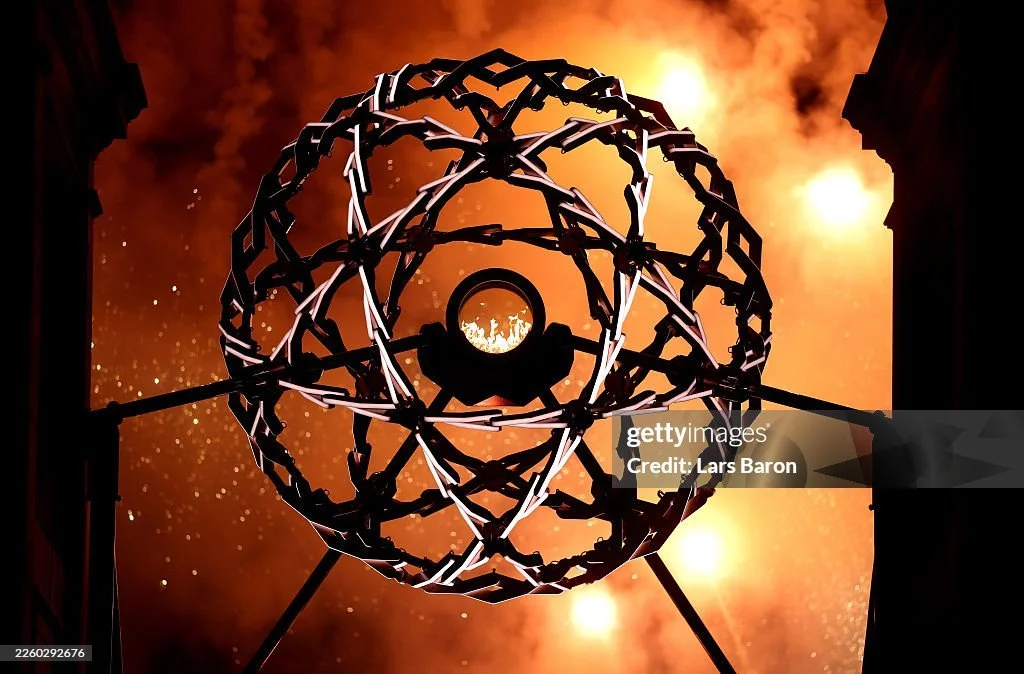
Tbe 2026 cauldron — it says … what? // /Getty Images / Lars Baron
That San Siro opening ceremony reveled in all things Italian. Andrea Bocelli! It signaled the potential of a Games that for 17 days would take center stage. Was that true, or just for show?
The cauldron — in branding, everything matters. What does that cauldron say?
Meantime, it was 54 degrees (12 Celsius) at 3 p.m Wednesday in Milan. That’s not winter.
Maybe it’s ideal weather for shopping on the most expensive luxury street in all the world, the Via Monte Napoleone, the core of Milan’s fashion district. But that just proves the point — the Games as a sideshow.
This can’t be like this anymore.
It’s assuredly the case many good people at the local organizing committee are doing their best. But it’s also the case that this project has been cash-strapped since the get-go, and everyone knew it was and would be. Who is that on? This was entirely foreseeable.
The verb the IOC uses to describe a Games is “celebrate.” As in, celebrating the 2026 Winter Games.
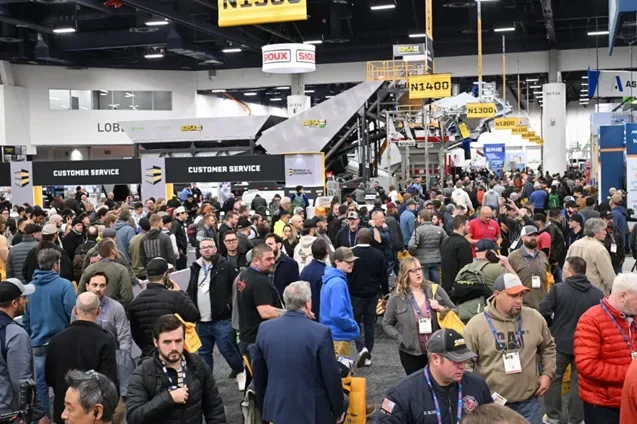
Action at the World of Concrete show in Vegas // PR Newswire
What this is more like is what happened a couple of weeks ago in Las Vegas. A convention called World of Concrete (for real) came to town. The food and drink options in Vegas are world-class. There were behind-scenes parties. Then everyone went back home.
Except what’s missing here are the throngs.
The other day — for once, it was not drizzling — brought a three-mile walk from the Galleria to the precinct where the Main Press Center is located. Along one of the city’s main drags, Via Vincenzo Monti, it looked like any other day ending in -y. Nothing to scream, the Olympics are here!
Compare — in Sydney in 2000, the big stadium was 45 minutes to the west on the metro but, back in town, seemingly every shop and store had Games buy-in, and when the Australian women’s water polo team beat the United States for gold, the place erupted.
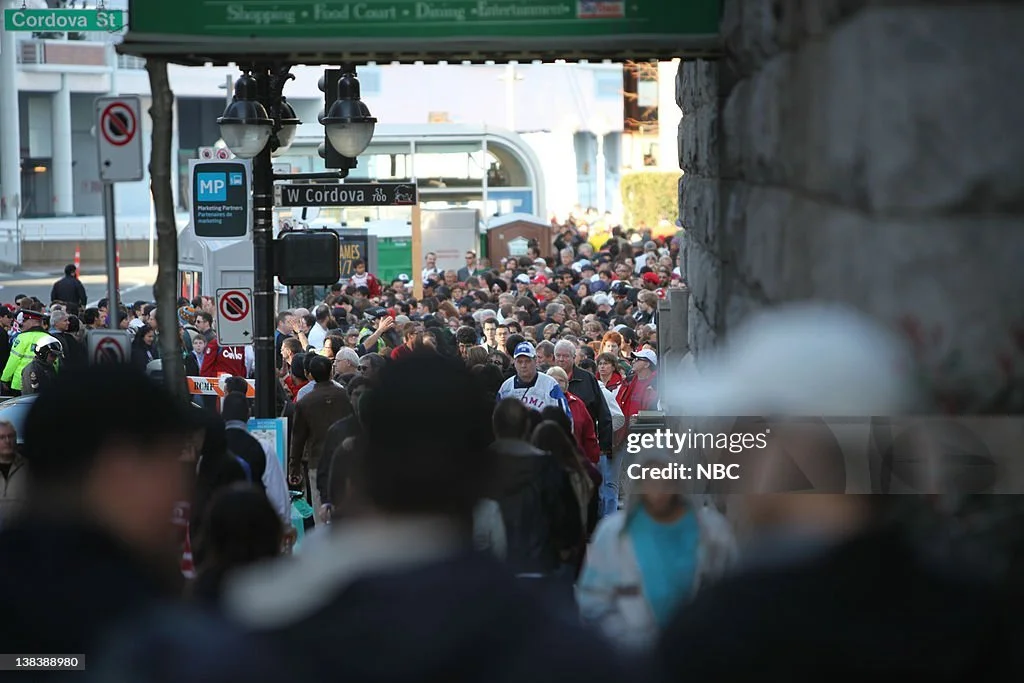
What it was like in downtown Vancouver at the 2010 Winter Games // Getty Images / NBC
If the argument is the Summer Games are different, and the focus needs to be on Winter, OK:
— Every night in downtown Vancouver in 2010 was a party, and the comparison with Milan is apt because the ski events at those Games were at least 90 minutes by car north in Whistler
— Same in Salt Lake City in 2002, with a medals plaza featuring a concert every night and thousands scrambling to get one of those berets to be part of something special.
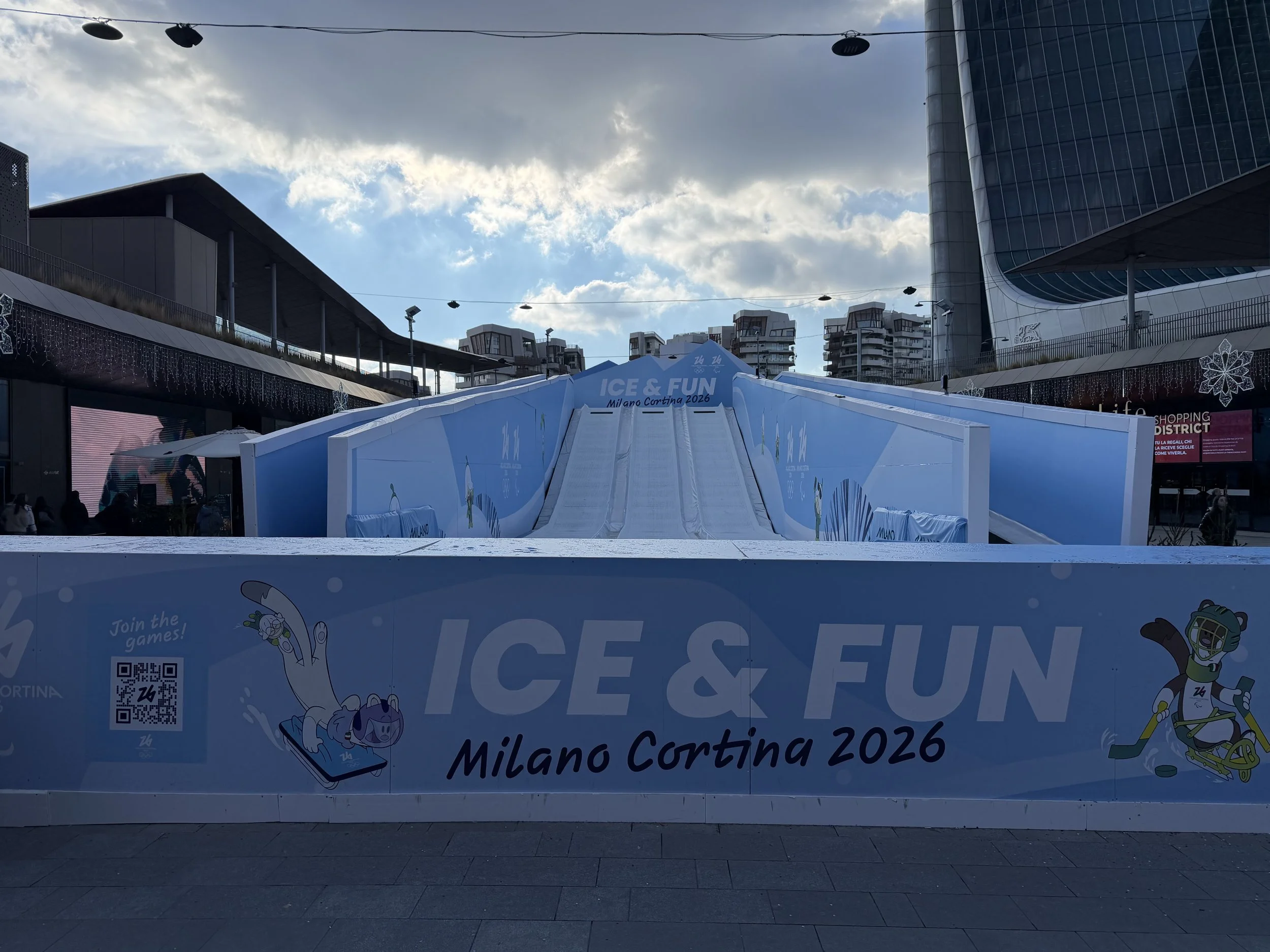
Big fun at the mall
That Milano press center is at one corner of a complex called CityLife, anchored by architecturally fascinating office towers around a mall of the sort that would be familiar to anyone in Wichita, Dayton or Grand Rapids. (Or, for that matter, London. The food court has a Wagamama.) The towers are at the center of a park. The park is a lure for moms (very few dads) pushing strollers along with dogs out for a sniff and runners who would seem unlikely to make any Olympic team. On Wednesday afternoon, a MiCo 26 sliding zone — for kids — stood unused and, for that matter, unmanned. On Sunday, in the shadow of one of the towers, while a bored security guard watched, a group of teens — the focus group of any Olympics — was practicing a dance routine they had made up. No one was wearing any Olympic merch. Not one phone tuned to any of the streaming Olympic action.
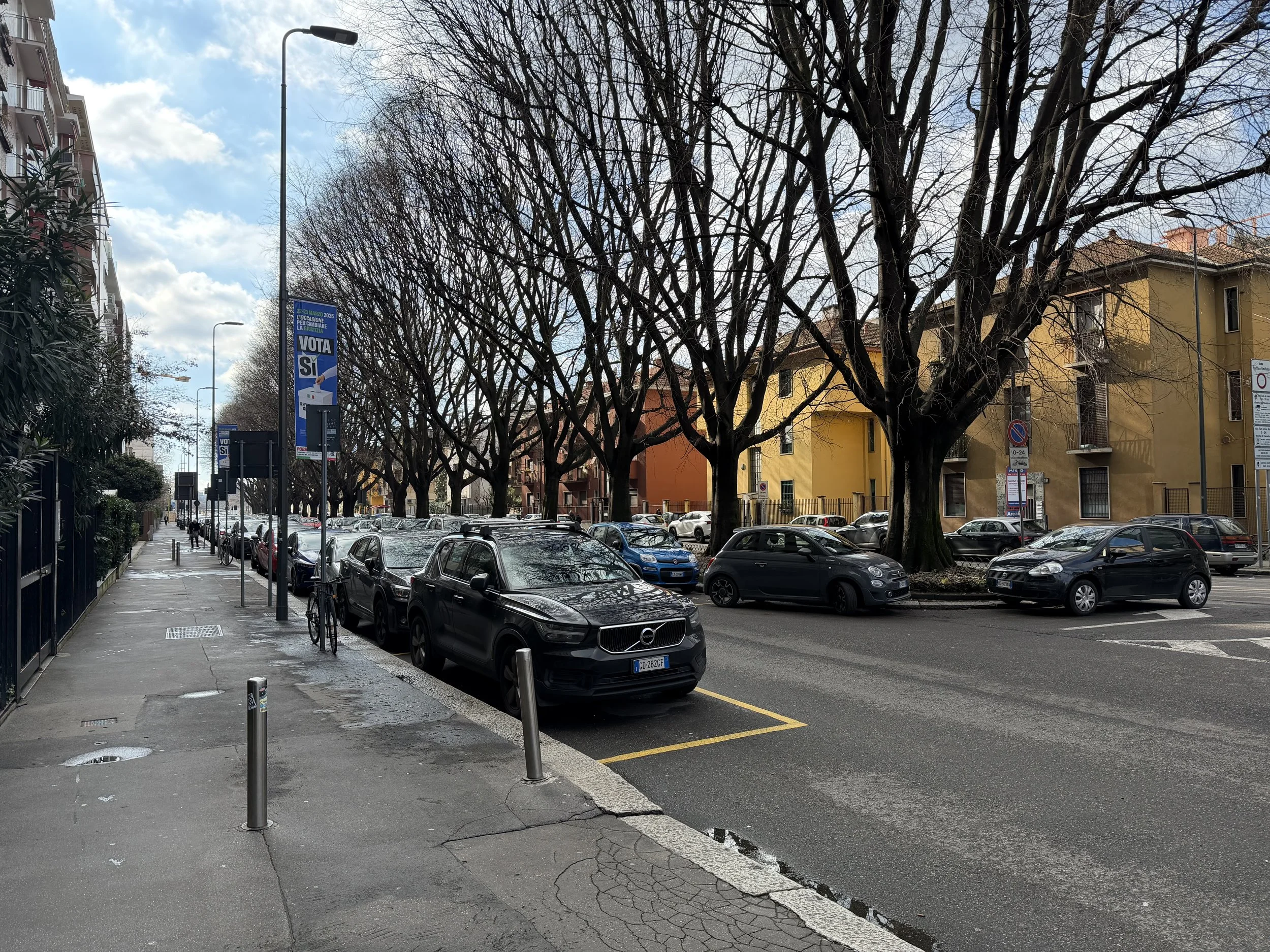
Half a block away from the International Broadcast Center — nothing to indicate the Olympics are in town
Along the street that borders the press center, Viale Lodovico Scarampo, which extends north to the broadcast center, MiCo26 banners flutter, bracketing the entrance to the Portello Metro stop.
Step even one block off that avenue, however, and nothing — just another neighborhood in Milan. Nothing to indicate anything special is going on and, for that matter, so close by.
Is it the same a few blocks away? For sure. At lunch Wednesday, a classic Italian bar maybe six blocks from the press center was jammed with locals who had the inside scoop on the 12-euro lunch special. The pasta pomodoro? Amazing. Anything about the Olympics on TV? Not a chance.
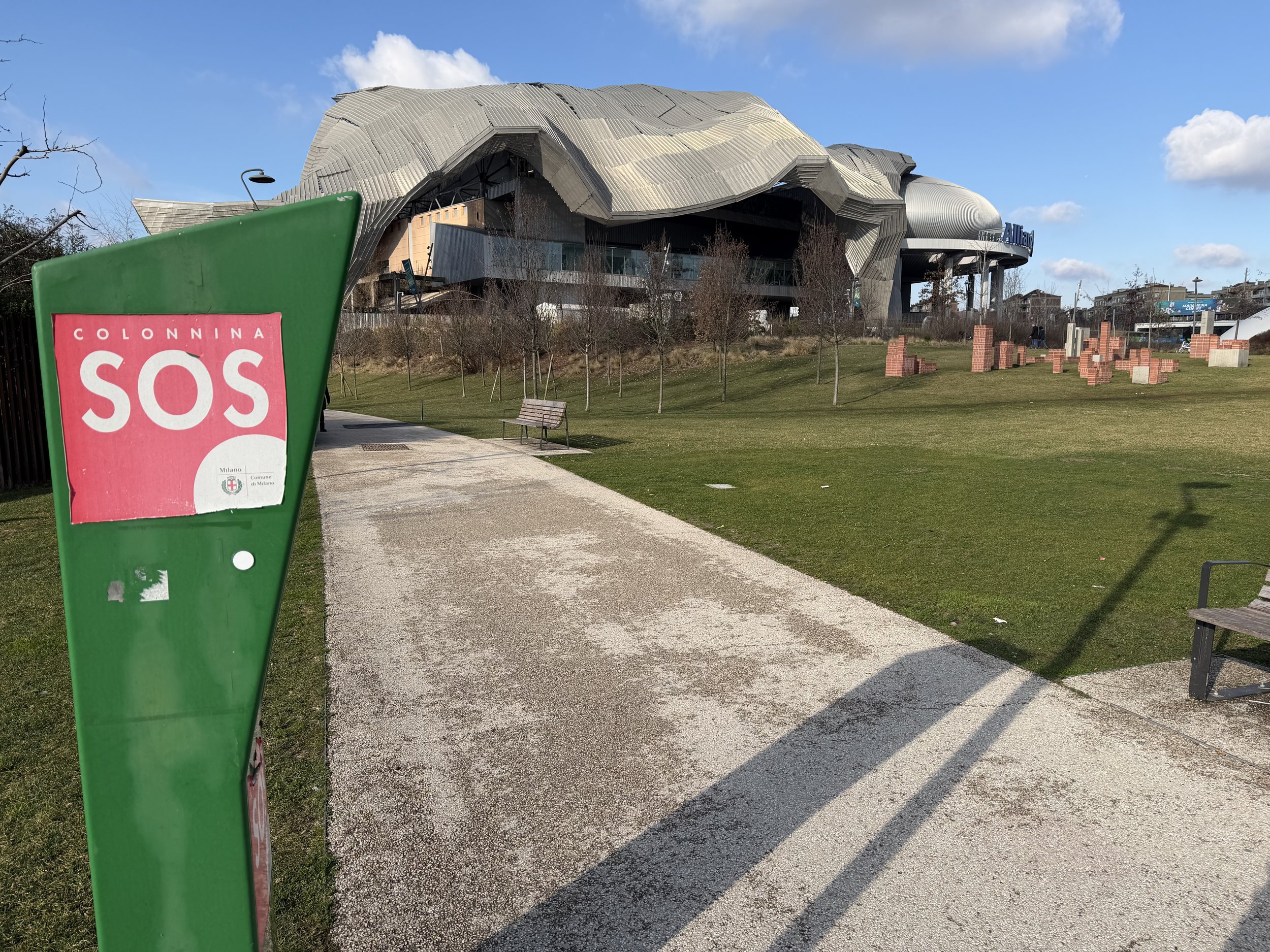
SOS! Absolutely no life outside the main media center about 3p Wednesday
The point of being at an Olympics is to feel something. Something big. To feel a part of something big — bigger than one’s self.
This is several degrees short of that. As Collins also sings, same song:
I was there and I saw what you did
I saw it with my own two eyes
If you know the song, you know how the rest of that verse goes. It’s unclear if this is all a “pack of lies.” But there’s no here here. An Olympic Games is not supposed to be Oakland. The IOC must do — must be — better.