
MILAN — The great thing about sports and in particular the Winter Olympics is that predictions mean, literally, nothing.
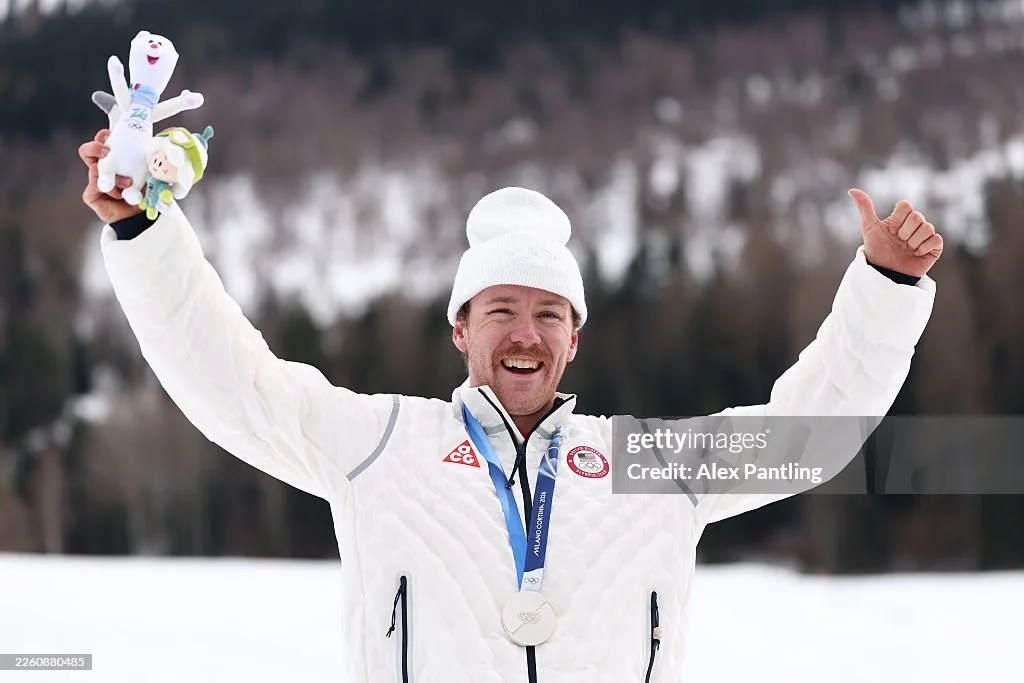
In a medal almost no one saw coming, Ben Ogden took silver Tuesday in what in cross-country skiing is called the sprint — the first American medal in men’s xc ski since Bill Koch in 1976.
Fifty years of nothing and, in just over three minutes, bang.
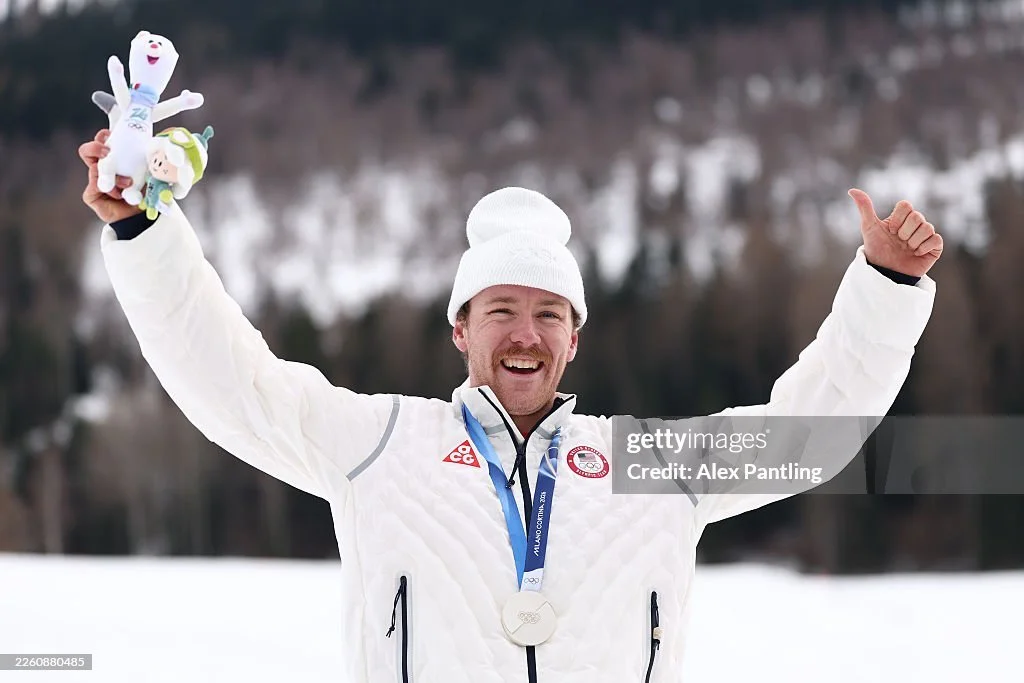
Ben Ogden, winner of the first U.S. men’s medal in cross-country skiing since 1976 // Getty Images / Alex Pantling
“It’s a dream, you know?” Ogden, 25, who grew up in Landgrove, Vermont (2020 U.S. Census: population 177), said afterward.
Here is the part of the race that for sure played to form: Johannes Høsflot Klæbo of Norway took gold, in 3 minutes, 39.74 seconds.
Ogden finished 87-hundredths back.
Another Norwegian, Oskar Opstad Vike, took third, a full 6.81 seconds behind.
The race marked Klæbo’s seventh Olympic gold across three Games — and the third straight Games, 2018 in PyeongChang and 2022 in Beijing, he won the sprint.
The sprint winner at the 2019, 2021, 2023 and 2025 world championships? Klæbo.
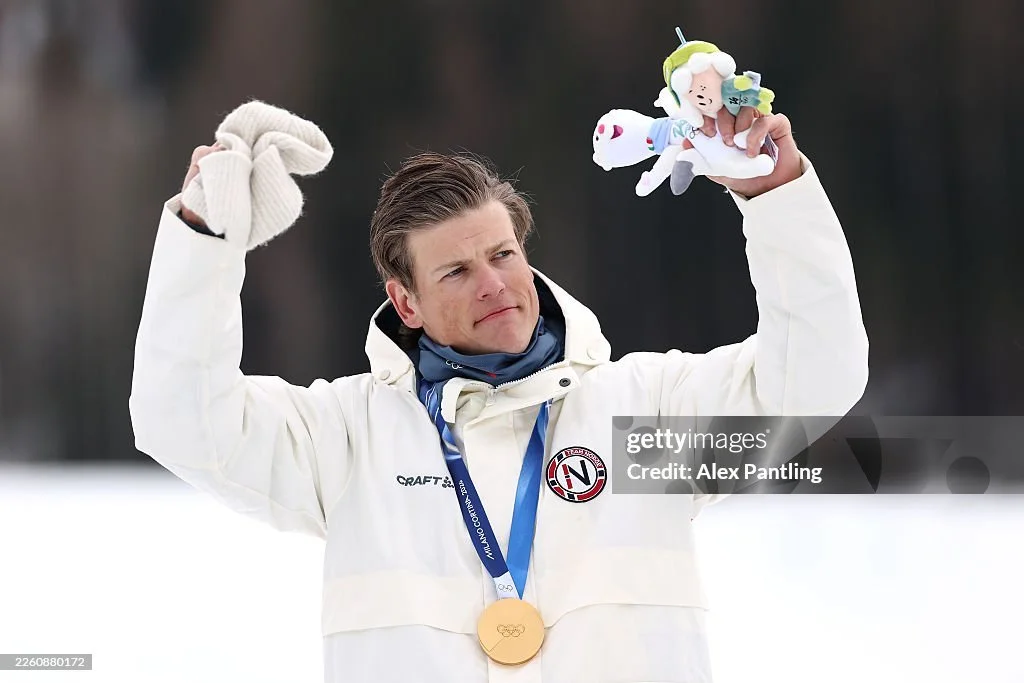
Johannes Høsflot Klæbo with his second gold medal of the Milano-Cortina 2026 Games // Getty Images / Alex Pantling
Some cross-country basics:
There are two kinds of cross-country races, classic and freestyle.
Free looks like the racers are skating, skis sliding side to side in something of a V-shape. Racers loop around on a surface that has been groomed to look, more or less, like a deck. Skate skis are shorter and waxed tip to tail.
A classic race is run on parallel tracks. The racers kick and glide. Skis are longer, with a waxed or scaled zone in the middle that helps with traction.
Free is typically faster.
Major championship races alternate between classic and free. The 2022 Beijing men’s sprint? Free.
The Olympic sprint Tuesday? Classic.
Tuesday’s Olympic sprint distance was 1.5 kilometers, just under a mile.
Koch’s 1976 medal, for comparison, came in a 30-kilometer race. Like Ogden, he is from Vermont. Koch has long been known for an aversion to publicity. Ogden, and his mustache, are a publicist’s dream. He is fully on Instagram — if it’s your thing you can watch him ski shirtless in a video taken at a May 2025 camp in Bend, Oregon — and has put his mechanical engineering degree from the University of Vermont to work in breaking apart a 1973 Land Rover. He also likes to knit. “Working on some mittens right now,” he said Tuesday. “I did a sweater earlier. It’s a great way to, just, relax.”
Since 2018, U.S. women have won three cross-country medals — Jesse Diggins with two individual medals in 2022 and, with Kikkan Randall, the team sprint in 2018.
Diggins, who fell in Saturday’s women’s skiathlon (mass start, classic and free in the same race) and told NBC it “really hurts,” didn’t get out of the quarterfinals Tuesday in the women’s sprint, which saw Linn Svahn of Sweden take first, Jonna Sundling of Sweden second and Maja Dalquist of Sweden third.
This is how it typically goes in cross-country skiing: Sweden, Norway, Finland, you get the idea.
In the 2022-23 season, Ogden won the green bib that signifies the fastest under-23 racer. In February 2024, Gus Schumacher, who is also now 25 and who grew up in Alaska, won a 10k race in Minnesota, the first American to win a World Cup distance race since Koch, in 1983.
For the American men, the Olympics have been the barrier. Not to say 1976 was a long time ago but Gerald Ford was president and Dorothy Hamill won women’s figure skating gold at the Games in Innsbruck, Austria. Dorothy Hamill turns 70 in July.
In 2022 in Beijing, Ogden finished 12th in the sprint. The 2025 worlds sprint, in Trondheim, Norway, again 12th (you guessed it: free).
Not to say confidence in an American medal was dim but betting markets, assessing the race Tuesday at the course in Tesero, northeast of Milan, just shy of 3,000 feet up high in the Dolomites, put Ogden at +6500 to win.
Odds with a plus sign mean you’re betting on an underdog. Translation of +6500: big underdog. (A $100 bet would win $6500.) The implied probability of winning: 1.52%.
Klæbo was -750 to win. A minus sign means you’re betting a favorite. What -750 means is that to win $100, you’d have to bet $750. The implied probability of a win: 88.2%.
The way the sprint race day goes is — all this across several hours — qualification (top 30 advance), quarterfinals (five groups of six), semifinals (two groups of six) and, finally, finals (again, six).
Ogden ran second (behind who else) in the qualification; won his quarterfinal; then, in the semis, got through to the finals as what’s literally called a “lucky loser” — the top two athletes in each of the two semis, along with the fastest two overall, moving on.
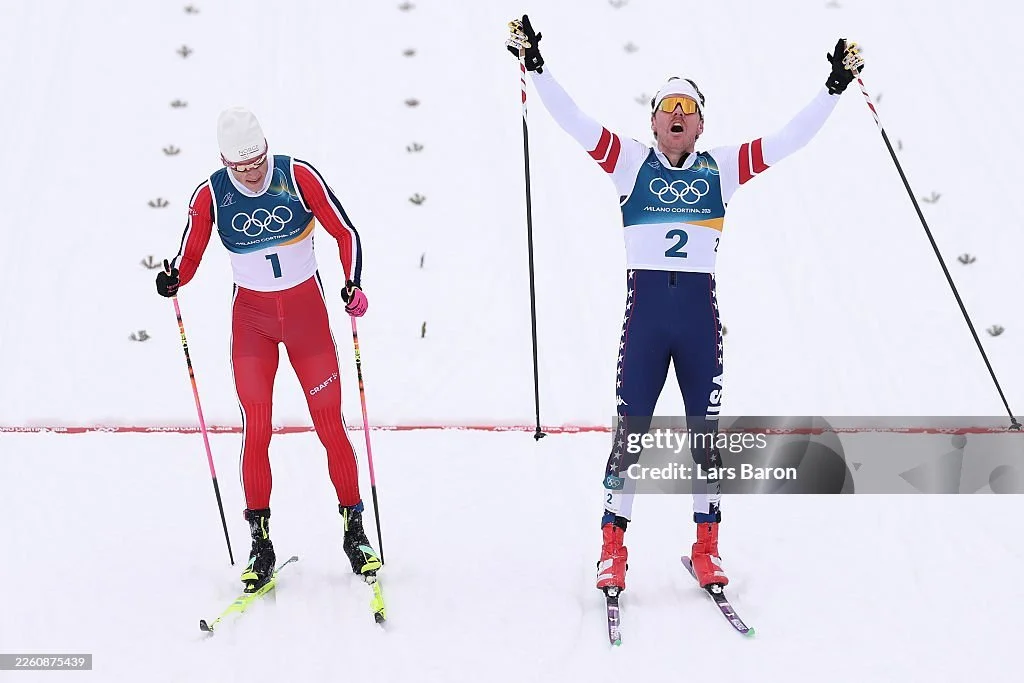
Klæbo and Ogden at the finish line // Getty Images / Lars Baron
What that meant: Ogden had finished third in his semifinal, behind (OK, him) and Finland’s Lauri Vuorinen — a mere four-hundredths behind Vuorinen — but still made the final.
In the final, Vuorinen took fourth.
After the final, Klæbo said, “We know that in sprint, over the past years, there’s one thing that matters and that is standing at the top. And that makes it even better when you actually achieve that goal.”
Mr. 1.52% Probability said, “It’s an unbelievable, unbelievable dream come true. Everybody who races dreams of being on the Olympic podium, and I think it’s the ultimate goal, and this year I dared to set my expectations on an Olympic medal. Every day in training, I thought about how I could get better and be the best version of myself on this course.
“You know, I’ve had good days and bad days on this course, but I’m thrilled today ended up being a good day.”
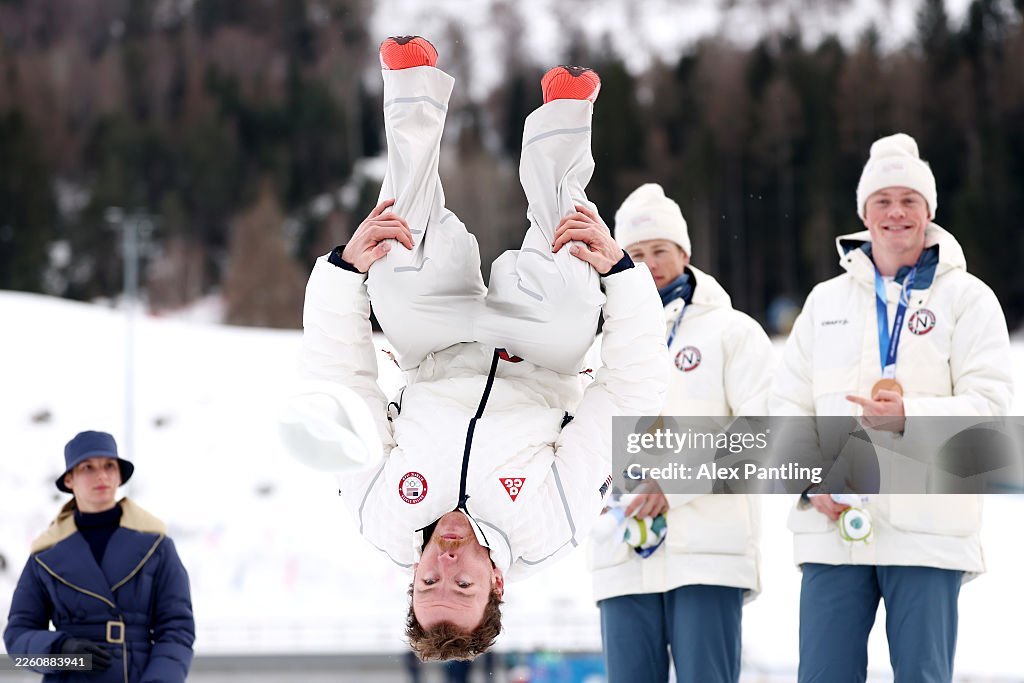
Ogden throwing a backflip at the medals stand // Getty Images / Alex Pantling
So thrilled that on the medals stand, he executed a backflip.
“I used to do that in high school on podiums,” he said. “I told myself, if I ever get on an Olympic podium, I’ll do it. It felt a little showboat-y in the moment. But sometimes in life you just have to satisfy your 15-year-old self. I accomplished that just now. There is that.”
When you win the Super Bowl, you go to Disneyland. When you break a 50-year U.S. medal drought?
“It will not be easy to come down and try to fall asleep tonight after the thrill that today has been,” Ogden said, “so my knitting needles and project are awaiting, patiently, to help me with that.”
Classic.