
The Youth Olympic Games in Dakar, capital of Senegal, draw Friday to an end.
For those who did not know this thing was even going on, you’re far from alone.
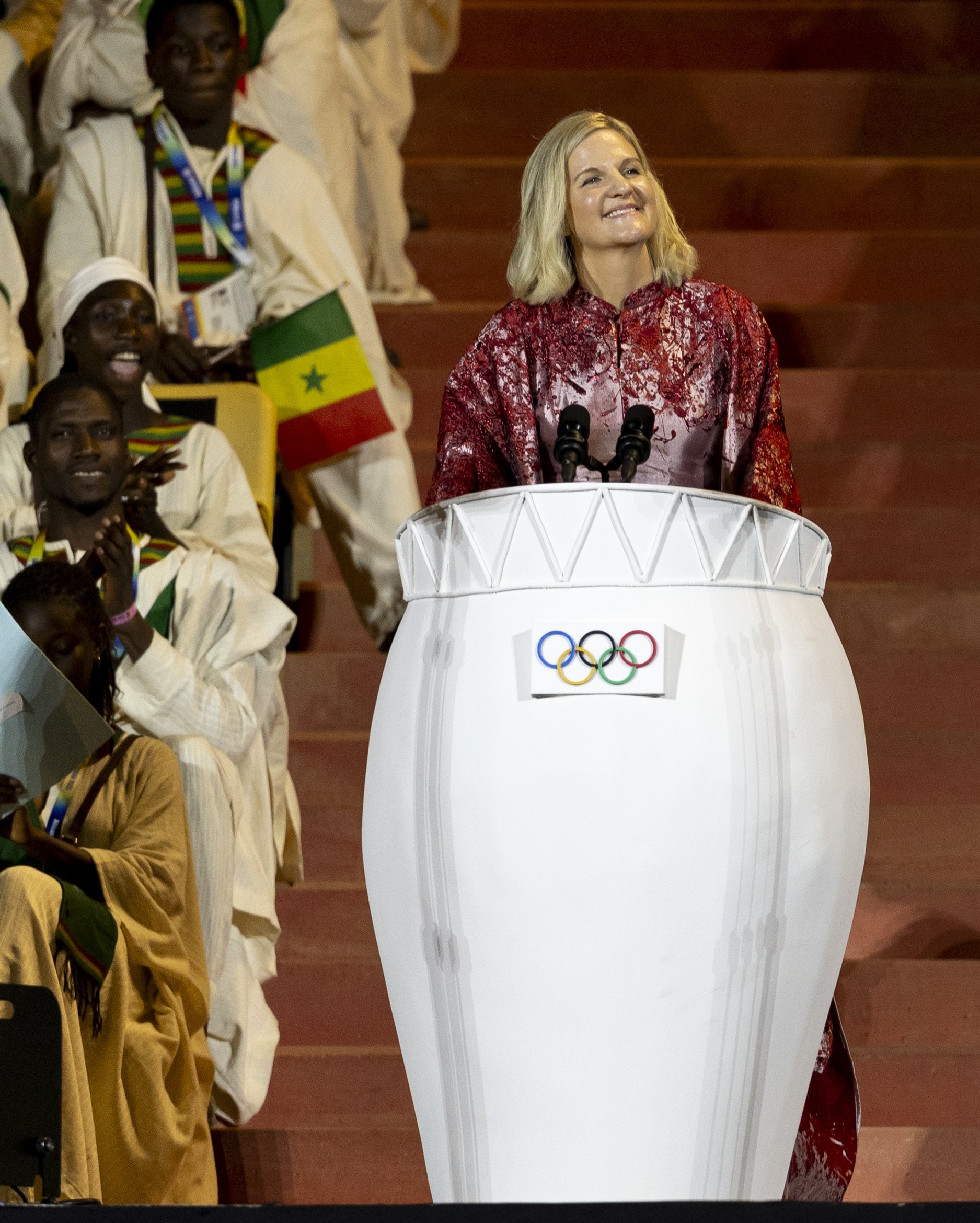
IOC president Kirsty Coventry at the Dakar 2026 opening ceremony // OIS/Simon Bruty
This edition – along with a Winter YOG scheduled for 2028, in Italy – ought to mark the end of this experiment. The Youth Games don’t do what they were envisioned, nearly 20 years ago, to do. They cost hundreds of millions of dollars that governments don’t have. They’re the farthest thing from a television draw. Sponsors are not clamoring to get onboard. Teams from around the world view them as a whatever.
The point of anything Olympic is to be relevant, and especially to young people. To matter. This exercise in Dakar simply proves what everyone already knows: there’s no compelling reason for the Youth Olympic Games to keep going.
Back in May, IOC president Kirsty Coventry made clear amid a news conference that the future of YOG, as it is widely known in Olympic jargon, was at issue.
When national Olympic committees and the international sports federations were asked if they saw the Youth Games as a pathway, the survey delivered “inconclusive results,” Coventry said, which is a nice way of saying no.
“We decided we need to pause and have a real reflection on why we’re doing the Youth Olympic Games, and we realized that across the movement it’s very disjointed,” Coventry said. “There’s not a true north star of why we’re doing the Youth Olympic Games.”
That’s because there can’t be.
The United States sent 29 teen athletes to Dakar across 12 sports. Of those, 12 were on one rugby sevens team. There were no Americans in swimming, artistic gymnastics or track and field. One of the 12 is in wushu. Wushu is not on the (big) Olympic program. In Paris in 2024, Team USA sent 592 athletes across 34 sports. All this tells you, and plainly, how much the Youth Olympic Games matter, or not.
I teach journalism at the University of Southern California. Two of my classes center on basic news writing for sophomores (American-speak for second-year students, most 19 years old). Across the two sections, a total of 26 young people, I asked in a weekly news quiz how many could name either the city or country where the 2026 Youth Games were going on.
Answer: one.
One of 26.
YOG’s target audience is supposed to be young people, precisely the age and cohort of the sophomores in my classes. When they don’t know, and don’t care enough to know – what’s the point?
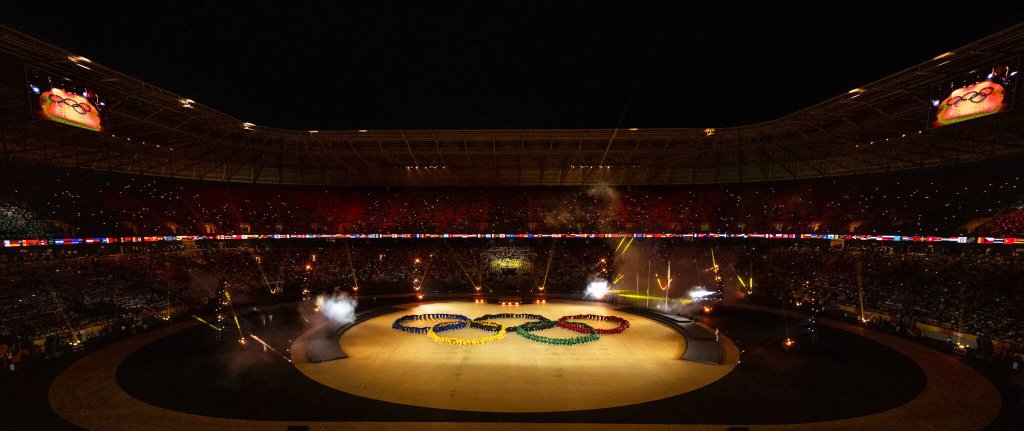
Even the dimmed lights at Abdoulaye Wade Stadium can’t hide the truth at opening ceremony: big chunks of empty seats // OIS/Will Palmer
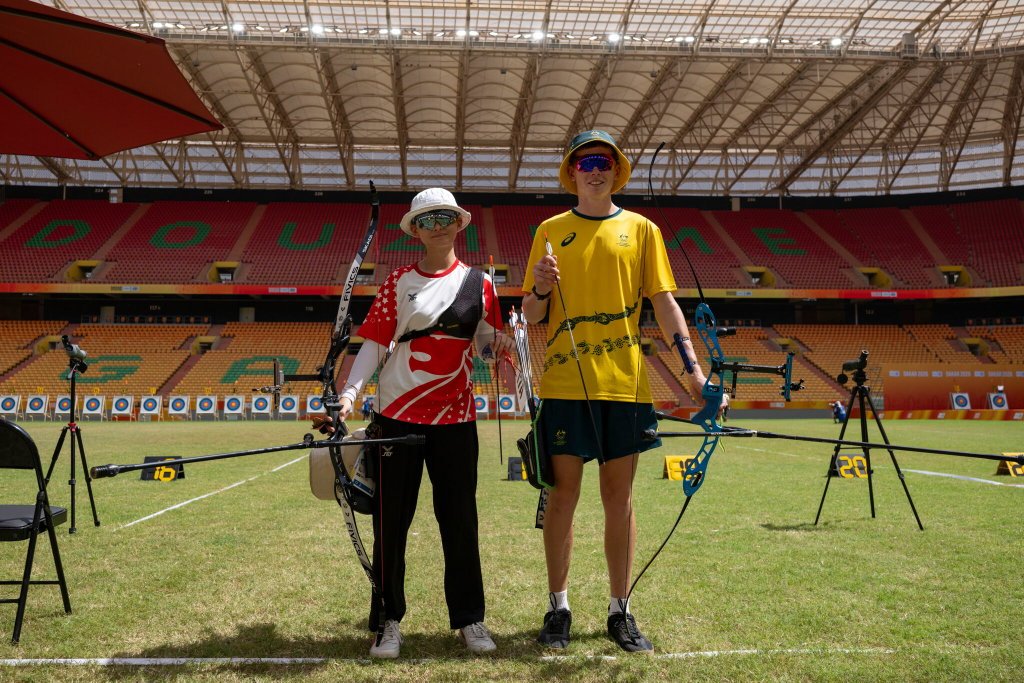
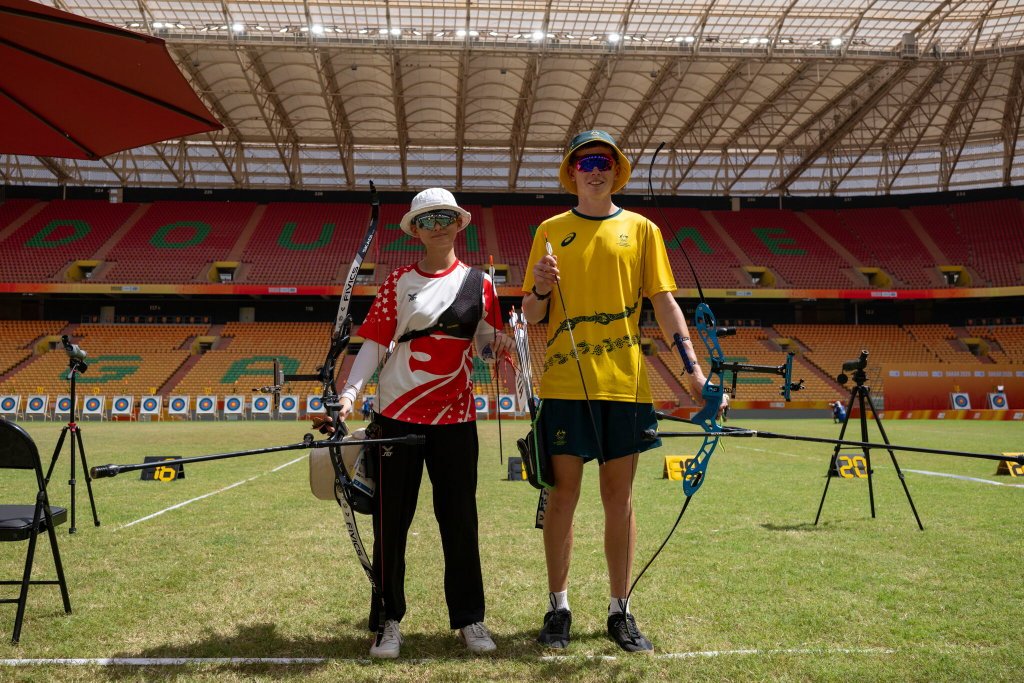
Is anyone there? Same stadium. Tabitha Ern Lin Yeo of Singapore and Brock Penna of Australia at the archery boys’ ranking round // OIS/Will Palmer
The YOG experiment grew out of the European Youth Olympic Festival. In 1990, Jacques Rogge, then leading the European Olympic Committees, led the creation of a European teen get-together. When Rogge became IOC president, he thought, let’s take this EYOF thing global. In 2007, the IOC members gave the OK to the Youth Olympic Games.
As envisioned, YOG had to – of course – include sports competitions. But the primary focus was supposed to be on learning (and taking back home to share) the Olympic values; cultural exchanges; and educational workshops.
In 2007, I was working for NBC, and I wrote a column when, at the IOC assembly in Guatemala, the members approved the YOG idea. I said YOG was dumb. This earned me a gentle scolding from Dick Ebersol, who had some mild concerns about public criticism of the IOC from, you know, anyone at NBC. Feedback is a gift!
The reason YOG is dumb is that the very idea of it carries an inherent tension that cannot be resolved: either it’s a world-class sports competition where the point of being there is to win or it’s a kumbaya “values” session for teens.
It can’t be both.
Time has proven (me right with) this disconnect, over and again.
Look, for instance, at the way even the IOC portrays what’s what in Dakar. Of the 12 video news releases you could find Wednesday on the official IOC website, 11 are about competition – who won what, and when. One is about the kabuki theater of these Games being a big win for Senegal and, dubiously by extension, Africa. Let’s see about that when the final financial reports are made public – particularly considering this was supposed to be held in Dakar in 2022 but got pushed back four years.

What the IOC decided Wednesday matters at Dakar 2026
The U.S. Olympic & Paralympic Committee notes in its release about that 29-person Dakar team that the Youth Games “provides an opportunity for young, standout athletes to compete in elite environments and prepare future Olympic hopefuls,” the chef de mission adding the event marks “the opportunity to represent Team USA and gain valuable experience competing on the international stage.”
Putting aside for the moment that’s obviously — going back to 2007 —not the point of YOG, consider Noah Lyles, the Paris 2024 sprints champion who won the boys 200 at the second Summer YOG, in Nanjing, China, in 2014. Did he need YOG to become Paris champion? When he is the 2015 Pan American under-20 200 champion and the 2016 world under-20 100 champ? Really?
When, to underscore the off-the-mark point about preparing “future Olympic hopefuls,” the Americans sent no one – not one athlete – in track and field to Dakar? Come on.
Have there been elements of the Youth Games that have been constructive?
The Young Reporters program may well prove one of YOG’s most enduring legacies. I had the privilege of serving as a mentor in the program in its first edition, in Singapore in 2010, and one of my 2026-27 graduate students at USC – in a sportswriting class I also teach – is currently a Young Reporter in Dakar. Without question, some very fine young journalists have come through that program. Too, the YOG Young Reporter program has sparked similar initiatives run by others, including AIPS, the international sportswriters’ association under the presidency of Italy’s Gianni Merlo. But YOG is purportedly about athletes, not journalists.
The edition in Buenos Aires in 2018 has driven an IOC focus on “urban” sports. Breaking, for instance. See how that turned out (vaya con dios, Raygun).
Is there any good to come out of Dakar?
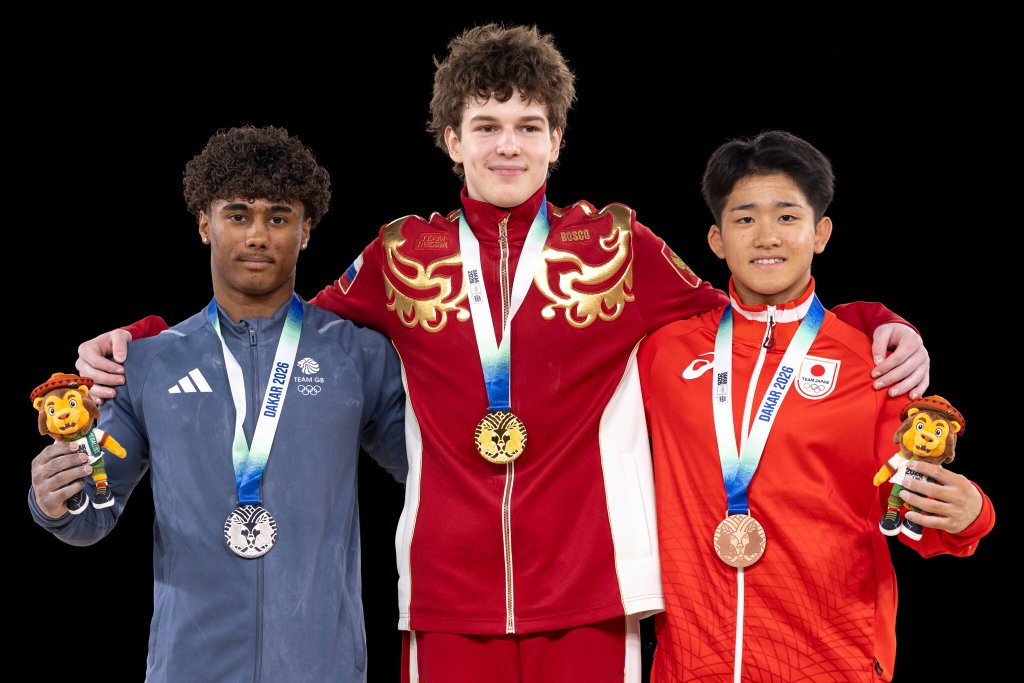
Left to right: Britain’s Uzair Chowdhury, silver medalist, boys all around; gold medalist Daniil Smirnov of Russia, bronze, Ikki Nishihara of Japan // OIS/Simon Bruty
Two Russians won the individual all-around titles in artistic gymnastics at the Youth Olympic Games, 17-year-old Daniil Smirnov the boys, 14-year-old Polina Dmitrieva the girls.
In the boys all-around final, 11 of 18 were European. Girls, nine of 18. The boys’ runner-up is from Britain, where the government and media have made vividly plain opposition to the war in Ukraine. On the girls side, two French athletes finished in the top 10, including the silver medalist. Fourteenth: a gymnast from Ukraine.
There have been no reports of unpleasantness.
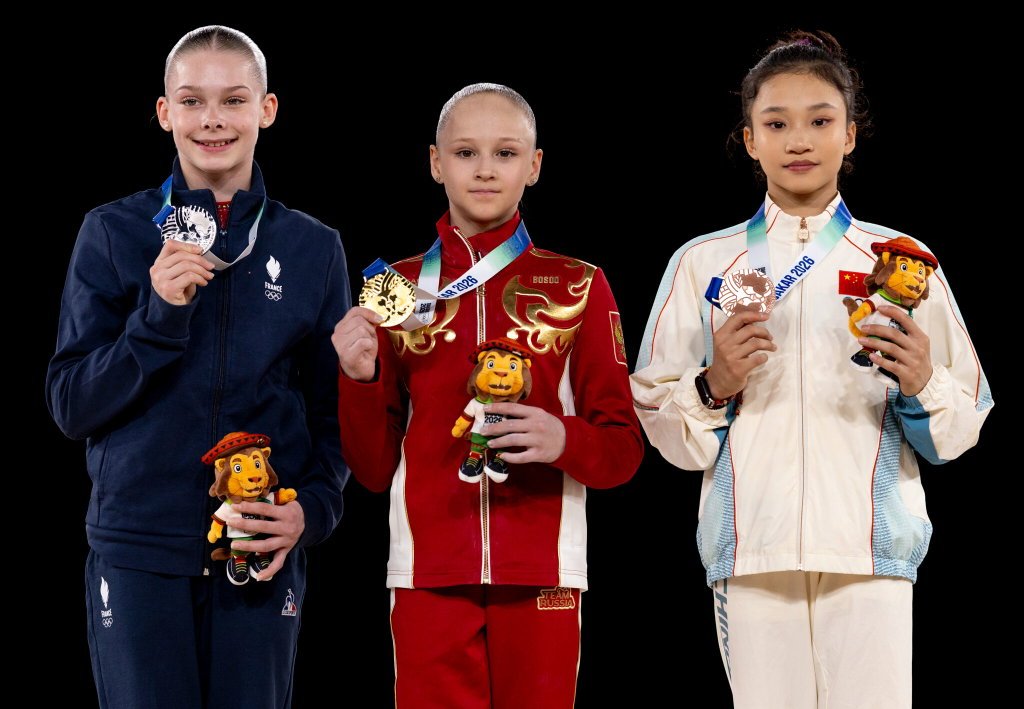
Left to right: Louane Plisson of France, silver medalist in girls all-around; gold medalist Polina Dmitrieva of Russia; bronze, Qi Zhong of China // OIS/Simon Bruty
We turn here now to scripture, to Isaiah 11:6, the prophecy that depicts a yearned-for utopian future of peace: wolf dwelling with lamb, leopard with goat “… and a little child will lead them.”
Perhaps this marks the value of the 2026 Youth Games – spotlighting the notion that athletes are not responsible for their governments and underscoring a, if not the, key component of the thing called Olympism, that when the athletes of the world come together they can discover that we are all more alike than different.
That the teens of the world can “lead them,” can compete against each other without rancor, can – should – serve as example for the grown-ups. Looking at you, ice hockey federation. Same you, track and field.
But.
It’s exceedingly possible there was no unpleasantness, no reason for politicians or leading sports officials to grumble and whine about the Russians for the beyond-plain reason: the Youth Games don’t matter.