Dennis Rodman and North Korea

The former NBA star Dennis Rodman is not engaging in “sports diplomacy” by going to North Korea and hanging out, or not, with the dictator Kim Jong Un. All he’s doing is creating publicity for Dennis Rodman.

No one is stopping Rodman from going, not even — apparently — the U.S. State Department, as Rodman apparently proceeds with a plan to play a basketball exhibition Jan. 8 in North Korea. It purportedly features ex-NBA players against the North Korean men’s national basketball team, its erstwhile Olympic team. Jan. 8, it should be noted, will be Kim's 31st birthday. How special.

Dennis Rodman in his element -- Fashion Week in Miami in July // photo Getty Images

This ought to be clear: Kim is using Rodman in a bid to deflect attention from the brutal reality of life in North Korea. Rodman, meanwhile, is using Kim to generate attention for the Dennis Rodman brand. As he said in a cover story in Sports Illustrated in July, “I haven’t had a job in years, yet I’m talked about more than ever.”

It can be funny to dye your hair or get a bunch of piercings or show up in public in a wedding dress or show up at the Wife-Carrying World Championships in Finland. It can be cool, maybe, to hang out with Carmen Electra or Madonna.

North Korea is isolated, its people impoverished.

An estimated 1 in every 120 people there is imprisoned in gulags.

On his birthday last year, Kim reportedly handed out copies of "Mein Kampf" as gifts -- allegedly to promote a study of Hitler's economic reforms.

The United States and South Korea have consistently registered serious concerns about North Korea’s nuclear and ballistic missile programs as well as its chemical weapons capabilities.

Rodman made his first visit to the North Korea in late February, accompanied by three members of the Harlem Globetrotters. Weeks before, North Korea had conducted a nuclear test, its third in seven years.

Some 28,500 U.S. troops are stationed in South Korea. Query: did Rodman visit them? Why not?

Kim, educated in Switzerland, reportedly grew up a basketball fan, especially of the Chicago Bulls, for whom Rodman played during their championship run along Michael Jordan in the 1990s. During that February visit, Rodman called Kim a “friend” and said, “I love him — the guy’s awesome.”

That trip was sponsored by Brooklyn-based Vice Media, filming along the way for a documentary. In September, he went back to Pyongyang, underwritten by Paddy Power, the Ireland-based online gambling concern. After that first North Korea trip, Paddy Power sent Rodman to Vatican City in March, where he pushed a black cardinal from Africa as his preferred candidate for the next pope, a company spokesman saying Rodman was there to “spread the gospel of pope betting.”

One of Rodman’s many problems now is that he has been all over the map — so to speak — when it comes to whether going to North Korea is, in fact, all about him or changing the world by effecting peace through sports.

In July, to Sports Illustrated:

"My mission is to break the ice between hostile countries. Why it's been left to me to smooth things over, I don't know. Dennis Rodman, of all people. Keeping us safe is really not my job; it's the black guy's [Obama's] job. But I'll tell you this: If I don't finish in the top three for the next Nobel Peace Prize, something's seriously wrong."

In November, to Associated Press:

"Just think, it's up to Dennis Rodman to break ground with North Korea. I’m the only one in the world who will go talk to this guy and try and find some common ground with these people. I'm hoping that gap between America and North Korea can close. Those guys love a lot about America. They love it. That's why I go over there.

"People don't believe that."

In December, to Reuters, in Beijing, en route to Pyongyang, after the execution of Kim’s uncle and mentor, Jang Song Thaek, who had been considered the regime's second-most powerful man, in response to an open letter in the Washington Post about human-rights abuses in North Korea:

"People have been saying these things here and there. It doesn't really matter to me. I'm not a politician. I'm not an ambassador.

"I'm just going over there to try and do something really cool for a lot of people, play some games and try to get the Korean kids to play.

"Everything else I have nothing to do with. If it happens that [Kim] wants to talk about it, then great. If it doesn't happen, I just can't bring it up because I don't (want) him to think that I'm over here trying to be an ambassador and trying to use him as being his friend and all of a sudden I'm talking about politics. That's not going to be that way.”

One might have thought Rodman would have had more common sense after Jang’s Dec. 12 execution. But no. He went to North Korea, anyway.

This last time, there was no meeting with Kim.

When Rodman got back, Paddy Power abruptly announced it had had enough — it was backing out of the Jan. 8 game. In an email, it cited “changed circumstances.”

The reality is that true sports diplomacy takes time. It takes resource. Almost always, it happens out of the spotlight.

The International Olympic Committee knows this. This is why, among other initiatives, it developed Olympic Solidarity, overseen now by Kuwait’s Sheikh Ahmad al-Fahad al-Sabah. Solidarity seeks to identify promising young athletes around the world and get them to the Games.

The State Department knows this, too. Its International Sports Programming Initiative is even now seeking grant proposals — the deadline is Feb. 28 — for one- to three-year projects around the world.

These one-one-one endeavors are hugely more likely to effect change and produce good than Rodman in North Korea.

The conundrum is that he is likely to get more press.

The challenge is that even writing about it — and him — gives him what he wants.

But unless this gets written, this, too, can’t be relayed:

None of the ex-NBA players due to take part in the Jan. 8 project have been identified.

Now is the time for any of those players to themselves develop a strong dose of common sense. And for the league, and the commissioner, to strongly advise any and all of those players: stay home.

Rabbi Abraham Cooper is associate dean of the influential Simon Wiesenthal Center in Los Angeles. In a recent open letter, he put it perfectly:

“… Please: forget Rodman. Don’t give Kim Jong Un an easy PR layup he doesn’t deserve. Instead, join decent people everywhere and become a part of the growing global zone defense trying to help the defenseless people of North Korea.”
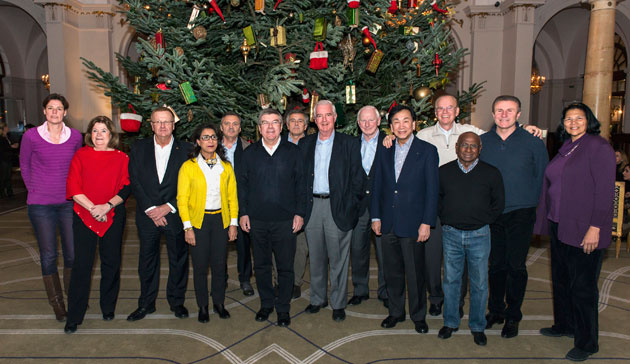
The White House Sochi delegation

President Barack Obama 1600 Pennsylvania Avenue NW

Washington, DC 20500


Dear Mr. President:

It is with great respect for you and your office that I write this open letter.

I have covered the Olympic movement for 15 years. The Sochi 2014 Winter Olympics will be my eighth Games.

I will remind you that in 1980, the last time the Olympic Games were in what is now the Russia, what was then the Soviet Union, the United States team did not go amid intense pressure from the White House. Today, Mr. President, the official U.S. delegation to the Sochi Games that you have announced does not include yourself, the First Lady, the vice president nor any member of your cabinet.

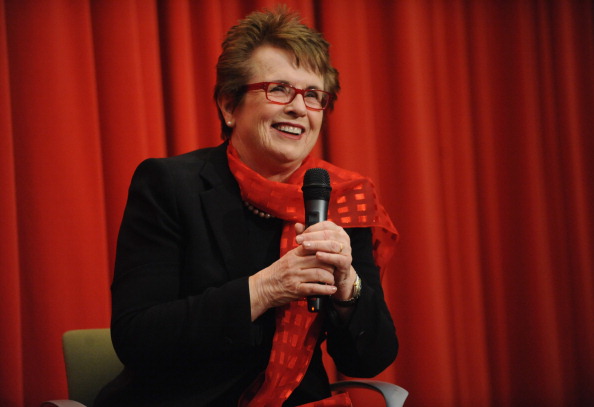
Billie Jean King in New York last month at a 70th birthday party // photo Getty Images

This marks the first Olympics since the 2000 Sydney Summer Games that the president, vice president or a former president will not be a member of the American delegation for the opening ceremony. A White House statement said your schedule simply doesn’t allow your to travel to Sochi.

Throughout the 1990s, it was typical for First Ladies to lead the American delegations. In 1996, of course, President Clinton led the U.S. delegation at the Atlanta Summer Games.

Again with respect, Mr. President, what you have done today is disrespected the Russians — and in particular the Russian president, Vladimir Putin — big time.

Mr. Putin has for years taken a personal interest in the Sochi project. He even came to the International Olympic Committee’s all-members assembly in Guatemala in 2007, at which Sochi won the 2014 Games, to lead its campaign. When Mr. Putin became president again for the third time on May 7, 2012, his very first meeting that day was with the-then IOC president, Jacques Rogge.

To be obvious: Sochi matters, a lot, to Mr. Putin.

And Mr. Putin is a very big deal within the Olympic movement. The Russians are spending at least $51 billion to transform Sochi from a Black Sea summer resort to a Winter Games destination. That’s at least $10 billion more than the Chinese spent in 2008 for Beijing, and Beijing was a Summer Olympics. For $51 billion, you get a lot of attention.

Mr. President, you have also sparked potential problems for the athletes on the U.S. team and, looking ahead, for the possibility of an American bid for the 2024 Summer Games, because in this matter of protocol you have also made clear your disregard for the International Olympic Committee.

All of this in the name of politics.

If we’re being straight with each other, this centers in some measure around the new Russian anti-gay law. That’s why you’re sending an icon like Billie Jean King as part of the official U.S. delegation. It’s why a White House spokesman said the delegation, headed by former Secretary of Homeland Security Janet Napolitano, now president of the University of California system, “represents the diversity that is the United States.”

Also, too, it assuredly has to do with leverage. You want it. There are complex geopolitics at issue, like your relationship with Mr. Putin, the interplay with the former intelligence contractor Edward Snowden and other matters that we, who do not have access to the daily White House security briefings, have no idea about.

Mr. President, you are a winner of the Nobel Peace Prize. You know full well the Olympics are a time when nations are supposed to give politics a rest, if only briefly.

You know, too, that sport has the power to bring people together. Just a few days ago, you were in South Africa, at the memorial service for Nelson Mandela, who understood that ideal perhaps better than anyone in our time.

You flew to South Africa aboard Air Force one with former President President George W. Bush and former Secretary of State Hillary Rodham Clinton. Mr. Obama, sir, if you were looking to make a statement about “the diversity that is the United States,” why not send Mr. Bush and Mrs. Clinton to Russia as your delegation leaders? Both are Olympic delegation veterans — Mr. Bush in 2008, Mrs. Clinton as First Lady in 1994 and 1996 — and that would have sent a very different signal of respect, indeed.

These things matter.

Instead, what you have also signaled — and this is unpleasant to acknowledge — is that, frankly, you don’t respect the American athletes themselves. The statement you’re making to them, loud and clear, is that they’re not important enough for you to step above politics.

Thinking this through to its logical conclusion, sir:

Compare your action Tuesday with President Bush, who cheerfully demonstrated his unity with American athletes in 2002 by literally sitting shoulder-to-shoulder with them in the stands at the opening ceremony in Salt Lake. You have put politics ahead of the athletes in a way that could potentially compromise the U.S. team’s success in 2014 if the Russians take the next steps. What might those steps be? This is not difficult. The Winter Olympics involve a multitude of judged sports. (Think back to the ice-skating controversy in 2002.) Moreover, any Winter Olympics involves transport issues. (It’s a long way up a winding road from the ice cluster in Adler to the snow cluster in Krasnaya Polyana.)

Things have a funny way of happening on snow and ice, Mr. President. It can get slippery.

Is your busy schedule — or, indeed, the First Lady’s — payback for Chicago’s first-round exit in 2009 for the IOC voting for the 2016 Summer Games? Rio de Janeiro won that day. It was historic; you were the first sitting U.S. president to ever appear before the IOC, at the general session in Copenhagen. Yet most of what the IOC members remember about you being there has nothing to do with your fine speech, or even the First Lady’s, for she was there, too. It was the Secret Service sweep and the delay it caused them in getting to their seats.

If that seems petty to some — what about this now?

If the fact that the U.S. Olympic Committee is weighing a bid for the 2024 Games is not foremost on your agenda, be sure that it is high on the IOC's list. The new IOC president, Thomas Bach, and his key advisers, are keenly seeking a U.S. bid. But the USOC is willing to jump in only if it has a high likelihood of winning, because Olympic bids in recent years have run to $50 million and more.

The IOC will pick the 2024 site in the summer of 2017. By then, you will be out of office.

Even so, within the IOC memories run long. And in 2015, three or four dozen IOC members, maybe more, are due in Washington, D.C., for a key assembly, a meeting of the 204-member Assn. of National Olympic Committees.

There they will be reminded vividly that you are there. And that in 2014 you threw this in their face.

All in the name of gay rights? Some of us may see gay marriage as a civil rights measure, Mr. President. But if you were to look at this from afar, it’s still the case that only 16 states and Washington, D.C., permit gay marriage. That’s not exactly a majority.

This controversial Russian law passed the Duma, their lower house, by a vote of 436-0. We can disagree with the measure, but there can be no question about the numbers.

Which begs the question: who are we Americans to be using the Olympics to lecture the Russians about how to run their country? To be sending Billie Jean King over as a symbol of — what? The purported progressiveness of our society or our moral superiority? Isn’t that presumptuous or, worse, arrogant?

After Sochi, are you planning to send Billie Jean King next to states such as Ohio (which you won in 2012), Virginia (ditto) and Colorado (same) to lobby for gay marriage? It’s banned there now in all three. And Colorado is home to the U.S. Olympic Committee.

How would we like it if the Russians — or, for that matter, anyone — came over here and told us what to do? Would we welcome their advice on matters such as the death penalty, which virtually every nation in western Europe now considers morally abhorrent? (Should that be an automatic disqualifier for a U.S. 2024 Summer bid? Or just disqualify, say, Texas?) What about our laws regarding assault rifles? Or legalized marijuana? And on and on.

Mr. President, the concept of American exceptionalism is not altogether popular around the world. But it’s often the case that we Americans are indeed held to a different standard. Here, you should have gone in a different direction in deciding who was, and was not, going to Sochi in the official White House delegation.

Too, you should have made this decision sooner. It was announced Sunday that France’s president, François Hollande, would not be going to Sochi.

Surely, sir, you were not taking your lead from the French?

Respectfully,


Alan Abrahamson

3 Wire Sports

Los Angeles, California


IOC's signals of change

There are two ways to look at the announcement Saturday from the International Olympic Committee that sports such as skateboarding and sport climbing will put on "performances" at next summer's Youth Games in Nanjing. If you are the sort who recognizes that the IOC is and always will be, no matter what, a traditionally minded organization, where change moves at a stately pace, the fact that these sports are being reduced to demonstrations doubtlessly will provoke, yet again, exasperation. It's 2013, almost 2014. Come on, IOC. Get with the program. Skateboarding, right? And climbing is huge, particularly in Europe.

Then again, if you are the sort who sees that the new IOC president, Thomas Bach, has in three months launched an ambitious reform agenda designed to usher in change, and that getting skateboarding and climbing in particular before the members in Nanjing is a way to get them to see such sports with their own eyes so that both sports can get into the mainstream Games program sooner than later -- ah, well, then you understand how he is moving.

The IOC executive board at its Montreux retreat // photo courtesy IOC

"We want to send a signal we are open for new and younger sports," Bach said.

In a teleconference Saturday that wrapped up a four-day "brainstorming" session at the Swiss resort of Montreux, up Lake Geneva from IOC headquarters in Lausanne, Bach announced a string of initiatives that together fit together as part of what he is calling "Olympic Agenda 2020."

In all, he intends to present a wide-ranging reform package to the full membership for discussion at the Sochi session in February and then for a vote at what the IOC is calling an "extraordinary session" to be held Dec. 6-7 in Monaco.

The entire list is likely to encompass the wide range of topics that dominated last summer's presidential campaign, which Bach won in September, everything from what sports are on the Games program to the age limit of the members (currently 70, with a move to lift it to 75) to whether the members ought to be allowed again to visit cities for the Olympic Games.

Such visits were banned in the aftermath of the Salt Lake City scandal of the late 1990s. That scandal ushered in a 50-point reform plan in 1999. Many of the issues now on the table have been percolating through the years since, through the presidency of Jacques Rogge, whom Bach succeeded.

Asked Saturday whether during the Montreux retreat the 15-member executive board discussed issues such as the age limit, the program and visits to bid cities, Bach demurred, saying that had to wait for public airing in just a few weeks.

He did say of the four days together: "This was a good experience with regard to team building because being together for four days and discussing for four days long, there you could expect you may see some hiccups in this discussion. It just did not happen. It always was very constructive. And, frankly, for four days long."

It is not clear whether, in the IOC's 117-year history, the Montreux retreat was something of a first. But for Bach it assuredly was: "This is a first brainstorming meeting I have lived in my time as an IOC member or as an IOC executive board member. I can not speak for the others."

The concepts -- as well as the details -- of what Olympic Agenda 2020, as Bach made plain repeatedly, are going to have to wait for Sochi and Monaco. A number of agenda items, however, he disclosed Saturday:

The executive board urged the 2022 Winter Games bid cities to "make the broadest possible use of temporary facilities," the IOC perhaps finally getting about  holding down costs, recognizing that Beijing 2008 ran to at least $40 billion, the Sochi project is north of $50 billion and such sums are entirely unsustainable. The IOC will pick the 2022 site in 2015. The six candidates now in the race: Almaty; Beijing; Oslo; Stockholm; Lviv, Ukraine; and Krakow, Poland.

The IOC is putting up $10 million to develop new anti-doping tests and methods and asking governments to match.

The World Anti-Doping Agency's annual budget is roughly $28 million. So -- a little math here -- $10 million is roughly equal, rounding up, to 36 percent of WADA's entire annual budget.

This shows what happens when sport takes over the WADA presidency -- IOC vice president Craig Reedie becomes WADA president as of Jan. 1 -- and is prepared to make this sort of intelligent investment. Now let's see whether eternally cash-strapped governments, who are always proclaiming they want to see a level playing field and are very public advocates for clean athletes, are willing to step up and match the IOC's $10 million.

More simple math: $20 million would equal just over 71 percent of WADA's annual budget. With that kind of money, the agency could afford to find the best and brightest researchers. Money typically has a way of solving problems that often can seem intractable.

In his role as incoming WADA boss, Reedie, incidentally, would have been just as surprised as anyone by this newest IOC initiative. Bach, in contrast to Rogge, is running the IOC  in the manner of a hands-on chief executive; Rogge had more of the style of a chairman of the board. For his part, Reedie is on his way to snowy Montreal and WADA headquarters for meetings there the next few days; with the promise of at least $10 million, he surely will receive a warm welcome amid the blizzards blanketing the eastern seaboard of North America.

The IOC, meanwhile, also is putting up another $10 million in a bid to protect athletes from "any kind of manipulation or related corruption," a match-fixing initiative. Early next year, Bach said, the IOC will sign an agreement with Interpol to set up a monitoring system aimed at guarding against illegal betting at the Games.

As for the anti-doping initiative, Bach noted that of course today's tests rely on blood and urine samples. What if, he said, there was another way? Hair? Or other cellular matter? "It would of course be very helpful if there would be another test method if we could find … prohibited methods for a longer time," he suggested, adding "This is another issue we want to address in particular."

On another issue, Bach, who during the campaign raised the idea of an Olympic television channel -- a notion that all but killed Chicago's 2016 bid because of the incredible complexities involved with NBC's multibillion-dollar support of the movement -- said the executive board during the retreat "took a first decision" by authorizing a "feasibility study."

The TV plan would be subject to discussion in Sochi and Monaco, according to the IOC.


Eugene: track ghetto or capital?

Eugene, Oregon, is a beautiful little town. It has many virtues. The issue at hand is whether it ought to be the track and field ghetto of the entire United States. A more charitable way to put it, of course, would be to call it the track and field capital of the United States.

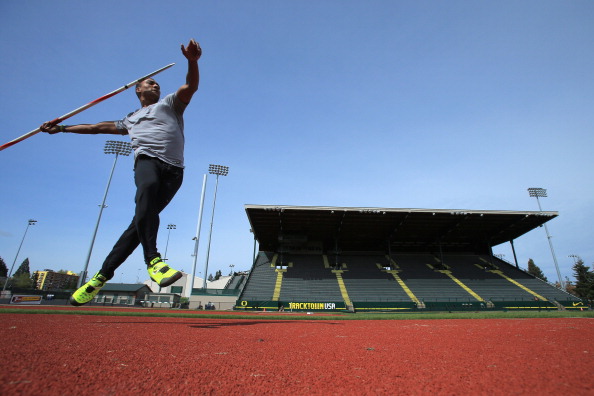
Decathlon champion Ashton Eaton practices earlier this year at venerable Hayward Field in Eugene, Oregon // photo Getty Images

Because after the announcement this week that the NCAA Division I outdoor track championships from 2015 through 2021 will be held at venerable Hayward Field, there's little doubt that Hayward, and Eugene, and for that matter, Oregon, are poised to be -- if not flat-out are -- at the epicenter of the track and field scene in the United States for essentially the next decade.

Query: is that a good thing?

Hayward staged the 2013 NCAAs. It will play host to the meet next year. Going through 2021 will make it nine straight.

Each year in late May or early June, Hayward puts on a Diamond League meet, the Prefontaine Classic. In 2014, Hayward will be the site of the world junior championships; in 2015, the USA nationals; and in 2016 -- just as in 2012 and 2008 -- the U.S. Olympic Trials.

Meanwhile, Portland -- just up the road -- recently won the right to put on the 2016 world indoor championships.

In Portland, the Oregon Project, with coach Alberto Salazar, is home to some of the world's leading runners, including Mo Farah, Galen Rupp and, now, American teen sensation Mary Cain. Olympic and world decathlon champion Ashton Eaton and Nick Symmonds, silver medalist in the 800 meters at the 2013 Moscow world championships, headline the list of athletes who in recent years have come out of Eugene.

Depending how you see it, this week's NCAA announcement is either brilliant or yet another turn in a disturbing trend to further niche-ify track and field -- to consign the sport to a distant corner of America, to a remote college town in the late-night Pacific time zone where the sport is destined to get noticed every so often, if then.

It must be noted, of course, that track and field in Oregon revolves around Nike. Without Nike there is virtually nothing.

In its elation over the 2021 thing, the University of Oregon put out a news release that maybe was just a little bit over the top. It quoted athletic director Rob Mullens as saying, "Being the birthplace of running in the United States, Track Town USA offers the most unique experiences for both student-athletes and fans alike."

When the biographies of Jesse Owens, Glenn Cunningham, Jim Ryun, Billy Mills and other greats get around to claiming Eugene as the "birthplace of running," that will surely be news. As will the fact that the University of Chicago played host to the NCAA championships virtually every year, 13 times, from 1921-36 (they were at USC in 1934, Cal-Berkeley in 1935).

Meanwhile, giving credit where it is due: boosters of the move to see so much action in Eugene, like Vin Lananna, the farsighted senior university associate athletic director who is also president of the entity that is itself called TrackTown USA, envision Hayward being a permanent site for the NCAA championships, like Omaha, Neb., is for men's baseball, or Oklahoma City for softball.

And that's fine.

But there are two key distinctions.

One, Omaha's convention and tourism bureau, for instance, recognized that it was unlikely to be a so-called "big-league" town like nearby St. Louis or Kansas City. Those cities actually really do have NFL and Major League Baseball teams.

So to build the Omaha "brand," they aggressively sought the College World Series and have bid successfully in recent years for events such as the U.S. Olympic Trials in swimming. They are concededly after a wholesome, family-style vibe.

Eugene is hardly in competition with Portland or Seattle. And maybe track and field is after the family scene and maybe it's after the die-hard -- nobody is quite sure what audience it's after. That's for sure one of the challenges. Another of the many issues facing the sport is that, if you've never been to an evening at the track before, you often leave after three -- or more -- hours feeling you're not quite sure what you've just seen.

At any rate, the key distinction is this:

Track is the No. 1 sport at the Summer Olympics. You can like it or not, Omaha and Oklahoma City, but baseball and softball are no longer in the Games.

Moreover, everyone in Eugene and, for that matter, Oregon, you can this it or not as well, but the IAAF, track's international governing body, wants more in the United States. Way more. They look at this country, and they see New York, Los Angeles, San Francisco, Chicago, Houston, Dallas, Miami, big cities, all these huge and important markets, and the only activity seemingly going on of note is in Eugene, or Portland, and Portland is hardly a top TV market, and they ask -- huh?

And that, friends, is altogether a reasonable question if you want track and field to stop being a niche sport in the United States.

Bach's very busy first IOC EB

2013-12-10-18.23.12.jpg

LAUSANNE, Switzerland --Russian organizers will set up protest zones in Sochi, the new International Olympic Committee president, Thomas Bach said here Tuesday. Whether they will work, or anyone will have the courage to want to step into them amid what is expected to be a ferocious security presence, remain very much an open question. The IOC president took the high road:  "It's a measure we welcome," Bach said of the protest area, "so that everybody can express his or her free opinion."

With an emphasis on such immediate challenges and even a nod to ceremony, the first executive board meeting of Bach's IOC presidency commenced here Tuesday and then, no surprise, broke up after a few short hours, the focus on Sochi, on the Rio 2016 project and even on a long-term plan that Bach has taken to calling "Olympic Agenda 2020."

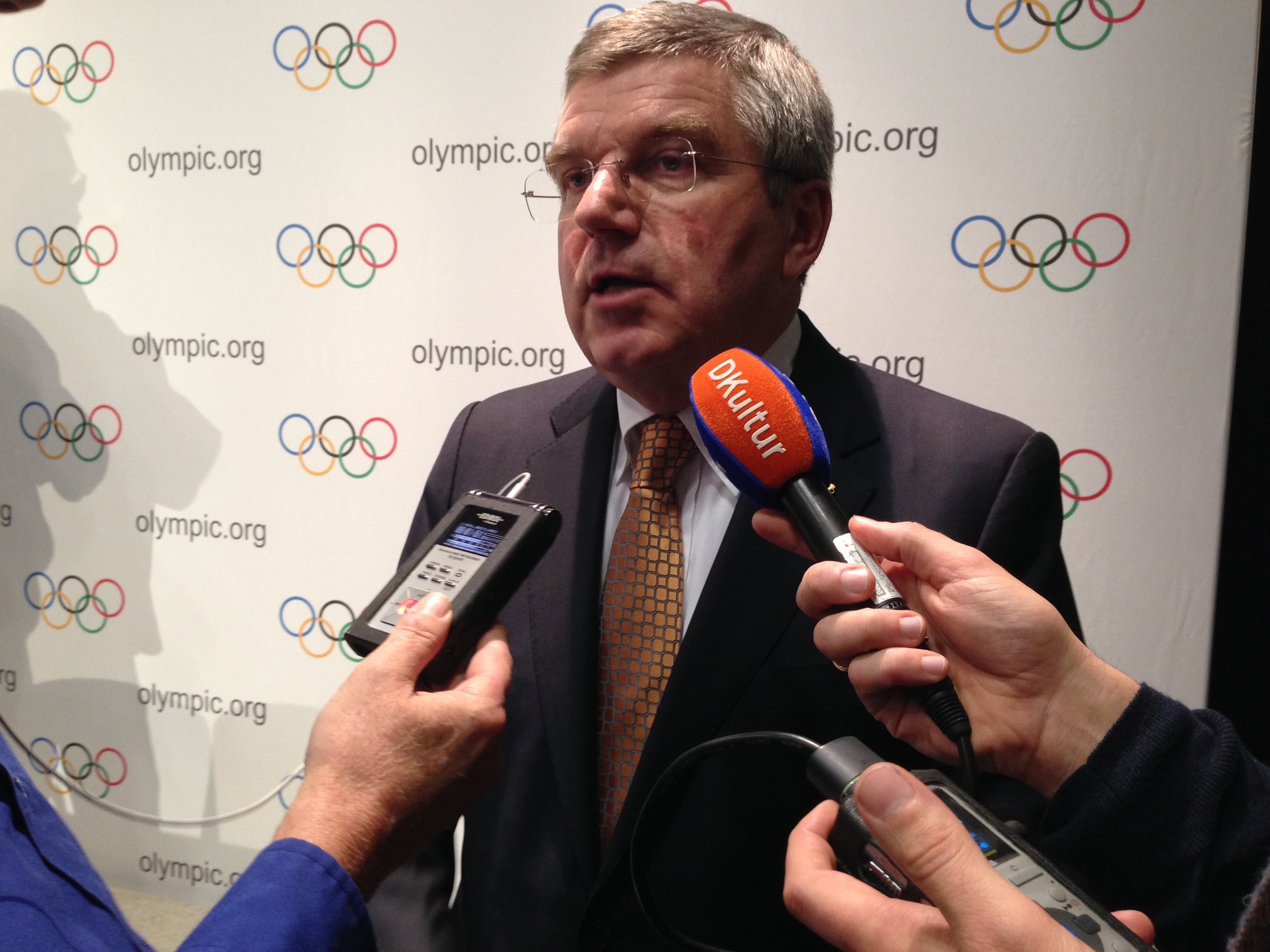
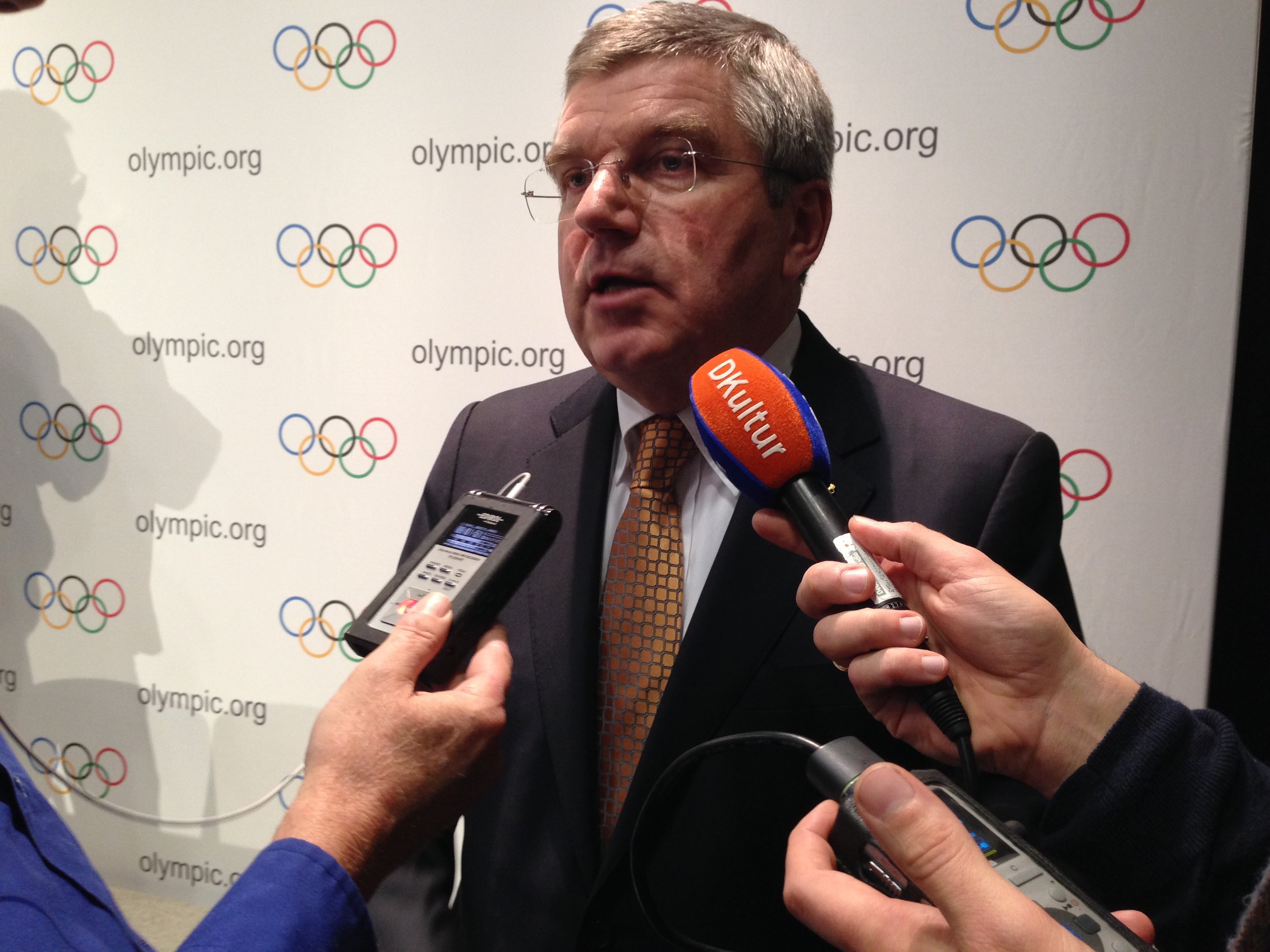
IOC president Thomas Bach at a news conference after chairing his first executive board meeting

The former president, Jacques Rogge, handed over the keys to the presidential office at the IOC's lakefront headquarters, the Chateau de Vidy. Later Tuesday, the Olympic Museum, just down the road along the lake, was officially re-inaugurated.

But, first and foremost, Sochi.

The 2014 Winter Games are now just 59 days away. A host of other pressing near-term issues loom large on the agenda.

Despite the massive security presence due in and around the Sochi venues, activists purportedly now will be free to protest, for instance, the Russian law that purports to ban "propaganda of nontraditional sexual relations” to those under 18.

In August, Russian President Vladimir Putin had signed a decree banning "gatherings, rallies, demonstrations, marches and pickets" for 2 1/2 months in Sochi around the Olympics and Paralympics. It is due to go into effect on Jan. 7. The Games start Feb. 7.

Bach said Sochi 2014 organizers informed the IOC of the decision to set up protest zones during their report to the board on Tuesday.

As a point of comparison: protest zones in Beijing in 2008, miles away from Olympic venues, largely went unused. Bach said he was unsure where the 2014 protest site is to be located.

Without making explicit reference to the gay controversy, Bach noted that IOC rules about what athletes can -- and can not -- do and say under the Olympic charter are going to be sent out shortly to the more than 200 national Olympic committees. Rule 50 bars political statements within Olympic venues. Rule 40, moreover, limits what athletes can do in regard to individual sponsorships. "They," meaning the rules, "are there to protect themselves," meaning the athletes, Bach said.

Bach noted that there is "still a lot to do" in Sochi "with regard to infrastructure, accommodation and other issues." Even so, he said, the IOC remains "very confident" that "everything will be in place and we will have really an excellent stage for the best athletes of the world."

The Rio 2016 Games, widely seen in Olympic circles as an "adventure," have already drawn the new president's sharp attention. He said he plans to travel to Brazil -- before Feb. 7, and Sochi gets going -- to meet with Brazilian president Dilma Rousseff and other officials. And after Sochi, the "top priority" of Gilbert Felli, the outgoing Games' executive director, will be Rio, Bach said, a recognition -- if not admission -- the project needs special attention. Even though Felli is formally retiring as of Aug. 31, he will continue long after to "work closely" with Rio organizers, Bach said.

"We have to realize, and also the organizing committee has realized, there is not a single moment to lose," Bach said. "Every effort has to be made, every single day, to bring the construction of Olympic sites and infrastructure forward."

Beyond all that, there already is in the works the makings of a long-term strategic plan. This is what Bach has taken to calling "Olympic Agenda 2020."

Indeed, the executive board -- after holding the briefest of meetings Tuesday morning with the Assn. of National Olympic Committees and then convening itself for the rest of the day -- is now due to head off for a four-day retreat up Lake Geneva in Montreux, better known as the site of the famous summer jazz festival, for a think session to sketch out Olympic Agenda 2020.

Everything -- for emphasis, everything -- not only should be but appears to be on the table.

As Bach has described it, this "brainstorming meeting" essentially breaks down into four categories:

One, sustainability. This includes everything from bidding for the Games to the 28-sport limit at the Summer Olympics to the management of the Games to "legacy," or what to do with Olympic venues post-Games to avoid so-called "white elephants" like the stadiums in Athens or Beijing.

Also: should the members be allowed again to the visit cities bidding for the Olympics? Should baseball and softball be allowed into the Tokyo 2020 Games? How, broadly speaking, to jazz up the program? Should tug-of-war be allowed in as a sport? Skateboarding? Surfing?

Two, credibility. This revolves around issues such as doping and match-fixing as well as issues of autonomy and governance.

Three, youth and the Youth Games. As Bach said, the notion here is how to " get the couch potatoes off the couch." What if the Youth Games, which came to life under Rogge, were used as a laboratory, just to see what worked and, perhaps, more intriguingly, what didn't? Above all, the IOC's No. 1 challenge is to remain relevant with young people.

Four, the structure of the IOC itself. Here, there are bound to be discussions revisiting some of the reforms that were enacted in 1999 amid the Salt Lake City scandal -- such as, for instance, the rule that now forces IOC members out at age 70 (it used to be 80). Fourteen years after that rule came into effect, there appears to be widespread consensus that 70 is too soon, that considerable talent and networking is being forced out in a world where being 70 is not necessarily old anymore.

This big-picture think is, frankly, long overdue. Every organization ought to go through something like it periodically. For the IOC, the change in the presidency is the natural time.

Bach has cautioned that the Montreux retreat is not designed to and will not produce decisions. There may be a new president but, as ever, the IOC moves at a deliberate pace.

In this instance, that makes sense. There are stakeholders of all sorts to consult. At the outset of his presidency, Bach enjoys considerable goodwill. Even so, he will want time to pursue that buy-in.

The timetable:

December 2013 -- Montreux retreat.

February 2014 -- Sochi session.

Fourth quarter 2014 -- probable extraordinary session, somewhere, to review and presumably enact Olympic Agenda 2020. "I hope we will need one," Bach said.

The IOC executive board and members of the Assn. of the National Olympic Committees after their joint meeting

The other advantage of this Montreux retreat, of course, is that while it can be assumed, politically, that the 14 others on the board are with the new president, the four days together will give him the chance to see who is all the more with him.

These next few days and weeks also will give everyone the chance to see -- with the elections in Sochi coming right up, by a quirk of the IOC calendar -- who is vying for authority in Bach's early years.

If, for instance, Zaiqing Yu of China isn't a candidate for the IOC vice-presidency, that would by most accounts be a surprise.

Similarly, if Turkey's Ugur Erdener doesn't run for the board, that would be unusual. Same goes for Canada's Dick Pound, who lost out by a mere one vote in Buenos Aires in September.

In just under two months, it's Sochi. Now, though, it's off to Montreux. No press allowed. No outsiders.

"I'm really looking forward to a brainstorming meeting in Montreux," Bach said. "Don't expect any kind of decisions from this meeting. It will be brainstorming."


Ligety wins, Bode's back

All successful sports teams need stars. Quick. Name the quarterback of the Denver Broncos. Easy. He's the guy who did a hilarious interview a few days ago with that Ron Burgundy fellow. Now -- who's the quarterback of the Tampa Bay Buccaneers? Right.

The U.S. Ski Team's alpine racers get noticed most -- particularly when it's almost Olympic time -- when the likes of Ted Ligety, Bode Miller, Lindsey Vonn and Mikaela Shiffrin are rocking it. Except for Shiffrin, the teenage slalom sensation who is newly showing promise across the board, the season had started slowly. Until Sunday.

Ligety and Miller went 1-2 in the giant slalom at the men's World Cup stop at Beaver Creek, Colo., while Vonn, who had gone a cautious 40th and then 11th in the downhills Friday and Saturday in making her return to the women's tour in Lake Louise, Canada, rocketed to fifth in Sunday's super-G and afterward declared she was "ready for Sochi."

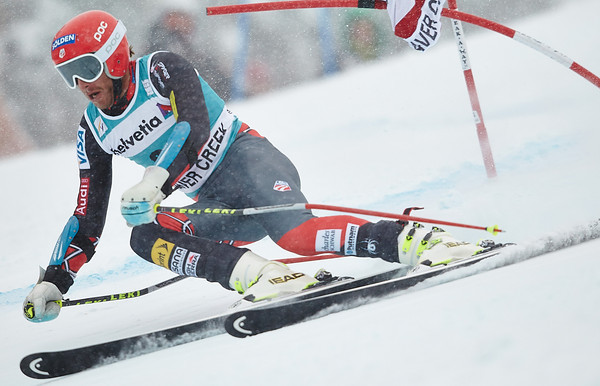
Bode Miller, Ted Ligety, Marcel Hirscher after Sunday's racing in Beaer Creek // photo Jesse Starr Vail Resorts courtesy U.S. Ski Team

Shiffrin didn't race this weekend. She did, however, sum up the excitement that seized the scene.

"I'm crying right now," she tweeted out. "My favorite racer is back on the podium. #gobode"

This was Miller's first top-three finish since February 2011 (a second in the downhill in Chamonix, France). It marked his first giant-slalom top-three since March 2007 (at the World Cup finals in Lenzerheide, Switzerland).

The last time two Americans were on the GS podium together? Bode and Daron Rahlves, at the 2005 GS in Beaver Creek.

Ligety, meanwhile, is without question best in the world in the giant slalom. And he emerged last year, with three gold medals at the world championships, as the rock of the U.S. team.

Sunday's victory marked Ligety's fourth straight World Cup victory in the GS; that ties him with Italian great Alberto Tomba, who won four straight in 2001.

Ligety is so good at this particular event that he has finished on the podium in his last 10 GS races. That is the second-longest streak of GS podiums in World Cup history. With it Ligety joins Tomba, Ingemar Stenmark of Sweden and American Phil Mahre.

This was, moreover, Ligety's third GS win in a row on the Birds of Prey course at Beaver Creek.

Ligety's winning combined time Sunday: 2:35.77. He won both runs, and easily.

The surprise -- unless you were keenly paying attention to Miller earlier in the week -- was that Bode took second. He finished 1.32 seconds behind Ligety. Austria's Marcel Hirscher took third, 1.82 back.

It's not that Miller isn't capable. He is the most successful alpine racer the United States has ever produced, among other things a five-time Olympic medalist as well as the 2005 and 2008 World Cup overall champion.

But after taking last year off to mend a bum knee, you would have to have been a true student of racing, and of Bode, to see this coming.

In Friday's downhill at Beaver Creek, Miller finished 13th. In Saturday's super-G, he held a huge lead of more than a second on the top part of the course before nearly missing a blind gate after a jump; he then -- typical Bode -- made an amazing recovery to finish 14th.

After Friday's race, he said, "I skied the way I need to. Maybe we picked the wrong skis. Maybe it was just weather or nature."

After Saturday, he said, "Yesterday and today I hit the thing really well, so I think that's really encouraging."

Bode_Miller_BOPGS002-M

Bode is -- finally -- back in shape, as he emphasized after Sunday's finish.

So anyone who has been listening carefully to him for years can easily explain what he was, in his way, telling everyone over the weekend:

The thrill show is back on. He is now a legitimate threat to win any and every race he's in.

Ladies and gentlemen, that is good for ski racing. Bode is not just the best the United States has ever thrown out there, he is the most interesting because every race is an exploration of what it's like to throw yourself out there without fear.

He's on new skis in every one of his events, he cautioned. Even so, the knee feels good.

"I"m ready," he said. "I'm skiing well in every event. It hasn't come out in the races yet. But it will."

The U.S. Ski Team is loaded with talent. Six American women, for instance, finished in a World Cup top-three last last season in the downhill or super-G. And, of course, beyond Miller, Ligety, Vonn and Shiffrin, there is Julia Mancuso, a big-game racer if there ever was one.

That said -- to have Bode Miller back injects a different dynamic. To pretend otherwise is just silly. Everyone knows it.

He took second Sunday, for instance, after starting the first run as the 31st skier down the hill. That is very hard to do.

Whether Miller -- who knows only one way, to ski all-out -- can over the next weeks and months be consistent is the thing. "Sharing the podium with Bode is awesome. I'm a little surprised, actually," Ligety noted. "He probably doesn't like it when I say that, but it was impressive how he was able to bring his intensity up and put down some impressive runs."

"It's a little bit of redemption today," Miller said. "It shows that I'm coming back in GS. I think I can do it in slalom, too," adding a moment later,  "The idea is to be able to ski four events the way I like to do it."

He also said, "There's little tiny pieces that are missing. It's just timing … just little parts that have to come back," adding after, "I feel like I'm ready."

Remembering Nelson Mandela

LAUSANNE, Switzerland -- The Olympic Games produce moments. Those moments become memories. Those memories inspire the hopes and dreams of generations. At the 1992 Barcelona Summer Games, Derartu Tulu of Ethiopia would win the women's 10,000-meter run, the first black African female gold medalist in Olympic history. After Tulu crossed the finish line, it took Elana Meyer, a white South African, almost six seconds more to get there. A few more steps past the finish line, Mayer found Tulu. They kissed. Then, hand-in-hand, they ran together, black and white, first and second, yes, but equals in sport and spirit, symbols of hope and possibility for South Africa, for all of Africa, indeed the world.

Because of its apartheid policies, South Africa had been banished from the Olympics after the Rome 1960 Games. Barcelona 1992 marked its return to the world stage. Those Olympics took place about two and a half years after Nelson Mandela's release from prison.

June 2004, the Athens Games relay: Nelson Mandela with the Olympic flame on Robben Island //  photo: Getty Images

Mandela was then 74. In the hours before the South African team would march in the opening ceremony, he arrived in the Olympic Village to speak to the team. This, as a Sports Illustrated story reported, is what he said:

"All I want to say is that our presence here is of great significance to our country, a significance which goes beyond the boundaries of sport. Our country has been isolated for many years, not only in sports but in other fields as well. We are saying now, 'Let's forget the past. Let bygones be bygones.' I want to tell you that we respect you, we are proud of all of you and, above all, we love you."

Mandela died Thursday at 95, an icon of hope and possibility. In sport he often saw a pathway toward reconciliation.

The president of the International Olympic Committee, Thomas Bach, said Friday the Olympic movement would be mourning a "great friend and a hero of humanity."

Bach, before a meeting at IOC headquarters along Lake Geneva, recounted how he met Mandela. In telling the story the IOC president paused to collect his emotions:

It was a private gathering several years ago, Bach said, and so he could ask Mandela the question he had always wanted to ask:

"You invited to your [May, 1994, presidential] inauguration even the worst from Robben Island. Don't you feel hate?"

Bach went on:

"His immediately response was no."

The IOC president said:

"I think he saw the doubt in my eyes," the kind that says, "You don't believe."

Bach continued:

"I said, 'Mr. President, this is really hard to believe after all you have been suffering."

"He said, 'I can tell you why.'

"I said, 'Why, Mr. President?'

"He said a sentence which still gives me goosebumps today. I will never forget it. He said, 'Because if I hate, I would not be a free man.' "

Usain Bolt's tweets since the announcement of Mandela's death included these:

"Just here thinking that Mr.Mandela in prison for 27 years is how long I'v been alive..Words are inadequate to describe this man #RIPMandela"

And: "One of the greatest human beings ever..May your soul rest in peace..The worlds greatest fighter."

In sport Mandela could see beyond fight. He was often quoted as saying, "Sport has the power to change the world. It has the power to inspire. It has the power to unite people in a way that little else does. It speaks to youth in a language they understand. Sport can create hope where once there was only despair."

Sam Ramsamy, now South Africa's IOC member, also at the meeting Friday in Lausanne, read those words once more to a hushed audience. At that inauguration 19 years ago, Ramsamy recalled, he had the honor of being the first to say aloud, "President Nelson Mandela."

Australian IOC member R. Kevan Gosper, at the Lausanne meeting as well, played a key role in bringing South Africa back into the Games. He, like Ramsamy, returned time and again Friday to Mandela's emphasis on sport as a vessel for potential and for change. And, like Bach, to the elemental humanity of Mandela himself.

In 1995, just a year after he took office, South Africa defeated New Zealand in the final of the rugby World Cup. The Springboks, as the team is known, had long been the favored sport of South Africa's white minority; for many blacks, the team -- and the mascot -- had become symbols of oppression. In the scene commemorated in the movie "Invictus," Mandela famously handed the championship trophy to the Springboks' white captain, Francois Piennar, while wearing a green jersey emblazoned with Pienaar's No. 6.

Since those years, of course, South Africa has become an even more important player in world sport. It played host to the 2010 soccer World Cup. There is talk of a bid for the 2024 or 2028 Summer Games.

To be sure, sport can not -- will not -- itself solve any nation's problems, and it will not solve South Africa's. It is nearly 20 years after Mandela's inauguration, and the country faces a range of serious challenges, including high unemployment, AIDS cases and a culture of violence. The amputee sprinter Oscar Pistorius, who at the London 2012 Games emerged as South Africa's most celebrated sports figure, is now facing murder charges in the shooting death of his girlfriend.

Even so, as Bach on Friday ordered the Olympic flags to be lowered to half-mast for three days and Ramsamy conveyed formal IOC condolences to current South African president Jacob Zuma, there was in the remembrance of Nelson Mandela not just gratitude but a sense of bearing witness to what, with the strength of human will, could be made possible.

Sebastian Coe, the Olympic running champion who served as London 2012 chairman, now head of the British Olympic Assn., said in a statement that Mandela "recognized the unique power of sport to unite people from every walk of life."

Coe added, "The values that are at the heart of sport -- equality, opportunity and mutual understanding -- are the very same values Nelson Mandela fought to instill and uphold. He lived his life with courage and conviction, and as we mourn his passing we are grateful for the unending inspiration he has given us all."

The chairman of the International Rugby Board, Bernard Lapasset, said,  "Mr. Mandela was a truly remarkable man. I was honored to be with him during the historic days of Rugby World Cup 1995 and saw his incredible impact on his nation and his people. HIs wisdom, intelligence and sheer presence was a wonder to behold.

"I am so proud that the rugby family could play its small part in supporting Mr. Mandela's efforts to establish the new South Africa and that our tournament came to symbolize the emergence of a new nation. He changed the world and we were privileged to witness and embrace his work."

On Saturday, the IRB announced, a moment of silence will be observed at the Rugby Sevens World Series event at Port Elizabeth, South Africa. That afternoon, all 16 teams are due to join together on the playing field, wearing black armbands as a tribute.

Of course, Ramsamy said, this was a time to mourn. But, he said, also the moment when the memory of Mandela not only could but should provoke an awareness of the good -- the genuine good, as Mandela understood -- that sport can play in our broken world.

In 1995, for instance, Mandela said in a speech, "South Africa remembers with pride the magnanimity in defeat which Elana Meyer demonstrated in Barcelona, when she proclaimed with her vanquisher the sanctity of the Olympic principle that participation is more important than winning."

Bach and Ramsamy have known each other for many years. Yes, Bach said: "As Mr. Ramsamy said, we have to celebrate life. This is the direction Mr. Mandela would have given us, to celebrate life and look into the future."


Awards gala turns to doping talk

2013-11-16-16.22.28.jpg

MONACO -- Usain Bolt and Shelly-Ann Fraser-Pryce, the Jamaican sprint stars, were named Saturday the IAAF male and female athletes of the year. To think it would have been anyone else would strain credulity. What, they were going to name Bohdan Bodarenko or Zuzana Hejnova? Only track diehards know he's a high jumper from Ukraine and she is from the Czech Republic and runs the 400 hurdles. Come on.

Bolt and Fraser-Pryce won three gold medals apiece, and in spectacular fashion, at the 2013 world championships in Moscow. Bolt is, more or less, track and field. He was his usual awesome self, winning the 100 at the exact instant a lightning bolt flashed across the sky, the moment captured in a remarkable photo. Candidly, Fraser-Pryce was even better than he was in Moscow, winning the women's 100 by an absurd .22 seconds.

2013-11-16 16.22.28

The IAAF did not direct voting for the awards. Even so, the challenge facing it and, more broadly, world sport is that the two Jamaicans were going to be the obvious winners in a year in which matters of doping and its protocols have emerged as a major concern in Jamaica and, indeed, once again, in track and field.

Eight Jamaicans have tested positive this year, including former 100-meter world-record holder Asafa Powell and two-time Olympic 200-meter champion Veronica Campbell-Brown.

This is not -- repeat, not -- to impugn Bolt or Fraser-Pryce or to assign guilt by association.

Bolt has never tested positive and has consistently proclaimed he runs clean. Fraser-Pryce served a six-month sentence after a positive 2010 test for oxycodone, saying it was for a medicine she took after oral surgery. Oxycodone, a banned narcotic, is not considered a performance-enhancer or a masking agent.

Bolt's award is his fifth in six years. Fraser-Pryce's is her first and, as well, the first for a woman from Jamaica since Merlene Ottey in 1990. She said she was "really excited, of course." Saturday's announcement marked only the third time that athletes from the same country have won both awards; Americans Carl Lewis and Florence Griffith-Joyner won in 1988, Britons Colin Jackson and Sally Gunnell in 1993.

Fraser-Pryce's award also is believed to mark the first time an athlete who has previously served a doping suspension has been named athlete of the year. Again, in fairness, her suspension was for a painkiller, not a steroid or blood-booster. Nonetheless, she served six months.

"Jamaica has had some problems this season," Bolt acknowledged, referring not to Fraser-Pryce but to the failed tests by the others, adding, "But that is not part of my focus."

Some problems, indeed:

The World Anti-Doping Agency is now reviewing the apparent systems breakdown by the Jamaican anti-doping agency, which goes by the acronym JADCO. This summer, former JADCO executive director Renee Anne Shirley claimed in a Sports Illustrated story that the agency had conducted just one out-of-competition test in the five months leading up to the London 2012 Games.

This week, the Wall Street Journal reported that Dr. Herb Elliott, JADCO's head, may not have the medical credentials he claims. It's now not clear whether Elliott will stay in his position.

Dr. Paul Wright, JADCO's senior doping tester, told the BBC the rash of failed tests may be the "tip of the iceberg." His comments came just days after a WADA team visited Jamaica.

In Kenya, meanwhile, WADA and International Olympic Committee authorities are growing increasingly impatient while waiting for confirmation that a task force to investigate allegations of a doping culture there, promised more than a year ago, has been set up.

It was noted at the WADA conference in Johannesburg that this IAAF gala was going on at precisely the same time as the WADA event. The IAAF likes to portray itself as the top dog among all Olympic sports. Usually, it has good reason. But for those IOC members now serving on the IAAF council it was apparent that other IOC members here were scarce. Like, maybe even none.

There's a new world order in the Olympic movement. The Jacques Rogge years are done. It's in the IAAF's keen interest to reach out to the IOC and to be tuned in -- acutely -- to what the new president, Thomas Bach, is saying, where he's saying it and how he's saying it.

Like -- a few days ago in Johannesburg, when he's warning Jamaica and Kenya that if this kind of thing keeps up they might be banned from the Olympics for doping irregularities.

In real life, nobody really believes that is going to happen. But -- it's the tone that matters. Keep in mind, too, that IOC vice president Craig Reedie was just voted in as the incoming WADA president.

Yet, at the news conference Saturday afternoon announcing the athlete of the year winners, IAAF president Lamine Diack took the occasion to assert that WADA was running a "ridiculous" campaign aimed in particular at Jamaica and Kenya. Say what?

“I read in the newspapers and it was like a campaign against Jamaica, and I think it was ridiculous,” Diack said. "They are the most tested athletes in the world.

“And so I read in the newspapers how WADA are going there and they are going to suspend," meaning the two nations from the Olympics. "They cannot suspend anybody!

“It was ridiculous, this campaign. After Jamaica, they went to Kenya because some doctor went there and said the Kenyan athletes are not controlled. They are the most controlled -- 650 or so athletes in Kenya controlled, every time, in and out of competition. They went there. What did they find? Nothing.”

Diack said, "So I think we have to stop all this. We are doing our best in athletics. You will never have an athlete suspended for four years in football," meaning soccer.

He said again a moment later, "Stop all this."

Bolt, who is typically guarded with the press when it comes to volunteering information on sensitive subjects, proved quite forthcoming Saturday. He allowed as the relentless drumbeat of news since mid-summer about whether or not JADCO was -- or was not -- doing its job was now having a meaningful impact.

It was, he said, hitting him in his wallet, with a potential sponsor just this week backing out of a deal.

"It is really costing me money now and I'm not too happy about it," he said.

Perhaps nothing, ladies and gentlemen, is likely to spur change faster in Jamaica than that -- its biggest star is now going to demand it, and for the most elemental of reasons. Always remember: money talks.

Also revealing was this:

In an interview Friday, Fraser-Pryce had suggested that Jamaica's track and field athletes might need the protection of a union to better serve their needs. She even said she would be willing to strike if the occasion warranted.

Different people are of course motivated by different things. Fraser-Pryce's rise from one of Jamaica's hardest neighborhoods and whose desire both to serve and give back is well-documented.

To gain any sort of traction, one would have to believe an athletes' union in Jamaica would need Bolt's support. Then again, he typically gets asked at news conferences either about his next party or about his next sequence of workouts -- not his next public-service campaign, though a fair amount of good work back home actually does get done in his name.

Asked Saturday if he would also be willing to walk a picket line, Bolt said, "Everybody has their own personal idea. Personally, track and field is my job."

In that spirit, he reiterated his new goal is to run under 19 seconds in the 200, if his body holds up. His world record is 19.19, set at the 2009 world championships in Berlin.

He said he had just gotten back to training about two and a half weeks ago. "I'm just getting soreness in my muscles now," he said.

He said he never sets out each year to be athlete of the year. "I just want to run fast. I want to keep my titles," he said, adding a moment later, "I just do my best, show the world I want to be a champion."

That was at the afternoon news conference. Later, at the evening awards show, with the cameras rolling for a broadcast going live around the world, it was back to the doping talk -- if obliquely.

“I know track and field’s been through a lot, but I see a lot of positive things coming out,” Bolt said. Directing his remarks to young athletes, he said, "Show the  world that we can do this, and we can make athletics a better place.”

Portland wins 2016 world indoors

2013-11-15-14.19.40.jpg

MONACO -- The U.S. team has long been No. 1 in the world in track and field. Hosting the world in track and field? Not so much. The U.S. has not played host to a major championship since 1992, in Boston. Before that, Indianapolis staged the world indoor championships, in 1987. Of course, Atlanta and Los Angeles put on the Summer Olympic Games. That was 1996. And 1984.

To say that this has been a recurring sore spot with track and field's governing body, the IAAF, would be putting it mildly. When, oh when, would the United States -- and, more particularly, USA Track & Field -- ever step up?

On Friday, Portland, Oregon, won the right to stage the 2016 world indoor championships, USATF president Stephanie Hightower asserting that under the direction of federation chief executive Max Siegel and in concert with TrackTown USA president Vin Lananna there is energy and synergy to "rebuild the brand of track and field in the United States."

The IAAF Council awarded Portland the 2016 event amid a spirited campaign that also saw it give Birmingham, England, the 2018 world indoors.

The UK is now lined up to stage the 2014 Commonwealth Games (in Glasgow), the 2016 world half-marathon championships (Cardiff, also awarded Friday), the 2017 world track and field outdoor championships (London, at the same stadium that staged the 2012 Games) and, now, the 2018 world indoors.

Talk about legacy from the 2012 Olympics.

The 2014 world indoors will be staged March 7-9 in Sopot, Poland.

Birmingham had staged the 2003 world indoors, IAAF president Lamine Diack at the time calling them the best-ever, and but for the fact of an American bid would probably have won going away for 2016.

"This is a sport that needs to nurture its roots in the United States," UK Athletics chief Ed Warner acknowledged Friday after all the political horse-trading was said and done.

The IAAF's "World Athletic Series," which includes its major championships, is sponsored by adidas; the current deal goes through 2019. It sometimes can seem as though everything sports-related in the state of Oregon is underwritten by Nike. How the two will mesh come 2016 remains uncertain.

Warner also said, "I feel as though Christmas has come early for British athletics."

For Portland and USA Track and Field, as well.

Teen middle-distance sensation Mary Cain announced here Friday that she would be forgoing college and turning pro, and would be based in, where else, Portland, with coach Alberto Salazar, and the Oregon Project, with stars such as Olympic medal-winners Mo Farah and Galen Rupp. Her plan, she said: "To throw myself into insanely fast races and have no pressure."

The Portland 2016 plan:

A three-day meet in March 2016, tentatively March 18-20, the week after the NCAA indoor championships, at the Oregon Convention Center, with seating, Lananna said, for "8,400-plus."

A new 200-meter track will be built and then, as a legacy of the event, repurposed for use -- somewhere. It will be the only indoor track in the track-crazy state of Oregon, Lananna noted.

TrackTown USA served as the organizers for the 2008 and 2012 U.S. Olympic Trials at venerable Hayward Field in Eugene, on the University of Oregon campus. It will also serve as the local organizing committee for next year's IAAF world junior championships, also in Eugene.

The 2016 U.S. Olympic Trials will be back in Eugene, based at Hayward.

All this begs the obvious:

It's fine, maybe even great, that TrackTown has lit a -- or, maybe more accurately, capitalized on the -- spark in Oregon. There's a lot of Nike money behind all this, in Oregon. At the same time, Oregon is a long way away from pretty much everywhere else. Anyone who has ever been to Eugene knows it is hard to get to. And almost no one who gets drafted by the Portland Trail Blazers ever goes, wow, that was my first choice.

When was the last time you ever heard any of your European, Asian or African friends say, gee, you know, I want to vacation in the United States and I think I'm going to go to -- Portland? San Francisco, absolutely. New York, definitely. Disneyland, for sure. Portland? Get real.

Look, there are a lot of reasons to like Portland. Excellent coffee. Fine wine. Lewis and Clark. But it is not a major market, and to argue otherwise strains credulity.

If, as Hightower asserted, track and field is truly to be re-branded in the entire United States, it needs to think about a strategy that gets people where it's at in New York, Los Angeles, Chicago, Houston, Dallas, the Bay Area, Boston, DC, Detroit, Seattle, Phoenix, Tampa, Minneapolis, Miami, Denver and on and on.

Asked about that, Siegel said "television properties" were in the works without offering more specifics. Lananna volunteered the example of the MLS Portland Timbers soccer team, saying that a few years ago it was nothing and now it draws "rabid" crowds in a "crazy environment," adding, "We hope to do the same … we feel very confident we will be able to do take those same steps forward."

Those would be giant steps, indeed, off a three-day track meet in an indoor convention center in Portland, which -- let's not forget -- will be staged amid the hoopla of NCAA basketball March Madness.

It's worth noting something else. Cain said Friday that when she was younger she was a swimmer and idolized Michael Phelps. Phelps, by putting himself back in the U.S. Anti-Doping Agency testing pool, has taken his first steps toward being back in the water in Rio in 2016. Don't kid yourself. This, in the sphere of Olympic marketing, is what USATF is likely up against in 2016, too.

Still, give USATF and TrackTown USA credit. This is its first step, a welcome step in bringing world-class international track and field back to the United States after more than two decades. It's Portland, sure, but you have to start someplace, and that someplace has to be where you know it's going to work.


SAFP: no Jamaica doping problem

2013-11-15-10.58.48.jpg

MONACO -- Jamaica does not have a doping problem, sprint star Shelly-Ann Fraser-Pryce said. Eight Jamaican track and field athletes have tested positive this year, including former 100-meter world-record holder Asafa Powell and two-time Olympic 200-meter champion Veronica Campbell-Brown. The World Anti-Doping Agency, meanwhile, is now reviewing the apparent breakdown by the Jamaican national anti-doping agency in the testing of the Caribbean island nation's sprinters in the six months leading up to the London Games.

"I don't think we have a doping issue," Fraser-Pryce said in an interview with a small group of international reporters. Instead, she said, at issue in Jamaica are cases of individual athletes "neglecting to correctly check the supplements" they are ingesting, adding, "The truth is, it's a minefield."

2013-11-15 10.58.48

She decried a lack of support from both the Jamaican track and field federation and the government, declaring, "Nobody is there to give us guidance and support," and saying the time had perhaps come for the island nation's to unionize: "We as the athletes need a voice."

If need be, unions strike to achieve their goals. Runners run. Would Shelly-Ann Fraser-Pryce, champion of the 100-meters at both the 2008 and 2012 Olympic Games, winner of three gold medals at the Moscow 2013 world championships, refuse to run, to support a union, to prove a point?

"If it comes down to actually not competing [because] things are not up to par … yeah, I would," she said. "If it means lobbying for the athletes, yeah, I would. And not having our name tarnished, yeah, I would."

Fraser-Pryce's comments came on the eve of the IAAF's annual gala here in Monaco, normally a festive event free of such politics. She is the odds-on favorite to be named the female athlete of the year at ceremonies Saturday night. The two other finalists: New Zealand shot put star Valerie Adams and Czech 400-meter world champion hurdler Zuzana Hejnova.

Fraser-Pryce, typically, is cheerful and understated. Indeed, though she had much to say Friday, she was her usual soft-spoken self -- her comments delivered so quietly that one had to strain to hear her, even with a microphone.

The recently elected president of the International Olympic Committee, Thomas Bach, speaking amid the WADA conference in Johannesburg, this week issued a dramatic warning to nations such as Jamaica and Kenya, saying athletes might be denied a chance to compete in the Games if nations were not compliant with WADA rules.

"The [IOC] charter is very clear that this," meaning expulsion, "can be one of the results," he told the British newspaper, the Daily Mail. "It's not the only one and not the exclusive one. But non-compliance can result in the exclusion from competitions."

There would be a long road before the IOC would consider exclusion. Usain Bolt and Shelly-Ann Fraser-Pryce -- and Kenya's 800-meter champion David Rudisha -- are huge stars. Even so, the fact that the new president would even mention it as a possibility is noteworthy, with Rudisha since saying, "It is bad. The faster they tackle the matter the better for our country's image. Not all of us are cheats. Some may have been [mis]led into abusing drugs."

Asked Friday about the possibility of Jamaica being excluded from the 2016 Rio Olympics, Fraser-Pryce said Friday, "I am not the one who writes the rules. I can't answer the question. I hope it never gets to that."

Fraser-Pryce herself served a six-month suspension in 2010-11 after a positive test for oxycodone. She said it was for medicine she took for a toothache. Oxycodone, a banned narcotic, is not considered a performance-enhancer or a masking agent.

She has said since dominating the 100 and 200 and running a leg in the winning Jamaican 4x100 relay in Moscow that some have questioned whether she was doping. On Friday, she said, "There is nothing for me to hide," adding of the rash of positive tests affecting other Jamaican sprinters this year, "I don't think it has cast any shadows on my achievements because I know what I have worked hard for."

She also offered incredible insight into what drives her not just to win but to keep winning.

In Moscow, Fraser-Pryce won the 100 in 10.71, defeating second-place Murielle Ahoure of Ivory Coast by a ridiculous .22 seconds.

She won the 200 -- not her favorite event -- by .15 seconds. Again, Ahoure took silver.

She anchored the Jamaican relay to victory in a championship-record 41.29. The Americans took silver, more than a second behind, in 42.75.

When she crosses the line first, Fraser-Pryce said, she does not exult in victory. Instead, she is even at that instant already thinking -- what's next?

"I am not enjoying it," she said, adding a moment later, "“A lot of athletes become so overwhelmed with their success when it happens, they forget about the next year. I constantly try to remind myself that this is just one chapter in my journey. There are many more chapters to write and finish."

She also said at other moments, "I feel like if I become complacent, then everything I’ve achieved might fall." And, "I never allow myself to fully unwind or have a vacation." And, "It’s always about doing better and taking advantage of the present."

Others, she said, "become complacent and comfortable and believe they have arrived."

Shelly-Ann Fraser-Pryce -- never.