Sheikh Ahmad on the record

BUENOS AIRES -- Kuwait's Sheikh Ahmad al-Fahad al-Sabah laughed the laugh of a man who had accomplished everything here he had set out to do. "The media asked what I thought," he said. "And I said, 'Thank you for making me a hero.' "

This was last Tuesday afternoon here in the lobby of the Hilton hotel. Germany's Thomas Bach had just been elected the ninth International Olympic Committee president. Earlier in the session, wrestling had been put back on the program. Tokyo had won for 2020.

Some moments before, Anita DeFrantz of Los Angeles had won election to the IOC's policy-making election board. This had delighted some. Some found it almost improbable. After all, without the sheikh in her corner, DeFrantz had managed just single-digits in prior campaigns over the past 12 years.

The U.S. Olympic Committee is still a long way from making a decision on a bid from 2024. The costs are staggering. Federal government is extremely unlikely. That said, if DeFrantz can win for the executive board with the sheikh's backing, a 2024 U.S. bid -- which he is known right now to support -- has to at least be considered.

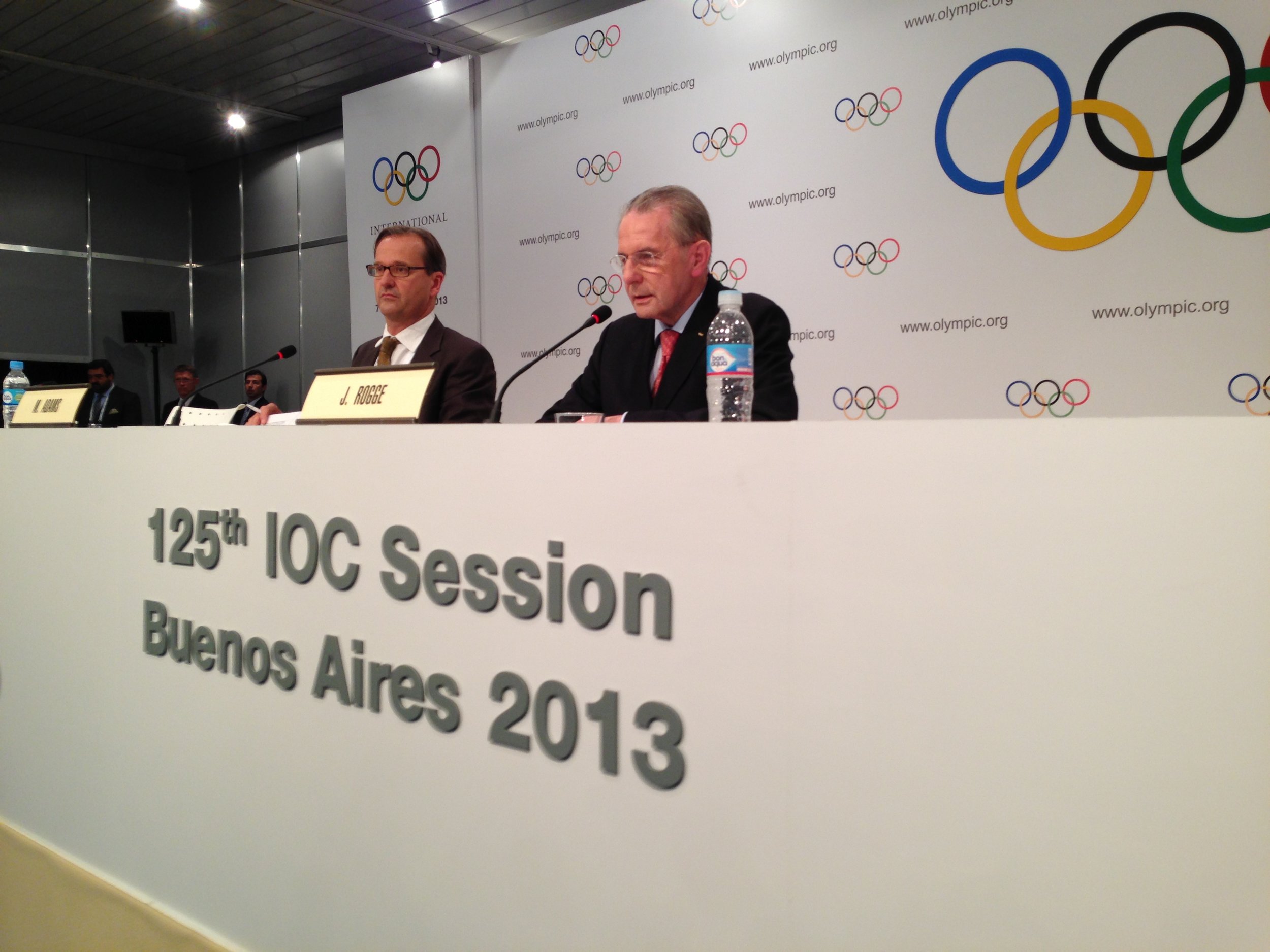
125th IOC Session - IOC Presidential Election

The sheikh riffed some more: "The Americans asked me, 'Are you the most powerful man in sport?' I ask, 'Are you the most powerful country?' "

Then the sheikh got serious: "To ask if I am the most powerful man does a disservice to the power of Dr. Bach." He ticked off Bach's accomplishments: gold medal-winning fencer, IOC member for 22 years, veteran on the executive board, chair of the legal commission, chief of anti-doping investigations, negotiator of European television rights.

"Do not," he said, "do not make it look like Dr. Bach is not the power. He is the power."

Bach, 59, was elected last Tuesday the ninth IOC president.

Over the course of last week in Buenos Aires, meanwhile, the sheikh, head of the Olympic Council of Asia and of the 205-member Assn. of the National Olympic Committees, firmly established himself as the leading man of Olympic influence.

Tokyo, wrestling, Bach -- the sheikh completed a trifecta. Then, for good measure, DeFrantz.

The corollary questions:

How is this happening, and why? And is this concentration of influence in one man good for the Olympic movement?

Some are delighted. Here is a man who says he will get things done. They get done.

At the same time, others -- within and without the movement -- are wary.

And there are those, truth be told, who would would use stronger words still.

The al-Sabah family holds key positions in the Kuwaiti government and military; it has wide-ranging interests in the petroleum industry. The sheikh has made no secret of any of this. His Olympic biography, for instance, recounts his own military service as a Kuwaiti army officer (1985-90). It details, too, how he was OPEC chairman from 2003-05 as well as his country's energy minister and, since 2006, its minister of national security.

A 2008 American embassy cable, disclosed by Wikileaks, proclaims that Sheikh Ahmad is "widely perceived as being corrupt." It offers no evidence for this assertion. It also offers this no-holds-barred compliment about him: "[Sheikh Ahmad] is clever and ambitious and is widely seen as being the only member of the ruling family having both the will and the capacity to rule."

At his very first news conference as president, just hours after being elected, Bach fielded questions from around the room about his relationship with the sheikh, whose support had been well-known.

"You can't win the elections for the IOC president with the support of one person alone," Bach said, adding a moment later and referring to the IOC members, "They are very strong individual personalities. You have to convince them individually. This is what I tried to do in my campaign."

Responding to another question, Bach said, "In all my conversations with the members, there was not a promise being made. This allows me next Tuesday, when I go to Lausanne," meaning IOC headquarters in Lausanne, Switzerland, along Lake Geneva, "to start with a white sheet of paper."

Already, meanwhile, speculation is rampant that the sheikh might be interested in himself running one day for president of the IOC. Bach's term is for eight years, renewable for four more. The sheikh is just 50. There's plenty of time.

What so many want to know about the sheikh is whether is he a force for good, or otherwise.

All journalists learn early on that if one is suspicious one should think like the police or prosecutors do. If it's misconduct or wrongdoing you're looking for, look for evidence of sex, money, drugs, a lust for power or some combination thereof.

The sheikh's hangout in Lausanne is the upscale Beau Rivage hotel, along the lake. His money is for sure good there. But the same can be said of any number of IOC members.

The sheikh threw a party in Buenos Aires at the conclusion of the landmark 125th session. It was a private affair, invitation only at a super-fancy hotel. It probably was a pretty nice deal. A couple days earlier, at the same hotel, the wrestling people threw a really nice celebration party. It for sure was a really nice deal.

The sheik -- and his many, many supporters -- insist there's nothing to be suspicious about.

They say he is completely legit.

In fact, they assert, he is unequivocally committed in the Olympic sphere to best-practices good governance and transparency.

The sheikh took over ANOC last year. That role gives him oversight of the IOC's Solidarity Commission, a program that aims to provide financial, technical and administrative assistance to national Olympic committees, particularly those in developing nations.

Its 2009-13 budget: $435 million, up nearly 40 percent from the 2009-12 cycle's $311 million.

As one senior European IOC member, speaking on condition of anonymity said, "The sheikh is dedicated. The sheikh is active. The sheik is interested. It's a new order."

There endures an air of mystery about Sheikh Ahmad because of the part of the world he is from; because he is a member of his nation's royal family; because he moves in a circle to which access can be tightly controlled; and because he rarely gives on-the-record interviews.

The sheikh moves easily in Arab, western and Asian cultures. He is completely at ease in languages, including English.

It would be a fundamental mistake to underestimate Sheikh Ahmad. He is tireless. He is also keenly intelligent.

The skeptic would say it helps the sheikh considerably, as that formal Olympic bio notes, to have been minister of his country's national security's office for the past seven years. A more benign view would be that one doesn't get to that office in the first instance without first being shrewd and sophisticated about human beings, and what makes them tick.

The sheikh has been an IOC member since 1992; his father had been killed the year before, on the second day of the Iraqi invasion. The son learned a great deal from Juan Antonio Samaranch, the IOC president from 1980 until 2001, particularly about the value of relationships. The outgoing president, Jacques Rogge, referred to him last Monday in a light moment as "someone who is like my younger brother."

This is a significant key to the sheikh's success in moving within the IOC.

It has been said many, many times about the IOC but bears repeating. Within the so-called Olympic family, relationships are everything.

So, too, the sheikh said, in trying to advance any campaign: "Logic."

And, he said: "Credibility."

And: "In the end, winning."

As simple as this seems, it's also elemental, and why so many want to jump aboard with him: "People like to win."

Before the presidential voting, the only issue was not whether Bach would win. It was whether he would steamroll to a first-round victory.

Almost.

In a field of six, Bach needed 47 for victory. He got 43 -- itself a remarkable thing.

In the next round, again needing 47, Bach picked up six more votes, winning easily.

His nearest challenger, Richard Carrión of Puerto Rico, managed 29. Ser Miang Ng of Singapore took six, Denis Oswald of Switzerland five, Sergei Bubka of Ukraine four. C.K. Wu of Chinese Taipei had been eliminated in the first round.

Asked if non-believers ought to believe in him now, the sheikh said, "I think people ought to believe in those numbers."

He made a joke: "I am not competing for a spot in the international journalists' federation."

Then, again, seriously, "There [are] rumors, media, PR," adding a moment later, "In the end you have to accept. I think people are accepting me."


Bach wins the presidency

BUENOS AIRES -- Thomas Bach of Germany was elected president of the International Olympic Committee Tuesday, replacing Jacques Rogge of Belgium. Bach is a gold medal-winning fencer at the 1976 Montreal Games who went on to become a lawyer. He was made an IOC member in 1991 and has served in virtually every position but president. Over the years, he has made no secret of his ambition for the top job.

Now he has it, winning decisively in the second round of voting over five other candidates. He received 49 votes, two more than he needed. Combined, the other five got 44.

Bach, 59, becomes the IOC's ninth president. Eight of the nine have been Europeans. The only exception: the American Avery Brundage, who served from 1952 to 1972.

The new president will serve a term of at least eight years. IOC rules permit the possibility of a four-year second term. Bach said he hoped to lead according to his campaign motto, "Unity in diversity," and declared, "You should know that my door, my ears and my heart are always open for you.''

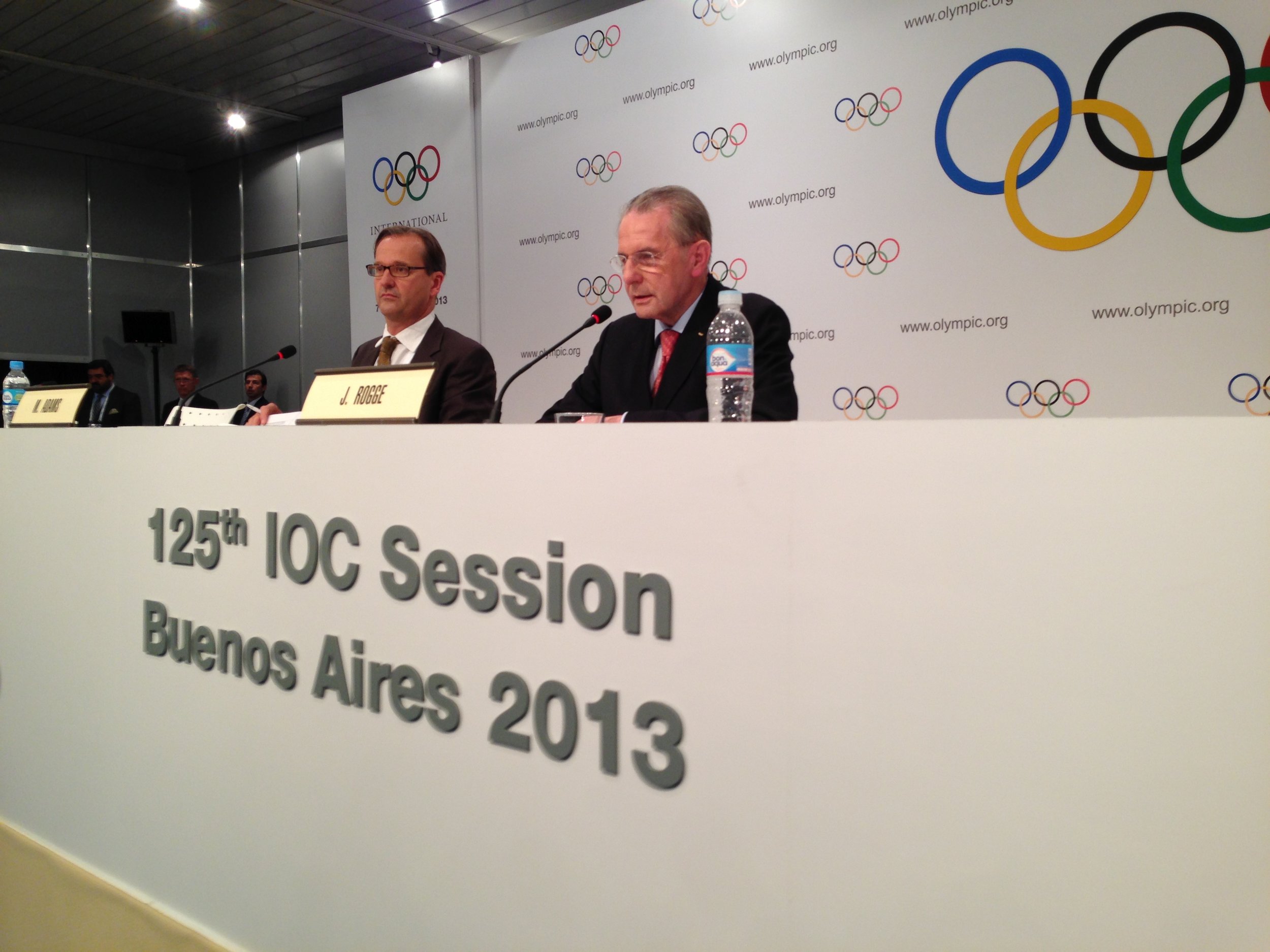
125th IOC Session - IOC Presidential Election

The intrigue in Tuesday's balloting underscored Bach's support -- completely overt -- from the Olympic world's new No. 1 power-broker, Kuwait's Sheikh Ahmad al-Fahad al-Sabah.

Also manifestly at work Tuesday, indeed throughout this landmark 125th IOC session, at which Tokyo was selected host for the 2020 Games and wrestling was put back onto the program for the 2020 and 2024 Summer Olympics:  the influence of Russian president Vladimir Putin. As Bach was making his way down a line of reporters shortly after being elected, Dmitry Chernyshenko's phone rang. He heads the Sochi 2014 organizing committee. It was Putin calling, for Bach, with congratulations.

As one triangulates, let there be no doubt: Sheikh Ahmad is now unequivocally positioned as one of the most influential figures in international sport.

This, too: Bach is certainly European. But to have a key political backer who is head of the Olympic Council of Asia and head of the Assn. of National Olympic Committees is perhaps evidence of a subtle shift in the Olympic worldview.

At any rate, about this there can be no misunderstanding: the IOC election Tuesday completed a turn that through 2013 has seen an older generation of leadership moved aside by younger personalities with different ideas and new energy.

This political master drama, a classical study that academics and operatives alike could learn much from as it played out in real life over more than 10 years, intensifying over the last 18 months, culminated Tuesday in Bach's emphatic ascent.

Out: Rogge, Mexico's Mario Vazquez Raña and, in something of a rebuke to the outgoing president, his former associate, the former International Cycling Union president Hein Verbruggen of Holland. Verbruggen served Rogge in a variety of roles, including as chief of the Beijing 2008 Games coordination commission; he was also the former head of SportAccord, the umbrella group of international sport federations.

Vazquez Raña and Verbruggen have hardly disappeared from the scene, and to count them out completely -- each entirely accomplished and hugely intelligent -- might well, it is true, be premature. Now, though, the leverage and access are completely different.

In: Bach, the sheikh, the judo federation and new SportAccord president Marius Vizer, who lives in Hungary, and perhaps a handful of trusted others. This, as Bach's mandate gets underway, is the essential new power base of Olympic sport.

Bach defeated five other challengers: Richard Carrión of Puerto Rico, Sergei Bubka of Ukraine, Denis Oswald of Switzerland, Ser Miang Ng of Singapore and C.K. Wu of Chinese Taipei. Only Carrión, the IOC's finance chairman, managed even double-digits in the two rounds of voting.

In Bach, amid a world buffeted by economic, environmental and security challenges, the IOC signaled that it was not looking for transformational change.

While the other five candidates in their campaign manifestoes, or action plans, had proposed suggestions that put the IOC at the center of a variety of wide-ranging global sport and technology initiatives, Bach for the most part focused on the IOC's franchise, the Olympic Games.

"Considering the many challenges ahead, the IOC's focus must be safeguarding the uniqueness and relevance of the Olympic Games in an ever-changing world," Bach had said in his.

He also said that "keeping the Olympic Games the most attractive event in the world for all stakeholders is a top priority for the IOC."

This may not be especially bold. This might not be particularly opportunistic. Then again, the IOC tends to be traditional, especially at big moments. And, given the stakes, it makes fundamental sense when looked at in bright light.

Sochi 2014 and Rio 2016, for instance, are now being referred to in influential Olympic circles as "experiment" Olympics. The capital budget for Sochi is already north of $50 billion and the new anti-gay law there has raised concerns in several Western nations. In Rio, construction is running slow and over-budget and, moreover, it was disclosed here that sponsorships are proving hard to sell.

Thus: when the IOC members looked around at this moment in time, what -- most -- did they want?

Continuity.

The Rogge years will likely be viewed, most of all, by one word: stability.

Juan Antonio Samaranch of Spain served before Rogge for 21 years. Samaranch is still largely a beloved figure within the IOC. Elsewhere, the first thing that often comes up is the Salt Lake City corruption scandal, which erupted in the late 1990s.

Rogge was elected in large measure to see the IOC through the Salt Lake reforms and to restore the institution's worldwide prestige.

"You have led us through those bad times," Princess Haya al Hussein of the United Arab Emirates, president of the International Equestrian Federation, told Rogge as the assembly closed late Monday, adding he "clearly understood" the IOC's way forward was rooted in "good governance."

She said he had brought "our family out of its darkest times into a good future," years that in time people will come to understand as truly remarkable fiscally, growing the IOC's financial reserves from $100 million to more than $900 million despite the global economic crisis -- enough to survive an entire four-year Olympic cycle, indeed to secure what the princess called a "clear future."

Rogge's response was classic: "I did no more than my duty,"  he said, adding, "What has been achieved is not one man. It is a team. Thank you very much."

Rogge, an orthopedic surgeon by training, came to office on a summer Monday in Moscow in 2001. He was then 59, an IOC member for 10 years, a man of distinct vigor, his hair still dark.

After 12 years in office, he steps down in winter on a Tuesday in Buenos Aires. He is now 71. His hair is grey.

"If you want to achieve something in the IOC, you have to age," he said wryly during the assembly late Monday to Christophe Dubi, the sports director and incoming Games executive director, whom Rogge has always called "young man."

Intensely European himself, Rogge nonetheless oversaw Games for the first time in China (2008) and the IOC's "new horizons" moves to South America (Rio 2016) and, for the Winter Games, Russia (2014) and South Korea (2018).

Rogge oversaw six editions of the Games, three Summer, three Winter and, as well, ushered in the Youth Games, the first Summer edition in Singapore in 2010, the first Winter product in Innsbruck in 2012.

"The fact that I could describe six Olympic Games and two Youth Games as being successful is for me the biggest reward I could have," he said here.

Beyond Salt Lake, Rogge also had to cope with unexpectedly intensified security concerns. The 9/11 attacks took place three months after Rogge took office, just five months before the 2002 Salt Lake Games, and would add security complications to those Olympics and thereafter.

He had to confront a multitude of financial issues. Some involved a lengthy dispute with the U.S. Olympic Committee over certain broadcasting and marketing revenues. They cut a new deal last year.

There were other issues as well: illicit doping and illegal match-fixing, in particular.

Throughout, Rogge remained typically calm, almost always implacable. His management style tended toward the technocratic. It was big on process.

This could be seen in the 12 years of back, forth and sideways over the Summer Games line-up which ended Sunday with the members' vote to reinstate wrestling.

It had been kicked out in February of what was called the "core" group of sports by the IOC's policy-making executive board, then forced to fight with squash and a combined bid from baseball/softball for a place.

Squash has been on the outside looking in for 10 years. Baseball and softball were both once in and now are out. Meanwhile, over the Rogge presidency, the only additions to the Summer Games sports line-up are that, come 2016, golf and rugby-sevens will be played.

Surfing? Skateboarding? Still waiting.

Virtually everyone associated with the Olympic movement agrees the program needs wholesale review.

So, too, the bid city process. The 2020 line-up produced just three finalists -- Tokyo, Madrid, Istanbul -- after four for 2016 and five of the world's great cities for 2012.

Mostly, what the movement needs is simply a dose of new energy.

There are those who say that in Bach, the sheikh and Vizer the movement is heading in ways no one can portend.

Then again, these three also say that they -- along with the head of the Summer Games' federations' association, which goes by the acronym ASOIF, currently Francesco Ricci Bitti of Italy, the international tennis federation president -- can foresee a new way. They say it might open up new avenues of governance and, to be candid, transparency.

Big picture, the IOC is caught in transition between 19th-century club and 21st-century multibillion-dollar business.

The way the IOC is structured, authority has been far too confined between the president, the director-general and remarkably few staff. The model would hardly pass many business-school studies.

Bach surely now has a mandate.

The sole question heading into Tuesday's vote was not whether Bach would win. It was whether he would win on the first round.

"People are turning," one of the soon-to-be defeated candidates had said late Monday night, acknowledging the obvious. "For months they tell you one thing. They look at you in the eye and now tonight they tell you something else. It's very disappointing."

It is an IOC maxim that in the first round members vote for their friends. In the second they get serious.

In the first-round, Bach carried 43. Carrión got 23, Bubka 8, Oswald 7, Ng and Wu 6 apiece. IOC rules put the tie to a run-off; Ng got 56, Wu 36; Ng moved on to the second round, Wu was eliminated.

In the second round, needing 47 votes to win, Bach got those 49. Carrión took 29, Ng 6, Oswald 5, Bubka 4.

The candidacies of both Ng and Wu were apparently hurt by Tokyo's win for 2020. Five times to Asia in 12 years ... Tokyo 2020 just three days ago ... the notion of an Asian president ... it was all, as the as the senior Canadian member Dick Pound put it, "too much Asia, too soon."

Twelve years ago, Rogge -- in a field of five -- won in the second round with 59 votes; runner-up Kim Un Young of South Korea got 23.

If it seems obvious, this is a lesson Samaranch taught, and the sheikh obviously took to heart: relationships are everything, and people like to know that they matter.

This is why the line-up to see Sheikh Ahmad in Room 532 of the Hilton Hotel here throughout the week was non-stop. What was he offering inside? Coffee. Tea. Water.

On Monday evening, wearing a paisley jeans and a shirt, he stopped in front of a coffee bar in the Hilton lobby. For a solid 10 minutes, a stream of well-wishers stopped to chat.

The sheikh, 50, first signaled his strength last year when he took over as president of the Assn. of National Olympic Committees, deposing the venerable Vazquez Raña. ANOC represents the world's 204 national Olympic committees. The vote: 174 in his favor, one against, two abstentions.

Last year in London, he helped elect to the IOC executive board both Patrick Hickey of Ireland and one of Tuesday's presidential candidates, Wu.

Earlier this year, he and his team helped engineer Vizer's SportAccord election.

Then, earlier this summer, they saw to it that Buenos Aires won the 2018 Youth Games.

On Saturday, Tokyo 2020.

Tuesday, Bach.

In voting later Tuesday afternoon the sheikh helped elect Anita DeFrantz of Los Angeles to the IOC's executive board. She had last served on the board in 2001.

One of the players in one of these dramas was in the Hilton lobby after the presidential election. He was willing to speak but not for the record:  "A new world is open now."


Wrestling is back

BUENOS AIRES -- The International Olympic Committee, recognizing the gravity of its error, reinstated wrestling to the 2020 Summer Games program. At the same time, the IOC rejected bids to put squash and a combined effort from baseball/softball onto the show at the Tokyo 2020 Games, underscoring the fix it has put itself in as it seeks to keep the program relevant.

"This was a mistake," the influential Kuwaiti Sheikh Ahmad al-Fahad al-Sabah said before the vote to reinstate wrestling, referring to the move last February by the IOC's policy-making executive board to take it off the 2020 program.

The IOC fixed the mistake in a one-and-done vote.

What next?

Maybe, perhaps, possibly finding a way for baseball/softball to be played in Tokyo, after all. That needs to wait, though, for the new president, and some other discussions -- none of which can even begin until after Tuesday, when part three of this landmark 125th IOC session transpires, the presidential election.

Sunday saw part two, the sports vote, following Saturday's part one, the election of Tokyo, which prevailed over Istanbul and Madrid.

Six candidates are running for president: Germany's Thomas Bach; Puerto Rico's Richard Carrión; Singapore's Ser Miang Ng; C.K. Wu of Chinese Taipei; Switzerland's Dennis Oswald; and Sergei Bubka of Ukraine.

With the sports vote out of the way, there are now two full days of mostly boring reports and mundane session business to keep the members from wondering what is the best steakhouse in Buenos Aires. The real action is elsewhere -- the presidential derby and re-hashing the 2020 vote, and triangulating the influence of Sheikh Ahmad, Bach and others such as Russian President Vladimir Putin.

Putin?

For sure.

When Putin took office as Russian president for the second time, on May 7, 2012, with whom did he hold his first meeting?

With Jacques Rogge.

The presentations and the vote Sunday marked just the latest step in a long-running Olympic drama. It is far from over because the IOC, frankly, has not figured out the essentials in mixing the traditional sports it has to have on the program -- track and field, swimming, gymnastics, wrestling -- with others needed to keep it fresh and interesting not just for television but to teens and young adults.

Such as, for instance, surfing and skateboarding.

The IOC in many ways has done a commendable job of adding so-called "action sports" to the Winter Games program.

The Summer program?

Over the 12 years of the Rogge presidency, the only changes to the program have been that both baseball and softball have been kicked out -- there's a cogent argument to be made that some of it is rooted in either Eurocentricism or latent anti-Americanism, the latter of which is vehemently denied -- and golf and rugby-sevens added for 2016.

For both Summer and Winter, the IOC has undertaken a laborious process designed to assign metrics to each sport -- TV viewing, internet ratings, governance categories and more -- and then tried to drop them into a group it calls the "core."

After every Games, all the sports are to be reviewed. To simplify, there is to be a new "core" every four years.

The first review -- the thing that landed wrestling on the outside this time around -- came after London. Modern pentathlon stayed inside the core. Wrestling, no.

As part of an intriguing debate that preceded Sunday's vote and presentations, Russia's Alex Popov -- the champion swimmer -- asked whether the IOC was going to have to go through the entire drama all over again in four years.

That is, he asked, was there going to be another "core" review?

Yes, Rogge said.

North Korea's Ung Chang, who typically does not ask pointed questions at the IOC's assemblies, raised his hand. He took the obvious route -- why last February was wrestling told it had to fight for a spot?

With Italy's Franco Carraro, chairman of the program commission, standing at the lectern, ready to answer, Rogge said that question clearly carried political overtones -- would you like me to answer? Everyone laughed, especially Carraro, and away Rogge went:

The wrestling federation, Rogge said, suffered from poor governance and confusing rules, and Greco-Roman was not so popular, among just a few reasons.

Meanwhile, Canada's senior member, Dick Pound, said what so many members have said privately, that to reinstate wrestling -- which was where the day was manifestly heading -- was simply taking the IOC "back to where we [had] started." What was the point?

Pound suggested the IOC take the five months between this assembly in Buenos Aires and the IOC's next full meeting, at the Sochi Games next February, to come up with a better solution.

Thank you, Rogge said, but no: "We should respect our own decisions."

First up, then, was the vote to approve the "core" group of 25 sports.

A simple majority was required to carry the vote.

The tally: 77 yes, 16 no.

Each of the three sports then made their presentations.

Baseball/softball went first.

The historical arc of what the two sports are trying to accomplish in growing worldwide is plain to see.

The games came of age in the United States in the early 20th century. Then they spread to the western hemisphere and to such Asian nations as Japan and Chinese Taipei.

Now they are taking root in Europe, Africa and elsewhere in Asia. Just as with golf, the plan is to use the Olympics as a catalyst to get bigger in growing markets.

The emotional pitch came from Don Porter, the longtime head of the softball federation. He fought back tears as he told the IOC members about 511 letters he kept in a box on his desk -- letters from girls all over the world asking for softball to be put back into the Olympics.

"I hope today you will … help restore their dreams," Porter told the IOC members.

Squash went next.

N. Ramachandran, the federation's chief, made it plain in the first few moments: "Squash represents the future, not the past." Yo, wrestling!

A video showed how you could put a glass court anywhere. The sport would need only two courts for its 64 Olympic players -- 32 men, 32 women. You can rent a court for $3,000 a day or buy two for about $500,000, Ramachandran said -- cheap. The federation has been campaigning for an Olympic spot for a full 10 years, the sort of persistence the IOC says it likes.

A teenager from the Bronx, Andreina Benedith, the United States' under-19 champion, speaking in Spanish, no less, said, "Squash changed my life."

All this was well and good.

But these two sports were up against the weight of tradition, history and politics.

"This is the most important day in the 3,000-year history of our sport," Nenad Lalovic of Serbia, the new president of FILA, the wrestling federation, said at the start of its presentation, outlining the various changes it, and the sport, had taken over the year.

He emphasized, "We are not here to speak about the past. We are here to speak about the future."

Now, FILA is a "modern, effective member of the Olympic family," he said. It promised the IOC 15 new commissions; now it has 17. It will have at least one female vice-president and on its board three seats for women and one for an athlete.

The February action by the IOC executive board, Jim Scherr, a FILA bureau member and the former chief executive of the U.S. Olympic Committee, was a "wake-up call," adding, "We have made extraordinary progress over the last six months, just extraordinary," including the addition of two weight classes in Rio 2016 for women, cutting out two classes for men.

"FILA," Scherr said, "understands its responsibilities."

So, too, did the IOC.

No way, especially after Tokyo won for 2020, was wresting going to be denied. Yes, baseball is big in Japan. But Japan won six wrestling medals in London last year, second-most.

Russia won 11. Those 11 medals made up 13 percent of the Russians' 82 total in London.

As Dmitry Chernyshenko, the head of the Sochi 2014 Winter Games, posted in a photo from inside the IOC assembly hall to his Twitter feed, "Wanna see the one who would say 'no' to the legendary Karelin!;-)"

Alexander Karelin, of course, is the legendary man-mountain Greco-Roman wrestler, winning three gold medals and one silver over his Olympic career.

Reality check: if Russia, the United States, Japan and others wanted it, it was going to happen.

Super-reality check: Putin, Putin, Putin. The Sochi Games are five months away, and though wrestling is not a Winter Games sport, don't think for a second that he doesn't exert considerable influence over what is happening here.

The vote, and in the first round, with 48 needed to get back in: 49 for wrestling, 24 for baseball/softball, 22 for squash.

Now comes the intriguing possibility that five months from now the new president -- whoever he is -- will carve out an exception to the rules to allow the runner-up to be allowed a place in the Tokyo program.

One might say that's unthinkable, that IOC rules don't allow for such a thing.

Then again, last February, who would have ever thought that wrestling would have had to fight in the first instance for its place in 2020?

If you were listening closely, you might have heard Rogge drop a fascinating signal as the meeting wrapped up Sunday afternoon. He said, "Hopefully, baseball is successful in the future."


It's Tokyo for 2020

BUENOS AIRES -- Tokyo won the race for the 2020 Summer Games Saturday, capping one of the unusual, unnerving and indeed unsettling contests in International Olympic Committee history. In the second round of voting, Tokyo prevailed over Istanbul, 60-36.

Istanbul had moved into the final round of voting only after surviving a tie-breaker with Madrid in the first round. The tally: Tokyo 42, Istanbul and Madrid 26-26.

In the run-off, Istanbul defeated Madrid, 49-45.

Istanbul had been left for dead by most who did not understand the complexities and nuance of IOC voting, especially with the interlocking influences of Kuwaiti Sheikh Ahmad al-Fahad al-Sabah and Tuesday's presidential election, in which Germany's Thomas Bach is favored among five other candidates.

125th IOC Session Buenos Aires - 2020 Olympics Host City Announcement

Part one of the domino chain -- a Tokyo victory.

Part two -- making sure Istanbul was not embarrassed. Four years ago, it was Tokyo that had to be spared embarrassment, leaving Chicago to a first-round exit.

Part three is due to play out Tuesday, and of course it now remains very much to be seen whether Bach, the sheikh and others can execute successfully.

All along, meanwhile, Tokyo had promised the IOC a "safe pair of hands" in a world increasingly confronting economic and security challenges.

"We guarantee to deliver," an emotional Tsunekazu Takeda, Japan's IOC member and the head of the 2020 bid, said late Saturday.

The vote means the IOC will be heading to Asia five times in 12 years, including the Youth Games that under outgoing president Jacques Rogge have become a fixture on the Olympic calendar:

Beijing 2008, Singapore 2010, Nanjing 2014, Pyeongchang 2018 and -- Tokyo 2020.

Now, too, the Games go back to Japan for the first time since the Winter Olympics in Nagano in 1998.

The Summer Games were held in post-war Tokyo in 1964, a historical and emotional note that was referred to time and again in the campaign -- along with the 2011 earthquake and tsunami that caused so much devastation in northeastern Japan.

The vote Saturday ended a campaign sure to be studied long into the future, and deservedly so.

After the luxury of choosing among some of the world's finest cities or turning to so-called "new horizons," Saturday's verdict offered evidence to some that the IOC picked what it had, given what it had. This was Istanbul's fifth bid, for instance; Madrid's fourth, and third in a row; Tokyo's third, and second straight.

All three cities certainly could boast positives. But all three came burdened as well with worrying negatives. Tokyo: the leak at the stricken Fukushima reactor. Madrid: one-in-four unemployment and lingering recession. Istanbul: deadly anti-government riots, the war in neighboring Syria and, in its sports programs, a massive doping scandal.

High on the agenda of the new president: this  2020 election season surely ought to serve as nothing less than a dramatic warning signal that much about the IOC bid and election process deserves wholesale review.

The 2020 race turned in February, 2012, when Rome dropped out, the then-prime minister, Mario Monti, saying the national government would not provide financial backing for the project, estimated at roughly $12.5 billion.

The United States opted not to get in, despite reaching resolution with the IOC on a longstanding dispute over certain broadcasting and marketing revenue splits.

For 2012, the IOC had five cities -- London, Paris, Madrid, New York and Moscow.

For 2016, four -- Rio de Janeiro, Madrid, Tokyo and Chicago.

2020: only three deemed, ultimately, finalists.

When Rome went out early, the race seemed it would be a referendum on Istanbul.

After all, in recent years the IOC had been in an expansionist mode.

In 2014, it had reached out to Sochi. Never before had there been Winter Games in Russia.

It went to Rio de Janeiro in 2016 -- after the Brazilians, during the campaign, produced a map that showed the Summer Games had never been to South America.

It went to Pyeongchang in a landslide in 2018, the campaign promising to help open up burgeoning Asian markets to winter sports.

Another trend seemingly pointing Istanbul's way: the blockbuster project.

A key IOC theme is what in Olympic jargon is called "legacy." Since Barcelona and the 1992 Games, and perhaps even Seoul and the 1988 Games, the notion of "legacy" has found expression primarily in the idea an Olympics could physically transform a city with massive infrastructure projects, and in turn those projects and the Games could the re-brand a city -- and by extension a country -- on the world stage.

Many have since tried to emulate Barcelona's success.

The Athens 2004 plan, a drama of dysfunction, finally cost Greece about $11 billion, at least double what was initially budgeted. Many facilities sit now moldering, unused, in the hot Mediterranean sun, so-called "white elephants."

Beijing's 2008 Games capital budget? More than $40 billion. As in Greece, there are Olympic "white elephants" in China, too.

London's 2012 Olympic plan? More than $14 billion -- though careful planning has resulted in the use of the facilities in Britain.

Sochi 2014? The budget, at least that admitted to by the Russians as they built a brand-new winter resort from scratch: north of $50 billion.

Rio's capital plans, much like the Athens project, have been shadowed by delays. The IOC just days ago told the Brazilians, again, time is of the essence.

It was against this backdrop that the Istanbul bid unveiled what in prior years amounted to the classic IOC play -- a series of enormous metro, airport and sports-related construction projects aiming to transform the city in time for 2020.

The estimated price tag: $19 billion.

Madrid offered a vastly different tack. After bidding for 2012 and 2016, it basically had almost everything in hand already -- only four new permanent venues and three new temporary sites would have to be built. Madrid's capital costs: $1.9 billion, one-tenth Istanbul's.

That's why, the Madrid mayor, Ana Botella, would assert the Spanish capital offered the movement a "new model."

The Spanish team also came to Buenos Aires feeling the momentum of the early July meeting at the IOC's longtime base, Lausanne, Switzerland. There, before the entire IOC membership, Spain's Crown Prince Felipe wowed the members with a speech full of energy, elegance and enthusiasm, declaring memorably, "Madrid 2020 makes sense."

The troubled Spanish economy? Not one question about it in July in Lausanne. Nor here Saturday.

In Buenos Aires, the Madrid team was easy to spot. "Spread the red" was their motto, their team out and about, the men in red ties, the lady mayor in her power red blazer.

The Japanese came to Argentina, in a way, exactly where they started.

Tokyo launched its 2020 bid in part as a response to the devastation of that 2011 earthquake and tsunami.

Along the way, the Japanese presented the IOC with an unparalleled opportunity.

Tokyo's capital budget was fixed at $4.9 billion. Its major project was a re-do of the national stadium, with estimates fixed at $1.5 to $1.9 billion.

Because Tokyo had bid for 2016 as well, there was now $4.5 billion sitting -- literally, untouched, available, at the ready -- in the bank.

That money was held by the Tokyo Metropolitan Government.

This money, the IOC was assured, would be available for "Olympic-related purposes not linked to construction, provided that the appropriate authorizations were obtained."

Which meant, pretty much, anything. Again, and for emphasis -- anything one could imagine.

The Tokyo 2020 team helpfully pointed out, too, that the money for the stadium fix-up was coming not from the TMG but from the Japanese national government itself. So whether you penciled the stadium cost at $1.5 or $1.9 billion, it didn't matter. All the $4.5 billion would still be available. For any "Olympic-related purpose."

For comparison: that $4.5 billion was more than NBC paid the IOC, $4.38 billion, for the rights to televise the Games in the United States from 2014 through 2020. It was like the Japanese were inviting the IOC on a seven-year-long date and saying, oh, by the way, we have $4.5 billion available, too, all of it totally legal and we are super-happy to share -- are you at all interested?

This is why throughout the campaign the Tokyo team stressed the financial security of their bid, saying the IOC would be "safe hands" in Japan. They reinforced the theme by saying Tokyo itself was a "safe" place to walk, even at, say, 3 in the morning.

They sought, too, to stress Japan's reputation for innovation in such fields as technology.

At the same time, for months the Tokyo team struggled to convey the passion they themselves felt working for the bid -- the emotion that brought hundreds of thousands of Japanese to the streets at a parade in Tokyo for the 38 athletes who won medals at the London Games.

Late in the campaign, they turned to the imagery of the earthquake and tsunami. In August, at a briefing at the world track and field championships in Moscow, Naoko Takahashi, the Sydney Games women's marathon winner, talked about how she had been in charge of a project to send shoes to kids in Kenya; instead, the shoes were sent to kids in northeastern Japan; when the kids in Kenya who were supposed to have gotten the shoes heard what had happened, she said, those kids sent the Japanese kids a prayer song.

"I promise in Tokyo every one of you will feel the Olympic spirit," she said. "In the year 2020, it will be full of feelings of celebration."

Then, though, the damage from the earthquake and tsunami came back into focus again -- this time through the prism of the Fukushima reactor.

At issue, ultimately: how bad was the problem, were the authorities covering up its scale and scope and, finally, what was going to be done about it and by whom -- keeping in mind, at least for Olympic purposes, that 2020 was seven years away.

On Saturday, Japanese Prime Minister Shinzo Abe said flatly to the IOC members, "Let me assure you: The situation is under control. It has never done and will never do any damage to Tokyo."

Asked by senior IOC Norwegian member Gerhard Heiberg to clarify, Abe asserted the radiated water was confined to a completely blocked-off area and posed zero risk now or in the future, declaring, "I shall take responsibility for the drastic resolution to render this situation completely problem-free. I shall say this most emphatically and unequivocally."

Tokyo got only three questions from the members after their presentation. Two included asides praising its "emotional" and "inspiring" presentation.

Meanwhile, as everyone fully understood, a vote for Istanbul would take Doha, and Qatar, out of the running for several years, perhaps a generation.

With the emirate poised to play host to soccer's World Cup in 2022, and some in the IOC gravely concerned about the import of Qatari wealth on the IOC bid process, the beginning of the Istanbul campaign seemed full of such promise.

Then came the $19 billion construction play, which seemed so completely and totally in line with recent winning bids elsewhere.

Then, though, it all started unraveling.

The IOC evaluation report made plain that Istanbul is a large and complex city and the 2020 plan widespread and more difficult to deliver than Madrid's or Tokyo's.

The bid, meanwhile, had sought to "reposition Turkey and to foster global understanding and inclusiveness by being the first secular Muslim country to host the Games." But at the core of the riots that shook Turkey this summer was the perception among many of the protestors of a shift away from the secular and toward the fundamental -- that is, a more Islamic society.

At the same time the Istanbul bid was saying an "emphasis would be placed on the use of social media," and the IOC increasingly turning to Facebook and Twitter to get its message out to young people, there was Turkish Prime Minister Recip Tayyip Erdogan declaring Twitter a "menace," saying, "The best example of lies can be found there. To me, social media is the worst menace to society."

Finally, over the summer Turkish sport itself was rocked by an enormous doping scandal. First, nine Turkish track and field athletes got two-year bans for doping. Then, just a few days later, 31 more were suspended, too, 20 of the 31 23 or younger, eight of them teenagers, one just 16 years old. On Aug. 28, 100-meter hurdler Nevin Yanit, the European champ who was fifth at the London 2012 Games, got a two-year ban. Still pending: the case of 1500-meter winner Asli Cakir Alptekin.

The 31 suspensions were tied to tests ordered by track's international governing body, the IAAF, connected to the Mediterranean Games, an Olympic-style competition held in June in the Turkish city of Mersin. The track and field events there were staged at the "Nevin Yanit Athletics Complex."

As July turned to August, there was increasing talk within Olympic circles that the Istanbul bid was losing traction. Even as Istanbul 2020 announced that Erdogan was coming to Buenos Aires, it was speculated that it was not because he was intent on leading a winning bid -- it was a matter of saving face.

On stage Saturday, Erdogan called Istanbul a "city of tolerance" -- no reference to the riots whatsoever -- and said Turkey wanted to "unite the continents in brotherhood."

In the questions-and-answers that followed, Turkey's IOC member, Ugur Erdener, disclosed a bombshell -- that though this was Istanbul's fifth bid over the years, Turkey had just two years ago finally gotten its act together to create a national anti-doping agency.

As a point of sharp contrast, the Tokyo 2020 team noted that not one Japanese athlete had ever failed a doping test at the Olympic and Paralympic Games.

Mami Sato, a three-time Japanese Paralympic long jumper with a smile that lit up the rainy winter night here in Argentina, confessed afterward that she had been so nervous before the vote.

"I was so worried for my country," she said.

But she said she was also, in her way, confident, the strength of a woman whose home in the earthquake and tsunami zone, just 200 meters from the sea, had been thrashed. She had lost contact with her family for nearly a week before learning that her parents and grandmother, in her 80s, had made it.

She said, "This bid connected people at all levels across Japan. I have never felt Japan so strong.

"I hope," she added, sighing a happy, contented sigh, "this power continues for seven years, to and through 2020."


Who do you love?

2013-09-06-15.37.18.jpg

BUENOS AIRES -- As circuses go, this one is most excellent. The question: who will be the next ringleader and where is the next tent to be pitched? Here Friday morning in the corner of the Hilton Hotel lobby one could see Thomas Bach of Germany, the International Olympic Committee vice president running for the top job, talking very, very quietly with Cuba's Reynaldo González López.

A few feet away, in the main hotel lobby, Her Imperial Highness Takamado of Japan held court, meeting first with Italy's Ottavio Cinquanta, president of the international skating federation, then with His Royal Highness Prince Feisal al Hussein of Jordan.

On the big screen set up just a few more feet away, the international wrestling federation's press conference got underway, the changes the IOC had sought to see from the federation dramatically evident on the dais -- here were two female wrestlers along with the new FILA president, Serbia's Nenad Lalovic.

Speaking of royalty -- here was His Imperial Basketball Highness, the former Sacramento King, Vlade Divac, near the front door, now the president of the Serbian national Olympic committee. His luggage had been lost on the way down to Buenos Aires. What was a really tall guy to do in such a situation?

2013-09-06 15.37.18

You want a story? Every few feet, every different huddle held a different story, the soundtrack of the entire thing encapsulated in George Thorogood's brilliant tour de force: who do you love?

The scramble for votes was on in full force as the landmark 125th IOC session got underway Friday night.

The 2020 vote goes down Saturday. Tokyo and Madrid seemed the likeliest choices. That said, no one was by any means willing to rule Istanbul out, and its supporters insisted they were very much still in it.

With apologies to Divac and mixed metaphors, wrestling seemed all but a slam-dunk certainty to be reinstated in voting Sunday to the 2020 program.

Los Angeles Lakers alert! Here was Divac, who of course played for L.A. before exile to Charlotte and Sacramento and then a last season in Los Angeles. Was that Pau Gasol? The current Laker big man is part of the Madrid team.

The intrigue underpinning the sports vote: which of the other two, baseball/softball or squash, will run second? Due to a quirk in the calendar, the next IOC session comes just five months from now, in Sochi in February. An entirely plausible scenario floating in the ether had it that an exception could well be carved out -- there being a new president and all -- for the runner-up here to be added to the program come 2020.

Everyone close to the Olympic scene -- repeat, everyone -- acknowledges that the process by which wrestling was first dropped and now appears on the verge of being reinstated needs wholesale review.

If Tokyo wins, imagine how easy it would be to imagine adding baseball/softball to the program.

Or adding squash, no matter which of the cities prevails.

The presidential vote -- which trumps all others, with six candidates -- happens Tuesday. That means Monday, an off day if you will, is likely to be rife with all manner of speculation, rumor, gossip and prevarications. Joining Bach on the ballot: C.K. Wu of Chinese Taipei; Richard Carrión of Puerto Rico; Ser Miang Ng of Singapore; Sergei Bubka of Ukraine; Denis Oswald of Switzerland.

IOC presidential elections have traditionally been subdued affairs. In the 24/7, TMZ-style world in which we now live, with camera crews scrambling for any image, the IOC is determined to keep it subdued.

This is the challenge:

The IOC received 1,846 media requests. A full 600 came from Japan; 300 from Spain; 180 from Turkey.

On Thursday, Bubka, the 1980s and '90s pole-vault champion who is now the head of his nation's Olympic committee and a vice president of the track and field international governing body, was sitting near where Bach would find himself Friday. When Bubka got up, that so stirred the camera crews that they madly began clicking and clacking.

This so unnerved the security and hotel staff that they thereupon drew the shades.

On Friday morning, the shades were still down.

This makes for an apt -- here comes that word again -- metaphor. The IOC votes in secret.

Thus here is the one absolute truth about such IOC elections:

The only thing predictable about an IOC election is that it is entirely unpredictable.

The candidate city votes happen every other year. The presidential vote is a generational thing -- every eight or 12 years, depending.

About the outcomes of either or both, this means -- as was sagely noted in the lobby -- the following:

Some people are guessing. Some pretend to know. Some assume. Some hope. No one knows.

A great many people are only too happy to lie, or maybe at least stretch the truth, or not just do what their kindergarten teacher would find wholesome.

Why do they act this way?

That's easy.

Because they can.

A skeptic would say the system encourages the members to be unaccountable.

Perhaps.

In truth, one figures out fairly consistently who votes for what -- though, to be fair, not with 100 percent accuracy. The IOC is a club, and clubs have certain discretions. What keeps the members accountable is that -- this is for real -- they are accountable to each other. Because there are votes for bid cities every two years, and votes for the policy-making executive board every year, there are favors and counter-favors and so on. One screws someone else at one's peril because, sooner or later, it comes back to haunt you.

The 2018 vote, won by Pyeongchang, was a runaway, which pretty much everyone -- except for a few affiliated with runner-up Munich -- knew going in.

The 2016 vote, won by Rio de Janeiro, was also a runaway, which Rio knew, even if others did not.

This 2020 vote does not appear to have a clear favorite. Thus the tension Friday in the Hilton lobby was very, very real, and theories fast and furious.

Right now there are, including the outgoing president Jacques Rogge, 103 IOC members. He does not vote. That means the vote count is a maximum 102. It likely will prove less because some members won't show up  -- because of illness or duties of business or state -- and because of IOC rules that prevent a member from Country X for voting from a candidate from the same nation. It is widely assumed that the winning vote total here -- majority plus one -- is going to be 48 or 49.

Because the balloting is secret, the members cheerfully tell each other whatever. In tallying up support, the denominator of 100 votes can quickly seem more like 200, indeed -- laughably -- more like 300.

"I support you," in IOC jargon, it must be understood, does not mean, "I'm going to vote for you."

"You have my vote," does not mean "in a round you want me to." Or "any particular round."

Indeed, in 2009, in balloting for the 2016 Summer Games site, the U.S. Olympic Committee felt sure before voting commenced that it had more than 30 rock-solid votes in the first round for Chicago. To the USOC's surprise, Chicago was booted in the first round with but 18 votes.

This is why, as one of the presidential contenders, surveying the scene Friday mid-afternoon, said, "Who the heck knows?" And he didn't say "heck."

This was a little bit after Kuwait's Sheikh Ahmad al-Fahad al-Sabah, the head of the Assn. of National Olympic Committees, walked in the lobby and the center of gravity seemed to shift, all eyes turning the sheik's direction. As has been speculated many times since he has become one of the Olympic world's most influential figures, with no definitive answer: how many votes does his excellency truly "control"? Any? Many?

As for the sheikh and 2020:

Does he support Tokyo? After all, he is also the longtime head of the Olympic Council of Asia. Within Olympic circles, it is hardly a secret that Tsunekazu Takeda, Japan's IOC member and the leader of the Tokyo 2020 bid, has been known to ride with the sheikh to important meetings on the sheikh's private plane.

Does he back Madrid? He and Alejandro Blanco, the head of the Spanish Olympic Committee, are known to be close through an association with Marius Vizer, president of the International Judo Federation and, as well, the recently elected head of SportAccord, the umbrella organization for the international sports federations.

Or might the sheikh prefer Istanbul? An Istanbul win probably knocks Doha, Qatar, out of the running for the Summer Games for many years. Given the intricacies of politics in the Middle East, might the sheikh find that a play worth exploring?

The sheikh is believed to be a supporter of Bach's presidential candidacy. Ultimately -- will he be?

The sheikh likes, most of all, winning.

Actually, two more things can be said for certain about an IOC election:

One, Fidel Castro's son, Antonio, is here, lobbying for the baseball/softball project. His translator speaks English so beautifully that Shakespeare himself might want to give a listen.

Two, Sheikh Ahmad controls his own vote.


The vision thing

2013-09-04-18.36.48.jpg

BUENOS AIRES -- The intrigue, the mystery, the drama of the history-making 125th International Olympic Committee session got underway Wednesday, and though there are three essential decisions to be taken here -- the 2020 Summer Games site, wrestling's all-but-inevitable reinstatement and the election of the new president -- there is one that overrides everything. It's that last one, the selection of the new president. Jacques Rogge's 12 years as president are all but done. The IOC is about to turn to a new era.

Everything else that happens here must be viewed in that context, through that prism. True, the presidential election comes last on the docket, after the 2020 and wrestling votes, but it's first in import.

To not understand that is to fail to understand the obvious, and to comprehend the cascade of deal-making and possibilities at work throughout the coming week here at the Hilton hotel.

2013-09-04 18.36.48

Big picture:

Jacques Rogge is a sober, sensible man. He tends to process things in an orderly way, and to define challenges through bureaucratic, indeed technocratic, systems. His worldview is entirely Eurocentric -- though, true enough, he has overseen the IOC's "new horizons" Summer Games moves for the first time into China (2008) and South America (Brazil 2016) and the Winter Games to Russia (2014) and South Korea (2018).

About his presidency, he reflected Wednesday, "Have I enjoyed it? Not always. Was it exciting? Definitely. Was it a privilege to be able to do that? Of course it was."

Rogge, as he further made crystal-clear at a news conference Wednesday marking the final meeting during his term of the IOC's policy-making executive board, defined the success of his 12 years as the rendition of various editions of the Games, Summer, Winter and Youth -- that is, the instrument by which the values of the movement are executed.

In all, starting with Salt Lake City in 2002 and ending with London last year, there were three Winter, three Summer and two Youth Games during the Rogge years. He said, "The fact that I could describe six Olympic Games and two Youth Games as being successful is for me the biggest reward I could have."

This, then, is both the challenge and the opportunity facing the other 102 members of the IOC as they gather here in Buenos Aires for the votes ahead.

The IOC is facing an extraordinary moment in time.

The salient question it -- that is, the members -- must confront is elemental:

Is the movement mostly about the Games?

Or it is about more -- indeed, in an increasingly connected world, much, much more?

The IOC, alone in the world not just among sports bodies but every other organization, has the opportunity to re-frame what it does so that it becomes not just a once-every-two-year organization but an entity -- and by extension, the international sports federations and the national Olympic committees -- that is part and parcel of the day-to-day lives, indeed the dreams, of billions of people across planet earth.

That is not hyperbole.

The members should be asking, as they wander around the Hilton lobby and, alone in their rooms at night, read -- or, re-read -- the manifestoes of the six presidential candidates: what is it you want?

That is: what do you want the organization to be? What role do you want for yourselves within it?

And more:

Where is the IOC going to be when this next president's eight years -- that is, in 2021 -- are up? If you choose a candidate who gets or wants another four years, that takes him -- and the IOC -- to 2025. As seemingly unimaginable as that might be: imagine the role you want the IOC to play across and in our world by then. Does it involve more than the Games? Or is that it?

That is what is at stake in this presidential election.

This is also in a fundamental way what is at issue in what has, in IOC jargon, come to be known as the "ABB" movement -- that is, "anyone but Bach."

Thomas Bach is the German IOC vice president typically described in media accounts as the front-runner in the presidential race. To be clear: Bach is thoroughly qualified to be the next president, having served the movement over his lifetime -- beginning with his gold medal-winning career as a fencer -- in virtually every role but the presidency.

In his manifesto, Bach says, "Considering the many challenges ahead, the IOC's focus must be safeguarding the uniqueness and relevance of the Olympic Games in an ever-changing world." He adds that "keeping the Olympic Games the most attractive event in the world for all stakeholders is a top priority for the IOC."

The other candidates -- Singapore's Ser Miang Ng, Puerto Rico's Richard Carrión, C.K. Wu of Chinese Taipei, Sergei Bubka of Ukraine and Denis Oswald of Switzerland -- have sought to define their visions in broader terms.

Oswald, for instance: the IOC must be the "moral authority of world sport."

Wu has proposed a variety of education-based initiatives to actively engage the world's young people.

Bubka's 28-page manifesto is punctuated with novel ideas, including an "Olympic Future Project," a "Council of Elders," an IOC "Youth Council" and "Icons Council," the creation of so-called "Olympic Global Citizens" and the enhancement of the Cultural Olympiad.

Ng asserts the movement's "fundamental calling" is to "instill the eternal values of Olympism in the youth of the world," and calls for a variety of values-oriented partnerships and initiatives -- with the members themselves, corporate partners and "like minded organizations and governments."

In a like manner, Carrión's manifesto says the IOC finds itself on the cusp of a "Great Olympic Era" well beyond just the Games. He, too, calls for values-centered partnerships and projects with the members as well as with athletes, the United Nations and others.

To be sure, there is nothing wrong with first-rate Games. That is the foundation. That is what Rogge has done, and brought -- stability.

When Rogge was elected in 2001, elected in Moscow, succeeding Juan Antonio Samaranch, who had been president for 21 years, the IOC was still reeling from the effects of the Salt Lake City corruption scandal. The prestige and standing of the IOC worldwide was very much at issue.

Too, the IOC was facing a world in which security concerns -- paramount since the 1972 Munich Games, when 11 Israeli athletes and coaches were kidnapped and murdered by Palestinian terrorists -- would be newly intensified in the aftermath of the 9/11 attacks.

Doping issues made for a major challenge. How, for instance, would the World Anti-Doping Agency be integrated into the international sports scene? Marion Jones, Lance Armstrong and others would test resolve, patience and systems.

Moreover, the IOC had to confront a multitude of financial issues. Some involved a longstanding dispute with the U.S. Olympic Committee over certain broadcasting and marketing revenue. Others revolved around the IOC's own financial stability, in particular its reserves, which needed to be grown significantly.

In large measure, the IOC addressed each of these concerns and, through Rogge's term, delivered successful -- and in the case of Beijing 2008, historic -- Games.

There were, too, as Rogge has said, reasons for sorrow, as in the death of Georgian luger Nodar Kumaritashvili before the Vancouver 2010 Olympics. Rogge said Wednesday that was the "worst" moment of his tenure.

Rogge also said he believes the challenges his successor will face "will not differ very much" from those he inherited.

In this respect, he is partly right -- security, doping, finance -- and partly wrong.

Rogge does not know what the world will look like in 2021, much less 2025. No one can.

Twelve years after Moscow, here now in Buenos Aires, the record shows that Jacques Rogge absolutely brought stability and a steady hand.

"I'm wary of pompous words and big declarations and big descriptions," Rogge said. "I did my duty. I did what I had to do. If it has benefitted the IOC, I'm happy."

Now the IOC needs more. It needs a president with the vision thing, someone with creativity, resource and imagination to engage with a world that wants more from the IOC -- a world that is changing, and changing fast.

Doing one's duty is absolutely admirable, and not to be diminished. Of course, the IOC still needs stability. But there is more, so much more, that can be done. That is what is on the table, and nothing less, as election season gets going here in Buenos Aires.


Bill Marolt pivots to Tiger Shaw

When Bill Marolt took over 17 years ago as president and chief executive officer of what is now called the U.S. Ski and Snowboard Assn., he proclaimed its goal was to be the "best in the world." For sure, the United States had produced great skiers: Andrea Mead-Lawrence, Billy Kidd, the Mahre brothers, generations of the Cochran family, Bill Johnson, Tommy Moe, Picabo Street, the cross-country racer Billy Koch. Absolutely, unequivocally, the American union was blessed with mountains east and west, even north in Alaska.

When Marolt took over, however, his goal was audacious. The U.S. Ski Team had enjoyed limited international success for about a decade. Its cash situation was, to be gentle, precarious. "Best in the world"? Little wonder the Europeans -- who dominated the winter scene -- might have laughed. Heartily.

With Wednesday's announcement that Tiger Shaw is due to take over for Marolt after next February's Sochi Games, the time is now to give credit where credit is due.

US Ski Team Speed Center Grand Opening

The United States is now a Winter Games powerhouse. Why? Because of the U.S. Ski Team.

At the Vancouver 2010 Games, the U.S. team won the medals count, with 37. Again -- why? Because the U.S. Ski team won 21.

A little comparison, for those who might yet be stuck in the past, or can't -- or don't want to -- get past their feather boas:

It is absolutely true that in Vancouver Evan Lysacek won gold in men's figure skating. But in the ladies' individual skating competition, no American won a medal of any color. That marked the first time there was no medal in women's singles since 1964, underscoring -- despite the massive hype and drama television loves to play up -- the weakness in the U.S. skating program.

That has not changed. At the 2013 worlds, U.S. women managed to finish fifth and sixth.

Reality, geography, politics and power check:

The 2014 Games are, of course, in Russia, where Vladimir Putin is president. The costs for those Games are already north of $50 billion. Mr. Putin did not oversee the spending of that much money not to win important medals. In Russia, figure skating is important (recall the judging controversy at the 2002 Games). Outside of South Korea's Yuna Kim, who is ethereal, who thinks the Russians aren't going to run away with the figure-skating medals?

The corollary? That leaves the real action in Sochi in the mountains.

Which leads back to the U.S. Ski Team, which has been planning for Sochi since even before Vancouver.

For instance, in 2014 because of new events added in 2011 by the International Olympic Committee, there will be 48 medal opportunities in snowboarding and freeskiing, up from 24 in 2010.

In these so-called "action sport" events, U.S. athletes have been at or near the top of the world rankings over the past seasons.

Meanwhile, in alpine skiing, Ted Ligety won three golds at last year's world championships. And Bode Miller is only the greatest all-around male skier the United States has ever produced.

The U.S. women, to echo the slogan, are the world's best:  Mikaela Shiffrin, just 18, is the No. 1 slalom skier anywhere, Julia Mancuso one of the top big-event racers ever. Lindsey Vonn, the most successful female ski racer in American history, a four-time World Cup overall champion and the 2010 Vancouver downhill gold medalist, now has something to prove; she is making an ahead-of-schedule recovery from last February's knee injury, cleared for on-snow training and heading Friday for Chile, the ski team's other big announcement Wednesday. Vonn's original target to be back on skis: November.

In cross-country, Kikkan Randall and Jesse Diggins and, for that matter, the entire women's relay team are for-real contenders to win the first Olympic medals for the U.S. in the discipline since Koch in the 1970s. On the men's side, Andy Newell is in the hunt, too.

The Nordic combined team proved the breakout stars of the Vancouver Games. Billy Demong and Todd Lodwick figure to be back. And the Fletcher brothers, Taylor and Bryan, are killer fast on skis. Any sort of jumping and the skiing will take care of itself -- which the rest of the world knows full well.

Sarah Hendrickson won last year's women's ski jumping world championships -- though she suffered an injury to her right knee in a training jump last week in Europe.

Back to snowboarding: the U.S. roster is so good and so deep that Shaun White, the two-time halfpipe gold medalist, is going to have to compete, and hard, to defend his title.

These are just some of the faces and names that will be on TV come February.

As complicated as Bill Marolt's job is, it's also thoroughly elemental. It's USSA's job to put these athletes in position come next February to deliver peak performance.

The record shows that few, if any, sports organizations have been run as well as the U.S. Ski Team since 1996.

Indeed, few organizations anywhere are now run with the vision -- and the winning culture -- of the ski team.

Since 2009, USSA has been headquartered at the Center of Excellence in Park City, Utah, where staff, trainers, coaches and athletes across all the disciplines mingle in a building that is part office and part state-of-the-art training center -- the better to exchange stories, ideas, laughs, whatever. This is how a common culture is not only built but nurtured.

This fall will mark the third season of the Copper Mountain Speed Center in Colorado -- where racers can, early-season, train full-on downhill, with speeds of 80 mph and jumps of 50 to 70 meters.

For 16 of the last 17 years, USSA has recorded a balanced budget.

It has an endowment that now measures $60 million.

All of this is, in large measure, thanks to the leadership of Bill Marolt.

"I think if I've done one thing," Marolt said, "I brought focus and a sense of direction that ultimately everybody bought into. And out of that focus and direction, you can create that culture of excellence. Then -- you can create a lot.

"More than anything, I brought the sense of focus."

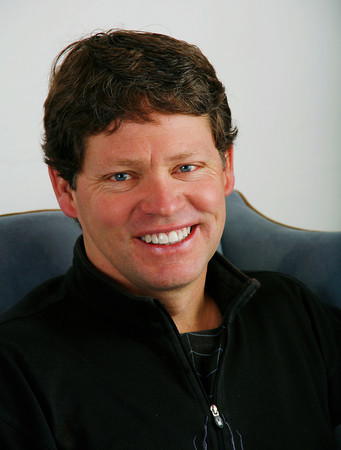
TIger_Shaw_TrusteeHeadshot-M

That is what Shaw inherits. This is his challenge and his opportunity.

An alpine skier himself who raced in the 1984 Sarajevo -- under then-men's coach Bill Marolt -- and 1988 Calgary Games, where he finished 12th in the giant slalom and 18th in the super-G, Shaw has since gone on to make himself into a successful businessman.

Shaw recently served as a senior director at Global Rescue LLC, responsible for business development and new markets. Before that he was director of inventory strategy at Dealertrack, overseeing a wide range of automotive retail sales issues.

Marolt will turn 70 in September. Shaw turned 52 last Saturday.

It's one more mark of Marolt's professionalism that there was a process to recruit, identity and put in place his successor. Shaw will become chief operating officer Oct. 1, then move into the top job next spring.

"I'm going to be involved right away in whatever Bill wants as he tutors me," Shaw said in a telephone interview, adding about Sochi and referring again to Marolt, "It's his show. The Olympics are his show. He built the institution to get the athletes to the podium, all that infrastructure.

"What I hope I learn in the time I spend under him is what has made him so successful. The primary goal of mine is to keep us No. 1 in the world, whatever it takes. What he is doing works. We want to emulate that, replicate that and -- improve on it."


There's no quit in John Nunn

Forty-five years ago, at the Mexico City Olympics, a marathon runner from Tanzania finished dead last in the marathon. His name was John Stephen Akhwari. Akhwari had fallen and hurt his knee. He was bloodied and bandaged by the time he straggled to the finish line, more than an hour after the winner. There, he was asked by the filmmaker Bud Greenspan why he had not quit despite obvious pain.

"My country did not send me 7,000 miles away to start the race," Akhwari said. "They sent me 7,000 miles to finish it."

At the recently concluded world track and field championships in Moscow, the American race walker John Nunn fulfilled a mission that in many ways rivals John Stephen Akhwari's for passion and pathos.

And -- absolutely, though it might not seem it at first blush -- dignity.

In the 50-kilometer race walk, Nunn, dead last by about an hour, crossed the finish line in screaming pain. There, he collapsed and had to be carried off the track on a stretcher. Under the stadium, intravenous fluids were pumped into him. An attendant asked if he could take off his singlet and shorts. Nunn was in such pain he could not move. So, literally, his uniform had to be cut off him.

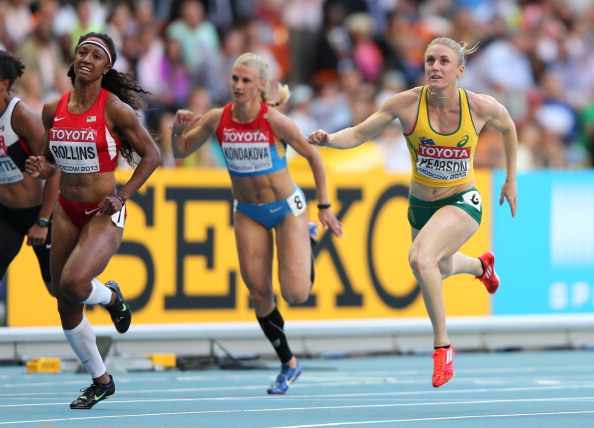
14th IAAF World Athletics Championships Moscow 2013 - Day Five

"I learned," he said, reflecting on it a few days later, "you just don't quit."

In the tightly knit race-walking community, Nunn's effort has already achieved a status approaching epic. Perhaps a few hundred people in Luzhniki Stadium saw it as well.

It deserves more.

Nunn finished 46th, in 4 hours, 34 minutes and 55 seconds.

The winner, Ireland's Robert Heffernan, had crossed nearly an hour beforehand, in 3:37.56.

The guy who finished 45th, Sándor Rácz of Hungary, had made it to the finish line some 22 minutes before Nunn, in 4:12.18.

For the last half-hour of John Nunn's ordeal, it was evident to the Luzhniki camera operators of the jumbo-screen TV that Nunn had set himself on a course of action and a test of will that was awful to watch and yet impossible to turn away from.

The cameras were on his every haunted step. Every time he winced or stumbled or grabbed his leg, it was all there on the big screen. Everyone among the few hundred stragglers at Luzhniki, it seemed, was crying out to him -- keep going.

By the time Nunn entered the stadium, the crowd was down to maybe 100 people. These 100 lived every moment of that last half-hour with him.  When he lurched across the finish line, collapsing, screaming, there were tears in the stands at what he had done and they had shared, all of them together.

"As soon as I finished," Nunn said, "my mind quit, and my body cramped up. They picked me up and I was just yelling. It was so painful. Tears were just pushing out of my tear ducts. They put me on a stretcher. They put me in some medical room.

They said, 'John, we had to take off your shirt so we can examine you. Can you take it off?'

I said, 'No.'

"Same with the shorts.

"So they cut off the shirt and the shorts.

"They put a towel on me. They put an IV in my arm. It took an hour, a full hour, for the intense cramping to calm down to where I could somewhat move."

14th IAAF World Athletics Championships Moscow 2013 - Day Five

The marathon -- 26.2 miles -- is usually thought of as the ultimate Olympic test.

The 50-kilometer race-walk is, in a word, harder.

While race-walking is keenly appreciated around the world, in the United States it is little known and mostly thought of as an oddity.

Which in itself is unusual. The odds of making the U.S. Olympic team in the race-walk -- if you can handle the mental toughness -- would appear to be better than in almost any other endeavor. There are untold numbers of 2:20 marathoners in the United States. And yet there are only a handful of guys who would even consider the 50k walk.

Nunn, for that matter, was the only American entrant in the event in Moscow.

The rules, it must be said, can take a little getting used to.

Walkers must keep least one foot in contact with the ground at all times. Two feet off simultaneously -- what would in ordinary speech you'd call  "running" -- is, in the jargon of race-walking, called "lifting," and grounds for a warning. Another rule requires straight legs at the point of first contact with the ground. If three judges give a walker warnings, the third warning leads to a disqualification.

It can all seem -- for those unfamiliar with the rules -- like a spectacle of sorts.

But make no mistake.

Race-walking can be, especially on a warm day like it was the day the 50k went down in Moscow, brutal. The physical demands are one thing. It's the mental grind that is the really hard part.

There are two Olympic-caliber distances, 20 and 50k.

A 50-kilometer race translates to roughly 31 miles.

For comparison, the marathon is 26.2 miles.

A world-class men's marathon is run in just over two hours.

A world-class men's 50k race-walk? Between three and a half and four hours.

The last American to win an Olympic medal is Larry Young, who won bronze in 1968 and 1972. In the U.S., funding is simply not a priority. The discipline has for years been kept alive in the colleges mostly at lower-level schools.

The results in Moscow showed exactly what happens when you invest time, effort and resource in race-walking programs and athletes. Eight different countries put athletes in the top 10.

Behind Ireland's Heffernan?

Russia's Mikhail Ryzhov finished second, in 3:38.58.

Third? Jared Tallent of Australia, 3:40.03.

Nunn's goal coming in was to try to finish in under four hours. A two-time Olympian, he raced the 20k in Athens in 2004 and then moved to the 50k in London last summer, the only American in the race, finishing in 4:03.28, in 43rd place.

It all started well enough for Nunn in Moscow, the kilometers clicking steadily by.

Indeed, through 20 he was hanging in there at a pace of under 5 minutes per kilometer. He turned kilometer 16 in 4:34.

At kilometer 23, though, Nunn started to feel some tightness in a hamstring. It got so bad he could not push off. He backed off. But it got worse. Then the pain moved down and around the leg, into his quadriceps, calf and shins. Then up, into his elbow joints.

"Everything started crunching down," he said. "It was miserable. It turned into Groundhog Day. Every step I was taking, I was, like, this is not going to end."

By kilometer 30, Nunn was doing roughly 6 minutes per kilometer. For conversion, 6 minutes per kilometer would see a jogger cover a mile in about 9 minutes and 40 seconds.

The debate started in his head -- to quit or not?

"At 25k," he said, "I thought, 'No way I'm going to get through this.' "

And this is where the thing gets truly fascinating. Like every racer in the 50k, Nunn went into it expecting pain. Maybe not so soon and not so severe. Even so, the race hurts. It's a given.

What to do?

"I would hit divots in the road. It would shock my body. My leg would go into an intense spasm of pain and lock up and double me over and I would, like, stop for a second or two and then keep moving. Other times, it would spasm so bad and I would try to keep moving but there would be 15 or 20 seconds of intense pain. Two or three minutes later, five at most, there would be the most intense cramping in my legs.

"I realized I would either fall over and be in total convulsion or not do anything and hit the finish line. I thought I would just keep going and see what happens."

Kilometer 44 would prove especially brutal. It took 7:42. More conversion: that would be a jogging pace of 12:23 per mile.

And still he kept going. "I honestly thought I was going to get told by the staff of the race I was going to have to finish out on the course, you are not going to finish in the stadium. But they never did tell me that."

He said, back now in the San Diego area where he is father to a 9-year-old, the two of them proprietors of a cookie business famous in track and field circles, "Part of me, at the end -- I remember when I finished the pain was pain I have never experienced in my life.

"There was a part of me that was crying out of humiliation. I was feeling like I was getting so much better," meaning at 50k strategy. "And then everything happened that day -- there was devastation at what had gone on.

"But in the 50k you just can't quit. Quitting became not an option. I know other people -- other people in the race said, 'I'm done,' and walked off long before the finish line. But USA Track  & Field paid for my airfare and training camp and for us to stay at a nice hotel."

And he said, in an echo of John Stephen Akhwari so many years earlier, "I had been asked to race the 50k. And so I did."


To quote Lenin, what is to be done?

It is good to be the king, and it is good -- unless and until there is evidence of doping, which it must be said could be tomorrow and could be never -- to be Usain Bolt. Because when you are Usain Bolt, you win, and when you win, you celebrate like he did Sunday at Luzhniki Stadium in Moscow, after yet another dominating performance by the Jamaican 4x100 men's relay team to close out the 2013 track and field world championships.

He shouted, "Moscow!" into the microphone. He threw his spikes into the crowd. Barefoot on the track, he did his "to the world" pose and performed his take on a Cossack dance.

Most important, later in the evening, Bolt -- perhaps alone among all the figures in track and field - has the gravitas to say what needed to be said about these championships. On a scale of 10, he said, they deserved a seven.

14th IAAF World Athletics Championships Moscow 2013 - Day Nine

"It has been a different championships," he said. "But it has not been the best. It got better over the days. More people got more relaxed. More people started smiling. There were more people in the stands. It picked up at the end but at the start it wasn't as good."

He added, referring generally to the Russians, "They don't smile a lot but they're cool people … and there are lots of beautiful women."

The Russian journalists wanted more. "The food," Bolt said, "was always the same. And I'm used to going to the 100-meter final with a stadium that's packed, so that was different.

"So there were little things but nothing major and it was stuff that took me a while to get used to."

If Bolt weren't using the athlete access, he could have added that one entrance to the stadium was through a grass path by a parcourse set-up that was being used -- despite security restrictions -- by the locals. Or that access to the IAAF tent required going through not one, not two but three separate security stations -- all 20 feet apart.

Or that the wireless access in the press seating was completely worthless. And that the main press center was a half-mile away from the journalists' entrance to the stadium. The press bus stop was even farther.

Because Bolt doesn't have to worry about such things, it's not his problem that eating and drinking in Russia -- we're not talking alcohol, just regular stuff -- is super-expensive. A bottle of water can run 170 rubles. That's nearly $6.

Not to mention the controversy over Russia's anti-gay law, which erupted over Swedish high jumper Emma Green Tregaro's rainbow-painted fingernails and Russian pole vault champion Yelena Isinbayeva's comments about Russians considering themselves "like normal, standard people," and Russian sports minister Vitaly Mutko saying Sunday the law won't infringe on the private lives of athletes and fans at next February's Sochi Games.

In ways large and small, these championships set the stage for Russia to play host to the world in Sochi -- and, as they always do, fixed track's place in the world of sport for the here and now.

So -- what of track and field?

Track geeks know that the sport's next big thing is the world championships, in Beijing, back at the iconic Bird's Nest, site of the 2008 Games, in 2015.

That is two years from now. Two years is a very long time.

Until then, track and field will be pretty much -- at least for the casual fan -- off the radar.

That is, to be obvious, nothing short of a disaster.

Yes, track's governing body, the IAAF, puts on the regularly scheduled Diamond League series of meets, mostly in Europe, in the spring and summer. The IAAF deserves credit for that. But the meets are mostly relegated to -- to use a newspaper analogy -- the sports-section back pages.

Consider:

Soccer is on, and on television, pretty much somewhere in the world seemingly every day, and the World Cup will go down next year in Brazil. The NBA has made tremendous inroads all over the globe with a season that runs from October until June. American football has already started and won't conclude until February. Even the American baseball season runs from February until late October, sometimes early November.

The 2013 Diamond League will feature three more meets -- Stockholm, Zurich, Brussels -- but, unless there's a lightning strike like last year's 12.8 world-record by American 110-meter hurdler Aries Merritt at the Brussels meet, track won't get much worldwide attention absent -- regrettably, yet another -- doping scandal.

The best thing track has going for it is Bolt.

He says he is thinking about running at the Commonwealth Games, next year in Glasgow.

To be, once again, obvious: the more Bolt is on the track, the more track is on track.

To be even more obvious: every sport needs stars.

It would make for a great bar bet to see if the average person anywhere in the world could name even five athletes not named Usain Bolt who competed in the Moscow championships.

Here's the corollary to that bet: if asked to name a track or field star, that average person would probably say ... Carl Lewis ... or Michael Johnson. That shows you how much work track and field must do to bring itself out of its glory days and into the 21st century.

What Bolt didn't say about the Moscow meet, because it's not his job:

Great meets tend to produce world records. It just so happens that the swimming world championships in Barcelona immediately preceded the track meet in Moscow.

It is just four short years since the craziness of the plastic-suit era at the 2009 Rome world swim championships, when swimmers set 43 world records and experts were wondering if those marks would ever be threatened.

In Barcelona, the swimmers set six new world records, all by women. They set three in one day, the final Saturday of the meet. Katie Ledecky of the United States set two world records herself.

In Moscow -- no world records.

Sure, there were world-class performances in Moscow: three championship records, 16 world-leading bests, 48 national records. In all, 18 nations won gold medals, 38 won a medal of some color.

Those totals are all the more intriguing considering who didn't show because of injury (the likes of London 2012 men's 800 gold medalist David Rudisha) or doping (significant cases before the meet in Russia and Turkey as well as failed positives involving U.S. sprinter Tyson Gay and, among others, Jamaicans Asafa Powell, Sherone Simpson and Veronica Campbell-Brown).

FINA, swimming's governing body, introduced high-diving at the Barcelona championships. It was a huge hit -- action sports, if you will, for the water crowd.

The track championship is still the same meet it is, and has been, for years.

A few thoughts:

There's no rock or hip-hop music at a track meet the way there is at a baseball game, when a reliever is introduced in the late innings. What if, for instance, each of the sprinters in the 100, 200 and 400 was allowed to pick a riff by which he or she was introduced?

What about putting wireless in the stands -- in a robust way -- so that fans could really follow along on their cellular phones or tablets? The IAAF iPhone and iPad app, introduced before the Moscow worlds, was genuinely great. Who actually knew about it?

For that matter, nine days is too long -- way, way, way too long -- for this meet. Make it six, max. That's long enough still for the marathons, the distance events, everything. And if it's not, then it's time for some creative thinking about how to do this championship differently.

Every sport has to change, and grow. There are sound reasons swimming and gymnastics were elevated this year into the top rank of the International Olympic Committee's financial tier, along with track and field -- a slot the IAAF had for years occupied, alone.

Outside Luzhniki Stadium stands a statue of Lenin. Thus he -- in a matter of speaking -- oversaw everything here. So he and perhaps his most famous aphorism are worth bearing in mind as the IAAF and its stakeholders pack up and begin the two-year trek to Beijing, some serious thinking in order between now and then about what its proponents believe is -- and could again be for all -- the finest sporting endeavor humankind has ever dreamed up.

As Lenin said: what is to be done?


The sensation Brianna Rollins

It's an unusual thing, indeed, when Usain Bolt storms to victory -- this time, in the 200 meters -- and he is not the star of the show on an action-packed night at the world championships at Luzhniki Stadium in Moscow. That would be the new sensation of the women's 100 meter hurdles, Brianna Rollins of the United States, who -- in a race that many track aficionados had been looking forward to as the showdown of the meet -- came from behind to defeat the reigning Olympic champion, Sally Pearson of Australia.

Rollins' winning time: 12.44.

Pearson's: 12.5 flat.

14th IAAF World Athletics Championships Moscow 2013 - Day Eight

Ponder this:

Rollins has made herself, in one year, NCAA champion, U.S. champion and, now, world champion. She finished up at Clemson this spring. She turns 22 tomorrow. She has now won 34 straight races, including heats, across four different disciplines.

Rollins ran an American-record 12.26 to win the U.S. outdoors in June. That 12.44 is her third-fastest time of the year even though it was run into a slight -- 0.6 meters per second -- headwind.

"I'd call it a great year for me," Rollins said. "I'd call it a blessed year."

As Benita Fitzgerald Mosley, the 1984 Los Angeles Games 100 hurdles gold medalist, now the U.S. Olympic Committee's chief of organizational excellence, put it in a telephone interview, Brianna Rollins "is something else -- she really is."

As for Bolt, who had dropped a starting block on his foot in the 200 heats but then got himself taped up and ran, anyway:

Sitting in the blocks, now his style, he got off to the slowest start in the field but nonetheless, as usual, had the race won by the curve. He eased up and still finished in 19.66.

By anyone else's standards, 19.66 would be extraordinary.

For all the understandable to-do about what Bolt does in the 100, the 200 always has been his best event.

To show how he has re-ordered time: 19.66 is his 10th-best 200 mark. Of course he holds the world-record in the event, 19.19, set at the 2009 world championships in Berlin.

Jamaica's Warren Weir, the London 200 bronze medalist, took second, in 19.79.

American Curtis Mitchell prevented a Jamaican sweep by coming on hard in the final 50 meters, finishing in 20.04 for third.

This is how close it was for third: Jamaica's Nickel Ashmeade crossed in 20.05 for fourth.

It was the first time in 200 history that all eight guys went a wind-legal 20.37 or faster.

Some more facts and figures to underscore not only Bolt's place in the record books but his hold on the imagination:

-- He became the first to win the 100-200 sprint double twice at the world championships.

-- His third 200 worlds gold surpasses Michael Johnson and Calvin Smith.

-- He now has seven world gold medals to go with the six he has won at the Olympics. A presumed eighth, the 4x100 relay, is coming up Sunday.

Pearson came into the women's 100 hurdles after overcoming an early-season hamstring problem. She ran 12.62 in the heats, then threw down a 12.5 in the semifinal, the fastest qualifying time, signaling that she was indeed ready to go.

Make no mistake: Sally Pearson is a big-game racer.

Rollins ran 12.55 in the heats, 12.54 in the semifinals.

This would be, of course, Rollins' first major international final. Also in Saturday's final: Dawn Harper, the 2008 Beijing gold medalist and 2012 London silver medalist.

In the first half of the race, it looked as if Pearson might just pull it off.

Rollins reacted horribly to the gun, 0.263. Pearson, meanwhile, got off to a good start, 0.154, and led through the first few hurdles.

But Rollins eventually made her move, passing Pearson over the eighth and ninth hurdles.

With the victory, Americans won both the women's and men's sprint hurdles at the worlds for the third time; David Oliver won the men's 110 hurdles on Monday. Americans won previously in 1995 and 2001.

"Today I didn't have the best start but I didn't panic," Rollins said. "I was just focusing on my own lane and working hard, trying to finish strong. Today was about the victory, not about the time. The fast times will come. I have a huge respect for Sally Pearson. She is a great athlete and it was great to compete with her today. I was nervous but nervousness is normal. It's just about the way you handle it."

For her part, Pearson said, "Of course you are going to a race to win but I am satisfied. It is not gold but the best I could produce tonight. It was a hard year for me. In July, others were smashing me. Tonight I was only beaten by one. Next year, I won't be getting any silver!"

Great Britain's Tiffany Porter ran a personal-best 12.55 for third place, Britain's first women's 100 hurdles medal at a world championships. Harper took fourth in 12.59, with another American, Queen Harrison, fifth in 12.73.

"It was a horrible race, and I don't know what happened," Harper said.

In other action, the illustrious Meseret Defar of Ethiopia won the women's 5000 meters, in 14:50.19, the fastest time in the race at the worlds in eight years -- despite a last 200 meters run in a relatively pedestrian 29.43.

Defar is 5-foot-3, 92 pounds of tough. Her record:

Three Olympic 5k medals -- 2012 and 2004 gold, 2008 bronze.

Five worlds 5k medals, a record -- two golds, one silver, two bronze.

In her typically understated way, Defar said afterward, "It is a big achievement for me."

Molly Huddle finished sixth in 15:05.73, the best finish ever by an American.

The U.S. women's 4x400 relay team's world championship winning streak -- five -- came to an end. Russia won, in 3:20.19. The Americans -- running without the injured Allyson Felix -- took second, in 3:20.41. Great Britain came in third, in 3:22.61.

In the women's high jump, Russia's Svetlana Shkolina, the 2012 bronze medalist, took gold Saturday at 2.03 meters, or 6 feet, 8 inches. American Brigetta Barrett, the London silver medalist, took second again; she cleared 2.00, or 6 6-3/4, but not 2.03.

"Two silver medals in the course of 12 months -- it's been one heck of a year," Barrett said later.

Finally, this:

Kenya's previous best performance at the worlds in any field event had been 15th in the triple jump qualifying.

In the men's javelin, won by the Czech Republic's Vitezslav Vesley with a throw of 87.17 meters, or 286 feet, Kenya's Julius Yego took fourth. He threw a national-record 85.40, or 280-2.