Wrestling? How about surfing?

The agenda is patently obvious Wednesday, when the International Olympic Committee's policy-making executive board meets in St. Petersburg, Russia, to determine the next steps for the sports program at the 2020 Summer Games. Does wrestling stand a chance to get back in? Or will it be irretrievably out for at least for four years? What about baseball and softball's combined bid -- does it deserve the one spot now open for 2020? Or will the other sports, such as squash, karate or climbing, be given an opportunity to make their case?

No matter the decision, the bigger picture has already been revealed. The IOC's process for figuring out what sports should be in the Games is fundamentally flawed and needs wholesale review.

The fix the IOC is in can be crystalized by assessing the outcome of the wrestling dilemma -- a crisis of the IOC's own making.

If wrestling, which the board voted out in February, gets a chance Wednesday to come back, and then -- in September at the all-members session in Buenos Aires -- actually gets voted back on, that's testament to an an appropriately aggressive response from FILA, the international wrestling federation, and power politics from, among others, Russia, where wrestling really matters, and President Vladimir Putin.

Russia is playing host to the Sochi 2014 Winter Games in just a few months. At Putin's direction, some $51 billion has already been spent -- that we know of -- getting ready for Sochi.

Putin is due in St. Petersburg to meet Thursday with Rogge, the day after the executive board vote.

If it's ultimately wrestling again on the program, and you can for sure make that argument in good faith, here's the problematic next question: what changes will the IOC's post-London Games review toward 2020 have actually effected?

Zero. Zip. Nada.

This raises a completely different set of issues and questions. Because, one might argue, it is counter-productive indeed for the IOC to do nothing, to seem stale, when it proclaims time and again that its mission is to reach out to the young people of the world.

To be blunt: the IOC's No. 1 priority in an ever-changing world is to remain relevant. There's a reason why sports such as jeu de paume, pelota basque and croquet, once features of the Summer Games program, aren't on it any longer. The program evolves with time and circumstance.

Yes, and understandably, wrestlers want to shine at the Games. But so do shortstops on baseball teams. And girls around the world who play softball.

And, for that matter, so do surfers, skateboarders, dancers, mixed martial artists and others.

The IOC has spent more than 10 years, essentially since the Mexico City session in 2002, trying to figure what to do about the Summer Games line-up. With this result: baseball and softball out, golf and rugby sevens in.

That is not considerable progress.

It is abundantly plain that more progress on this issue is not going to, or can not, take place until after the election of the new IOC president, at the Buenos Aires session, in September.

After that, though, this issue ought to be a key priority.

Mindful that the IOC -- at least for now -- caps participation in the Summer Games at 10,500 athletes and 28 sports, and also appreciating that a logjam like this is going to take both time, some direct conversation and some out-of-the-box thinking, here is a proposal to start the dialogue.

To begin, because of the 10,500 cap, somebody's got to go.

Say good-bye to soccer (504 athletes in London), shooting (390) and equestrian (200). This assumes wrestling is gone as well (344). Now you have cleared 1438 spaces.

Soccer for sure does not need the Games. Obviously, the men's component at the Olympics is not even the beautiful game's top priority since the best players don't play.

As for shooting -- people are going to shoot guns no matter what.

And for equestrian -- horse shows will survive without the Olympics, it's always a complication getting the horses to the Games and while the proponents of equestrian sport like to talk about how it fosters an amazing connection between man and beast that anyone can enjoy, doesn't it really cost a lot of money -- an awful lot of money -- to compete at an elite level?

Another way to approach the 10,500 cap is to ask why there is a 10,500 cap. And why the Games only run for 17 days. But that's a different philosophical issue entirely.

At any rate, once you make room for new sports, here are sports to consider, sports that young people actually like and that would not only make for hot tickets live but would crank up TV ratings, too:

Surfing

Is there anyone who doesn't think surfing is cool? Who in the world doesn't think Hawaiian surf god Laird Hamilton is, like, the coolest guy on Planet Earth? Wouldn't he be an invaluable asset to the movement? Dude, there is an entire culture devoted to this sport.

The head of the International Surfing Assn. recognizes that the only way surfing makes its way into the Games is not out in the ocean. It's through man-made wave-park technology.

Purists would assuredly argue that would be betraying some of surfing's soulfulness. Who, though, says the soul of surfing requires it to be a sport for only those who live by the shore? That technology would spread the sport far and wide, allowing millions -- if not billions -- more access to it.

If you think beach volleyball is now the hot ticket at the Games -- imagine the scene at Olympic surfing.

Fernando Aguerre, 55, a surfer (of course) and president of the ISA, is a visionary, not just an entrepreneur and environmental activist but someone who for years now has understood the power of the Olympic movement to effect change.

Born and raised in Argentina -- where he founded the original Argentinean Surfing Assn. despite a military dictatorship ban on the sport at the time -- he now lives near San Diego, Calif.

Reef, the sandal and sportswear maker? That was his company. This summer, the surf industry's trade group SIMA -- which is more likely to honor the likes of a competitor like Kelly Slater -- is poised to give Aguerre its top prize, the Waterman of the Year Award.

The federation, incidentally, now counts 72 member federations. It includes world championships in a variety of categories. Further, ISA has launched a number of initiatives, including scholarship programs for young surfers in countries like Peru.

Aguerre said, looking at the sports in the Games program, "I believe restrictions on participation should exist. However, I think that in the best interest of the Olympic movement, the results should be applied to all sports -- those that are in the Games and those that are not in the Games. It should be a level playing field."

He added a moment later, "It's like I say about creating a menu for a party. It doesn't matter what food you serve in your house. You look at the best food, and then you create the menu. Then people are going to be happy."

Skateboarding

The IOC has done solid work in bringing snowboarding to the Winter Games. U.S. icon Shaun White is now a two-time Winter Games gold medalist.

White is also a skateboarding stud.

And yet he can't compete in skateboarding at the Summer Games?

This makes no sense, especially when you see skateboarders doing awesome tricks at the X Games.

The explanation is both simple and yet super-complex -- it's sports politics.

Without getting too deep, the IOC demands national federations and an international federation. And everyone understands that skateboarding could mean big money.

The snowboarding analogy: snowboarders got in through the skiing federation. Now it's all good. But at the time, in the late 1990s, it was far from easy.

The challenge for skateboarding is figuring out how to get in -- separately, or under the wing of another federation. The cycling federation, for instance, has often been mentioned. But that has never seemed like the right fit.

So, as IOC president Jacques Rogge said in a recent interview in Around the Rings, this is the impasse.

It needs to be worked out.

Again, see those skateboarders at the X Games?

DanceSport

When: Dec. 11, 2000.

Where: the Palace Hotel, Lausanne, Switzerland.

What: a standard and Latin DanceSport demonstration.

Who was there: then-IOC president Juan Antonio Samaranch, the entire IOC executive board, the IOC program commission and others, among them me. I walked out thinking, no way.

More than a dozen years later, and all I can say is, I was flat-out wrong, and I am here now to say it's time to admit it.

One: it's ridiculous to say the IOC doesn't allow dancing in the Games. Look at ice dancing in the Winter Olympics.

Two: they're real athletes. Ask Apolo Ohno, the eight-time U.S. short-track speed skating medalist, about how physically taxing it is to dance on "Dancing with the Stars." Or Shawn Johnson, the U.S. gymnast who won gold on the balance beam in Beijing in 2008 and who, like Ohno, is a "Stars" winner.

Three: have you seen the ratings for "Dancing with the Stars"? Or the British version, "Strictly Come Dancing," which started the entire thing? Ladies and gentlemen, what we have here is not just a franchise but a worldwide phenomenon. And not just on TV. We're talking crazy on social media.

Tug of war

Is there a kid alive who has not played tug of war?

This is a sport that, with a little rock-and-roll music, some cheerleaders and a little sand, could become the next breakout hit -- again, the next beach volleyball.

What do you need to make tug of war happen? A rope. Where is there not a rope and some imagination?

A little-known fact is that tug of war was included in the Games from 1900 to 1912, and again in  1920. Time to bring it back!

As David Wallechinsky writes in his authoritative The Complete Book of the Olympics, a first-round pull resulted in one of the biggest controversies of the 1908 London Games: after the Liverpool Police pulled the U.S. team over the line in seconds, the Americans protesting that the Liverpudlians had used illegal boots spiked with steel cleats. The British maintained they were wearing standard police boots; the protest was disallowed and the Americans withdrew. After the tournament, the captain of the gold medal-winning London City Police challenged the Americans to a pull in their stockinged feet; there is no record of such a contest ever taking place, Wallechinsky writes.

Meanwhile, talk about universality. Imagine three-on-three teams from, say, American Samoa and Estonia. Why not?

Why not mixed teams? Men and women competing against each other? Maybe five-on-five?

All that would require some major rules changes, acknowledged Cathal McKeever, head of the sport's international federation, who said it is actively working to get back onto the program, perhaps by 2024.

"It's not like Michael Phelps," he said. "We don't have superstar individuals."

Not yet.

Mixed martial arts

Eight years ago, when I was still a staff writer for the Los Angeles Times, I wrote a front-page story  about an up-and-coming sport, mixed martial arts, that U.S. Sen. John McCain, the Republican stalwart from Arizona, had once decried as "human cockfighting."

Since then, the UFC has gone on to become an enormous success story.

Mixed martial arts is already huge, it's still growing, young people can't get enough of it, and the time has come for the IOC to start coming to terms with it -- indeed, to get on board, because if you go to an MMA gym, the values that are preached there are thoroughly in line with the Olympic values: respect, excellence, friendship.

One of the primary ethos of an MMA fight is that it's OK to tap-out to live to fight again -- this shows respect not just for your opponent but for the sport itself.

Every excuse the IOC could come up with is just that -- an excuse.

For instance, there are those who don't like the fact that MMA is a "submission sport." But so is judo.

To be clear, this is a long-term proposition. The IOC and the international federation -- yes, there already is one, and it is not based in the United States -- would have to figure out how the basics of how to run a tournament. Could the athletes, for instance, reasonably be expected to fight three or four times over 16 days?

Here's the thing, though: where there's a will, there's a way. And when the IOC wants to get things done, it always does.

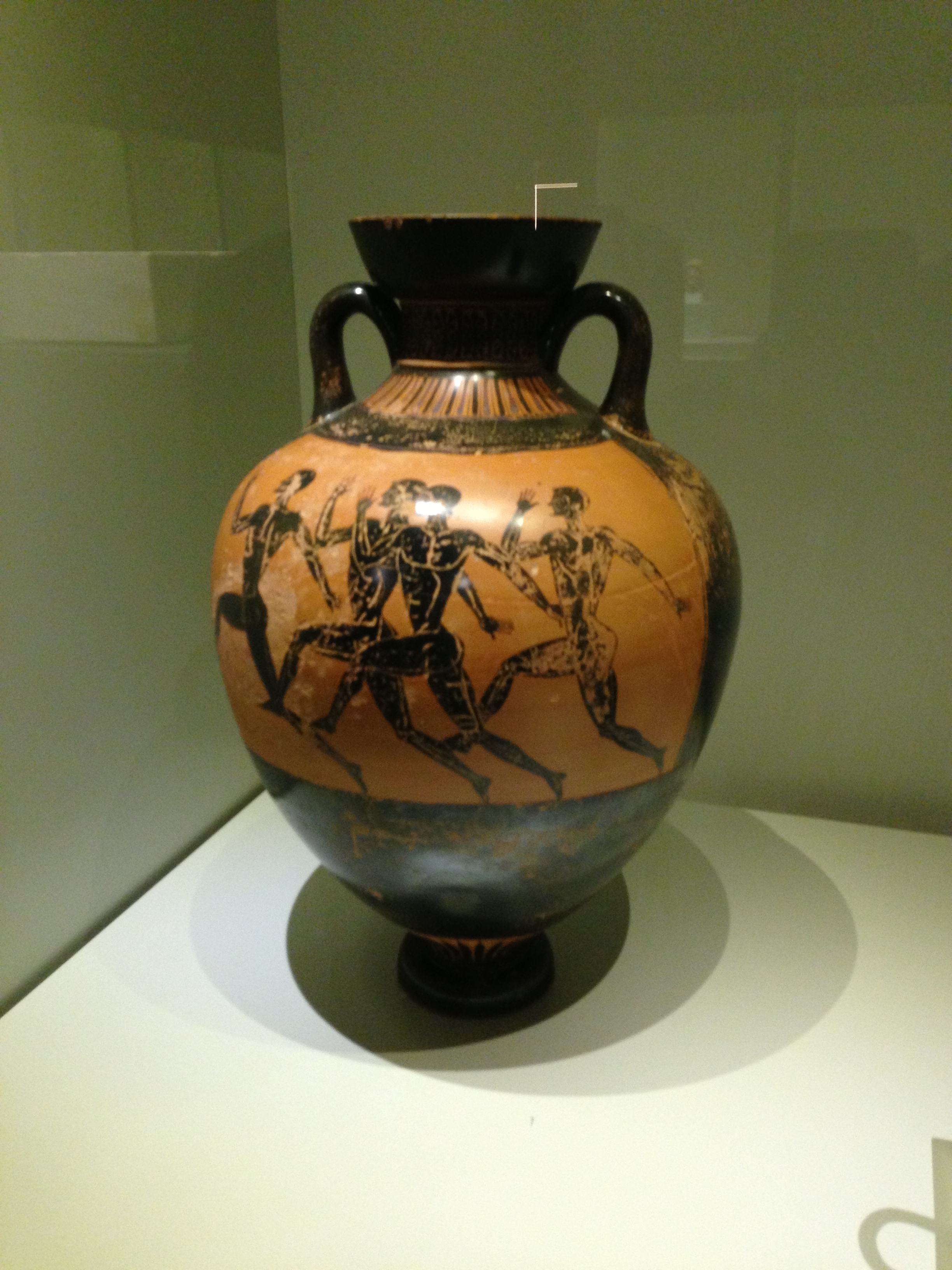
Oh, and to take this back to the beginning of this column, and wrestling, because wrestling has been around since the beginning of the modern Olympics in 1896 -- you know what was a major feature of the ancient Games, in Olympia itself? A discipline called pankration.

Today we would call that "mixed martial arts."


Oswald makes it five

Denis Oswald of Switzerland made it five Friday and three in one week, announcing that he, too, is now a candidate for the International Olympic Committee presidency. Oswald, experienced in virtually all facets of the movement -- as an athlete, IOC member and administrator -- sent a one-page letter to his fellow members that both declared his intent to run and outlined his extensive qualifications:

"My 40 years of service to the Olympic movement have provided me with a comprehensive understanding of our organization as well as its role and significance in the wider world.

"This knowledge and experience ... will enable me to advance the Olympic cause and enhance the IOC's authority as the leader of world sport.''

IOC presidential candidate Denis Oswald of Switzerland

Oswald, 66, joins a list that includes C.K. Wu of Chinese Taipei (who announced Thursday), Richard Carrión of Puerto Rico (Wednesday) and Ser Miang Ng of Singapore and Thomas Bach of Germany (both earlier).

Sergei Bubka of Ukraine is also expected to jump in, perhaps as soon as next week.

The IOC will select the successor to Jacques Rogge Sept. 10 in Buenos Aires.

Rogge has been president since 2001. He took over from Juan Antonio Samaranch, who served for the 21 years before that.

That 2001 presidential election saw five candidates.

An intriguing back story to Oswald's announcement Friday is that some had been suggesting to him -- and quite directly -- that he consider options at the World Anti-Doping Agency.

Instead, he said in the letter, "In the coming weeks, I will have the opportunity to present to you my vision and philosophy which will inspire my actions on your behalf and that of the IOC."

He scheduled a news conference for June 3 in Lausanne, Switzerland, where the IOC has its headquarters, to outline his plans. Oswald is based in nearby Colombier, near Neuchâtel.

If all IOC elections are based in large measure on relationships, it's also an inescapable fact that they are also math problems.

Oswald's entry into the race now means there are two western European candidates -- he and Bach. What Oswald's campaign means for Bach, the first to declare his candidacy and widely presumed to be the front-runner, is immediately unclear.

Oswald has, as he said in Friday's letter, been immersed in the movement at every level.

He competed in rowing at the 1968, 1972 and 1976 Games, winning a bronze medal in Mexico City in 1968.

A lawyer for many major companies since the mid-1970s, he has been president of the rowing federation, which goes by the acronym FISA, since 1989 -- his term there ends later this year -- and an IOC member since 1991.

He served as president of the Assn. of Summer Olympic International Federations from 2000-12; that gave him a spot during those years on the IOC's policy-making executive board.

Since 1984, he has been an arbitrator at sport's top court, the Swiss-based Court of Arbitration for Sport; since 1994, he has been a CAS mediator.

Oswald served as chair of the IOC's coordination committees for both the 2004 Athens Games (despite any number of challenges) and the 2012 London Olympics (now a benchmark for future Games).


Wu's IOC vision: education

C.K. Wu of Chinese Taipei, the president of the international boxing association and a member of the International Olympic Committee's policy-making executive board, on Thursday announced he is running for the IOC presidency. Stressing that the Olympic movement ought to reach deep into communities worldwide to emphasize not just sport but culture and, especially, the education of young people, Wu said, "This is the way to look to the future."

He added, "The Olympic values should start early. When you are young, we all have family education. We learn a lot through the family. When I look at the problems facing us -- doping, match-fixing -- and beyond, all the issues that we care about, issues that are part of our responsibilities, you ask, how to tackle these?

"I am emphasizing the education."

International boxing association president and IOC executive board member C.K. Wu

Wu, 66, made his announcement at a news conference in Taipei, becoming the fourth candidate in the race, joining Richard Carrión of Puerto Rico -- who issued a statement on Wednesday -- as well as Ser Miang Ng of Singapore and Thomas Bach of Germany.

Sergei Bubka of Ukraine is also widely expected to join. Switzerland's Denis Oswald has been dropping hints, too, about getting in.

The IOC will elect its new president on Sept. 10 in Buenos Aires.

Jacques Rogge of Belgium has served since 2001. He replaced Juan Antonio Samaranch of Spain, who served for the 21 years before that.

Wu, a hugely successful architect who played a key role in developing the Milton Keynes project in Britain, has been an IOC member since 1988.

He served on the Beijing 2008 Games coordination commission and is on the same panel for the Rio de Janeiro 2016 Games. He also was a member of the 1998 Nagano Winter Games coordination commission.

He served on what was called the Cultural Commission from 1992-99 and since 2000 has been on what is now called the Culture and Olympic Education Commission.

For the past 11 years, he has been a member of the Philately, Numismatic and Memorabilia Commission -- that is, stamps, coins and other collectibles.

He and Samaranch shared an avid interest in collecting. Indeed, Samaranch bequeathed Wu his collection and, last month, the Samaranch Memorial Museum opened in Tianjin, China -- designed and financed in part by Wu.

Some may assess this 2013 presidential race and be tempted to underestimate Wu.

Wu, though, has a profound civility about him. And important allies. And a knack for beating the odds.

That museum, for instance? The first time the Chinese government allowed such a memorial to a foreign figure. In Wu, moreover, the project was overseen by a non-national. All that, and it got done -- and then some two dozen IOC members showed up at the dedication.

Wu has been president of AIBA since 2006. There were those who thought the controversial former president, Anwar Chowdhry, might never leave; Wu managed to oust him that year in an election. The next year, an AIBA ethics report outlined a series of financial irregularities during Chowdhry's 20-year reign.

Under Wu, AIBA has continued to undergo a series of reforms.

Last year, Wu ran for the IOC's executive board. Some thought, no way. He won.

In an interview, Wu said his idea for the presidency rests on those three core elements of sport, culture and education but emphasized that the president's ability to "transform and realize" Olympic ideals into practice is, and always will be, key.

Under the principle "beyond Olympism, together," he said, the IOC could "significantly enhance" its "contribution to humanity."

Through any and all tools, he reiterated his commitment to education worldwide with an emphasis on the Olympic values -- and even perhaps, he suggested, Olympic museums in host countries with programs supported by the IOC.

He said the IOC members should actively position themselves as part of "an organization that leads the effort in making our world a better place not only for our athletes and the Olympic family, but also for our neighbors and society at large.

“I strongly urge that we concentrate more on education than ever before. I truly believe that there is no better solution to fighting against these problems than providing young people with education early on. This is one of the best ways to bring the IOC well beyond what it has achieved ..."

In other areas, Wu suggested that all Olympic sports should be "protected" -- an intriguing note given the controversy over wrestling's bid to get back onto the program for the 2020 Summer Games. As for new sports, he suggested, the IOC might want to re-visit the idea of demonstration sports.

Wu proposed that the IOC revisit the age-70 limit set as part of the reforms enacted as a response to the late 1990s Salt Lake City scandal.

IOC membership is now set at 115. Wu suggested 130 on the grounds that it would bring in more national Olympic committee and international federation presidents.

For those who wish to underestimate him, Wu said with a gentle laugh, "Gradually, they will understand. I will talk with the colleagues. Last year's [executive board] election -- I got a very high vote. The members -- they recognize what I have done. At AIBA, the work I have done once seemed impossible and now people say, you have done it.

"The museum -- this is the culture side. We need a president with a cultural background. The body and the mind -- we need that, and education. The new president can emphasize the importance of this."

He also said, looking ahead to the campaign, "Competition is only for three or four months. Friendship is for forever."

Carrión lights his flame

Optimized-Carrion-Podium-Pic-2-CONGRESS.jpg

It was a couple days before the start of the Vancouver 2010 Winter Games. The British Columbia weather was, as usual for that time of year, unpleasant -- rain and sleet. All the more charming, it was hardly 7:30 in the morning. And yet -- people were lined up three-deep to watch the Olympic flame go by. Those who had  prime viewing locations made way so that some in wheelchairs could get a look. People who had babies held them up high and said, out loud, to the little ones, "There it is."

Taking all this in that morning was the man who, for a couple minutes, ran with the flame, then handed it off on its next leg toward the cauldron and the opening ceremony -- Richard Carrión, the International Olympic Committee member from Puerto Rico.

On Wednesday, Carrión announced he is a candidate for the IOC presidency. Much will inevitably be made in the weeks and months to come about how Carrión is a banker, a businessman who has negotiated the IOC's major television rights deals, indeed arguably the IOC's key financier -- all of that -- and how he would bring best-practices sensibilities to the office.

That, though, is not why he is running.

Thinking back to that morning now more than three years ago, Carrión said, "The people were there to watch the torch -- not the guy.

"That flame evokes an emotion. That is the most powerful thing we have going for us. The minute we think this a business or a professional meeting, we are lost.

"This is fundamentally an organization built around universal values that tries to bring out the best of us in every way. That is what makes me feel privileged to give the organization the time I have given it the past 23 years. I feel it is a privilege -- not something I should be compensated for. That is what stirs the passion in me."

Carrión, 60, is third to announce his candidacy, joining Germany's Thomas Bach and Singapore's Ser Miang Ng.

C.K. Wu of Chinese Taipei, Sergei Bubka of Ukraine and Denis Oswald of Switzerland are other likely or potential candidates. The IOC will vote Sept. 10 in Buenos Aires. The winner will replace Jacques Rogge, who has served for 12 years.

Carrión, as he noted, has been an IOC member since 1990. He served as a member of the policy-making executive board from 2004 until last year. He has been chair of the IOC finance commission since 2002.

Though the global economic downturn has rocked governments and businesses worldwide, the IOC has over the past 10 years increased its reserves from $100 to some $900 million, guaranteeing funds sufficient to withstand an entire four-year cycle without Games.

How? Finance stuff -- opening up the bidding process itself for the sale of broadcast rights, holding more country-by-country TV bidding and readjusting the pay-out to Games' organizing committees to an inflation-based formula.

Over the course of the campaign, the two challenges Carrión is most likely to hear most often -- which he straight-up acknowledges -- are, first, his demeanor, and two, the fact that unlike some of the others, he was not an Olympian, professional athlete or even sport functionary before a business career.

To take the second one first, perhaps only within the IOC would that even remotely grasp at logic. Carrión has been chief executive (since 1989) and then chairman (since 1993) of Popular, Inc., the financial institution that now claims $37 billion in assets.

Meanwhile, an easy check of the website for FIBA, the international basketball association, would show Carrión's name there as a central board member. It's hardly as if he doesn't know or understand sport -- he serves now on the 2016 Rio de Janeiro coordination commission and pulled similar duty on the 1996 Atlanta commission.

As for his personality -- Carrión can command a room but does not easily glad-hand it. This can sometimes create the wrong impression. At first, he can seem shy. Beneath the reserve, it turns out, he is not just sensible and level but, indeed, gracious and personable.

As for campaigning, he said, "I just have to do it. i just have to go out and sit down and say, 'This is what I think, you are important to me and your ideas are important to me. I am a listener. You can talk to me all day long. That doesn't mean I will do what you say -- but it will weigh in my mind.

"I am not subject to any kind of pressures. I have resisted pressures. I have dealt with large companies and large organizations all my life. I have a global perspective. I am independent, in the sense that I am not subject to any kind of pressure."

The IOC, Carrión made plain, finds itself now in good standing. At the same time, this election sees much at stake.

Why? Economic strains threaten sports across countries of all sizes. The Olympic Games themselves have become increasingly complex to stage. Doping and illegal betting represent significant threats. And, as a social trend, there is the growing rate of inactivity and obesity among young people in certain countries.

A key point: it's not just the Olympic movement of 2013 that's at issue. It's what the movement will look like in 2021 or, given the way things really work, with the next president on deck to serve not just the standard first eight-year term but a full 12 years, 2025. Moreover, it's not just about the Games -- it's about the movement and its reach to the big cities and little villages of the world alike.

Carrión outlined some broad themes and, at the same time, some potential action steps. The IOC, he said, should:

-- Use a "multi-partner approach" to better achieve what it calls "universality," or worldwide inclusion. A foundation of the Olympic movement is that sport is a human right. But governments -- which largely fund sport -- are facing tough choices. Carrión's notion? The IOC's United Nation observer status and added partnerships with non-governmental organizations can help. "We have a treasure trove of knowledge of what is working," he said, "so that at the community level we can put plans in place."

-- Create a special new fund for grass-roots sports education and development, one that complements the existing Olympic Solidarity program, which aims more at elite sport. Last month, in Lima, Peru, the IOC held a conference on "Sport for All." This was the IOC's 15th such conference; it went on for four days; 500 leading experts from almost 90 nations attended. Now, as a point of contrast: the IOC's "Sport for All" budget for the 2009-2012 cycle -- $2.2 million. If that sounds like a decent sum, consider that there are 204 national Olympic committees. Consider, too, that Solidarity's budget for the same period was $311 million. Which means that Sport for All's budget for the same period was 0.7074 percent of Solidarity's.

-- Lessen the burden of hosting the Games or run the risk -- as is already perhaps being seen -- in limiting future bids to a handful of countries. One way: bring in-house some Olympic Games functions. This sort of non-sexy, but essential, idea actually could save big dollars. The IOC already knows this, because it has the model in place: Olympic Broadcasting Services. OBS has shown that with the same teams in place you can gain greater efficiencies, higher quality and greater productivity.

-- Take a broad look at the reforms enacted in the wake of the late 1990s Salt Lake City crisis. Carrión served on the commission that pushed for the reforms, which include an age-70 age limit. Now, he says, "The important thing is we need to review these things. Twelve years later, we can better gauge the effect of some of these things," noting the members' skills and diversity are not being tapped to their fullest.

-- Urge for the inclusion of women at management and executive positions throughout the IOC and the movement. "We do," he said, "need to show some leadership and increase that."

Others will of course have held a news conference to mark their presidential candidacies. Not Carrión, who is sending a letter and his "manifesto," or to-do plan, to the members. For him -- that's enough.

"It is part of my style," he said. "It drives most of the things that I do -- let's be as efficient as possible."


Dan Cnossen's journey

Optimized-DSC_0137.jpg

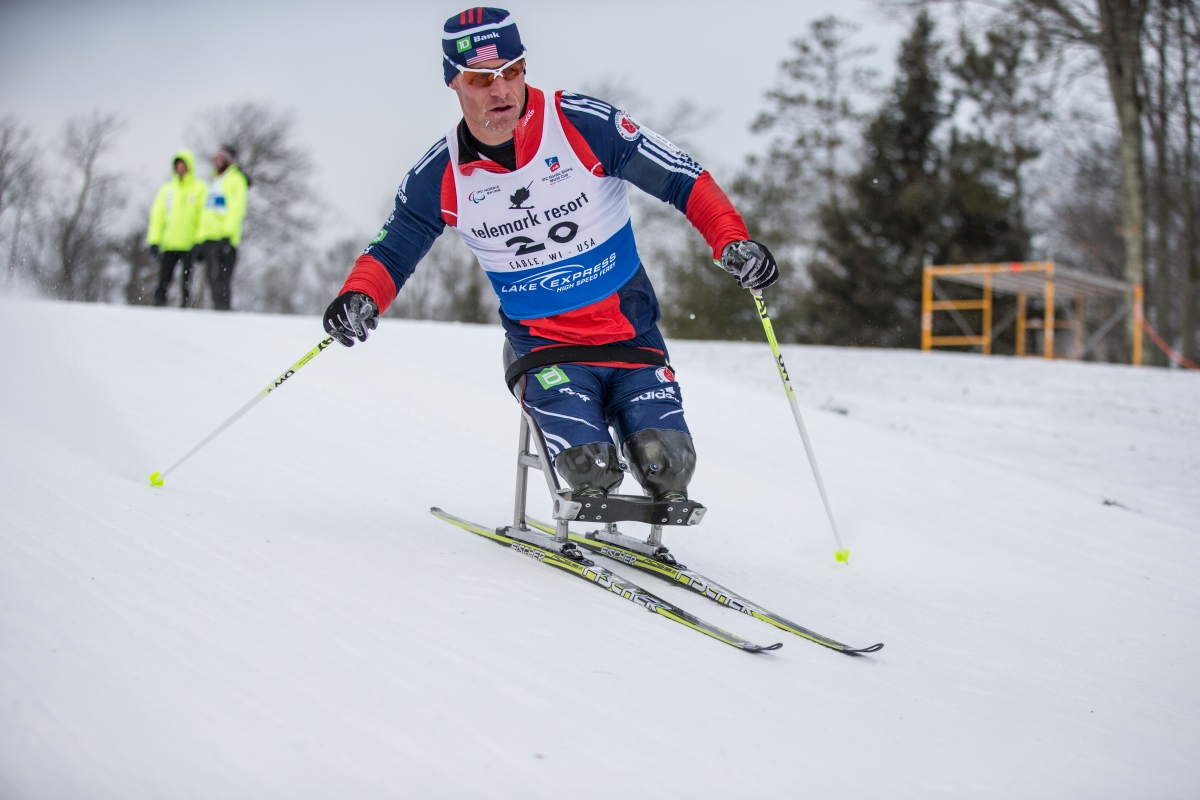
On days when it may seem grim, there is the quiet example of U.S. Navy Lt. Cmdr. Dan Cnossen to give us all hope. Cnossen is a leading contender to make the U.S. Paralympic team at next February's Sochi 2014 Games in Nordic skiing. He has a real shot to win a medal in both cross-country skiing and in biathlon, the skiing-and-shooting sport.

It's not just that, though.

Dan Cnossen, a Navy SEAL, lost both legs just above the knees in an explosion in Afghanistan in September, 2009.

It's how he has come back, how he can walk and run, and ski, and how it's all a new normal.

This is the way it's going to be now for those wounded in the Boston Marathon bombings last month.

Dan Cnossen's tale can show the way.

"We are a high-performance sports organization, and that means we work day in and day out with a pretty remarkable group of people," Max Cobb, the president and chief executive of USA Biathlon, said.

"And then there are times when for a moment you reflect on an athlete like Dan Cnossen, and on his progress, on his story, on his phenomenal tenacity. It's emotional. Dan makes you proud to be an American, proud to be on his team."

Cnossen says about the suggestion that he might be an example, "It's pretty humbling," adding, "I hope it can help."

Dan was born and raised in Kansas, on the outskirts of Topeka. He and his sister, Leslie, are the fifth generation in his family to grow up there, on a family farm.

He went to the U.S. Naval Academy in Annapolis, Md. The academy has a triathlon team that competes at the Olympic distance; he was on that team. Meanwhile, twice while in college, he ran the Boston Marathon. His best time, in 2000 -- 3:05.57.

After the academy, he made it into the SEALs. There can be no doubting his work ethic and mental toughness.

The explosion in Afghanistan took place on Sept. 8, 2009. Cnossen stepped on an IED, an improvised explosive device. He was unconscious for eight days.

When he woke up, in intensive care in Maryland, it was not much of a shock to realize what had happened. "I just kind of knew," he says now.

Dan's first year home is chronicled on a website that features a beautifully written collection of posts, many from his sister, Leslie. This one is from the first post, not even three weeks after the blast, from his mother, Alice:

"The medics who saved his life, the surgeons in Bagram and Landstuhl who stabilized him for transport to National Naval Medical Center at Bethesda, the excellent medical teams who have cared for him daily since his arrival here -- all have converged to bring him to his destiny today: to embark upon many new adventures and turn over a new leaf in his life: healing, recovery, rehabilitation, reconnection with family and fellow wounded warriors, perhaps serving as an inspiration to many as he starts this long, arduous journey toward renewed health and joyful living."

The goal, Dan said, was not just walking. It was running. That was what he had done on the afternoon before the bomb blast that night in Afghanistan. That was what he had done on the beach in San Diego, training for and with the SEALs. Or on the many trails wherever he was. "I was," he said, "always a runner."

On Sept. 8, 2010, exactly a year to the day later, Cnossen ran four laps around a track in Rockville, Md. "It was," he said, "a struggle," adding, "I wanted to quit after two. But I got four in."

Part of the struggle had to do with the technology he was using. He switched prosthetic devices and learned how to run with a straight-leg style, with his hips out wide. That made him more stable, meaning he could run not just on a track but venture out into, as he calls it, "the real world," onto pavement.

The switch also made him a lot faster.

He has, he said, run five kilometers, or 3.1 miles, in 17:50.

"Now I'm at the point I can do 5:10, 5:15 [per mile] if I'm going hard," he said.

He also has gotten back to the marathon. At the 2011 New York Marathon, he hand-cycled the first 16 miles. Then he ran the final 10-plus. His finish time: 2:38.

At the 2011 Warrior Games, Cnossen won three gold swim medals and a bronze in the 800 in track and field.

The 2013 edition of the Warrior Games wrapped up Thursday in Colorado Springs, Colo.; Cnossen was not there; he is in Bend, Ore., at a ski camp.

The beauty of biathlon is that it involves, as Cnossen phrased it, "moving and shooting." That's the same principle that drives infantry and special operations.

"As a sport," he said, "I thought this might be a way to represent something a little bigger. The community I come from, and thanks to the complete support of my chain of command, I have been able to remain on active duty. And I have come to love it."

On skis, "I can cover 30 to 40 kilometers through trails in the woods, and it's hard to do that in any other way. For me, I had really liked trail running before my injury. I am a good runner but I need pavement. Cross-country skiing gives me the ability to do that, the ability to get out into the woods."

The challenge in biathlon for Cnossen -- who this past winter won a silver medal at an IPC World Cup biathlon event in Wisconsin and finished sixth at the long-course cross-country skiing championships in Sweden -- is both the shooting and the skiing.

Of course he learned to shoot in the military. But that's different than acquiring the pacing it takes to shoot after racing hard.

Then there's the skiing itself. And, as Cnossen notes, he has only been skiing for just a little bit over two years.

That's why he's in the Oregon mountains in May.

"In the scheme of things," he said, "I can become good enough at shooting to win. It becomes hard to develop strength and stamina to ski fast."

Of course, a 2014 Sochi medal is the goal. But so many things have to come together, cautioned James Upham, the U.S. biathlon team's Paralympic coach.

"It's about setting that goal that's a little beyond your reach and going for it and following the plan," Upham said, adding a moment later for emphasis that while winning would be fantastic it simply can not be -- in this arena -- the measure of all things.

"When you hear whatever national anthem it is that's playing, can you say, 'I had my best day? My best year?' Can you say you are satisfied in that deeply spiritual way you can be as an athlete?' "

If you had to bet on anyone to develop strength and stamina to ski fast, wouldn't you like Dan Cnossen's odds?

This next passage is also from the family website; it's included in the final post, written a year after the blast in Afghanistan. Dan's sister, Leslie, wrote:

"Dan has no solid plans for the future quite yet – he is just going one day at a time – but I know that wherever he ends up taking himself and the rest of his life will make these triumphs of the past year seem like just a small fraction of what he’s capable of."


Ng's moment: symbolism, vision

In a moment rich with symbolism, Singapore's Ser Miang Ng announced Thursday he is a candidate to become the next president of the International Olympic Committee. Ng, 64, made the announcement in Paris, at the Sorbonne, the university where in 1894 Pierre de Coubertin and his invitees met in the Salle Octave Gréard to revive the Olympic Games. There began the audacious idea of making this modern Olympic committee something that might someday be truly, indeed profoundly, international.

Now the movement includes more national Olympic committees, 204, than the United Nations has member states, 193.

The "values of sport," Ng said Thursday, "are tomorrow's living Olympic legacies." At the same time, he said, "The world is changing -- and the movement must evolve with it."

Singapore's Ser Miang Ng // photo Getty Images

Ng's candidacy makes two now in the presidential race. He joins Germany's Thomas Bach, who jumped in last Thursday.

Others expected to make announcements in the coming days include Ukraine's Sergei Bubka, Puerto Rico's Richard Carrión and C.K. Wu of Chinese Taipei.

The deadline for declaring is June 10. The vote is due to be held Sept. 10 at the IOC's all-members assembly in Buenos Aires. The new president will replace Jacques Rogge, who has led the IOC since 2001; Rogge replaced Juan Antonio Samaranch of Spain, who served for the 21 years before that.

With one exception, American Avery Brundage, who served from 1952 to 1972, all the IOC presidents have been European.

Even now, the IOC remains traditionally Eurocentric -- 43 of the current 101 members are European -- and Bach is widely presumed to be the front-runner in the campaign.

That said, Ng has for months been traveling the world, quietly sounding out the membership.

Ng's resume, briefly: Successful businessman and diplomat. Former vice president of the international sailing federation. Chair of the organizing committee of the inaugural Youth Olympic Games, in Singapore in 2010. Member of the London 2012 and Beijing 2008 coordination commissions. IOC member since 1998 and its current first vice president.

Ng set the stage for Thursday's announcement by meeting Monday with Rogge at IOC headquarters in Lausanne, Switzerland. To then seize the moment by invoking de Coubertin and what Ng called this "historic, sacred place where I am inspired by our past and encouraged for our future" -- it ought to be plain that Ng is savvy, indeed, and can be expected to be a formidable candidate.

Ng said in an interview, "The IOC is strong and on sound footing thanks to the leadership of President Rogge. But definitely we live in fast-changing times, with economic challenges around the world. A lot more can be done; there is a lot more we can do. It will take discussions with members to reach a shared vision; we can go from there. Definitely we are on a shared foundation, a shared footing."

The vision thing is one of three notes that came through loud and clear from the Sorbonne:

One, Ng's emphasis on Olympic values. Young people need to be "at the center of the movement," he said, and the IOC members themselves, "blessed with a wealth of experience and knowledge," must be empowered to work with other stakeholders to "share our strengths."

He talked, too, about "silent heroes" such as Games volunteers and organizing committee staff -- with "inspiring Olympic stories to share," and said the IOC should "help them do so."

Two, while some press accounts will inevitably try to portray him as an "Asian candidate," as if that was some sort of one-dimensional thing,  he said, "I am proud to be Asian but I am also a global citizen."

Ng is Singapore's ambassador to Norway, its former ambassador to Hungary and chaired IOC commissions that chose African and South American cities to host IOC assemblies.

He added, "I understand that the strength of the movement lies within its diverse interests and perspectives -- all of which are valuable -- now more than ever."

Three, Ng for sure can rattle off details of what he would want to do, and in the "manifesto" -- Olympic jargon for to-do plan -- he is already sending to the members there absolutely are details. Some would seem obvious, and he talked about them Thursday: review the size and cost of the Games as well as the sports on the Olympic program.

That Ng's manifesto is already in the mail stands as an immediate, and intriguing, point of campaign contrast with Bach. Bach said he plans to wait until next month to make his platform available to the members.

At the same time, Ng played Thursday to the big picture -- to "goals not yet realized ... summits not yet reached ... and vistas not yet seen."

He said, "The Olympic movement faces an increasingly interconnected world.

"This will require a leader with an inclusive leadership style and worldview based on collective input and decision-making.

"And, this will require a leader who can empower the Olympic movement behind a unifying vision."

In an interview, he elaborated: "I believe this competition is not about me. It's about vision and style of leadership. I believe we need inclusion and a universal leader who is able to take into account all the different views and to empower members to be involved. The movement is bigger than one. The movement is bigger than one's self."

Back to his remarks at the Sorbonne. He closed by saying: "At every Olympic Games, the world comes together in a celebration of what it means to be human, what it means to strive and what it means to share in each other's dreams.

"…The future of the Olympic movement is written in the dreams of young people around the world. It is my most sincere desire to help all young people, everywhere, make those dreams come true. Thank you. Merci beaucoup."


USOC's snapshot of stability

Financial documents, it is often said, are boring. Nothing could be farther from the truth.

They provide a wealth of clues about the performance and direction of whatever entity is at issue.

What the U.S. Olympic Committee's annual tax filing, its Form 990, made public Wednesday, underscores -- yet again -- is that, under the direction of board chairman Larry Probst and chief executive Scott Blackmun, it has reversed years of chaos and infighting and traded that for security, stability, growth and zero turmoil.

In combination with the medals tallies from the Vancouver 2010 and London 2012 Games -- the U.S. teams won the overall counts at both Olympics, with 37 in 2010 and 104 in 2012 -- these are, in many ways, glory years for the U.S. Olympic Committee.

Almost totally.

Now comes the next step: the USOC is quietly moving to forge partnerships within the international Olympic movement. Probst is thought to be a candidate for IOC membership, perhaps as soon as this year; meanwhile, he and Blackmun have, since 2010, assiduously been at work at relationship-building, and the USOC is eyeing a bid for the Summer 2024 or Winter 2026 cycle, probably 2024.

All this is rooted in the comfort of the documents that underpin the USOC"s standing.

On the very first page: total revenues of $338.3 million, up from $140.7 million in 2011.  This wide discrepancy is normal, due to the receipt of broadcast revenues in a Games year.

Similarly, expenses were up from $185 million in 2011 to $247 million in 2012 (also, page 1).

Revenues thus exceeded expenses by $91 million.

The timing of the lump-sum broadcast pay-out for the Summer Games forces the the USOC to shelter cash reserves so that it can have sufficient operating cash for the remainder of the four-year Olympic cycle.

The apples-to-apples comparison for 2012 is 2008, the final year of the previous four-year cycle, which in Olympic terms is called a "quadrennium." USOC revenue in 2008: $280.6 million. At $338.3 million, 2012 revenue marked a 20.5 percent jump.

As a continued sign of the stability the USOC has shown since Probst took over as chairman of the board and Blackmun came on as chief executive, the report lists no severance payments -- that is, no former employees were "highly compensated."

Compare that to the 2010 Form 990, which featured three chief executives on the USOC payroll  -- Blackmun, who had been hired that year, along with former executives Jim Scherr and Stephanie Streeter.

Alan Ashley, the USOC"s chief of sport performance, got about a 10 percent raise over 2011 (page 8). Based on the 2012 team's performance in London -- who wants to question that?

Blackmun's compensation (page 7), breaks down this way: $461,923 salary (page 64), $231,750 bonus (page 64) and $35,664 retirement income (page 64). Then there's another column of deferred compensation -- a long-term performance bonus plus non-taxable retirement and health insurance benefits.

For those tempted to look only at the first column (page 7) next to Blackmun's name and see the number itself, which says, $729,337, there's this:

He made less in 2012 -- a Summer Olympic year -- than he did in 2011. His 2011 total: $742,367. He got paid a bigger bonus in 2011 is mostly why.

Then there's this for context and comparison:

According to a database published last month by USA Today, here is what various athletic directors around the United States make: Shawn Eichorst, Nebraska: $1.123 million. Barry Alvarez, Wisconsin, $1.143 million. Tom Jurich, Louisville, $1.401 million.

David Williams at Vanderbilt: $3.239 million.

By any measure in the real world, Blackmun is a bargain.

Meanwhile, USA Ski & Snowboard got $4.3 million in grants from the USOC; it earned 21 of the 37 Vancouver medals. At the 2013 alpine world championships, Ted Ligety won three gold medals; Mikaela Shiffrin won the world slalom title; Kikkan Randall is a cross-country medals threat; and more.

USA Swimming got $4.16 million; it won 31 medals in London.

USA Track & FIeld got $4.692 million. It won 29 medals in London.

This is the USOC strategy: to invest in sports likely to bring back results. Given the U.S. team's world-leading performance in London -- all those who want to argue that the swim and track teams did not measure up, line up on the left.


UCI's belated preemptive strike

Cycling's international governing body, which goes by the acronym UCI, "did not protect" Lance Armstrong as he cheated his way to the seven Tour de France titles that have since been stripped from him, a new file prepared by the federation asserts. "Every decision by the UCI concerning Armstrong -- and indeed every other rider -- was taken in compliance with the known facts and with the science available at the time," says the file, sent out Monday to national cycling federation presidents, describing the UCI as a "pioneer" in the anti-doping campaign and "at the forefront" of "many new technical advances."

In an accompanying letter, UCI president Pat McQuaid declares, "For the past 20 years, the UCI has done everything possible in tackling the scourge of doping in sport."

The exuberance of these declarations, and the timing of the file, must be understood in context. McQuaid is in a reelection campaign, and most of the Olympic world, including the International Olympic Committee executive board, will be gathering in two weeks in St. Petersburg, Russia, for what's called the SportAccord convention.

Pardon the oxymoron but this is, in essence, a belated preemptive strike.

Belated, of course, because the U.S. Anti-Doping Agency's so-called "Reasoned Decision," which lays out the case against Armstrong in breathtaking fashion, came out last October.

Then, in January, came Armstrong's televised confession with Oprah Winfrey.

Now, for a variety of reasons, it's in McQuaid's interest in particular for UCI to appear transparent.

He says in the cover letter that UCI "remains committed" to an "independent audit' of UCI's "behavior and practices" during "the Armstrong years.  Armstrong won seven straight Tours de France, 1999-2005, retired, then raced again in the Tour in 2009 and 2010.

Further, McQuad says in the letter, "I can also confirm that the UCI has agreed to release all test data in our possession concerning Armstrong to both WADA," the World Anti-Doping Agency, "and USADA."

And, he says, UCI is discussing with WADA "a process that will allow a full examination of doping in the peloton in the past so that we can learn all the lessons that need to be [learned.]"

The 14-page file itself covers a range of topics that by now are familiar elements of the Armstrong tale, traversing the 1999 test for corticosteroids at the Tour de France to and through Tyler Hamilton, Floyd Landis and Armstrong's two donations to UCI.

"Many of the allegations leveled at the UCI have been comprehensively answered and debunked," the file says on page one.

The issue, of course, is whether this file -- in its bid to relay the truth -- tells the whole story. As the file circulated Monday around the world, there were those who found plenty to question.

Travis Tygart, the chief executive officer of USADA, called it "simply another political move full of self-serving excuses and rationalizations and not the decisive action UCI promised the world over seven months ago now."

Tygart called the file "a 14-page letter with no evidence," issued "in response to more than a decade of a corrupt culture of drug use," and  labeled it " nothing short of shameful."

As an example of whether the file merely relays events but also fixes them in the big picture, consider the matter of Armstrong's 2001 Tour of Switzerland tests.

Armstrong was tested five times in that race. Three of those five samples were tested for EPO, the blood-booster erythropoietin. All were negative. Two, though, came back with notes from the lab as "strong suspicion" for EPO with numerical readings of 75.1 and 70.0; a positive reading was 80.0.

It is therefore "clear and irrefutable," the file says, that the UCI did not conceal anything.

True.

At the same time, as other UCI documents have also made clear, Dr. Leon Schattenberg, a member of the UCI anti-doping commission, told Armstrong and then-U.S. Postal Service team leader Johan Bruyneel of the suspicious test results a few days later, at the 2001 Tour de France.

This was a "normal" UCI policy at the time, "done so that the rider, if he was indeed doping, would stop doing so and the other competitors would be protected," according to UCI documents.

Armstrong "asserted strongly" that it was "completely impossible" for him to have produced a suspicious test as he "categorically denied doping," and went on to question the EPO test itself, as those documents relate.

The entire 2001 Swiss affair galls UCI critics.

They ask: if you were serious about doping, if you were genuinely a "pioneer," what would you do about a competitor -- indeed, the sport's star rider -- who was "strongly suspicious"? Would you essentially give him a field course about how the latest new test works and how close he was to flunking it -- and thus about how, if he were smart, he had better get back in line?

Or would you, knowing he was "suspicious," wait to actually catch him?

Moreover, wouldn't you want to submit the other two tests at the time for EPO? Or test them later -- as was allowed under the rules -- for EPO? And then, later, when you had reason to know, or at least to believe, that numerous witnesses were testifying to Armstrong's use of EPO, wouldn't you provide that evidence to USADA during its investigation, particularly after repeated requests?

Then there is the matter of Hamilton.

On page 11 of Monday's file, it notes that in 2004 Hamilton was caught blood doping and "concocted a story about a vanishing twin brother," adding, "Had Hamilton not been caught by the UCI, he would never have eventually confessed and then testified against Armstrong."

OK -- except that Hamilton fought the matter for years. A confession was a long time in the making. So was testimony against Armstrong. And then, as the USADA "Reasoned Decision" makes plain, when Hamilton had offered his cooperation to U.S. law enforcement officials, Armstrong told him, "I'm going to make your life a living … f-ing … hell."

The file sent out Monday says it was UCI that in 2006 found out that Landis had tested positive for banned testosterone. "If that had not happened," the file says, "Landis would never have eventually testified against Armstrong."

Except, again, that ignores the ferocity with which Landis fought the charges, indeed the book he wrote denying culpability, the hundreds of thousands of dollars that USADA -- not UCI -- spent prosecuting the case and more. UCI would not even give USADA Landis' test data, which assuredly would have been helpful in the prosecution of the case.

It is perhaps worth recalling that in October, 2012, within a couple weeks after the Reason Decision was issued, McQuaid seemed full of scorn for Landis and Hamilton for providing evidence to USADA about the doping system in place at the U.S. Postal team:

"Landis started it. He was in a bottomless hole and he said the only way out of it was to bring the sport down. That's what he intended doing and what he intends doing but he won't achieve it.

"Another thing that annoys me is that Landis and Hamilton are being made out to be heroes. They are as far from heroes as night and day. They are not heroes, they are scumbags. All they have done is damage the sport."

As for the two donations Armstrong made to the UCI -- the file asserts there is "no relationship" between testing and the money. From the UCI's perspective: Armstrong never tested positive; there was no test to conceal; therefore, how could there be any incentive to conceal any test?

The file adds detail to the donations.

It has long been known that there were two donations, one of $25,000, the other of $100,000.

The $25,000 came in May, 2002. It was used to finance testing in the junior (17-18 year-old) and under-23 (19-22 year-old) ranks, the file says.

Armstrong offered the $100,000 in the first half of 2005, to be used to buy a new Sysmex blood analyzer, which counts reticulocytes, or new blood cells. Such cells can serve as markers for blood doping; an athlete who is using EPO or who is blood transfusing typically would not be producing new blood cells in the normal way.

The UCI bought the machine in July, 2005, paying for it with its own money. That's because, the file says, Armstrong hadn't yet made good on his offer and the machine was "urgently needed for the fight against doping." Armstrong was "reminded of his promise later in 2005 and again in 2006," eventually sending the money in January 2007, a year and a half after he had retired, the file notes.

"With the benefit of hindsight, in particular given his subsequent confessions, it is clear that Armstrong deceived his sport, as well as the UCI, and that it would have been wiser not to have accepted these donations from him."

Which is the issue critics have in the first instance with the donations themselves, right?

"Nevertheless," the file goes on to assert," the donations had no influence on the UCI's testing of Armstrong," nor on any anti-doping entity.


Straight talk about Qatar

2013-04-13-11.55.52.jpg

They held a track meet Friday on a typically warm and balmy evening in Doha, the opening Diamond League event of the 2013 season. It was sensational. American long jumper Brittney Reese, the 2012 Olympic gold medalist, sailed out to a personal best, 7.25 meters, or 23 feet, 9 1/2 inches. It was the best jump by an American in 15 years.

Another London gold medalist, David Rudisha of Kenya, won again, in 1:43.87, considerably slower than his world-record 1:40.91 at the Games. That was to be expected for an early-season outing. Even so, he beat Mohammed Aman of Ethiopa -- who had beaten him last year in Zurich -- by more than half a second.

In the women's 400, Amantle Montsho of Botswana defeated Allyson Felix in a rematch of their thrilling encounter at the 2011 world championships in Daegu, South Korea; Felix hadn't lost in Doha in 10 races but, then again, hadn't run the 400 in a meet since Daegu. Montsho crossed Friday night in 49.88, Felix in 50.19. Britain's Christine Ohuruogu, the London silver medalist, took third, in 50.53.

In all, there were 11 world-leading performances. More than two dozen Olympians made the meet.

The focus Friday in Doha was on track and field. Nothing else. It just goes to show -- again -- that when given a chance, the Qataris know how to put on a big-time sports event where the athletes are front and center.

It's a mystery why so much of the world -- still -- views what is going on in Doha with such suspicion.

It's as if having money is a bad thing.

Like, why?

That is stupid thinking and ought to stop.

This is not naiveté.

If there is evidence of misconduct or wrongdoing, then it should be produced, and examined for everyone to see.

If there is not, then what is at issue is stereotyping, or worse -- and that really needs to stop. Because, as Fahad Ebrahim Juma, the director of planning and development for the Qatar Olympic Committee said in a recent interview in Doha, "Believe it or not, the Middle East is part of this earth."

One day, there are going to be Olympic Games in the Middle East.

Maybe they will be in Istanbul in 2020. The International Olympic Committee is going to vote this September on the 2020 site; Istanbul is in the mix, along with Tokyo and Madrid.

If Istanbul doesn't make it, Doha -- which bid for 2016 and 2020 but was cut -- will surely bid for 2024. Maybe even if Istanbul does make it. Who knows?

Of course, Qatar will stage soccer's World Cup in 2022.

Again, if there is documentable evidence of misconduct or wrongdoing in the Qatari World Cup bid, bring it on.

Until then, here is some of the evidence of what is actually going on in Qatar:

The country is being developed, and rapidly, according to a "National Vision 2030" plan that includes sport as one of its key pillars.

Part of the strategy involves international outreach. In 1993, Qatar staged two international sports events. In 2002, 10. This year, 40. The 2020 objective, 50.

Next year, it will stage the world swimming short-course championships; in 2015, the world handball championships; in 2016, the road cycling championships.

The Qataris announced Friday they intend to bid for the 2019 world track and field championships; they tried for 2017 but lost to London.

Another element of the 2030 plan is an internal focus. An Olympic program in the country's schools drew 5,000 students in 2008 -- 1,500 girls and 3,500 boys. This year, roughly 21,900 students -- 7,555 girls, 14,345 boys.

At the London Games, Qatar sent women to the Games for the first time -- four. But it's not as if there aren't Qatari female athletes. More than 200 Qatari women competed at the 2006 Asian Games. The Qataris are, for the most part, trying to get their female athletes to the Games by qualifying them the way every other nation does, not just by accepting wild-card invitations in swimming and track.

The nation's flag-bearer at the opening ceremony in London: female shooter Bahiya al-Hamad.

Yes, you can see women in veils in Doha. But, this spring at the QMA Gallery at Katara, near the upscale West Bay development, you could also have taken in the "Hey Ya!" photo and video exhibit -- shots of Arabic women in swimsuits; gymnastics leotards; sports bras, shorts and track spikes; whatever.

You could also have taken in a production across town of the Greek tragedy, "Medea," put on by Northwestern University in Qatar. Northwestern is one of several leading institutions with branch campuses in Qatar -- others include Texas A&M, Carnegie Mellon, Virginia Commonwealth, Georgetown's foreign service school and Cornell's medical school.

You could have gone shopping at the Villagio mall. It has an ice rink in it. And a food court. And every shop-'til-you-drop outlet you can imagine. It's right next to the Aspire complex, with a 50,000-seat stadium and a sports-specific hospital. They put on the 2010 world indoor track and field championships at Aspire.

Or -- and this is where the Qataris got their latest round of bad press -- you could have taken in the "Olympics: Past and Present" Exhibit in a temporary hall close to the Museum of Islamic Art. The show will run there until June 30; it's due eventually to be housed in a Qatar Olympic and Sports Museum.

The exhibit, which opened in March, is split into two parts, one highlighting ancient Olympia, the other the modern Games. On display are some 1,200 items, including over 600 from Greece and international museums.

There's a mini-Olympic stadium. There are Olympic posters and mascots. There is every Olympic torch -- including the super hard-to-find Helsinki 1952 torch.

The display, put together by Dr. Christian Wacker, a German historian, is genuine. It is engaging. Most important, it doesn't skirt the truth -- it confronts the honest realities that, for instance, the Games have had boycotts and been shadowed by doping problems.

All that, and the one thing that the European press bothered to write about -- which then made the English-language wire services -- is some nude statues?

A compromise -- a fabric six feet in front of the statues -- didn't suit the Greek Culture Ministry. So the antiquities were a no-go, and reportedly shipped back to Athens, where it somehow became a story.

Why? Because cultural sensitivities in Doha are, on some level, different than in Athens? Who got together and decided that cultural standards in Athens make the world go around?

The controversy is all the more incredible given that this exhibit is -- again -- literally in the shadow of one of the world's finest exhibits of Islamic art.

Beyond which -- there is nudity in the exhibit, including a lovely small bronze.

Four Olympic champions, meanwhile, were among those touring the show on Wednesday: Felix, Reese, American triple-jumper Christian Taylor and Jamaican sprinter Shelly-Ann Fraser-Pryce.

It was normal.

Then they, and a bunch of other top athletes, went out Friday night and ran. Normal.

"I love racing in Doha," said Kellie Wells, the London bronze medalist in the women's 100 hurdles, who finished second Friday, behind London silver medalist Dawn Harper-Nelson.

Harper-Nelson ran a world-leading 12.6; Wells ran a season-best 12.73. "It's always great to run here," Wells said. "Every single time."


Bach into the race first

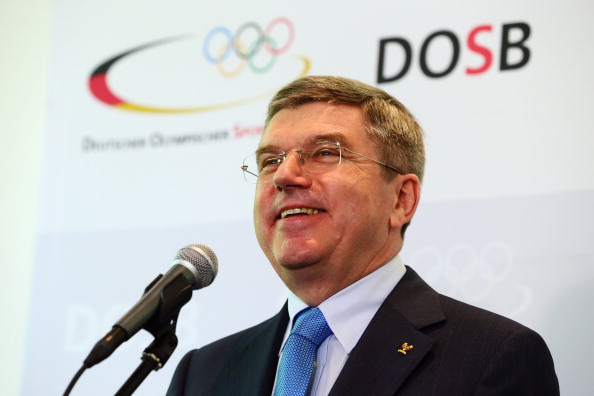
Thomas Bach announced his candidacy Thursday for the International Olympic Committee presidency. It's not news, really, that he's running. The only issue was the timing.

Everyone in Olympic circles has been mindful for years that Bach has been interested in the top job. Indeed, he is, by most accounts, considered the front-runner for the presidency. Now comes the time to find out, with the election Sept. 10 in Buenos Aires, if being the front-runner, indeed announcing first, proves smart campaign strategy.

Thomas Bach at the news conference in Frankfurt, Germany, announcing his intent to run for the IOC presidency // photo: Getty Images

"I didn't want to keep other members in the dark any longer," Bach said at a news conference in Frankfurt, according to wire service reports. "I think it is the right time."

Bach would seem to meet most every qualification you could think of for the job. He is an Olympic gold medalist, in 1976 in fencing. He has been an IOC member since 1991. Without interruption, he has been a member of the policy-making executive board since 1996.

As chairman of the IOC juridicial commission, Bach -- a lawyer -- heads inquiries into most doping cases. He has chaired evaluations for cities bidding for Summer and Winter Games. He leads European television rights negotiations for the IOC. He is the head of the German national Olympic confederation, which goes by the acronym DOSB.

"With my management and leadership experience on the national and international level of sport, but also in business and politics and society, I am well trained for this great task," he said in a telephone  call with reporters after the news conference.

Other probable candidates include Sergei Bubka of Ukraine, Richard Carrión of Puerto Rico, Ser Miang Ng of Singapore and C.K. Wu of Chinese Taipei. The deadline for declaring is June 10, three months ahead of the vote.

The winner will succeed Jacques Rogge of Belgium, who will have served 12 years. Rogge took over from Juan Antonio Samaranch of Spain.

The timing of Bach's announcement is most intriguing. Rumors had been circulating about who was going to get out there first -- and it was not Bach.

But then, suddenly, it was Bach, and it was him saying on the conference call, "This campaign for IOC president is not like a political campaign because the IOC members, they know all the candidates very well. They know what they are standing for, they know what they have contributed in the past to the Olympic movement and they know what they think."

He added, for emphasis, that it was "very much about convincing the members rather than about the public at large."

Step one, apparently, was what Bach did Wednesday in advance of Thursday's announcement.

Again, the timing -- most interesting.

He sent the members a letter -- he talked about it in Thursday's conference call -- that included a copy of the 10-page speech he presented in October, 2009, in Copenhagen at the Olympic Congress on the structure of the movement. That speech focuses on the notion of how sport must maintain autonomy in a complex 21st-century world. It refers to sources such as the philosopher Immanuel Kant. It prizes "respect, responsibility, reliability."

The headline on the speech: "Unity in diversity." That, Bach said Thursday, is the working mantra for his campaign as he "listen[s] even more carefully to the members" over the next several weeks before presenting a real-world plan for what he would do as president.

This microcosm highlights Bach in action. It also presents some of the challenges to his campaign.

Kant? Ten pages? Structure?

After years of anticipation -- that's the opening play?

There is an enormously delicate balance to be struck in this sort of campaign. The IOC presidency is a serious job, and the members have to know you are legitimate. At the same time, as Bach articulated in that conference call, this is a race that is something more like running for high-school class president than prime minister.

Once more, then, about the timing of all this -- so, so interesting. Was Bach being pro-active or hurriedly reactive in the belief that someone else might be setting the presidential agenda by being out first? Why else send out the preemptive strike of a (more than) three-year-old 10-page tome on the structure of the movement?

The skeptic would say that would simply buy time to put together his real manifesto.

In the meantime, what tone does this launch set for his campaign?

Whatever the motivation, always understand this: Bach is smart, capable, resourceful and formidable. His allies are all those things, as well.

An intriguing back story to Bach's campaign is that, for the moment, he would appear to be not only the single major western European candidate but, obviously, German.

The DOSB on Thursday issued a statement of support for him. From Berlin, Associated Press reported, German chancellor Angela Merkel "wishes him success."

Ordinarily, being European in the Eurocentric IOC might seem a huge advantage.

Then again, when one looks around at major international organizations, one is hard-pressed to find many Germans in charge. Until just a few weeks ago, the pope was German -- but now there is a new pope, and he is South American.

There are 35 Olympic sports. Only two have German presidents, modern pentathlon and luge. Neither is considered particularly influential.

Will Bach's German-ness prove an advantage, or not? Only time will tell.

In the meantime, Bach said Thursday he intends to run a clean campaign: "The campaign I am running is in favor of me. I am not running against anybody else. This is my leading consideration in what I will do these next four months."