LONDON — It can be difficult sometimes, living as we do in the here and now, to appreciate the gift of genuine greatness when it — more accurately, she — is right in front of us.
There are so many demands on our attention, so many cries that so-and-so or such-and-such is the next big thing, the coming huge star. We whipsaw from this to that and back to this again, mesmerized, tantalized, titillated by the paparazzi-hounded, TMZ-stylized comings and goings of the larger-than-life, the outlandish, the can-you-top-this, the freak show at the club at 3 in the morning or maybe was it 4, dude, I forget.
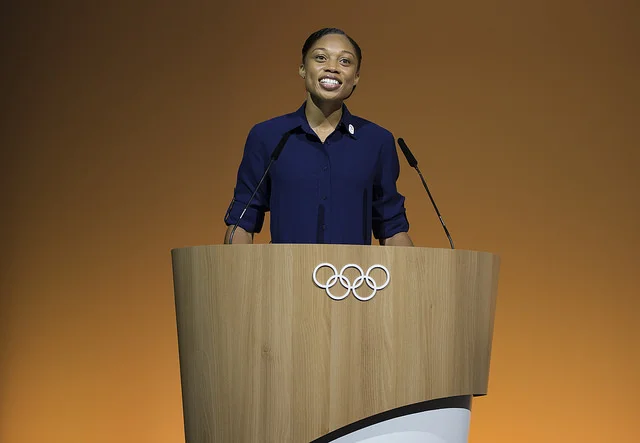
When we say we want our kids to grow up and be someone like Allyson Felix.
LONDON — No matter if it’s sports or what journalists call hard news, all young reporters learn early on a truism. Whether it’s a big court case, a political race or a major sports event like these 2017 IAAF track and field world championships or an NFL Super Bowl, there are always — always — at least two storylines.
There’s the action itself.
And then there’s what’s happening around it.
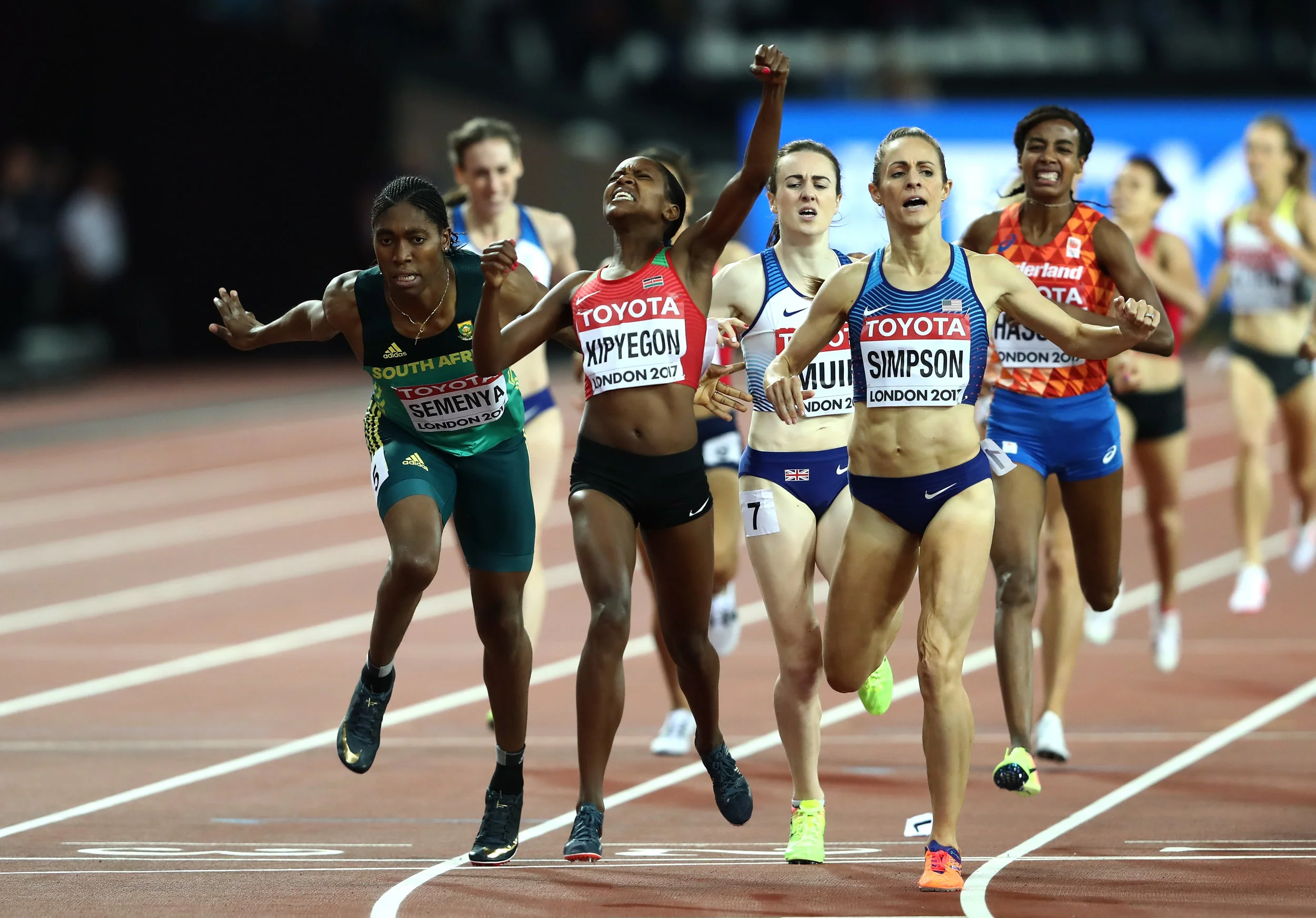
With the 2017 worlds nearing the halfway mark, it’s entirely unclear whether they seem destined to be remembered for the track and field itself, which truly has been remarkable if not historic.
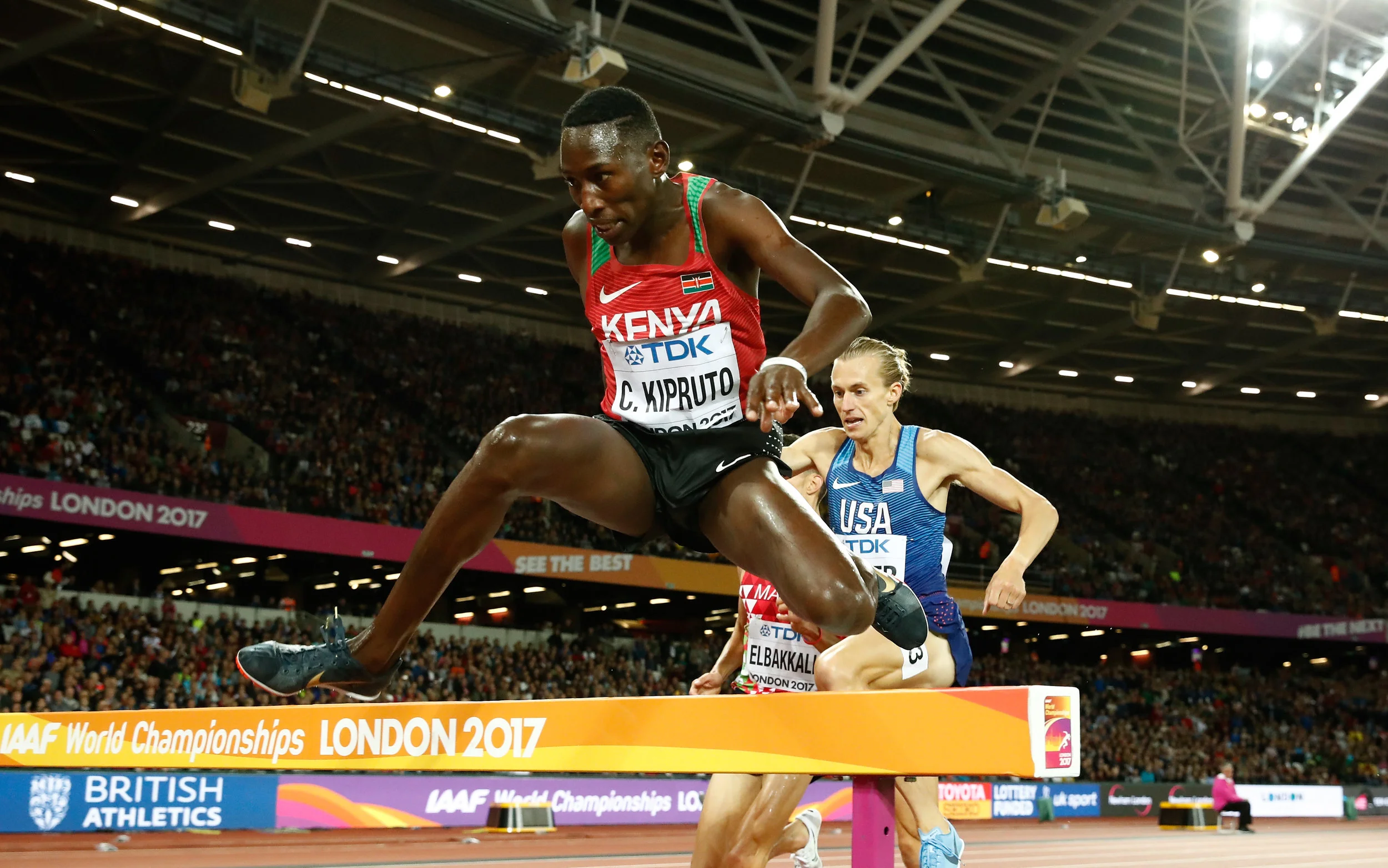
LONDON — The marathon course here at these 2017 IAAF world championships started and finished at Tower Bridge. Just a few steps away, of course, is Tower Hill, where the likes of Anne Boleyn met her fate.
It’s fascinating, those historical and cultural markers that, in turn, frame — consciously or otherwise — national identity.
In Britain, one might argue, right is right, wrong is wrong, rules are rules, black is black, white is white. When you make a mistake, it’s off with your head. You wonder why the Pilgrims wanted out? The United States, by definition, is a land of second chances. The American national narrative — the founding national story, told over and again — is redemption.
To be clear: find fault all you want with these oversimplifications. Detail, if you please, the countless exceptions.
LONDON — They introduced Justin Gatlin to the Olympic Stadium crowd here Sunday evening, just before they put a gold medal around his neck, before The Star-Spangled Banner played in his honor, and along with some cheers a chorus of boos rang out.
The cheers — great. The boos — this fell somewhere between disappointing and reprehensible. Olympic-style sport is not the English Premier League, the NFL or NBA. It is supposed to be about promoting three key values: friendship, excellence and respect.
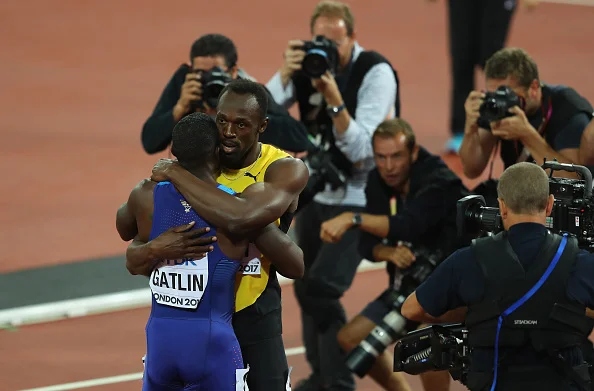
Saturday’s men’s 100-meter final immediately became arguably the biggest gold-medal victory in the history of the event. Gatlin defeated the sport’s biggest legend, Jamaica’s Usain Bolt. It’s how the race will forever be remembered: who beat Bolt, and in Bolt’s last individual 100? Gatlin. And who, before Saturday, was the last guy ever to beat Bolt? Gatlin, in Rome in 2013.
LONDON — Act II of the morality play shall now commence, and if there is justice in this world, let it rain Justin Gatlin’s way. He is deserving, more than deserving, of your appreciation and, more, your respect.
A few days ago, before the start of these 2017 IAAF world championships, Usain Bolt had said he was both “unbeatable” and “unstoppable,” adding, “Without a doubt. If I show up at a championship, you know that I’m ready to go.”
Without a doubt, the track and field establishment wanted Bolt — king of the scene, a “genius,” according to IAAF president Sebastian Coe — to win Saturday night’s 100 meters, Bolt’s last hurrah, the final competitive 100 the greatest sprinter humankind has ever seen had said he intended to run.
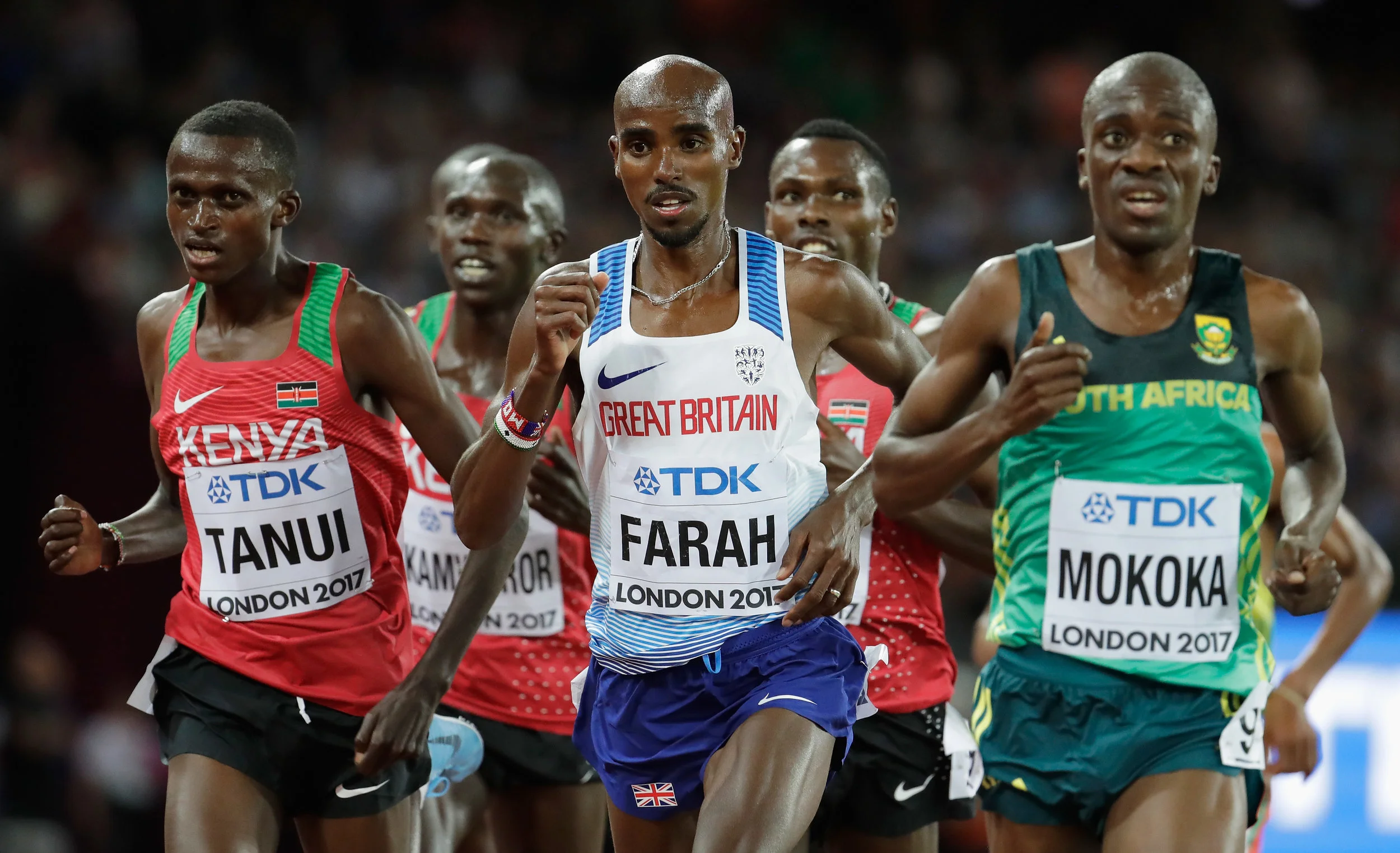
LONDON — Five years ago, the London Summer Olympics opened with a happy and glorious riff, Daniel Craig reprising his role as James Bond, escorting Her Majesty the Queen out to the royal helicopter, where it then wheeled above cheering crowds in the sun-splashed city below (hello!) and then under Tower Bridge to Olympic Stadium.
From the moment the “queen” and “007” jumped out of that copter, Mo Farah, the Somali-born British distance runner, has gone on to win the Olympic distance double-double thunderball, first in London and then in Rio, the men’s 5,000 and 10,000. For his efforts, the queen on January 1 of this year made Farah a Knight of the Realm. Pretty heady stuff.
The problem with encores, as 007 could readily tell you, is that it’s always tough to top the spectre of that last installment. So many critics. The world is not enough, as it were.
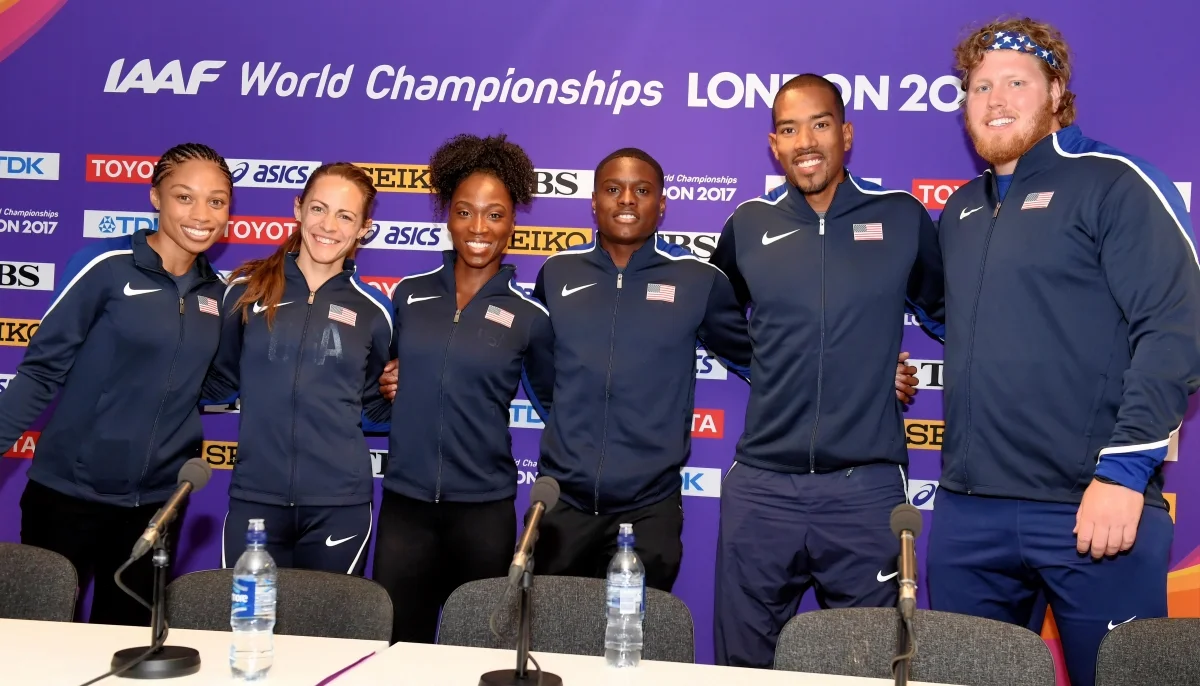
LONDON — Somewhere, some 8- or 9- or 10-year-old kid is in her or his backyard, throwing or running or jumping and dreaming big dreams about maybe someday being, say, Allyson Felix, lithe and elegant, or Tianna Bartoletta, fast and focused, or maybe Christian Taylor or Ryan Crouser, guys who produce when the spotlight is brightest.
Never, perhaps, has track and field found itself at such an intriguing intersection, indeed one suddenly filled with potential.
There are the kids, and their dreams. There is the sport, with its many documented woes. There is also, genuinely, because of the award of the 2024 and 2028 Summer Olympics, opportunity, and particularly in the United States.
SACRAMENTO, California — Five years ago, on the last night of July, Bruce Springsteen played an epic show in Helsinki, more than four hours, his longest show ever.
He and the E Street Band played 33 songs, one of which, My City of Ruins, ran to 18 minutes and 26 seconds. That song, as Bruce describes it that night, was originally written about his New Jersey hometown “trying to get back on its feet” but had since become about so much more: “what you lose, what you hold onto, the spirits that remain forever and the things you have to let go.”
The 43rd edition of the Prefontaine Classic went down over the weekend at historic Hayward Field in Eugene, Oregon. Pre is purportedly the leading professional track meet in the United States, the only American stop of the year on the world track and field tour, what is now called the Diamond League.
Eugene, for those who have never been, is surrounded by foothills and forests — literally, forests — to the south, east and west. Thus this philosophical question: if a track meet happens in the forest but it barely makes a sound anywhere else, then — what?
To consider the absurdity of what track and field is considering with regard to its records, let’s turn to baseball. The comparison is apt. Both sports are heaven for stats-freak geeks.
Who holds the Major League Baseball record for most home runs in a career and, as well, most home runs in a season?
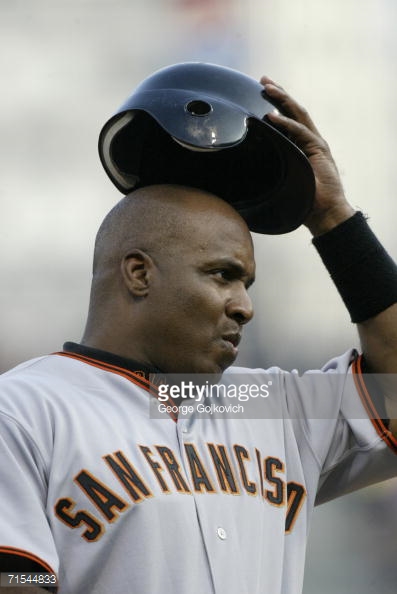
Hey, in both categories it’s that guy Barry Bonds. He hit 762 over his career. In the 2001 season, he slammed 73.
Now, does baseball say that Bonds leads the charts for guys whose hat size mysteriously, peculiarly got way, way, way bigger when he played for San Francisco as compared to the years he played in Pittsburgh? Not a chance. Bonds sits there, at No. 1.
Look at No. 4 on the all-time homer list: Alex Rodriguez, with 696. Rodriguez is an admitted user of performance-enhancing drugs. Who’s No. 4? Rodriguez.
People: what happened, happened.
This is the thing about history. It happened. You can’t say in 2017 — whether it’s baseball, track and field, tiddlywinks, whatever — that something didn’t, or arbitrarily propose new rules, like the European Athletics Records Credibility Project Team did on Sunday (the report was made public Monday) in proposing reforms that would wipe out more than half of Olympic-discipline world records from the books.
The European report is being forwarded to track and field's international governing body, the IAAF, which is said to be giving it serious consideration.
To be clear: the contributors to the European committee deserve considered respect for effort. They are good people and they mean well. Officials deserve extra marks for including Gianni Merlo, the longtime Italian sports writer and current president of the International Sports Press Association, in their deliberations. Awesome -- we’re not just running dogs!
As was articulated in the charge to the committee, track and field is purportedly beset by doping issues.
OK.
But that is not track and field’s central problem.
Baseball has had huge doping problems, too, and baseball is thriving. Track and field is wallowing. So that makes for a pretty easy conclusion: doping is not track and field’s central problem
Instead, track and field suffers from a multitude of other issues. This is what the very bright minds on that committee, and others around the world who care about track and field, should be focusing on.
For starters:
— Track and field is a professional sport. But the way it presents itself, by almost every metric, is sorely inconsistent, especially when compared against a wide range of other professional products. It is competing against those other entities for sponsor and audience attention and dollars. Pick it: European soccer, American basketball or football. Whatever. Now, how does track and field stack up?
— The best athletes don’t race against each other enough. Justin Gatlin and Usain Bolt maybe race each other at perhaps one, maybe two, meets each year. Compare: the Boston Red Sox and New York Yankees play each other 19 times each season. Why are the NBA playoffs must-see TV? Because the teams play each other every other day for two solid months, April to June. Real Madrid and Barcelona play each other all the time. In NFL football, Dallas and Washington play at least twice each season. This is a no-brainer, people!
— Track and field is sport at its essence: run, jump, throw. Yet for the average spectator, a track meet is bewildering. It’s confusing. There’s too much going on, often at the same time. And this is an awful secret: a lot of very serious track fans make like super-snobs, which is a complete turn-off to the would-be newbie fan, who just wants to know what’s going on, not get lectured about “negative splits” as if it’s Fermi and Einstein and physics at Princeton. Ugh.
— Meet presentation has barely evolved since the 1970s. There are some genuinely good track announcers out there but the PA systems at many fields are high-school quality, if that.
— Music? Lights? Fan-friendly experience? What?
— The world championships, which this year will be held in London, run from August 4-13. This is awesome for the niche of super-committed track fans, and organizers will justly point out that — just like the 2012 Olympics — the event will be sold out. But a 10-day run is a l-o-n-g deal. The U.S. track nationals are only four days. Why do the worlds run to 10?
Why, with all of that, is track and field obsessed with its records?
“… The power of any record depends on its credibility.
“If there is suspicion that a record was not achieved fairly or the conditions were somehow not correct, people become skeptical or worse they ignore it.”
Look again at baseball.
Here, for easy reference, are baseball’s top 10 single-season home run leaders. For fun, identify how many may have, you know, taken something stronger than an aspirin and those you absolutely, positively, indisputably, unequivocally know with 110 percent certainty are cleaner than Mr. Clean:
1. Bonds, 73, 2001
2. Mark McGwire, 70, 1998
3. Sammy Sosa, 66, 1998
4. McGwire, 65, 1999
5. Sosa, 64, 2001
6. Sosa, 63, 1999
7. Roger Maris, 61, 1961
8. Babe Ruth, 60, 1927
9. Ruth, 59, 1921
10. Jimmie Foxx, 58, 1932
Hank Greenberg, 58, 1938
Ryan Howard, 58, 2006
McGwire, 58, 1997
Also for fun: name the year Bonds gets elected to the Hall of Fame. Bonds landed on 53.8 percent of ballots this year; that’s up from 44.3 percent in 2016; he has five years of balloting left; historical trends suggest that players who get at least 50 percent almost always end up in the Hall by the end of their eligibility.
Reality suggests that whatever you believe about Bonds’ hat size, 73 and 762 are the numbers and he’s headed for the Hall of Fame. The relevant audience: for those who are not aware, voters for the Hall are from the baseball writers association, meaning the most skeptical running dogs themselves.
If more than half of the skeptics think those numbers are credible, and those cranky skeptics increasingly are proving willing to vote for the guy’s Hall of Fame enshrinement, he is — and the records themselves are — hardly being ignored, right?
Which holds considerable parallels for track and field, and the errant proposal to get rid of half of track and field’s records.
For one, the committee didn’t do the appropriate due diligence.
They did not, before announcing it to the world, secure the buy-in of athletes. Predictably, some of the world’s biggest stars from prior generations — the long jumper Mike Powell, the marathoner Paula Radcliffe, the middle-distance star Wilson Kipketer — were justifiably outraged. So, too, the families of former stars, including Al Joyner, the husband of U.S. sprint star Florence Griffith-Joyner.
“That’s dishonoring my family,” he told the Wall Street Journal. “I will fight tooth and nail. I will find every legal opportunity that I can find. I will fight it like I am training for an Olympic gold medal.”
Asked after a seminar Wednesday at the Milken Institute Global Conference in Los Angeles if she supported the European proposal, Allyson Felix, the nine-time Olympic medalist, said, "I guess I'm not."
She had said a moment earlier, "You don't want to take away a clean record from a clean athlete. I don't know how you solve that issue."
Further, the basis for the recommendation of this would-be policy rests on a fallacy — that “new” records can be deemed reliable because athletes who set them will be “clean” because they will have passed a certain number of doping tests.
A little background:
Samples are now kept for up to 10 years. The IAAF began storing samples in 2005. Current world records that don’t meet the new guidelines would no longer be called a “world record” but would remain on an “all time” list, according to the European proposal now off to the IAAF.
“Do we really believe,” Radcliffe wrote in a lengthy Twitter post, “a record set in 2015 is totally clean and one in 1995 not?”
Radcliffe’s opposition is particularly notable. She is close to IAAF president Seb Coe.
Indisputably, technology has advanced since October 6, 1985, when East Germany’s Marita Koch set the women’s 400-meter world record, 47.6, running in Lane One in Canberra, Australia.
But this is ever a cat-and-mouse game, and to build on Radcliffe’s notion, who is to say that someone somewhere is not using some 2017 variant of THG — the designer steroid at the core of the BALCO scandal 15 years ago. You can’t test for something if you don’t know it exists. Again, logic.
This is the flaw with reliance on any system that turns to testing. It creates in the public mind the illusion of confidence in that system. But, and this is critical, that confidence is only an illusion. That confidence is wholly false.
Look at Lance Armstrong. Consider Marion Jones. Each passed hundreds of tests.
Tests maybe can deter. But they do not prove with 100 percent certainty that an athlete is innocent of anything.
One final point.
Let’s say that track officials disregard the world’s best athletes and common sense and make this proposal the rule in track and field.
It’s not going to do what officials want. Indeed, it would do exactly the opposite. All it would do is sow confusion, which — right now, when track and field needs to simplify things and find ways to market itself to a new generation of fans — ought to be the very last item on its agenda.
Example:
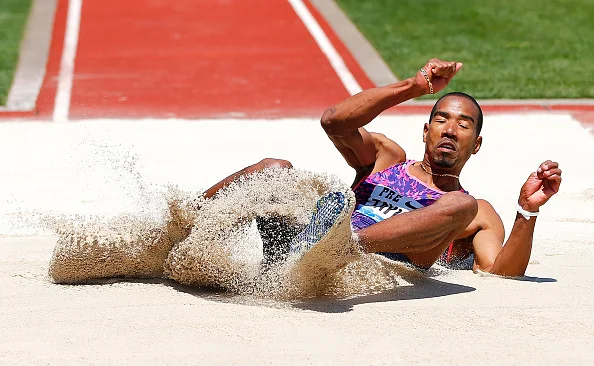
For reference, Powell’s long-jump world record, set in 1991, is 8.95 meters. That’s 29 feet, 4 1/2 inches.
Let’s say, under this would-be policy, that at some meet somewhere someone jumps 8.90, 29-2 1/2. Let’s also say that’s deemed the new “world record.”
Any report from that meet — indeed, any report going forward about that 8.9 jump — would inevitably include a reference to Powell’s 8.95.
One would thus be called a “world record” when it really isn’t and one would be called a mark from the “all time” list when, in fact, it is the “world record.”
This is what happens when you try to re-write history. It can’t be done.
Track and field, you know, needs smarter thinking under that hat size, whatever it might be.