Coventry ignites a controversy: does the IOC, truly, put athletes first?

Coventry ignites a controversy: does the IOC, truly, put athletes first?

The won’t-go-away controversy over new IOC president Kirsty Coventry’s assertion that she is not a proponent of prize money at the Olympics underscores the disconnect — the chasm, really — between the vision of the modern Games as they have been, a chase for glory, and glory only, as memorably depicted in “Chariots of Fire,” and the way they need to evolve to be now, in our 21st century.

Nothing moves without money, and the time has come for the IOC to take the logical (next) steps and, at the least, make sure that athletes who come to the Games get paid (an appearance fee, if you will) and that those who win medals get paid even more. And those who break Olympic or world records? More still.

And, for the sake of all that is decent, at long last give the athletes access to their images.

We the People! With World Cup near, this soccer truth should be self-evident: no more British English

We the People! With World Cup near, this soccer truth should be self-evident: no more British English

The men’s World Cup is nearly upon us, and with it a telling if not altogether disturbing push in some quarters to turn to Celsius, meters and, worst of all, British English. 

We the People! This summer, as the World Cup bracket plays out, marks the 250th anniversary of the Declaration of Independence. The 13 colonies broke away from the British. We won. This is the United States of America. And so this truth ought to be self-evident: let’s speak American English.

318 days in, Kirsty Coventry is clearly executing a pivot -- or is it a repudiation?

318 days in, Kirsty Coventry is clearly executing a pivot -- or is it a repudiation?

Kirsty Coventry has been president of the International Olympic Committee for, by her count at a news conference Thursday, 318 days.

In almost every meaningful way, Coventry is now executing a pivot away from predecessor Thomas Bach, IOC president from September 2013 until last June. Indeed, it is said behind the scenes in Lausanne, at IOC headquarters, that Coventry has little to maybe no interest in the past — only what lies ahead. 

Spotlight turns to Yu-Ting Lin, deemed eligible for women's boxing -- on what grounds?

Spotlight turns to Yu-Ting Lin, deemed eligible for women's boxing -- on what grounds?

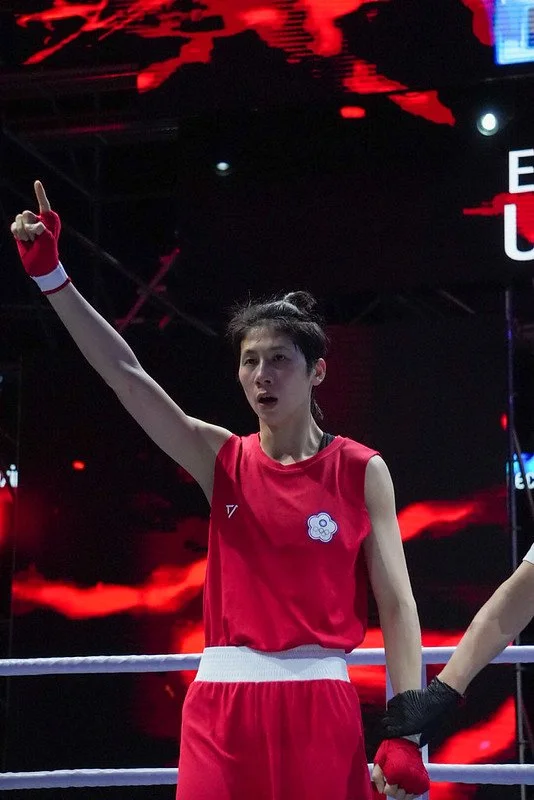
Yu-Ting Lin of Chinese Taipei, a gold medalist in women’s boxing at the 2024 Paris Olympics, took bronze Monday in the 2026 Asian continental boxing championships.

In Paris, Lin won the 57-kilogram class (just over 125 pounds) to become Taiwan’s first Olympic boxing champion. Heading toward two years later, Lin is now fighting at 60 kilos (132 pounds). The Asian championships were held in the capital of Mongolia, Ulaanbaatar.

After Monday’s action, Lin’s coach, Tzu-Chiang Tseng, emphasized for the China News Agency the value of Lin fighting up a category: “After all, this is our first time competing in the 60-kilo division after the Olympics. The opponents’ skills, strategies and styles are all new to us, so we used this opportunity to observe and learn.”

This is not the story.

The story is, rather, how this could have been allowed to happen in the first instance. 

Paralympics proved it: Russians deserve to compete. Now, LA28 and Olympics

Paralympics proved it: Russians deserve to compete. Now, LA28 and Olympics

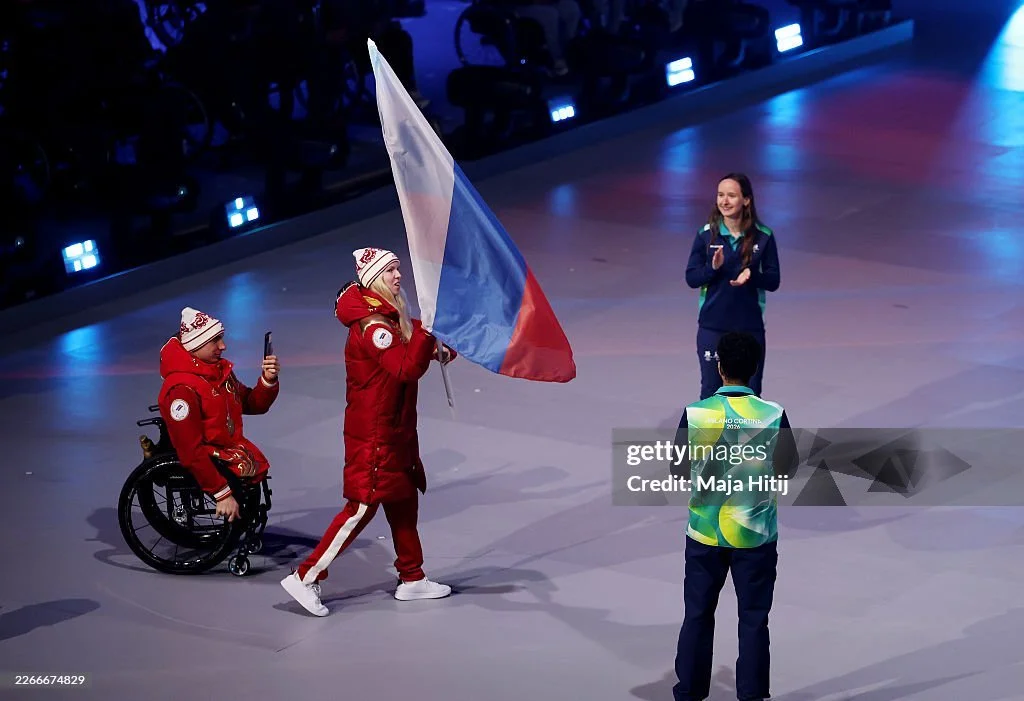
The 2026 Milano-Cortina Paralympic Games drew Sunday to a close, with China atop the medals table, the United States second and — what’s this — Russia third. 

The successful — no other word for it — reintegration of the Russians at the Paralympics foreshadows, almost certainly, not only what is likely but what should most certainly be the case at the Olympics, presumably if not probably as soon as the next edition, the Los Angeles Games in 2028. 

Snowflake culture run amok: LA Marathon 'finisher' medals for running 18, not 26.2 miles

Snowflake culture run amok: LA Marathon 'finisher' medals for running 18, not 26.2 miles

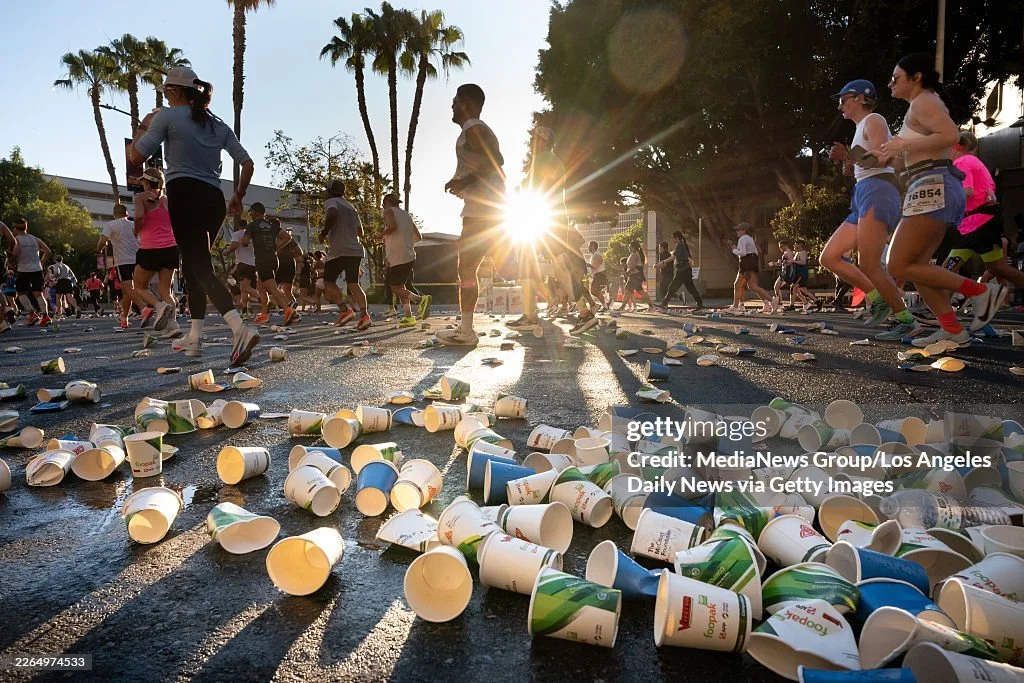
here is stupid and then there is the decision by officials at Sunday’s Los Angeles Marathon to award “finisher” medals to untold numbers of people who ran 18 miles instead of the prescribed 26.2.

Organizers said heat prompted the move. Even at the beach, by late morning it was nearly 80 degrees, or 27-ish degrees Celsius. Inland, along the course, it was for sure hotter.

So what? 

The idea that someone should get rewarded for 18 instead of 26.2 reflects the very worst sort of snowflake culture run, if you will, amok —  you’re so special because you tried, gosh darn it.

India sent Arif Khan to finish. In pain, skiing in terrible conditions, Arif Khan ... finished

India sent Arif Khan to finish. In pain, skiing in terrible conditions, Arif Khan ... finished

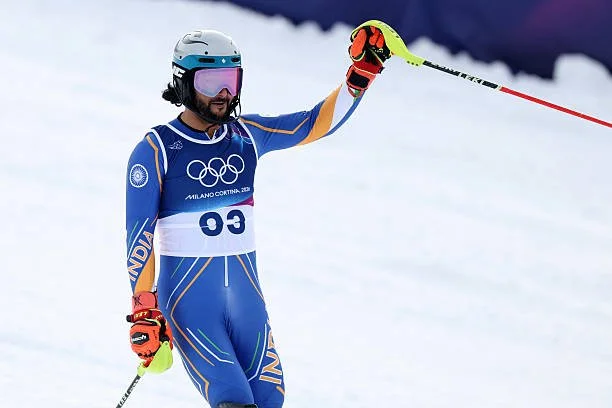
Skiing got its Bud Greenspan moment here at these 2026 Milano-Cortina Winter Games. In men’s slalom, India’s 35-year-old Arif Khan, with back pain and more, finished dead last. In a sport in which races are won by hundredths and sometimes thousandths of a second, Khan finished nearly 48 seconds behind the winner, Switzerland’s Loic Meillard. 

But — Khan finished. 

In conditions that knocked more than half of those who started out of the race, among them Norway’s Atle Lie McGrath, the first-run leader who after missing a gate took off his skis and literally walked into the woods, distraught, Arif Khan finished. 

Five Jews, a Druze and a dog: the improbable quest of Israel's first Olympic bobsled team

Five Jews, a Druze and a dog: the improbable quest of Israel's first Olympic bobsled team

MILAN — The first-ever Israeli bobsled team in Olympic history runs this week at these 2026 Milano-Cortina Winter Games. 

Five Jews, a Druze and a dog. The dog, Lulu, will not be in the sled.

Even by the standards of the 2026 Winter Olympics, where the unusual has become the norm, the Israeli bobsled team stands out. Just — for being here.

Tribunal rightly denies Ukrainian skeleton racer legal 'miracle on ice'

Tribunal rightly denies Ukrainian skeleton racer legal 'miracle on ice'

MILAN — Vladyslav Heraskevych, the Ukrainian skeleton racer disqualified for insisting he wanted to race in a helmet adorned with the faces of athletes killed by Russia, had said he was hoping for a new “miracle on ice.”

Instead, and predictably, came this ruling: the IOC was right to disqualify him because Olympic rules “state that freedom of speech is a fundamental right of any athlete competing in the Olympic Games, but limit the right to express views during competitions on the field of play.”

Rules, IOC says. Ukrainian skeleton racer says, this is more important

Rules, IOC says. Ukrainian skeleton racer says, this is more important

MILAN — The International Olympic Committee had no choice, really, but to disqualify the Ukrainian skeleton racer Vladyslav Heraskevych. Rules are rules.

For his part, Heraskevych, by putting himself at the center of a frenzy he could know with unequivocal certainty would explode to become the centerpiece of this first week of the 2026 Milano-Cortina Games, delivered a master class in orchestrating a media strategy to maximum effect.

This controversy threatens to become one of the defining storylines in the history — the telling — of the 2026 Winter Games. If it’s about rules, it’s equally — if not more — about narrative and, in this context, narrative’s increasingly frequent traveling partner, raw emotion.