A super-G to test the best

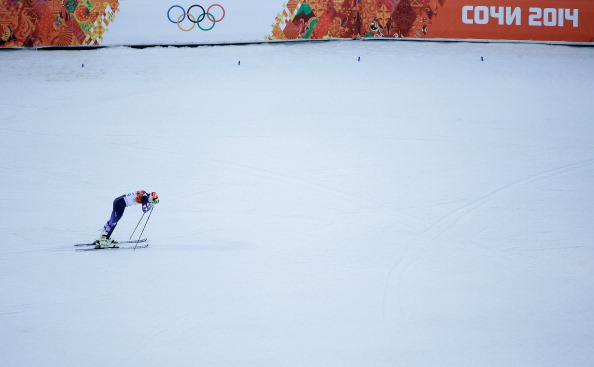
KRASNAYA POLYANA, Russia — The Olympics are supposed to test the best of the best. What conclusions to draw about Saturday’s women’s super-G, in which eight of the first 11 racers went skidding out and 18 of 49 ultimately did not make it to the finish line? What meaning to infer from a course set by an Austrian coach in which Austrian skiers won gold and bronze?

Swiss racer Lara Gut after the Olympic super-G // photo Getty Images

Lara Gut of Switzerland — and for context it should be understood that Ms. Gut is both a tremendous racer but had the distinction Saturday to take fourth place in the super-G — the floor is yours:

“There is no snow at the bottom. It’s not funny anymore. This is a disaster. It was a shame for everybody. If I have another chance, I could have gotten another result. I tried but did not work.”

For the rest of this post, please click through to NBCOlympics.com: http://nbco.ly/1eZWzTz
 

Austria's Big Red Machine is back

KRASNAYA POLYANA, Russia — After Austrian racers had on Saturday dominated yet another  edition of the women’s Olympic super-G, the Canadian skier Canadian Marie-Michele Gagnon was asked the obvious: how can this be? And she laughed. The fourth gold medal — out of eight — in Olympic super-G history? The third Olympic super-G gold in a row?

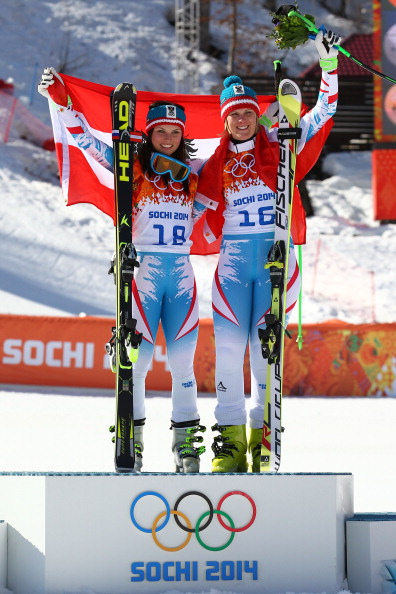
Anna Fenninger, left, and Nicole Hosp on the podium after the super-G // photo Getty Images

On a day when 18 of the 49 best racers in the world didn’t even finish, the highest drop-out rate in women’s super-G Olympic history, an attrition rate of 36.7 percent, the Austrians went 1-3, Anna Fenninger taking gold, Nicole Hosp bronze. Only a late surge into second place by Germany’s Maria Hoefl-Riesch kept it from being 1-2.

Gagnon laughed because the answer, too, was obvious: “Why are Canadians good at hockey?

For the rest of this post, please click through to NBCOlympics.com: http://nbco.ly/MVUPyH

Four events: one medal

KRASNAYA POLYANA, Russia — Four years ago, after four events up at Whistler, the U.S. alpine ski team could boast five Olympic medals, two of them gold. Here, after four events, the count for the Americans: one medal, Julia Mancuso’s bronze in the super-combined, the event that mixes one race of downhill and one of slalom.

The men’s super-combined Friday featured the Vancouver 2010 gold medalist, Bode Miller, and the 2013 world champ in the event, Ted Ligety. If ever a race seemed tailor-made for the U.S. team to win one or more medals — here it was.

Miller finished sixth, Ligety 12th.

Ligety, afterward: “I choked, for sure.”

Miller: “I was pretty lousy.”

For the rest of this post, please click through to NBCOlympics.com:  http://nbco.ly/1eyZUD2

Downhill tie: 'crazy and cool'

2014-02-12-13.50.57.jpg

KRASNAYA POLYANA, Russia — The Olympic women’s downhill course here at Rosa Khutor measures out at 2713 meters, or precisely 8900 feet. That’s just shy of a mile and three quarters. On Wednesday, the best racers would hit speeds of more than 60 miles per hour.

On the one hand, it’s all a math problem. You win by getting down the mountain faster than anyone else. On the other, it’s an exercise in fear versus logic. You strap on boots, fix your feet on sticks and throw yourself down a river of ice, hope your mountain-men technicians have figured out the right wax and try to slice down that ice all in one piece, the orange safety nets flashing by, the rest of you wrapped in nothing but lycra, your head in a bobble of plastic. See how that feels.

Tina Maze of Slovenia, co-gold medalist in the women's downhill

The alpine ski show makes for a fantastic traveling camp that simultaneously includes elements of the backwoods and high-tech, a mash-up of the best and not-so of American and European cultures with the ever-present scent of danger, a reminder of the fragility of the human condition rooted in the need to test what the soul is capable of against the power of the mountain. That’s why it always verges on the edge, literally and figuratively: can you believe this?  On Wednesday, it tipped over.

In a first in Olympic alpine ski history, the downhill ended in a tie.

For the rest of this post, please click through to NBCOlympics.com: http://bit.ly/1hbvb6X


Julia: 'I got a medal today!'

2014-02-10-12.15.23.jpg

KRASNAYA POLYANA, Russia — Norman Vincent Peale, the power of positive thinking guy, has nothing on Julia Mancuso. Tony Robbins, the self-help guru? Julia could teach him a thing or two.

Julia Mancuso wins bronze in the Sochi 2014 super-combi

“As you know,” she was saying Monday, “ it has been a tough season for me,” and that was a gentle understatement, her finishes looking too often like she was trying out NFL running back jerseys: 27-20-29-26-21. This was before she decided around Christmas time to take a break and get focused on what matters, what has always mattered to Julia, the Olympic Games.

Has there ever, in the history of American skiing, been a better big-game skier than Julia Mancuso?

For the rest of this post, please click through to NBCOlympics.com: http://nbco.ly/1dCgHVv


Bode looks up at opportunity lost

2014-02-09-12.49.30.jpg

KRASNAYA POLYANA, Russia — Ski racing can be so, so capricious. The light, just a little bit of light, can make such a huge, huge difference. When you race, the luck of the draw can work for — or against — you. If ever conditions seemed set up for Bode Miller to win the Olympic downhill, here they were. After taking last year off to recover from a bum knee, he had worked himself back into peak condition. Moreover, this Rosa Khutor course was icy, dangerous, thrilling, just the way he likes it. Over the three training runs he had gone 1-6-1, setting the pace, his rivals acknowledging he was the man to beat.

While others were crashing out, Bode had somehow figured out a magic line, especially at the top of the course. Anticipation ran high as he stepped into the start gate, No. 15. Yes, surely he would race more races. But at 36, this was probably his last Olympic downhill.

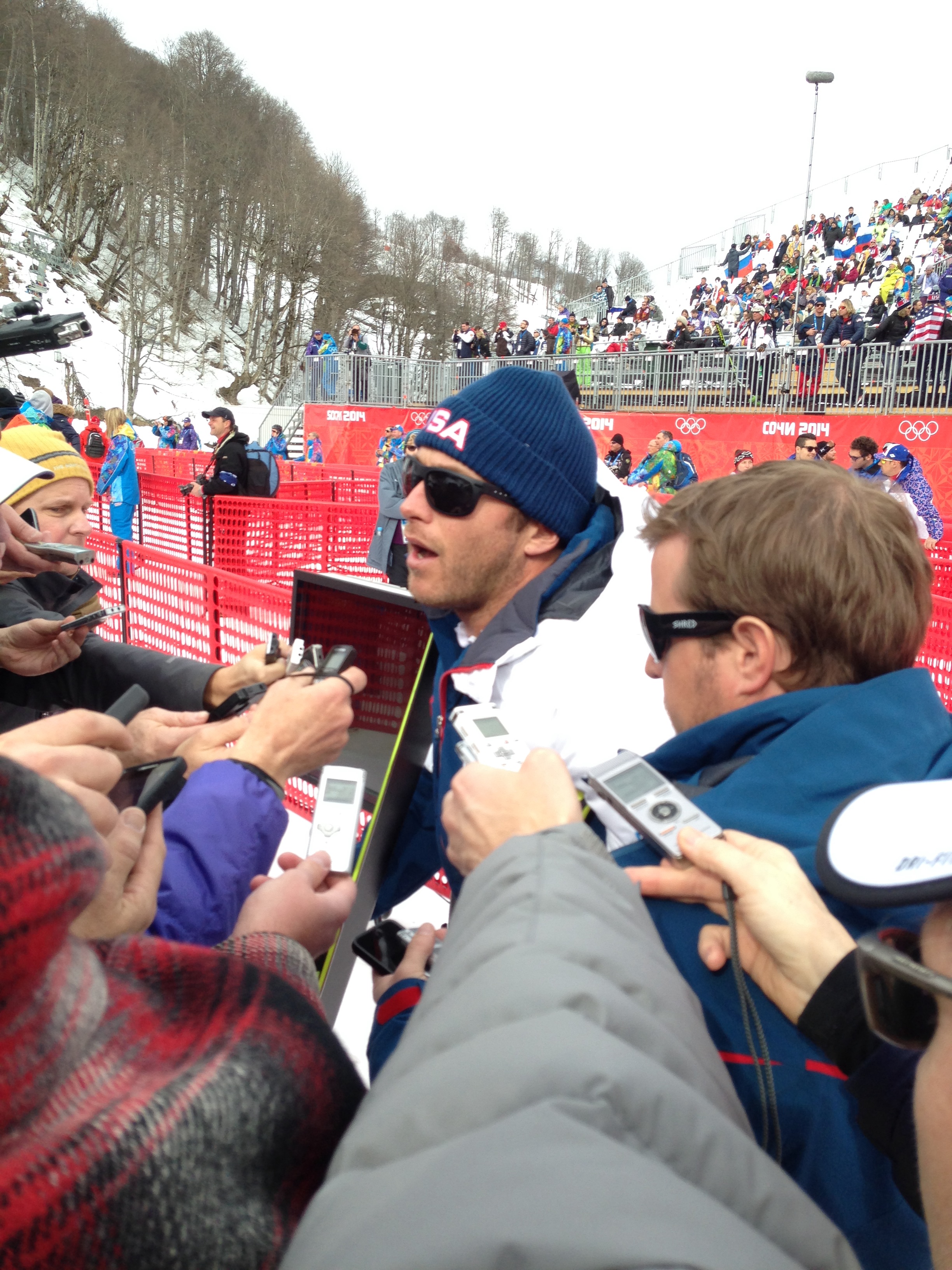
The media crowd encircling Bode Miller after his eighth-place finish in the Olympic downhill

Two minutes, six-point-75 seconds later it was over.

He wasn’t fast enough.

Not nearly.

For the rest of this post, please click through to NBCOlympics.com: http://bit.ly/1jnFtkq

Jackie Wiles: downhill fun

2014-02-08-11.08.46.jpg

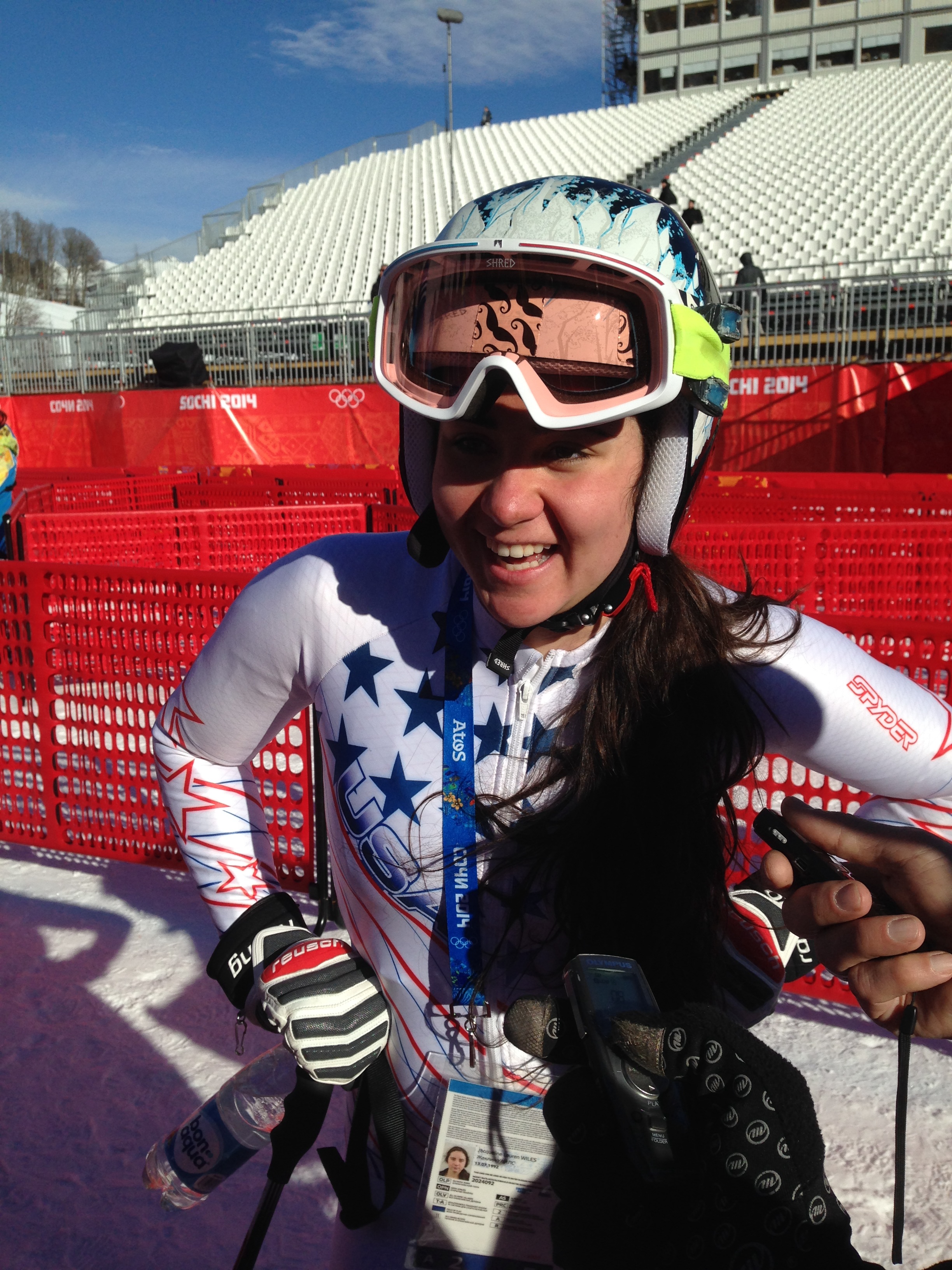
KRASNAYA POLYANA, Russia — When she got to the bottom of the run Saturday, after a time that would land her in fourth place in the third training run for Wednesday’s women’s Olympic downhill, Jackie Wiles, the 21-year-old newcomer on the team, found herself ushered along through the pen where the athletes talk to reporters and TV types, and there, hanging out with the press, was, well, Picabo. Some people might be all, like, OMG — that’s Picabo Street, maybe the greatest power and speed skier of all time.

Jackie Wiles after Saturday's sparkling downhill training run

Not Jackie Wiles. She snapped to immediately, of course, because she understood she was in the presence of American ski royalty. But the reason Jackie Wiles is now going to be racing in the downhill, and the reason she is skiing in a way that suggests she very well might throw a huge surprise on Wednesday, is that she was hardly overwhelmed — even though this was the same Picabo Street whose picture she, Jackie Wiles, used to have in her room growing up.

Politely, respectfully, she told Picabo, “I had a picture of you on my wall — obviously,” like of course it would be obvious, adding, “In middle school, when I was little.”

For the rest of this post, please click through to NBCOlympics.com: http://nbco.ly/MAYYYu

Bode goes 'epic' in last training run

2014-02-08-12.09.06.jpg

KRASNAYA POLYANA, Russia — Bode Miller’s first thought in the start house Saturday was that he was going to take it easy on this, the final day of training before Sunday’s Olympic downhill. Then, being Bode, he thought, what the hell. He had an opportunity to express himself in the manner of a great artist at the top of his work.

Which is what he is, as we should all recognize.

Or, as Bode put it later, “It’s a pleasure for me to ski on this track. I would be angry with myself if I had wasted this opportunity to properly run on this track. It tests your ability to the maximum.”

For the rest of this post, please click through to NBCOlympics.com: http://nbco.ly/1g6es0Z

Putin's big "Dreams about Russia"

2014-02-07-20.21.02.jpg

ADLER, Russia — In a ceremony entitled “Dreams about Russia,” the Sochi 2014 Olympics got underway, arguably the most controversial and contentious Winter Games in history, as much a referendum on modern Russia as celebration of the best in winter sports. “Welcome to the center of the universe!” Russian TV star Yana Churikova shouted to kick off the evening, touching off a show that veered through the centuries amid the strains of classical music, the thump of dance music and the crash and boom of fireworks that lit the night sky.

A scene from early in Friday's "Dreams of Russia"

As the Russian team made its way into and around Fisht Olympic Stadium, the place literally shook to a heavy bass beat. Television cameras showed Russian president Vladimir Putin smiling. Later, he would formally declare the Games open. And he would smile again.

Irina Rodnina, the most successful pairs figure skater in history with three gold medals, and Vladislav Tretyak, arguably the greatest hockey goalie ever with three golds and one silver, together lit the cauldron.

In much the same way that with the bang of 2008 drums China sought six years ago to announce its arrival onto the 21st century world stage, these 2014 Olympic Games were always going to be a defining occasion for Russia and, in particular, Putin.

For the rest of this post, please click through to NBCOlympics.com: http://bit.ly/1o1SPTY


Bode and the first run -- all good

2014-02-06-12.25.38.jpg

KRASNAYA POLYANA, Russia — An Olympic downhill comes along once every four years. It is meant in every way to be a demanding test, physically and, equally, mentally. The men’s downhill course here runs just over two miles, the women’s just under.

Bode Miller meets the press after Thursday's downhill training at Rosa Khutor

When they first encountered the setup here two years ago, Bode Miller was saying here Thursday, “that year it was our most challenging downhill,” and keep in mind the World Cup tour hits all the famous mountains you might want to name in the world.

After winning the first of three scheduled training runs in 2: 07.75, Miller said, “I would say this year it’s equal.”

For the rest of this post, please click through to NBCOlympics.com: http://bit.ly/1c7pFKF