
Probst up for IOC membership

LAUSANNE, Switzerland -- It's nearly four years ago now that Chicago got thumped when the International Olympic Committee voted for the 2016 Summer Games host city. For the U.S. Olympic Committee, that was, indisputably, the low point.

It's worth bearing in mind all the time and miles in between then and now amid Tuesday's announcement by the International Olympic Committee of the nomination of nine new members, U.S. Olympic Committee board chair Larry Probst among them.

Probst's membership is for sure a milestone. Over time, it's likely to means more influence for the United States within the IOC, and as the USOC is considering bids for future Games -- in particular, as soon as 2024 -- that could be key.

At the same time, the United States still has a long, long way to go in becoming a power player in the IOC along the lines of, say, Switzerland, with five members.

For now, what Probst's membership marks is, simply, yet another step in the USOC's effort at quiet diplomacy.

He  -- and the other new members - will be sworn in at the end of the all-members assembly in September in Buenos Aires. They will not, repeat not, take part in the voting there.

At that September session, the IOC will elect a new president, replacing Jacques Rogge, who has been in office since 2001, as well as pick the site of the 2020 Summer Games. Madrid, Tokyo and Istanbul are in the race. All three bid cities are making presentations here Wednesday in Lausanne to the full IOC. All six presidential candidates are likewise making presentations Thursday.

Four new athlete members, meanwhile, are due to be sworn in Wednesday. They were elected in voting from the London Games and will be eligible to vote in September.

When the nine new members are brought on board, assuming no other changes, that will bring the IOC membership to 113, spokesman Mark Adams said Tuesday.

Notable among the nine -- only one is from Asia, Mikaela Maria Antonia Cojuangco-Jaworski of the Philippines.

The list includes famed long-distance runner Paul Tergat of Kenya and Athens 2004 high-jump champion Stefan Holm of Sweden.

It also features the head of the Russian national Olympic committee, Alexander Zhukov. The next Winter Olympics, in February, will be held in Sochi.

Russia will then have four members.

The U.S., too -- when Probst is sworn in, the Americans will count him, Anita DeFrantz, Jim Easton and Angela Ruggiero.

Even so, the U.S. has for years lacked significant political influence within the IOC.

DeFrantz has been a member since 1986. She served on the policy-making executive board from 1992 to 2001. She has since run for office unsuccessfully; she is standing this September again for the board.

Easton has in recent years played a markedly reduced role.

Ruggiero is widely seen as an up-and-comer. At the same time, as an athlete member, she is already three years through her fixed term of eight years.

Thus Probst's entry is widely seen as an important step in bringing back a measure of American influence.

"The U.S. is a very strong and important partner of the IOC," Adams said at a briefing Tuesday at the IOC's Lake Geneva headquarters, the Chateau de Vidy. "Larry's nomination is a sign of that and a sign of continuing cooperation with the USOC."

For his part, Probst said in a statement released by the USOC, “I am truly honored to be nominated for membership in the IOC, and extremely grateful for the potential opportunity to serve the Olympic Movement."

Last year, the USOC and IOC resolved a longstanding dispute over certain television and marketing revenues. Probst's nomination is a reflection of that ongoing USOC-IOC "cooperation." It is by no means a quid pro quo for the deal.

Probst becomes the first USOC president -- as the jargon goes -- as IOC member since Sandy Baldwin. That's 11 years ago.

Bill Hybl served as USOC president and IOC member for two years, 2000-01.

Before that, you have to go back to Bob Helmick. He stepped down in 1991.

Again, Probst's entry is important. But it's just one step. It must be reiterated that the USOC has to be thinking in terms of the long run in assessing the political calculus of a Games bid.

Consider:

There are 35 Olympic sports, summer and winter. The United States has no presidents among any of those 35 federations. It has one -- just one -- secretary general from among any of the 35, Svein Romstad, who runs the luge federation from, of all places, Atlanta.

Last year, American Doug Beal ran for the presidency of the international volleyball federation. The convention and election were held in Anaheim, Calif. Even so, he did not win.

The United States does, in fact, boast some international sports federation presidents. But they are not Olympic sports. They are in sports such as softball, surfing and cheerleading.

Then again, the situation now is better -- way better -- than in October, 2009, when Chicago got rocked.

U.S. Soccer Federation president Sunil Gulati was elected in April to a four-year term to the FIFA executive committee.

USA Basketball chief executive Jim Tooley is in line to become FIBA Americas president for 2014-18.

Max Cobb, the USA Biathlon president and chief executive, heads the International Biathlon Union's technical committee.

These things, simply, take time.

This is what Probst came to understand in Copenhagen in October, 2009.

Before that, he did not totally understand how demanding the USOC board chairman's job was. Nor did he grasp fully how much time and how much travel it was going to take.

The next January, Scott Blackmun came on board as the USOC's chief executive.

Together, they vowed to repair the USOC's standing in international relations.

They said, privately and publicly, that relationship-building took time and effort. They said they were in it for the long haul.

Instead of sending staffers to meetings, Probst or Blackmun -- sometimes both -- started showing up.

Now, Probst and Blackmun serve on IOC committees. Probst is, as well, on the board of the Assn. of National Olympic Committees.

Blackmun, for that matter, is here in Lausanne for the second time in three weeks. He was here the first time for the ANOC assembly and is back now for an IOC marketing commission meeting.

It's active engagement. That's what it takes. That's what got Probst nominated Tuesday.

It's going to take more -- a lot more -- to win the United States an Olympic Games. Everyone should keep that in mind.
2020: Signals in black and white

The 2020 evaluation report the International Olympic Committee published Tuesday ran to 101 pages, without annexes, maps and so on. This so-called technical report was finalized in April, before the unrest erupted in Istanbul, and so the IOC is in the sensitive position of having put out a document that may have already been overtaken by events. Even so, it is clear that this report describes Istanbul as a large and complex city with a widespread plan that would be more difficult to deliver than Madrid's or Tokyo's; that Madrid is in good shape in terms of compactness and things already being built; and that Tokyo, in terms of risk, is predictably the least problematic.

The riots and protests almost surely have enhanced the chances of the other two candidates. As Istanbul's mayor, Kadir Topbas, said Monday, images of the violence have tarnished Turkey's image, and if it keeps going on, "Istanbul stands to lose."

The IOC will meet next week in Lausanne, Switzerland, to hear presentations from all three 2020 bid cities. It will pick the 2020 winner by secret ballot Sept. 7 at a session in Buenos Aires.

The challenge confronting the Istanbul bid is straightforward. As the evaluation report notes on page 9, "Istanbul 2020 aspires to reposition Turkey and to foster global understanding and inclusiveness by being the first secular Muslim country to host the Games."

At the root of the unrest in Turkey, however, is the perception among many of the protestors of a shift away from the secular and toward the religious -- that is, toward a more Islamic society.

That has to give pause to any thinking member of the IOC.

Asked on a conference call Tuesday with reporters about the violence, Istanbul 2020 bid leader Hasan Arat said, "We will be very open. Now the protests are largely calmed down. We will tell them how it starts and how it ends. We will answer any questions they have," adding a moment later, "IOC members are very experienced, and they understand the Games are seven years away."

At the same time, there are indeed bound to be questions.

Like -- the evaluation report says in describing the Istanbul project, on page 10, "As a major user of social media, an emphasis would be placed on the use of social media, particularly with regard to engaging young people." How, exactly, would that work in a country where the current prime minister has called Twitter a "menace," and says, "The best example of lies can be found there. To me, social media is the worst menace to society."

Or -- turning to a more regular evaluation report subject, traffic:

The transport plan for Istanbul's 38 venues, divided into four zones and seven venues "across the city"? The bid says travel times would amount to a maximum 35 minutes. The commission? That "may be optimistic for the most distant venues."

Istanbul's population now totals 13 million. It's due to grow to 16 million by 2020 with car ownership growing by 10 percent annually. Even with an expanding metro system, the commission thus "believes that the risk of road congestion during the Games remains high."

Compare that to the language for Tokyo's transport section: "robust."

Note the difference in the IOC code words for the "ambitious" Istanbul opening ceremony: "close attention," "detailed planning," "operational complexities."

Or the dry, non-judgmental way the report assesses the Spanish economy. It notes that in 2012 it was in recession. Then it simply cites growth rates between 2013 and 2016. Then: "the Commission believes that [the] Spanish economy should be able to support the delivery of the Games."

This, of course, has been for many the primary concern about the Madrid campaign -- and that's all the report has to say about it, no more.

That, though, is not the most interesting take-away in this report.

Normally, evaluation commission reports tend to be so technical and analytical that many IOC members, candidly, don't even read them.

This 2020 evaluation report, however, is -- even factoring in the unrest in Turkey -- worth a close read. There are, like the Istanbul traffic and the Spanish economy, signals in this document that are there to be read. Whether they ultimately prove decisive is yet to be determined, of course -- but they are for sure there in black and white.

On page 68 comes a distillation of Tokyo''s finances, what's drily called a "Hosting Reserve Fund." That's the $4.5 billion in cash that's been sitting in the bank since Tokyo bid, and lost, for the 2016 Games.

Again, and for emphasis -- that's $4.5 billion, in cold cash.

That sum is held by the Tokyo Metropolitan Government. The national government has pledged to spend the money -- estimates vary from $1.5 to $1.9 billion -- needed to re-do the Olympic Stadium in time for the 2019 Rugby World Cup and, if Tokyo wins, the 2020 Summer Games. So that's money that wouldn't come out of the $4.5 billion.

As the commission notes on page 68, that $4.5 billion "exceeds the proposed amount of government funded capital expenditures associated with the Games and its presence significantly reduces the risks normally inherent in the delivery of Games infrastructure by government."

In the very next sentence: "Furthermore, during the Commission's visit, it was clarified that the fund, which was established at the time of Tokyo's bid for the 2016 Games and has remained in place since that time, could also be used for Olympic-related purposes not linked to construction, provided that the appropriate authorizations were obtained."

Olympic-related purposes not linked to construction?

The mind can imagine dozens if not hundreds of uses for such a fund -- all of it legal, all of it appropriately authorized.

Particularly since the report also helpfully notes that no capital investment would be requires for transport, airports, accommodation, electrical infrastructure or security.

Little wonder the Tokyo 2020 bid team adeptly put out a press release noting, among other matters, the "several references" to the "Hosting Reserve Fund" and saying it was, overall, "extremely pleased."


Smart USOC executive play

Here's why the U.S. Olympic Committee is trending in all the right directions under chief executive Scott Blackmun. On Wednesday, the USOC announced an executive team re-shuffle, keynoted by the hiring of Benita Fitzgerald Mosley as what's called the "chief of organizational excellence," in essence chief operating officer.

Fitzgerald Mosley, 51, comes back to the USOC from USA Track & Field, where she was chief of sport performance. Last summer in London, the U.S. track team won 29 medals -- one shy of the audacious Project 30 goal set out by former USATF chief executive Doug Logan, who hired Fitzgerald Mosley and then charged her to see it through.

Fitzgerald Mosley is the real deal, one of the most intelligent, articulate and capable executives in the United States. That's right -- any business, not just sports. It is the USOC's good fortune that she is working in the Olympic movement, and that she thoroughly understands not just the scope and nature of its mission but, as well, all its component pieces.

It is a coup for Blackmun to get her back in Colorado Springs, Colo., the USOC's longtime base.

For emphasis: it is the USOC's gain and, candidly, USATF's loss.

Fitzgerald Mosley is the 1984 Olympic 100-meter hurdles gold medalist. She served the USOC previously as director of its Chula Vista, Calif., Olympic Training Center (1995-97), of all three USOC Training Centers (1997-2000) and of its public relations programs (2000-01).

From 2001-09, she was was president and chief executive of Women in Cable Telecommunications.

"I'm excited about working with Scott," Fitzgerald Mosley said, simply, in a telephone interview from Des Moines, Iowa, where the U.S. track and field national championships are underway.

She is due to take up her new position in August.

"I'm extraordinarily excited about this addition to our team," Blackmun said in a statement. "We have to ensure that we continue to evolve as an organization and hold ourselves to the same standards as our athletes, and Benita will help us do just that."

For one thing, what Fitzgerald Mosley will do is bring an athlete's perspective to executive-level meetings in the Springs. Everyone else in that room might think they know what an athlete wants or needs. Fitzgerald Mosley knows for sure. That's invaluable.

For another, Fitzgerald Mosley brings diversity. There's no getting around this. She is African-American. She is female. Blackmun has repeatedly pledged that enhancing diversity is a USOC priority, and Fitzgerald Mosley's hiring is proof that the USOC is not just talking the talk.

"He and I certainly didn't talk about that," Fitzgerald Mosley said, adding, "I certainly recognize that's a plus in my hiring. Breaking through barriers or at least overcoming them is something I'm used to doing as hurdler."

Blackmun has plenty this 2013 on his plate, in particular the contours of a potential 2024 Summer Games bid and the search for a chief development officer who could multiply fund-raising levels. Practically speaking, that means Fitzgerald Mosley is going to have plenty to do, too -- again, a smart play by Blackmun.

Unlike some chief executives who are control freaks, Blackmun is more than confident enough in himself to hire someone as capable as Fitzgerald Mosley, to not be threatened by her and to trust her and and the rest of his team to get their jobs done. This is the winning culture he has helped create at the USOC since coming on board in January, 2010.

Take note of this USOC statement:

"Fitzgerald Mosley will oversee a number of organizational priorities that will utilize her unique perspective, including athlete career programs and the athlete ombudsman's office. Additionally, she will assume many of the responsibilities of outgoing Chief Administrative Officer Kirsten Volpi, including diversity and inclusion, human resources, facilities, NGB organizational development, security, and strategic planning."

Volpi is leaving the USOC to return to the Colorado School of Mines, in Golden, Colo., west of Denver, where she previously served as chief financial officer.

In other changes:

USOC chief financial office Walt Glover will take on further responsibility for information technology and audit. He will report to Blackmun.

Rick Adams has been named chief of sport operations and NGB relations. He will add oversight of the three Olympic Training Centers to his NGB organizational development portfolio. He will report to Fitzgerald Mosley.

Mike English, who had been chief of sport operations, is leaving.


Medellín: a city transformed

MEDELLIN, Colombia -- High atop the Santo Domingo barrio in this city's First District sit, incongruously, three black slate cubes. This is the $4 million Spanish Library, opened in March 2007. The library features books, computers, community meeting rooms, art exhibits and, intriguingly, what's called a ludoteca, run by a public agency called INDER, staffed by a specially trained worker in a green-and-gold uniform. Always -- green-and-gold. That's the marker that it is official. That's the signal that it is safe.

A ludoteca is a mommy-and-me hang-out spot for moms and kids ages 1 to 5. There are balls and mats things to roll on and play with, an immersion in sports from the get-go. "This program is really great," says Ana Maria Acevedo, 32, who was there one day recently with her 23-month-old, Roxana Echavarria. "We feel we are working together."

Around Medellín, there are now dozens upon dozens of ludotecas. "Through sports," says a senior city spokeswoman, Paula Bustamante Jaramillo, "you remove them from conflict. You give them room. You give them tools. Violence is about easy money. If you change the context from the beginning, if you make it a family context from the beginning, then the whole context is different. It is so beautiful. And it is so simple."

Twenty years ago, Medellín was known as the most dangerous city in the world.

Now it is, truly, a city transformed.

Optimized-Screen Shot 2013-06-18 at 8.53.16 PM

Now it is bidding for the 2018 Youth Olympic Games, against Buenos Aires and Glasgow, Scotland. The International Olympic Committee will select the winner July 4 at an all-members assembly in Lausanne, Switzerland.

Medellín's candidacy poses a fascinating test for the IOC.

At issue, bluntly, are 20-year-old stereotypes of Medellín and, for that matter, all of Colombia -- cocaine, coffee, corruption -- amid the axiom that politics, especially sports politics, can sometimes be as much about perception as reality.

Reality check: the drug lord Pablo Escobar has been dead since December, 1993.

That is a generation. That is long enough to grow up in in Medellín and to get so good at bike-racing that you can go to the London Games and win a gold medal.

"I travel all over the world to participate in sport competition and I am always asked the question about safety in Colombia," said 21-year-old Mariana Pajón, the 2012 women's BMX London champion. "And I am constantly having to tell people, including my fellow athletes, that Medellín is not what people think it is."

The Youth Games is the pet project of the current IOC president, Jacques Rogge. It came to life midway through his term, in 2007, and was envisioned to be set in a city and country that was never going to be able to stage the full Olympic Games.

Thus, for instance, the inaugural edition of the Summer Youth Games went to Singapore in 2010. To win those Games, Singapore beat Moscow. Russia of course put on the 1980 Summer Games and will stage the 2014 Winter Games -- not to mention a raft of other events in the coming years, including the 2018 soccer World Cup and the 2015 swimming world championships.

To keep the project afloat, however, the second edition of the Summer YOG is due to go to Nanjing, China, in 2014 -- just six years after the 2008 Summer Games in Beijing. The budget is believed to have soared to more than $300 million.

Within influential Olympic circles, there are concerns that already YOG has overgrown its original mandate.

Assessing the three 2018 YOG candidates:

In 1997, Buenos Aires bid for the 2004 Summer Games, eliminated in the first round, losing a run-off vote with Cape Town, South Africa. Buenos Aires also will play host to the IOC session this September at which the IOC will both elect Rogge's successor and select the site of the 2020 Summer Games.

Glasgow is not only bidding for 2018, it already has been picked to stage the 2014 Commonwealth Games. Moreover, Scotland is of course part of the United Kingdom, which obviously just last summer put on the Summer Games. The Glasgow bid file explicitly "seeks to build on the London 2012 Olympic Games and use the momentum to ensure a powerful and impactful YOG six years later."

That leaves -- per the original terms of what YOG is supposed to be all about, a city and country otherwise not in the running for the Summer Games -- Medellín.

If that weren't enough by itself, there's more -- much more -- to recommend Medellín.

In its evaluation commission report issued earlier this month, Medellín was said to present "minimal risk to the IOC."

In part, that's because of the experience the city gained from putting on the South American Games in 2010. The evaluation report praised the "compact concept and use of existing venues" and the depth of "good experience in hosting international and multi-sport events."

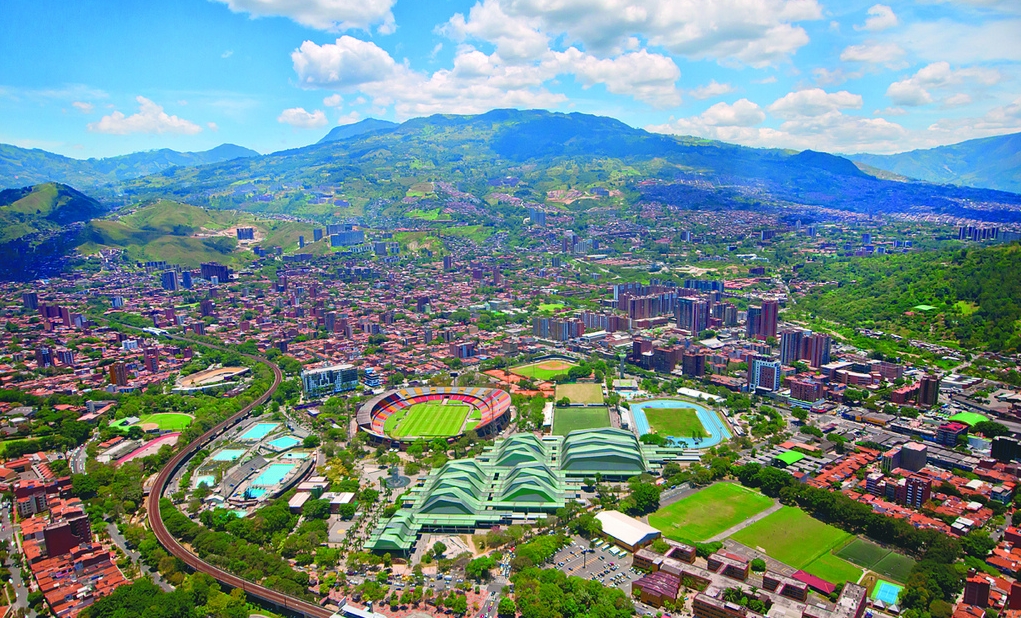
It's also because, practically speaking, all the venues are ready to go -- 20 of 24. Because most everything got built, and only three years ago, for the South American Games, the only permanent venue yet to be built would be a new BMX range. Three others would be temporary -- triathlon, sailing and road cycling. The Medellín 2018 operating budget: an estimated $170.5 million.

For good measure, in 2011 the IOC recognized Medellín with its "Sport and Environment Award" for its work at the 2010 South American Games, citing a variety of initiatives.

Others have also taken note of what is going on in Medellín.

In January, the New York Times devoted its "36 Hours" travel feature to Medellín. It cited, among other things, El Poblado, "a villagey part of town that is thick with bars and excellent restaurants."

In March, Medellín won the worldwide "Innovative City of the Year" competition, beating out New York and Tel Aviv, chosen in part for its modern transit system, environmental policies and network of museums, schools, libraries and cultural centers. The contest is sponsored by the non-profit Urban Land Institute in association with the banking concern Citi and the marketing services department of the Wall Street Journal.

Why else did Medellín win? Because, in part, the city averaged 10 percent growth for each of the 10 years between 2002 and 2011, an investment consultant telling the Financial Times earlier this year those are "Asian Tiger" numbers.

Medellín's metro system, incidentally, has its own unique way. Bogota, the Colombian capital, does not have a metro; Medellín does, repelte with cable cars to get to the city's high points. Thus it's a point of enormous civic pride. Stations and cars are spotless. There's no eating or drinking; no graffiti, either. It's all part of what around town is called "metro culture," and to underscore the point there's even a library at the Acevedo station.

This is all part of the transformation. Several years after Escobar died, a new mayor took over, Sergio Fajardo, now the regional governor. A mathematician turned politician, he promoted a wide-ranging agenda that linked education, culture, sports and community development with infrastructure and notable architecture such as the Spanish Library.

The facility that used to be a women's jail near the San Javier metro station? That's now a library, too.

In the Fourth District, near what used to be an enormous garbage dump known colloquially as "Fidel Castro," the architecturally notable Cultural Development Center of Moravia opened in 2008. A few months ago, a kindergarten opened across the way.

"If you build a beautiful library in a poor neighborhood, it gives people a sense of importance; it raises their dignity and gives them access to goods such as education," Fajardo, seen as a presidential contender by 2018, told the Financial Times earlier this month.

"It also brings visitors from other parts of the city -- something that encourages social integration."

The current mayor, Aníbal Gaviria, said in a statement, "Medellín stands today as an example for many cities around the world, because despite having lived through difficult times 20 years ago, we have undergone a true metamorphosis.

"We are now a city filled with life, thanks to the innovative approach taken at every step, both in social programs and urban development."

In April, the magazine U.S. News published a lengthy column entitled "Why Medellín, Columbia is a great retirement spot," citing the "calming and peaceful" red brick buildings and "swatches" of flowers, "friendly, helpful and hospitable" people, always-temperate climate and -- not to be forgotten -- the El Tesoro shopping mall, "as impressive … as you'll find anywhere in the world."

Colombia played host to the 2011 FIFA under-20 World Cup; Medellín staged some matches. Last month, FIFA, obviously satisfied, awarded Colombia the 2016 futsal World Cup.

Also last month, the international sportswriters association, AIPS, held a regional "Sports Games"  in Medellín; 164 journalists from South, Central and North America were on hand, and on May 21 a seminar brought together journalists and Olympic champions Jefferson Perez of Ecuador and Alberto Juantorena of Cuba.

Next year, the United Nations World Urban Forum will be staged in Medellín. Since its first meeting in Nairobi in 2002, the Forum has grown in size and scope as it has hopscotched around the world: Barcelona in 2004, Vancouver in 2006, Nanjing in 2008, Rio de Janeiro in 2010, Naples in 2012.

Some 4,500 people will be in Medellín for the UN event in 2014.

"This," said Juan Pablo Ortega, the chief executive officer of the Ruta N technology initiative in central Medellín and a Fulbright scholar at MIT in 2007-08, "is candidly part of the strategic view -- to be a city of big events."

No one, by the way, is pretending there isn't still crime in Medellín. In 1991, Medellín recorded 6,349 homicides. That number has since dropped by 80 percent.

In its evaluation, the IOC said, "In Medellín, crime is still a problem," then said in the very next sentence the city had made "admirable progress" to "significantly improve the standards of safety in the city." It also said the president of the country "guaranteed" that "all necessary measures would be taken to ensure the security and peaceful celebration of the YOG."

"Foreign investors are keen to do business with Colombia," the president, Juan Manuel Santos, said in a statement. "Over 640 foreign companies have come to Colombia since I took office," in August, 2010, "and they are now more concerned about legal insecurity than physical insecurity. Security is now a non-issue."

When it comes to crime -- there's crime in Buenos Aires and Glasgow. There's for sure crime in Rio and the Summer Games are going there in 2016.

Bottom line: would the UN be coming to Medellín if it weren't convinced the city wasn't just transforming but, indeed, transformed?

Want more evidence of how Medellín has been transformed?

Here's one point to consider:

If Medellín wins for 2018, the opening ceremony will be staged at the same 44,500-seat stadium where the bid committee now has its headquarters -- which, incidentally, is across the street from the aquatics complex with 10 pools. Across a cozy plaza -- where butterflies flutter and parrots, including brilliant macaws, chatter up on the trees -- are the environmental award-winning volleyball, basketball, gymnastics and combat sports buildings. Though they have lights, those halls were built to take advantage of natural lighting and, because the climate is so mild, don't need air-conditioning.

Last November, Madonna -- the Material Girl herself -- played that stadium. Not just one show. Two. Back-to-back.

Here's point two:

Steps away from where the "Fidel Castro" dump used to be sits a soccer field. In his time, Pablo Escobar put up towers and lights so that the people could play ball at night.

Now, that field has new lights and, moreover, new turf. It is run by INDER. The field is busy morning, noon and night.

"For us, the page is turned," the Colombian IOC member and the country's sports minister, Andrés Botero Phillipsbourne, said.

Added the 2018 bid chief executive, Juan Camilo Quintero, "The transformation in our city is huge. We have passed from the dark to the light through the last 20 years," adding a moment later, "The legacy is through sport, education and culture. That is the perfect fit for our city. This is the reason the Youth Olympic Games were created. This is the DNA of that."


Running for Tohoku

Optimized-Sadhary_Mishina.jpg

SENDAI, Japan -- The anpan is the answer here to a doughnut, a roll typically filled with sweet red bean paste, and the basis of one of the most enduringly popular cartoons in Japan, especially with the 5-year-old and under set, called "Anpanman." The superhero main character -- his head is all anpan -- goes around doing justice. Sadaharu Mishina's 2-year-old loved it. "She watched it a lot," he recalls. "She was very fond of it." The earthquake that rocked Japan on March 11, 2011, hit at 2:46 in the afternoon. Mishina was at his job here in Sendai, the capital city of the Miyagi prefecture, the largest city in the Tohoku region, a city of about a million people roughly 230 miles from Tokyo. At the time, he was an assistant manager at the center-city Holiday Inn.

The earthquake registered at 9.0 on the Richter scale, one of the most monstrous of all time. It then triggered, as everyone knows, a cataclysmic tsunami. The water roared ashore roughly 40 minutes later.

The baby was in pre-school that day, as usual. His wife was at her office. Racing against time and hope, she had left as soon as the quake struck. "I first heard from my wife at 6 p.m.," Sadaharu Mishina says now. "On the way she was informed the child was caught in the tsunami.

"We couldn't do anything. There was no electricity. There was no transport. There was nothing we could do."

Optimized-Sadhary_Mishina

The earthquake and tsunami caused massive destruction and occasioned incomprehensible personal loss. Now, more than two years later, the question throughout Japan is not: is there something to be done?

It's: what is to be done?

And how does the Tokyo bid for the 2020 Summer Games, which intriguingly is a project of truly national scope, fit in to the recovery? The campaign asserts that it has an "important role to play in the process of spiritual and physical recovery." How? Why?

An Olympic bid is not -- can not be -- won on the basis of a disaster. The week after the 9/11 terror attacks, the then-mayor of Rome, Walter Veltroni, suggested all the other candidates in the race for the 2012 Summer Games bow out in favor of New York, saying, "This will show that the terrorists are defeated."

By the time the International Olympic Committee got around to voting, in 2005, London won; New York was eliminated in the second round of voting with only 16 votes.

Tokyo, Madrid and Istanbul are now the three finalists for the 2020 Summer Games. The IOC will pick the winner Sept. 7 at an all-members assembly in Buenos Aires.

Tokyo played host to the 1964 Summer Games. There was great symbolism then in that -- in Japan emerging from the destruction from World War II.

As horrific as the earthquake and tsunami were, the situation now is not the same as after the war.

This much is also clear: the Tokyo 2020 bid team is not -- repeat, not -- looking for a sympathy vote.

At the same time, what is also evident -- but what has yet to be made plain internationally -- is the extent to which sport in general and the Olympic bid in particular have played in galvanizing the response within Japan to the 3/11 disaster.

At issue for the Tokyo 2020 bid, of course, is how to tell that story over the final months of the campaign, beginning this week at the Assn. of National Olympic Committees meeting in Lausanne, Switzerland.

Telling the Japanese story has been something of a struggle for prior bids. The 2008 Osaka bid went out in the first round with just six votes. Tokyo's 2016 bid made it only as far as the second round.

The current that has thus dominated the Tokyo 2020 campaign is to find the right message, and strike the appropriate tone -- which leads back to the core question, how much does 3/11 and the response to the disaster matter in telling the story, and why?

“All Japanese have great passion in the heart, but [it's] not easy to show,” Tsunekazu Takeda, the president of the Tokyo 2020 bid and the lone Japanese member of the IOC, said at a briefing Thursday in Lausanne ahead of the ANOC meetings. “Now everybody will be trying hard in this next presentation.”

It's a delicate balance, indeed.

Because if history says a disaster can't form the basis of a winning bid, it's also the case that what is happening in Japan is unique -- and it's right there for anyone to plainly see:

When the Japanese team came home last summer from London, having won a record 38 medals, some 500,000 people lined the streets of Tokyo in welcome.

To date, the bid team has handed out 5.5 million Tokyo 2020 pins.

Last week, after the Japanese national soccer team qualified for the World Cup next year in Brazil by virtue of a 1-1 tie with Australia, the players paraded around Saitama Stadium with a banner that proclaimed, "Hang in there, Japan -- the whole sports family is together."

Takeda said in a recent interview that planning for the bid was well underway before the disaster. Then, when it happened, "We realized again that sports had such a big power."

He added, "Not to benefit just us. We thought we could bring something to the movement," explaining, "Sports can send this message. Because of this disaster, by engaging with athletes, if they persevere, if they don't give up, that kind of attitude can bring positive change to their lives. This positive change is not limited to Japan. Other people in devastated situations -- if they do the same thing, they can achieve whatever dream they have. This is the power of sports."

Eight Japanese medalists last summer in London came from the Miyagi prefecture. "Sports alone can't reconstruct," said Habu Yoshihiro, the vice principal at Miyagi Technical High School. "But sports can make Miyagi prefecture a better place."

He added, "Japan has received the blessing of the Olympic movement for some time," noting the involvement of Major League Baseball as well as FIFA in rebuilding facilities and the U.S. women's soccer team in playing an April 2012 friendly with Japan in Sendai.

"If we receive the honor of the 2020 Games, we could contribute to the Olympic movement in a unique way. It might be a bit spiritual. It would be a Games that only Japan could host."

At the makeshift headquarters of the chamber of commerce in Onagawa, northeast of Sendai, three Tokyo 2020 posters adorn the wall. Onagawa suffered arguably greater losses than anywhere along the Tohoku coast -- more than 80 percent of its buildings, 50 percent of its homes, just under 10 percent of its population of roughly 10,000 people.

The water that day surged into town about 50 feet high. Takahiro Aoyama was then the assistant director of the chamber of commerce. He survived by climbing up to the roof of the four-story building where the chamber was headquartered, then by scrambling -- with three other men -- to the top of a water tower perched on the roof. The water nipped at their heels.

"It was awful to see it come in," Aoyama, now the chamber director, said. "But when it was going out, that was terrifying. Buildings, people. It was hell."

What he also remembers, after it became clear all four of them might live, is just how cold it was that March day. And how, after the sea raged ashore, the sky shook down snow.

Two years later, Aoyama says, "Finally, we have basic infrastructure. There are a lot of challenges. But," using a sports metaphor, "we have a start line."

The local soccer club, called Cobaltore, fields teams from grade school all the way up. One of the boys and a dad were among the dead; for months, there were no practices.

Then, though, it just seemed right to start up again and, said coach Shuo Sumida, "I noticed the power of sports to transcend anything -- to inspire kids, to put a smile back on their faces."

In other places and under other circumstances, this kind of remark might be seen as so much brave talk. In Japan, now, this sort of comment is offered -- regularly -- with earnest genuineness.

"I would like to see smiles on the kids again," said Igarashi Shigeto, whose Heart Light Sendai charity group organizes soccer tournaments, workshops and other activities. This year's tourney will see two dozen kids who had to be evacuated from their homes around Fukushima, near the crippled nuclear reactor.

A United Nations-commissioned expert report issued last month, which has received comparatively little attention, concluded that levels of radiation following the leaks and explosions at the plant were so low as to be "unlikely" to cause health problems among the general public and the "vast majority of workers."

"Japan is an island country. It's our national character to be united," Shigeto said, adding that he is not alone in seeing the 2020 bid as a special project: "We like to show the joy of being Japanese."

Tomoki Kikuchi, now 21, was at judo practice in Sendai when the quake hit. He and 11 of his judo teammates -- with no place else to go -- crammed into a one-bedroom apartment for the next two nights and three days.

Now a fourth-year student at Sendai University, Kikuchi has since spent countless hours cleaning up bricks and debris at local elementary and middle schools. "When I first started," he said, "I would think, when will this end?" Now, "I realize how important it is to support each other."

A third-year student, Takamichi Hirayama, 20, is a national-level rower, in the eight-man event. His captain's sister and another teammate's sister died on 3/11. "The tragedy was so vast," he said, and it wasn't clear whether they should continue to race.

Ultimately, they decided life is for living. Their team took second recently in the Japanese nationals. "If we got 2020," he said, "it would add energy to Tohoku and the country."

Mami Sato, 31, has represented Japan at the past three editions of the Paralympics in the long jump. She lost her lower right leg to cancer when she was 19. On 3/11, her parents' house, just 200 meters from the sea in Kesennuma, was washed out. It took six days for her, down in Tokyo, to make contact with her family -- to learn that her parents had survived and her grandmother, in her 80s, had made it through, too.

"I imagined all the people in Tohoku losing their families," she said. "I remembered being in the hospital myself, how tough it was for me. Those six days were worse. But thinking of all the people who lost their families -- that's even more painful."

She added, "They're both long battles. I keep thinking of the long battles these people are enduring still."

As of April 30, 48,453 people in Miyagi prefecture alone remained in temporary housing, according to the district's own website.

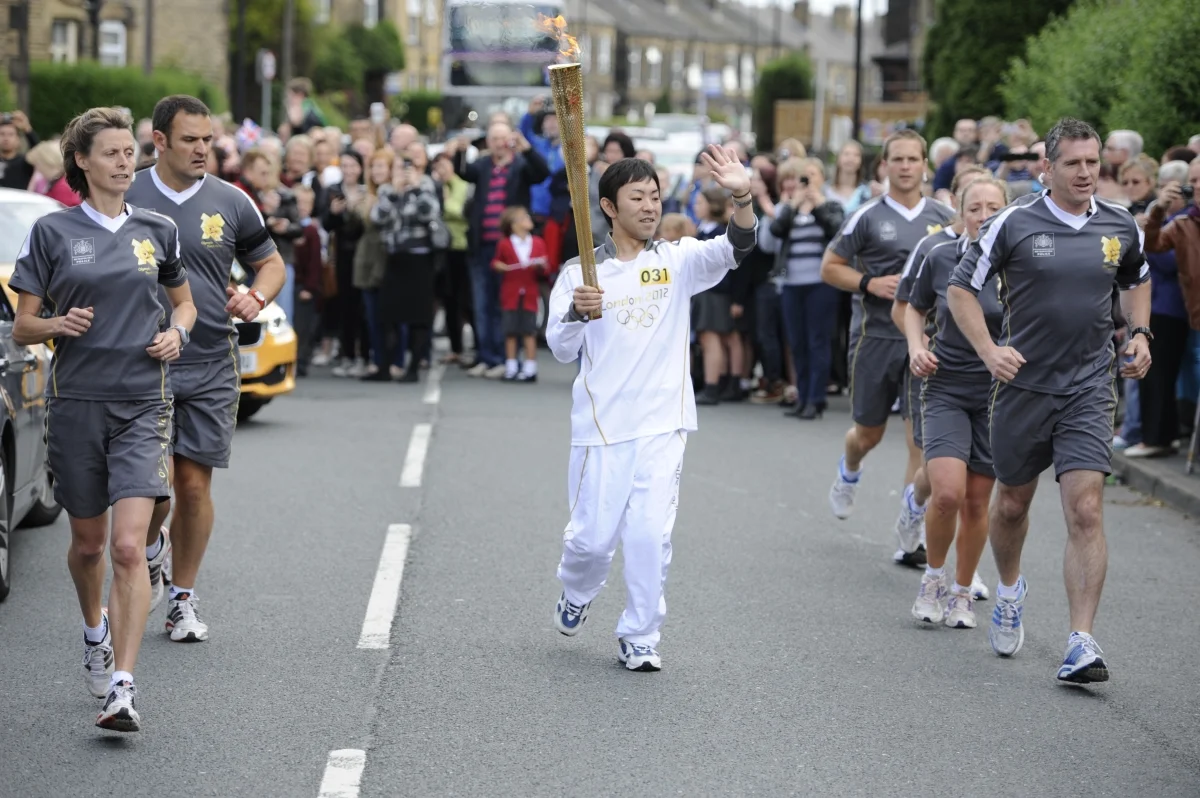
Last year, Sadaharu Mishina was nominated to run with the Olympic torch in the London 2012 flame relay. His day came up last June 25. He flew all the way to England and ran with the flame for about 400 meters in a little town called Morley.

By then, he and his wife had a new baby, a boy, and he had to leave them both to take part in the relay, to fly all the way to England and then get up north to Morley. Go, she said.

"I was very, very nervous," he recalled. "I remember all the people on the side of the road. I thought that being Japanese and not anyone super-famous -- I didn't expect people to cheer me on. But I got so many cheers. I became less tense and more relaxed. The crowd support gave me more energy to run."

This, too: "There was one thing I decided before I got there. The first step I took was for my daughter. The second step was on behalf of Tohoku."


Istanbul 2020's dilemma

The backers of Istanbul's 2020 Olympic bid can seek to spin this all they want. The International Olympic Committee's senior leadership can make like this is all maybe just a passing threat.

But what happened -- and is happening in Turkey -- is not normal. Protests make up the fabric of everyday democracy. But using water cannons and tear gas on thousands of your citizens, and making the front pages of newspapers all over the world -- that's not usual. And when it happens in the context of an Olympic bid, especially with just three weeks to go until you're due to tell your story to the 100 members of the IOC at an assembly in Lausanne, Switzerland, that presents an extraordinary -- if not unprecedented -- dilemma.

Time is ticking. Every day with protests in the streets in Turkey brings the Istanbul bid up against these questions:

Does the IOC want to take on this risk for seven years?

How does the team from Istanbul go now to Lausanne in a few weeks and, in good faith, convince the IOC there's little to no risk?

The unrest in Turkey comes just days after all three 2020 bids -- Istanbul, Madrid, Tokyo -- made presentations at the SportAccord convention in St. Petersburg, Russia, each claiming to be the safe choice in an uncertain world. The IOC will pick the 2020 city on Sept. 7 in a vote in an all-members assembly in Buenos Aires.

In St. Petersburg, Istanbul 2020 leader Hasan Arat reiterated one of the bid's tag lines, saying, "In the past, Turkey bid for the Games as an emerging nation. This time, Turkey is bidding as an emerged nation."

For the IOC, security is -- as the current president, Jacques Rogge, is given to say -- priority Number One. This has been the case since the 1972 Munich Games, when Palestinian terrorists kidnapped and murdered 11 Israeli athletes and coaches.

Since April's Boston Marathon bombings, security issues at high-profile sport events have taken on renewed urgency. Plans for the 2014 Sochi Games, now just months away, are being subjected to heightened scrutiny.

It's against that backdrop that the situation in Istanbul and across Turkey continues to unfold.

Monday's protests marked the fourth straight day of unrest in major Turkish cities, the situation escalating with the first reports of deaths at two demonstrations. A protestor in Ankara died after a vehicle slammed into a crowd there late Sunday, according to Associated Press, citing a medical official. And in the southern border town of Antakya, a 22-year-old man died; there were conflicting reports about the cause of his death.

Tuesday saw the IOC leadership headed for New York, and the International Forum on Sport for Peace & Development, jointly sponsored by the United Nations. In Turkey, the protests moved into Day Five; in Ankara, the capital, hundreds of riot police backed by water cannons deployed around the office of prime minister Recep Tayyip Erdogan.

Before leaving on an official visit Monday to Morocco, Algeria and Tunisia, Erdogan suggested the demonstrations were tied to "extremists" led by political opponents trying to overthrow his government.

The IOC is used to protests. The peaceful kind come up all the time in Olympic bids. But widespread confrontation with police in an Olympic context -- that hasn't been seen since the Beijing torch relays in London, Paris and San Francisco in the spring of 2008.

This is different. Beijing had won the Games seven years before. Istanbul is bidding.

It's different twice over because, fair or not, these protests are arising in a country that has a Muslim majority. Indeed, it's a primary selling point of the Istanbul bid that going to Turkey in 2020 would make for the first Games in a nation with a Muslim majority. It makes for a fascinating connotative turn of language, incidentally, that the Istanbul team quite deliberately has throughout its bid used the word "Muslim," not "Islamic."

But, of course, that is -- at their core -- what the protests in Istanbul are all about.

The violence was originally sparked by government plans to build on an Istanbul city park.

It broadened Friday into nationwide anti-government unrest that turns on deep-seated concerns that the Turkish government, led by Erdogan and his Justice and Development Party (AKP), is trying to impose more-conservative Islamic values on the officially secular country.

Which in Turkey better -- or best -- reflects key values there right now?

That community activists helped clean up a central Istanbul park after protests there?

Or that the government last month tightened regulations on alcohol sales and use?

Or that Erdogan has blamed the unrest on on what he called "lies" circulating on Twitter and other social networks: "There is this curse called Twitter. It's all lies … That thing called social media is the curse of society today."

The Turkish mainstream media has provided scant coverage of the demonstrations. On Twitter, however, protestors have shared graphic evidence of wounded protestors.

Bid organizers on Sunday issued a statement that said they were "monitoring the regrettable situation" in Istanbul "very carefully" and while buoyed by the "positive community spirit in helping to clean up and repair damage," the situation remains "fluid."

The statement also says, "Despite these recent events, all sections of Turkey remain united in our dream to host our nation's first ever Olympic and Paralympic Games in 2020. The slogan for our Olympic bid is 'Bridge Together' and there is a common desire to unite in the Olympic spirit and show the world that we can work together for a better Turkey."

No matter what, the IOC evaluation commission report, due to be made public June 25, won't mention a word about the unrest. The report, a culmination of visits earlier this year to all three cities, is already in the process of being printed.

On Monday, Denis Oswald, a leading Swiss member of the IOC, speaking in a conference call at which he outlined his plans for his presidential candidacy, said of the situation in Turkey, "It's a beginning of a protest that can happen in any democratic country For the time being we'll see how it develops, how important this protest is. We have had that in many countries where we had Olympic Games.

"I don't think it would necessarily affect the candidature. We are still three months away from the decision. It will depend if this continues and develops, but for the time being I don't think it's a real threat for the candidature."

Germany's Thomas Bach, an IOC vice president and another presidential candidate, also said he didn't think the protests would be a factor in the bid race.

He told the German wire service dpa, "It's not going to have any influence on the decision of the IOC members. All of them are experienced enough to realize that you are talking about a bid for the Olympic Games in seven years."

Both Bach and Oswald are lawyers. One of the things they teach you in law school is a concept called an "excited utterance." It means an unplanned reaction to a startling event -- something that's said so spontaneously it's then considered so trustworthy to be an exception to the rule that bars hearsay from being admitted to evidence.

After police had confronted tens of thousands of people in Istanbul's Taksim Square, here was mayor Kadir Topbaş in an interview:  "As Istanbul's mayor going through such an event, the fact that the whole world watched saddens me. How will we explain it? With what claims will we host the 2020 Olympic Games?"


What does the sheikh want?

Optimized-DSC03392.jpg

ST. PETERSBURG, Russia -- Marius Vizer was elected president Friday of SportAccord, the umbrella organization of international sports federations. Ordinarily, this development would be consigned to the sports section's back pages, and understandably.

In this instance, however, Vizer's election signals the undeniable emergence of significant trends and personalities with increasingly significant roles within the international sports movement in this year of even more important elections and, looking out to the coming years, beyond.

Vizer, 54, a Romanian-born Hungarian who is president of the international judo federation, defeated Bernard Lapasset of France, president of the international rugby board. The tally: 52-37.

Optimized-DSC03392

SportAccord represents both Olympic and non-Olympic sports federations.

Vizer succeeds Hein Verbruggen, the former international cycling federation president, who had been SportAccord president since 2004.

Verbruggen has long been seen within the movement as a close associate of the current IOC president, Jacques Rogge. An element in Friday's voting is that Lapasset was seen, rightly or wrongly, as the candidate more likely to be affiliated with the establishment.

The core of Vizer's winning platform: the notion of transforming SportAccord into a new power base. He envisions a "United World Championships" every four years for both Olympic and non-Olympic sports. He said he hopes the first such event, with 91 sports, could be organized in 2017.

Such an event could, of course, be seen as a direct threat to the Games themselves.

Moreover, that summer of 2017, per their regular cycles, the swimming and track and field federations -- among others -- are due to stage their own world championships.

The allure of a new mega-event, particularly for federations not affiliated with the Olympics, is easy to understand: the possibility of more money.

That said, it remains to be seen whether such an event can -- or will -- be organized, and what the IOC's response over time will be.

At a news conference wrapping up the 2013 SportAccord convention, noting that his 12 years as IOC president will end in about three months, Rogge said Friday he expects Vizer and his successor -- whoever it will be -- to "come together and to discuss collaboration."

Then he added, "if you ask my personal opinion," cautioning, "I am nearing the level of my irrelevance" because his term is so close to ending, the sports calendar is already too crowded -- as another sports body, the Assn. of Summer Olympic International Federations, suggested just a few days ago.

In the minutes after the vote, Vizer told reporters, "The Olympic spirit and Olympic Games are something very different and special.

"They have to be happy with my plan to bring additional resources to sport and finance the base of sport. They don't have to worry because it's a different event with a different background, a different strategy."

Voting Friday was done by secret ballot.

And the balloting showed -- yet again -- the political strength within the movement, indeed international sports, of Sheikh Ahmad al-Fahad al-Sabah of Kuwait. Just moments after the election results were announced, the two hugged in victory.

An obvious question raised by many Olympic insiders -- with no immediate answer -- is what Friday's results mean for the sheikh and the role he will play, or wants to play, in the IOC presidential election Sept. 7 in Buenos Aires.

Six candidates have declared for the post: Thomas Bach of Germany; Ser Miang Ng of Singapore; Richard Carrión of Puerto Rico; C.K. Wu of Chinese Taipei; Denis Oswald of Switzerland; and Sergei Bubka of Ukraine.

At issue is how many of them can claim allegiances to the sheikh, or want to -- or, for that matter, would want to.

Also this: what does the sheikh want? And why?

Such matters, understandably, can prove delicate as the politics of the moment unwind.

Even so, some connections are hardly a secret. Bach, for instance, is up front on his Olympic C.V. about the fact that he is president of the Ghorfa Arab-German Chamber of Commerce and Industry, with ties throughout the Gulf region. "They are good colleagues," said a Bach spokesman.

The sheikh, 49, has been an IOC member since 1992. He was chairman of OPEC from 2003-2005 and has served in various Kuwaiti ministries for years, since 2006 as its minister of national security.

Since 1991, he has been president of the Olympic Council of Asia; last year, at a meeting in Moscow, he took over as president of the Assn. of National Olympic Committees, replacing the venerable Mario Vazquez Raña of Mexico. ANOC represents the world's 204 national Olympic bodies. The vote: 174 in his favor, one against, two abstentions.

He said then that his leadership would include a "vision to help the underdeveloped countries' national Olympic committees."

In his new role, the sheikh also now oversees the IOC"s Olympic Solidarity Commission, a program that aims to provide financial, technical and administrative assistance to national Olympic committees, particularly those in developing nations.

Its 2009-2013 budget: $435 million, up nearly 40 percent from the 2009-12 cycle's $311 million.

Again, and for emphasis, the sheikh has been president of the confederation of the world's largest continent, a group that obviously includes Japan and China, and has done so non-stop since 1991, when he was still in his 20s, from Kuwait, where in an apparent nod to his influence, the IOC held an executive board meeting in 2006.

Last November, Bach publicly noted the import of the OCA, saying in a statement issued by the confederation, "The OCA is a very flourishing continental association with many activities."

Making matters all the more remarkable, the national Olympic committee of Kuwait was suspended for two years -- from early in 2010 until just before last year's London Games -- because of complexities relating to what the IOC perceived as governmental interference in committee autonomy.

In recent years, the sheikh is widely believed to have played a significant role in electing Wu to the IOC's policy-making executive board, as well as Patrick Hickey of Ireland.

Earlier this month, the sheikh played a pivotal role in seeing Bahrain's Sheikh Salman bin Ibrahim al-Khalifa become the top figure in Asian soccer circles -- at elections in Malaysia, first becoming president of the Asian Football Confederation, then defeating Qatar 2022 World Cup organizing committee chief Hassan al-Thawadi to claim a vacant spot on the FIFA executive committee.

In both cases, Sheikh Salman had to defeat the friends and former associates of a longtime Qatari rival, Mohamed bin Hammam, whom FIFA had expelled for alleged corruption.

Now Vizer.

Bach, asked about Vizer and his plan for a super-sized world championships, like Rogge cited the ASOIF opposition to the already jam-packed calendar and said, "From the IOC, the point of view, the IOC will not agree to any kind of idea which would dilute the uniqueness and the image of the Olympic Games.

"We will have to see what the ideas of Mr. Vizier, whom I congratulate on his elections, will be now after the elections. Sometimes," he said, "there are slight differences in the attitudes before and after the elections."


2020: playing the safe card

2013-05-30-17.35.38.jpg

ST. PETERSBURG, Russia -- Tokyo 2020's Yuki Ota, a two-time silver medalist in fencing, bounded across the stage and said to the crowd, with enormous energy and enthusiasm, "It is great to be back in St. Petersburg," where he had competed in 2007. Everyone laughed, and he had them from there as he said, "I can promise that Tokyo 2020 will see your sports shine." A few moments later, Jaime García-Legaz, at the lectern for Madrid 2020, tackled the pink elephant in the room head-on -- the Spanish economy. His nation's minister of commerce and international trade, García-Legaz noted that the International Monetary Fund and others project "steady" economic growth for Spain in the next five years, adding, "The fundamentals of the Spanish economy are strong and deep."

Meanwhile, the Turkish minister for youth and sport, Suat Kiliç, his tie knotted just so and his pocket square sitting just right, said in an interview after confidently rocking his presentation, "We believe Istanbul will deliver a unique chance. Not just for the Olympic movement but for global peace."

Two-time fencing silver medalist Yuki Ota (far left) and the Tokyo 2020 bid team

With precisely 100 days to go before the International Olympic Committee selects the 2020 site, the three cities in the race took their presentations public Thursday for the first time, throwing the race  into a fresh phase -- not only revealing strategies but minting personalities likely to frame this campaign homestretch.

The IOC will vote by secret ballot Sept. 7 in Buenos Aires.

Intriguingly, each of the three cities sought to play the safe card -- that is, asserting that it could best offer the IOC financial security in these uncertain economic times.

Given that the three offer wildly divergent construction budgets, each came at the notion Thursday on stage from wholly different approaches.

Each also struck a markedly different tone.

Istanbul, bidding for the fifth time, its first time as an "emerged nation," according to campaign leader Hasan Arat, sought Thursday to highlight the allure of a Games that would go for the first time to a nation with a Muslim majority and that literally and figuratively bridges Europe and Asia.

"You have one city where you see the sun rise on two continents," Arat said.

"We have a city that bridges light and shade, old and new, east and west," Kiliç said. "Istanbul shines like a diamond." At that, up came a short film accompanied by the Rihanna hit "Diamonds."

Mostly, though, the emphasis was this: Istanbul's $19.2 billion infrastructure plan would, according to Kiliç and Arat, be worry-free.

Over the past 10 years, Turkey's economic growth has averaged more than 5 percent annually, Kiliç said. It is now the 16th-largest economy in the world, projected to be in the top-10 -- as ranked by gross domestic product -- by 2023, the 100th anniversary of the founding of the Turkish republic.

As a sign of how things are booming in Istanbul, Kiliç pointed out, just Wednesday Prime Minister Recep Tayyip Erdoğan broke ground on a third bridge over the Bosphorus strait -- a structure that will be the longest combined road and railway bridge in the world, with a combined capacity of 270,000 cars, scheduled for completion by the end of 2016, at a cost, privately funded, of $4.5 billion.

The bridge was not included, incidentally, as part of the $19.2 billion in the bid file -- the tender process had still been ongoing.

Arat asserted, "This week our focus has been risk-free delivery, proving that we are ready to be perfect partners."

Madrid's infrastructure budget would be one-tenth Istanbul's: $1.9 billion. Eighty percent of its venues are already in place -- this being Madrid's third bid in a row.

Simply put," the bid's chief executive, Victor Sanchez, said, "Madrid 2020 makes sense."

He added, "We will have zero white elephants, only four new permanent venues and three temporary venues. All are already budgeted for and fully guaranteed."

Added Alejandro Blanco, the bid's president, "Madrid 2020 is not a bid of dreams -- we've already built them."

García-Legaz, on stage in a clear bid to evoke memories of Brazil's central banker, Henrique Meirelles, key to Rio de Janeiro's winning 2009 campaign for the 2016 Summer Games, said real data shows that Spain leads export growth in the Euro area, with an expected increase of 4.2 percent, compared to 3.3 percent for Germany.

Moreover, Spain will have the second-highest balance of payments surplus in the coming years among the five biggest European economies, behind only Germany.

Meanwhile, in a clever turn, Marisol Casado, the president of the International Triathlon Union, began the Madrid 2020 presentation with this introduction, "I am one of the three IOC members from Spain," a fact that remarkably gets little play but may ultimately prove significant.

Madrid can work the room with Carisol; José Perurena López, president of the International Canoe Federation; and Juan Antonio Samaranch Jr., the IOC executive board member.

Turkey has one IOC member, Dr. Ugur Erdener, president of the international archery federation.

Similarly, Japan has just one active member, Tsunekazu Takeda.

In a vivid contrast from the often-dull affect of the Tokyo 2016 bid, it wasn't just Ota who on Thursday was pumped up.

Takeda's passion for the project was vividly on display. So, too, Tokyo governor Naoki Inose, bid chief executive Masato Mizuno and the others.

The connection that the Japanese team forged with the audience was notable -- and from the get-go, with Takeda, at the lectern, extending "best wishes" to the "European cities of Istanbul and Madrid," then noting, "We are proud to carry the hopes of Asia," home to "more than one billion young people."

When the Japanese team came home last summer from London, half a million people took to the streets in welcome. "Imagine that passion in 2020," Ota said, and as the closed-circuit camera panned to the audience around the LenExpo Center, heads nodded all around.

Tokyo's construction budget: $4.9 billion.

The message from the Japanese: "certain delivery," because as they have noted time and again, they have $4.5 billion of it already squirreled away in the bank, just sitting there. If it were a country, Inose said, Tokyo's economy alone would almost make the global top-10.

Moreover, he said, Tokyo is itself safe -- a different kind of clever tack in a world where security issues are always at issue. "If you lose something," Inose said, "many times it returns to your hands, including [the] cash."

In concluding, Takeda made his pitch: "In these uncertain times, Tokyo offers certainty. You can have total confidence that we will deliver."

Then, continuing slyly: "In a city that bridges and unites two global cultures, east and west -- and which will connect with all five continents.

"Tokyo 2020 will be Games that reach new generations in these challenging and fast-changing times for sport."


IOC short-lists three sports

2013-05-29-19.59.47.jpg

ST. PETERSBURG, Russia -- The ballroom here at the Lenexpo Convention Center here was jammed. TV crews and photographers assumed their positions, cameras trained on wrestling supporters in the front row of audience seats, immediately behind the ladies and gentlemen of the press. The tension was thick. Up on the dais, Mark Adams, the International Olympic Committee's spokesman, started to explain that the IOC's policy-making executive board had Wednesday afternoon decided to short-list just three sports for review this September by the all-members assembly in Buenos Aires. Everyone did quick math. Three sports in. That meant five were out. Which three?

Adams started to read off the first of the three: "Wrestling," he said, and in the instant before the place erupted someone in the wresting group summed it all with just one word that echoed across the hall: "Yeah!"

It took several long moments before order was restored, and Adams could then read off the other two: "Baseball and softball," he said, and then, "With apologies to the others, squash."

Jubilant wrestling officials meet the press after Wednesday's IOC executive board vote

With that, the IOC sought to turn the page in one of the most convoluted procedural and substantive fixes it has ever produced. Time, and only time, will tell whether it got this just right -- or profoundly wrong.

Cut were sport climbing, karate, roller sports, wakeboarding and the Chinese martial art of wushu.

In a statement, IOC president Jacques Rogge noted that "it was never going to be an easy decision" but this was a "good decision."

Thomas Bach, an IOC vice president and leading candidate to succeed Rogge in voting for the IOC presidency, said, "This is a good mixture between team sports, individual sports and martial arts."

The executive board voting Wednesday -- which followed 30-minute presentations by each of the eight sports -- proved complex. A sport made it through with a majority vote of the 14-member board; Rogge, a 15th potential ballot, did not vote.

The first round did not portend what was to come: wrestling made it through in just one ballot, with a majority of 8. The second round then took seven ballots before the combined baseball/softball bid defeated karate, 9-5. Squash got through in three rounds in the third with a majority of 8.

The IOC will pick one of the three -- or, perhaps, none -- in voting Sept. 8.

If the full membership selects wrestling for the sole vacant spot on the program, then the review process will have resulted in, essentially, no change -- at a time when the IOC is keen to be seen to be more vibrant in reaching out to a younger audience.

At the same time, the IOC has always sought to balance its traditions.

Therein lies the considerable tension.

A quick review of how the IOC got to Wednesday's action:

After every Games, the IOC reviews the line-up on the Games program.

By rule, the IOC sets these caps: 28 sports on the program and 10,500 athletes.

In 2009, the IOC decided to add rugby sevens and golf for the 2016 and 2020 Games.

For 2020, the review meant there would be 25 "core" sports plus golf and rugby. That meant -- and still means -- there would be one, and only one, open spot on the 2020 program.

In February, to considerable surprise, after its program commission -- chaired by Italy's Franco Carraro -- put every sport through a survey of 39 criteria, the executive board dropped wrestling from the core.

Wrestling's governing body, which goes by the acronym FILA, never saw it coming.

After all, wrestling had been on the ancient Games program. It had been on the program of every program in the modern Olympics.

In response, the federation got rid of its president, the Swiss Raphael Martinetti, and elected a new one, Serbian Nenad Lalovic. It enacted a series of rules changes aimed at making the sport more attractive.

"Wrestling needed to make the rules changes they did, and once they did, it gave the executive board an avenue to put wrestling on the short-list because it was a different wrestling than they saw in February," said Jim Scherr, the former U.S. Olympic Committee chief executive who is now a member of the FILA bureau.

Malaysia's seven-time squash world champion, Nicol David, said, "This is a great day for squash as it takes us one step closer to realizing our long-held ambition to join the Olympic Games. I said to the executive board that the one big regret in my career is that I have never had the chance to compete in the Olympic Games, but I would happily trade all my seven world titles for the chance of Olympic gold."

Baseball and softball formed a single international federation, the World Baseball Softball Confederation. They also laid out a plan to shorten their tournament and and play at one venue. Also, Major League Baseball and its players' association sent the IOC a letter confirming "our continuing support and confidence in finding the best possible … solution" for the "participation of professional players."

IOC sports director Christophe Dubi noted, "…They gave important assurance from the leagues that solutions will be found and this was presented today."

Both baseball and softball were kicked out of the Games in 2005, effective in 2008. Baseball had become part of the Olympics in 1992, softball in 1996. Don Porter, the longtime head of the softball effort, was visibly moved.

He said, "I have been through this a long, long time. I have been disappointed before. I just hoped we had done enough.

"This is like the seventh inning. Now we are heading to the ninth. We have runners on base and are going to work hard to bring those runners home."

Lalovic, the new wrestling president, used a different metaphor:

"The match is not finished," he said, adding a moment later, "We have to stay in the Olympics. This is our goal."


Bubka makes it an even six

2013-05-28-16.49.01.jpg

ST. PETERSBURG, Russia -- Sergei Bubka, the former Olympic and world champion in the pole vault who made himself into a leading figure in the business and politics of international sports, announced Tuesday he is running for the presidency of the International Olympic Committee. Bubka becomes the sixth -- and presumably final -- candidate for the post, a record.

For all his success on the field of play and  since, whether in the innovative programs he has developed as president of the national Olympic committee of Ukraine or  in a variety of other fields, Bubka said at a news conference that he has been driven by an elemental principle: "I always dreamed to change the world for the better."

At 49, Bubka is -- by far -- the youngest candidate in the race. Asked about that, he said that while he now carries years of experience as an athlete, businessman and sports administrator, he also would bring "passion, energy, dynamism, motivation," adding such qualities are "important for such a responsibility." He also said, "If needed, I will work 24 hours a day for the success of the Olympic movement."

The fascinating challenge now confronting the winner -- whoever he is to be come Sept. 10, when the IOC votes at an all-member assembly in Buenos Aires -- is simple and obvious: how to build a winning coalition.

Also this: how to get through the critical first round of voting.

Bubka opted in amid the SportAccord convention, and just one day before the IOC's policy-making executive board convenes for meetings at which, among other issues, the future of sports such as wrestling on the 2020 Summer Games program is at stake. Why here? Because it was in St. Petersburg that Bubka first qualified for the 1983 track and field world championships, where he would go on to win gold -- in essence, where he announced his entrance onto the international stage. On Tuesday he sought to come full circle.

On Monday, Bubka said, he notified IOC president Jacques Rogge of his intention to declare.

In the very first paragraph of a letter sent Tuesday to the other 100 IOC members, Bubka moved immediately to the values that lie at the core of the movement, tracing them back to the founder of the modern Games, the French baron Pierre de Coubertin.

"Our challenge today is to maintain those historic values while adapting and growing as the modern world changes immeasurably," the letter says, noting that he intends to build on the work done by Rogge, who has served for the past 12 years, as well as Juan Antonio Samaranch, president for the 21 years before that.

Bubka joins a field that includes IOC vice presidents Thomas Bach of Germany and Ser Miang Ng of Singapore; finance commission chair Richard Carrión of Puerto Rico; boxing federation president C.K. Wu of Chinese Taipei; and international rowing federation chief Denis Oswald.

Bach is generally seen as the front-runner.

It is also presumed, however, that Bach is by no means a lock to move into the president's office at the Chateau de Vidy, the IOC's headquarters in Lausanne, Switzerland.

In the letter he sent to the IOC members, Bubka says, "I am fully aware of the responsibility I have accepted and also of the difficult decision that each IOC member faces in deciding who is best able to lead the Olympic Movement in the coming years."

The letter cites his years as an athlete, businessman and sports administrator.

Bubka competed in four Olympic Games, 1988 to 2000. He won gold competing for the former Soviet Union at the 1988 Seoul Games.

He is a six-time world champion. He set 35 world records.

Bubka still holds both the outdoor (6.14 meters, or 20 feet, 1-3/4 inches) and indoor (6.15, or 20-2) pole-vault records.

"From a young age I wanted to become an Olympian and I was fortunate enough to achieve my dream," the letter says. "I was lucky, I had the right team around me, as coaches, as advisors, as friends. And this is my principle of life: even as an individual doing an individual sport, you can not succeed alone. Only together, we are strong. Only together we will be able to address the challenges that lie ahead of us."

It continues: "I believe that membership of the IOC brings with it obligations: to serve the world of sport; to preserve and evolve the great virtues on which Olympism stands; to listen and learn; and to react to the changing times to ensure that the Olympic values continue to reach and inspire a global population."

Bubka said he would present his action plan -- "manifesto," in IOC jargon -- in the coming weeks, promising a "clear vision and a number of ideas about how we might shape the future of the Olympic movement."

In the meantime, the letter says the movement must better connect with young people even as it finds "new ways" to combat doping and illegal betting.

It says, "We must spread the message of the Olympic movement and use its influence on a global political scale as a force for good."

Bubka served as the athletes' representative on the IOC executive board from 2000 to 2008; he was made a full IOC member in 2008 and elected anew to the executive board last year.

He has served on several commissions, including the coordination commissions for both the Beijing 2008 and Rio de Janeiro 2016 Games. Since 2010, he has chaired what is called the Entourage Commission, a novel IOC panel that reviews the impact of an athlete's circle -- coaches, family, friends and others.

Since 2005, Bubka has been president of the national Olympic committee of Ukraine. The committee has developed, among other initiatives, a wide-ranging youth sports program that ties in kids, coaches and local communities. As Bubka said at the news conference, "We are building heroes in Ukraine."

Rogge has suggested that the next IOC president be paid; all the presidents in modern IOC history have served as volunteers. Bubka said it is a "big honor and pleasure" to serve the Olympic movement, and it is in that spirit that he volunteers now in his various roles. Even so, he said, he agrees with Rogge's proposal that the next president receive a salary, saying, "When [the president] is paid, he is responsible." Immediately, though, he also said that if elected, he would donate the salary -- however much it was -- to charity, explaining that family business interests and IOC expense allowances would cover the cost of living.

Bubka has been a vice president of track and field's worldwide governing body, IAAF, since 2007. He and Britain's Sebastian Coe are widely believed to be the leading contenders to succeed the IAAF president, Lamine Diack, whose term is due to end in 2015.

He said, "I am here because of athletics. Athletics, and the Olympic movement, this is in my heart -- this is my life, this is my life, my passion. And of course today, today we have the election for IOC presidency. And I think this is [a] good time to run for IOC president."