Track and field

Track and field makes it so hard on itself. Why, why, why?

Track and field makes it so hard on itself. Why, why, why?

EUGENE, Oregon — On Sunday, the United States won nine medals, four of them gold, at the world track and field championships.

As track nerds knew and organizers helpfully reminded, this was statistically the greatest single-day haul by any nation in the nearly 40-year history of the championships.

On August 31, 1991, the Soviet Union won eight. The previous American best had been seven, on August 10, 1983. Kenya won seven medals on August 27, 2011. There have been 14 times a nation has won six.

The question is: does this nine/four performance move the needle when it comes to growing track and field in the United States? Nine and four are great, no question. But unless this meet kickstarts the sport, with an eye toward the Olympics in Los Angeles in 2028, then nine and four are just — nine and four. Numbers. Like those in that third paragraph. Stats. For freaks and nerds. Who are already on the I-love-track train.

Script writer's dream for U.S. track: Fred Kerley, yessir, leads 1-2-3 USA sweep in men's 100

Script writer's dream for U.S. track: Fred Kerley, yessir, leads 1-2-3 USA sweep in men's 100

EUGENE, Oregon — Fred Kerley has an active Twitter account. In it, he explains why he’s very good at running fast.

I love what I do, he says. That’s why, he goes on, I’m confident in everything I do.

To know Kerley is to understand, indeed appreciate, that he is not obnoxiously confident. He is from small-town central Texas, and he has an understated humility. “Track and field has changed my life, coming from where I come from,” he said late Saturday. “Every day I get to run track, it’s a blessing.” All the same, no one gets to be best at the 100 meters, the most alpha of alpha male disciplines, without considerable self-esteem. In that Twitter account, in which he lets the public in, at least a little, into bits and pieces of the real him, Kerley returns time and again to the notion that greatness, by implication, his, cannot be denied.

Four case studies: athlete mental health

Four case studies: athlete mental health

Athlete mental health is a real thing. To be clear, no one is suggesting otherwise.

It’s intriguing to explore the intersection in recent days of four separate episodes that bear on this fascinating topic.

Any therapist will tell you that matters of mental health are subjective. That is, they’re in the headspace of the person who’s dealing with them. All the same, that person — for purposes of this discussion, an athlete, and more specifically, a professional athlete — lives and works among us. That means there’s some significant measure of objective if not common-sense reality.

In Belgrade, a rivalry in the men's sprint, and let's get it on

BELGRADE, Serbia — There are four big track and field championships this year: world indoors, world outdoors, Commonwealth Games, Europeans. For a sizeable number of top athletes, these world indoors are, for lack of a better description, the baby of the four, the junior rider.

In any year, but particularly this one, it would be rare to see the kind of showdown that took place Saturday night in the marquee event of these world indoors, the men’s 60 meters. In Lane 5, the Tokyo Olympic champion in the 100 meters, Italy’s Lamont Marcell Jacobs. Was his run last summer a fluke? In Lane 3, American Christian Coleman, the 2019 100 world champion, the 2018 60-meter winner, the world record-holder at this distance at 6.34 seconds. He could not challenge Jacobs in Tokyo. He was sitting out, grounded by a whereabouts violation.

Rarer still is the race that lives up to the hype.

This one did.

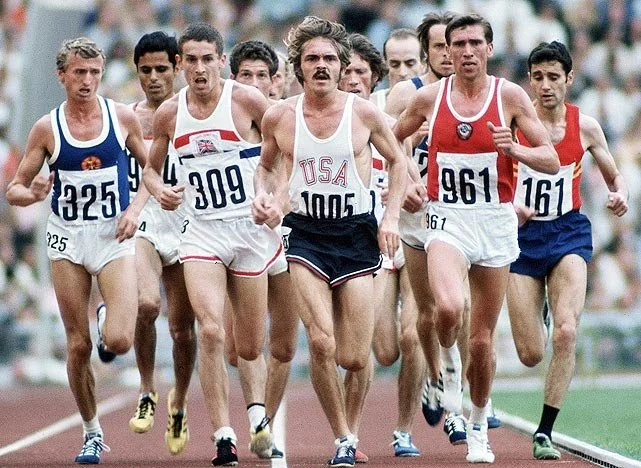
Track and field has a problem. His name is Steve Prefontaine

Track and field has a problem. His name is Steve Prefontaine

Track and field has a problem. His name is Steve Prefontaine.

This week, the lead-up to the 114th edition of the Millrose Games in New York, arguably the world’s most prestigious indoor track and field meet, marked what would have been Prefontaine’s 71st birthday.

Yet again, social media lit up with gushing tributes and grainy videos of Prefontaine races.

Track and field’s problem is, to be blunt, with the ongoing fetishizing of the Prefontaine legacy.

Time for Shelby Houlihan to come clean

Time for Shelby Houlihan to come clean

Two things ought to happen now that the Court of Arbitration for Sport has issued a technically detailed but, in the end, common-sense ruling in the matter of Shelby Houlihan, the American distance runner, banning her for four years for nandrolone — through January 2025 — while thoroughly rejecting the ridiculous burrito defense.

One, Houlihan ought to come clean.

Two, all the journalistic sheep who wanted to believe, who maybe still want to believe despite the overwhelming evidence against Houlihan, that there was no way, just no way, a white American distance runner affiliated with the Bowerman Track Club could test positive — all these people, and the readers they misled, ought to take a crash course in Doping 101 and the things people will say and do, meaning anything and everything, to avoid getting busted.

First, Elaine Thompson-Herah. Last, and a call for context, empathy: Sha'Carri Richardson

First, Elaine Thompson-Herah. Last, and a call for context, empathy: Sha'Carri Richardson

First and foremost, let us pay tribute to Elaine Thompson-Herah, winner Saturday of the women’s 100 at the Prefontaine Classic at Hayward Field in Eugene, Oregon. This summer, Thompson-Herah has cemented her status as one of the finest female sprinters of all time, if not the best.

In Tokyo, Thompson-Herah completed the two-time Olympic double-double, winning — again — the women’s 100 and 200, just as she did in Rio. Then, on Saturday in Eugene, she ran 10.54 to win the 100.

10.54.

This is the second-fastest 100 ever, behind only Florence Griffith-Joyner’s 10.49 in Indianapolis in 1988. It’s a bunch of other stuff, too — personal best (obviously); world lead (ditto); national, Diamond League and meet record (same) — but the important thing is that it’s only five-hundredths back of FloJo, and ETH, as she is known in track speak, is hot, and there are meets coming up, including in Lausanne, Switzerland, on Thursday, where she is already due to race, and it’s clear she wants 10.48 or lower.

That is one story. To be blunt, Elaine Thompson-Herah deserves far more credit than she is getting from the pack of journalistic sheep covering track and field. Way, way, way more.

Context and empathy, please: Richardson very unlikely to run at all in Tokyo

Context and empathy, please: Richardson very unlikely to run at all in Tokyo

Sha’Carri Richardson is not going to run in the women’s 100 meters at the Tokyo Olympics. That race is at the start of the track and field competition at the Games.

For that matter, she is very unlikely to run in the women’s 4x100 meter relay. That relay is run near the end.

“We have not focused on the relay,” her agent, Renaldo Nehemiah, said Friday afternoon in a telephone interview. “I just felt that was not healthy for her to get excited about possibly being in Tokyo. I felt it would be a shock and a surprise. Her sights are going to be on the Prefontaine Classic,” on August 21 back at Hayward Field in Eugene, Oregon, a World Athletics Diamond League meet.

Richardson’s 30-day marijuana-related suspension does far more than seemingly take one of the brightest young U.S. stars out of the Tokyo Games, which begin July 23.

It also highlights the need for context and empathy — and a renewed appreciation for athlete mental health — when bright young talents, burnished on the star-making machinery of television as the next big thing, are revealed behind the scenes as human beings like the rest of us, in this instance, a 21-year-old young woman desperately grieving the loss of her mother.

In this context, it also highlights the way that USA Track & Field, under the leadership of chief executive Max Siegel and chief operating officer Renee Washington, have again, indeed relentlessly, stepped up to provide precisely such empathy and athlete support — in direct contrast to the way such matters might have been dealt with in the past.

A $270-million spaceship in remote Eugene is not how to grow track and field in America

A $270-million spaceship in remote Eugene is not how to grow track and field in America

EUGENE, Ore. — Maybe you are one of those people who believes that Paul McCartney has been, you know, dead for all these years.

Maybe you believe that Britney Spears has thoroughly enjoyed every minute of the 13 years under the conservatorship that has controlled her life and money.

Maybe you believe that the Houston Astros were just learning new syncopation skills when they were beating on garbage cans.

If you are one of these people, or maybe you just belong to the Cult of Running and don’t want to listen to logic and facts, then maybe you believe the new Hayward Field here in Eugene is the lynchpin to a revival of U.S. track and field. And you likely believe, too, that this week’s U.S. Trials, which are essentially a dry-run for the stadium, are a precursor to next year’s track and field world championships that will change everything for the sport in this country.