Track and field

Race-based character assassination, and more

Max-Siegel-CEO-President-USATF.jpg

Anyone who has spent a number of years in journalism recognizes a story written with the full intent of being submitted at the end of the year, maybe as part of a package, to prize juries.

The question is whether the Washington Post story published Friday about USA Track & Field also gets recognized for what it further is: a story laced with implicit bias about the only federation in the U.S. Olympic scene with significant African-American leadership as well as one driven by source interviews animated by the same stupid, tiresome, fourth grade-style playground politics that have in years past all but destroyed USATF.
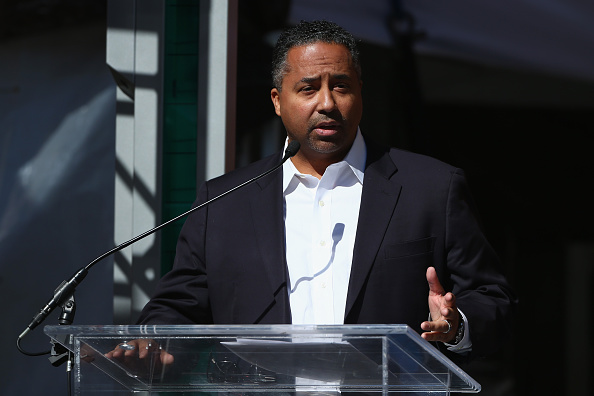
USATF chief executive Max Siegel at a news conference in Portland, Ore., in advance of the 2016 world indoor championships // Getty Images

This story comes after the U.S. track team won 32 medals at the Rio Games, passing the long-targeted 30 mark. Max Siegel is the USATF chief executive. Did either of his two predecessors, Craig Masback or Doug Logan, both mentioned in the Post story, lead a team that got to 30? No. Is that mentioned? No.

Last month, the U.S. Olympic Committee acknowledged that it and the sports it leads are way behind the curve in the placement of women and minorities in key coaching and leadership positions. The exception: USATF. Siegel is African-American. So, too, chief operating officer Renee Washington. So, too, president Stephanie Hightower. Of the 15-member USATF board of directors, 10 are people of color.

Is any of that mentioned? No.

So what is? That Siegel flies business or first-class, or even on a private jet?

People, that’s what business executives do. Why is the black guy getting singled out for that?

Last October, Siegel opened his email to find not one but two vile emails loaded with threats and repeated use of the n-word. Is any of that mentioned? No.

If the point of the story is that Siegel is flying up front while American athletes are sitting in the back — uh, wait. Someone call USA Swimming and ask if the entire team — the entire team — flew to Rio on Mark Cuban’s private jet.

The journalistic jargon for the kind of story the Post published about USATF, and in particular Siegel, is a “takedown.”

The point is not just to try to win prizes but to embarrass Siegel in particular and, as well, because it’s the Washington Post, to get a story in front of Congress, which has oversight over the U.S. Olympic scene.

The problem with this particular effort is that there is, as the famous saying about Oakland goes, no there there.

And it is riddled with fairness issues.

Nowhere in the lengthy story — which runs to some 4,000 words, or roughly 100 copy inches — will one find the words “misconduct” or “wrongdoing.”

The headline itself is so telling: Siegel “has alarmed some insiders with his spending and style.”

What white executive gets called out in one of the country’s leading newspapers on account of his style?

As for the substance:

Just to pick one of the observations in the story about Siegel’s “travel habits,” as the story calls them:

At the world indoor championships in March in Portland, Siegel for sure stayed at The Nines hotel. So did the senior executives of track and field’s world governing body, the International Assn. of Athletics Federations. One of the basics of the USATF top guy’s job is to forge and to maintain a constructive working relationship with IAAF leaders. It’s entirely reasonable to stay at the same hotel.

At any rate, those “habits”? Approved by the USATF board of directors.

His compensation package, loaded with performance bonuses that pushed his package to $1.7 million? Same.

USATF competes for sponsorship dollars against the four primary major leagues and the roughly 30 teams in each league. So to suggest that Siegel’s compensation package should somehow be measured against a “typical non-profit” just misses the mark.

Siegel buys a laptop and the assertion is he did so to save — or somehow evade — all of $112 in sales taxes? One, it’s a work-related laptop so he’s saving USATF money. Second, this is so ticky-tack it’s hard to even know why it was deemed publishable. When was the last time a white chief executive was harassed over $112 in sales tax?

By the way — a guy who took in $1.7 million can’t afford $112? Come on. The double standard is outrageous.

The $500 million Nike deal with USATF that is due to generate $23.7 million in commissions over the length of the deal, through 2039? Like either is a bad thing? One, as the story itself notes, the commission amounts to less than five percent. Two, the story asserts that the role of the two guys getting the commission “has not previously been disclosed.” Except that in the next sentence it says that the 2014 USATF 990 tax form lists the payment.

Wait a minute.  A Form 990 is a public document. Just to be obvious — that means it has in every regard previously been disclosed. The document sits on the USATF website.

The insinuation that there’s something amiss because USATF has done work with Matchbook, a marketing company that once shared office space with Max Siegel Inc.? As Siegel wrote in a memorandum in August to the USATF board of directors, “I do not own a stake in Matchbook Creative, have never owned a stake in the company and do not financially profit from the vendor relationship.”

Meantime, the story is punctuated with quotes critical of Siegel’s leadership “style.” In the interest of fairness, and referring back to the headline about the purported “alarm” of “insiders”:

The juicy quote about “leadership” and “Marie Antoinette” that ends the first copy block comes from the California lawyer David Greifinger, the former USATF board counsel.

Does the story disclose that, as former board counsel, Greifinger would have every reason to want that job back? No. Does it disclose that Greifinger is playing an active role opposing USATF in ongoing litigation — a lawsuit brought by the federation against the 13 former members of its youth committee involving a dispute over meet-registration software? That Greifinger is representing the other side and would thus have ample incentive to be critical of Siegel? No.

Next:

The story asserts that the “office environment” at USATF is now “authoritarian and tense.”

That’s somehow newsworthy? Iron-fisted white executives typically get showered with praise for running a tight ship but the black guy somehow is “authoritarian and tense?” Absurd. It’s also not true. Check with Duffy Mahoney, the USATF director of high performance. Over his nearly 30-year USATF career, he has been through it all and seen it all, the Masback years, the Logan years and more; he loves working with both Washington and Siegel. Is Mahoney quoted in the story? No.

The story offers quotes from the former USATF accounting manager Melissa Bowlby. In one, she says Siegel and Washington have “just made [USATF] their playground.” As for her credibility — maybe someone ought to ask if there is anything the reasonable person might find interesting in her USATF personnel file.

Then there is the email exchange involving Siegel and Jon Drummond, identified in the story as “an influential retired athlete.”

At the time of the exchange, Drummond was chair of the USATF athletes’ committee. The story highlights, in the third paragraph, a snippet in which Siegel says he will “fuck anyone up that goes after me personally.”

The accompanying screenshot farther down does what the story does not — provide the context, in which Siegel also makes plain the difference between what’s business and what’s personal.

In a perfect world, should Siegel be sending those kinds of texts? No. That said, is the recipient someone likely to be offended? Drummond is himself no stranger to attention-getting devices — see his performance at the 2003 Paris world championships, lying down in protest on the track after a false-start call, a stunt that delayed competition for nearly an hour.

At any rate: the idea that someone might drop an f-bomb is hardly news.

This, however, is: Jon Drummond is serving an eight-year doping-related suspension involving the sprinter Tyson Gay that arguably wrecked Gay’s career.

That for sure cuts to Drummond’s credibility. Is that mentioned in the story? No.

Finally, there is this, which underscores the real point of what’s going on at USATF: the organization is changing, for the way better, and a bunch of people who are not ‘insiders” but are on the outside looking in are pissed off about it. So, in the style they know, they are leveraging the Post to pursue petty personal politics, just like in the old days, in the hope that they can for real be “insiders.”

If for some inexplicable reason Siegel were to go, the chief operating officer takes over. That’s Washington.

From the story — an email provided by a former retail and marketing manager in which Washington calls Jill Geer, the federation’s longtime communications director, a “bitch.”

Again: like that’s worth being in the newspaper?

Here’s a good guess about why it’s in the paper. Geer declined to make Siegel available for the story. The reporter couldn’t himself call Geer a bitch in print for that. But, voila — the email.

You know what that is? That’s bitchy.

You might say: to the max.

31 medals (at least), all with class and character

image1.jpg

RIO de JANEIRO — For a generation, USA Track & Field has been chasing an elusive goal: 30 Olympic medals.

Here in Rio, in a run at Olympic Stadium that underscores the major up-pointing trend in the American track and field scene, the Americans have — through Saturday night — won 31. The men’s marathon is yet to come Sunday. Those due to run include Meg Keflezighi, silver medalist at Athens 2004 and winner of the 2014 Boston Marathon.

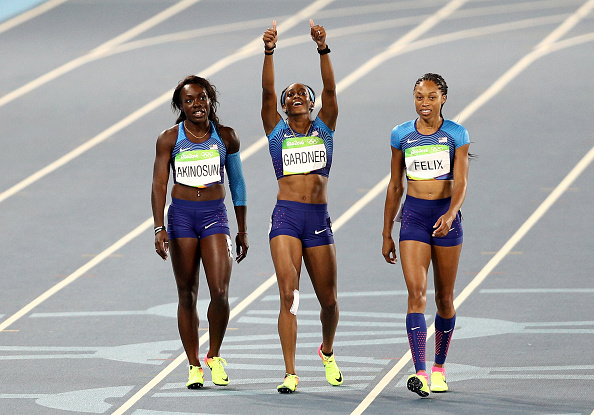
After the women's 4x4 relay

On Saturday night, Matthew Centrowitz Jr. won the men’s 1500m in a front-running, tactically savvy 3:50 flat — the first gold for the United States in that race since 1908. In the men’s 5000, Britain’s Mo Farah won, completing the 2012 and 2016 5000m and 10,000m distance double, the American Paul Chelimo crossing the line second. Moments later, Chelimo was disqualified for a lane infringement; then, later, in the evening, he was reinstated, the first U.S. men’s 5k medal since Tokyo 1964.

Those were medals 28 and 29.

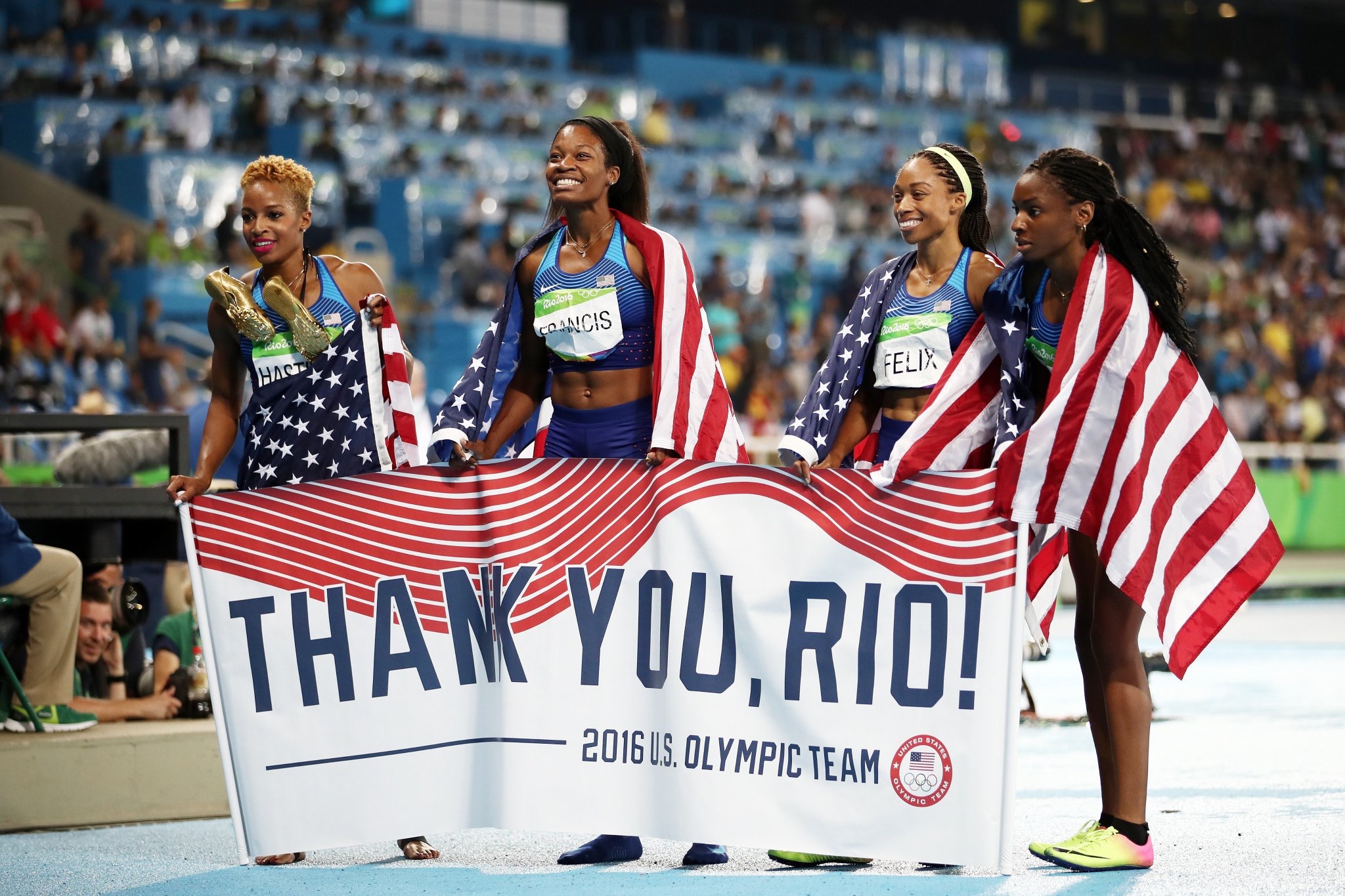
Then came the women’s and men’s 4x400 relays. Both American teams won, medals 30 and 31, Allyson Felix anchoring to a sixth straight Olympic victory for the U.S. women, all four thereafter carrying around the stadium a banner that said, “Thank you, Rio.”

To read the rest of this column, please click through to NBCOlympics.com: http://bit.ly/2bcINiF

Semenya: center of dilemma with no easy answers

GettyImages-592608998.jpg

RIO de JANEIRO — The Olympics seek to promote three key values: excellence, friendship and respect. It thus follows logically that the Olympic ideal seeks to realize the best in each of us on the grounds that doing so makes all of us, together, better.

Sport has rules. These rules mean that a soccer game in Brussels is the same as a soccer game in Seoul is the same as a soccer game in Wichita.

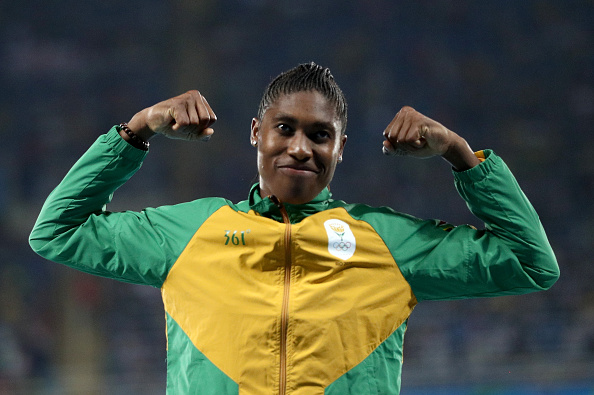
Gold medalist Caster Semenya of South Africa on the medals stand // Getty Images

In the person of Caster Semenya, the runner from South Africa who on Saturday night at Olympic Stadium dominated the women’s 800m, winning in 1:55.28, these two big ideas clash.

It is entirely unclear how these tensions could — or should — be resolved.

It is in the person of Semenya that sport stands at one of its new frontiers — at the intersection of science, cultural norms and evolving standards of gender fluidity.

To read the rest of this column, please click through to NBCOlympics.com: http://bit.ly/2bujL1S

Bolt wraps up the three-pack three-peat

GettyImages-592242174.jpg

RIO de JANEIRO — After winning the eighth race of his Olympic career, Usain Bolt offered this trenchant observation:

“I don’t need to prove anything else,” he said after Thursday’s men’s 200-meter dash. “What else can I do to prove to the world I am the greatest?”

Nothing. Absolutely zero.

Nine-time gold medalist Usain Bolt // Getty Images

As Ashton Eaton, the decathlon champion said, and this goes for all who have had the privilege to bear witness to Bolt’s collection of astonishing turns on the track, said, “It has been an absolute pleasure to compete in the same era as Usain Bolt.”

Even the gods, of some sort, seemed to agree Friday night. A golden full moon lit up the sky over Olympic Stadium as Bolt, in what he has vowed will be his last Olympic competition, led the Jamaican men’s 4x100-meter relay team to victory, in 37.27 seconds.

To read the rest of this column, please click through to NBCOlympics.com: http://bit.ly/2bDSA0X

Simply, all around, the best

IMG_6296-e1471573347730.jpg

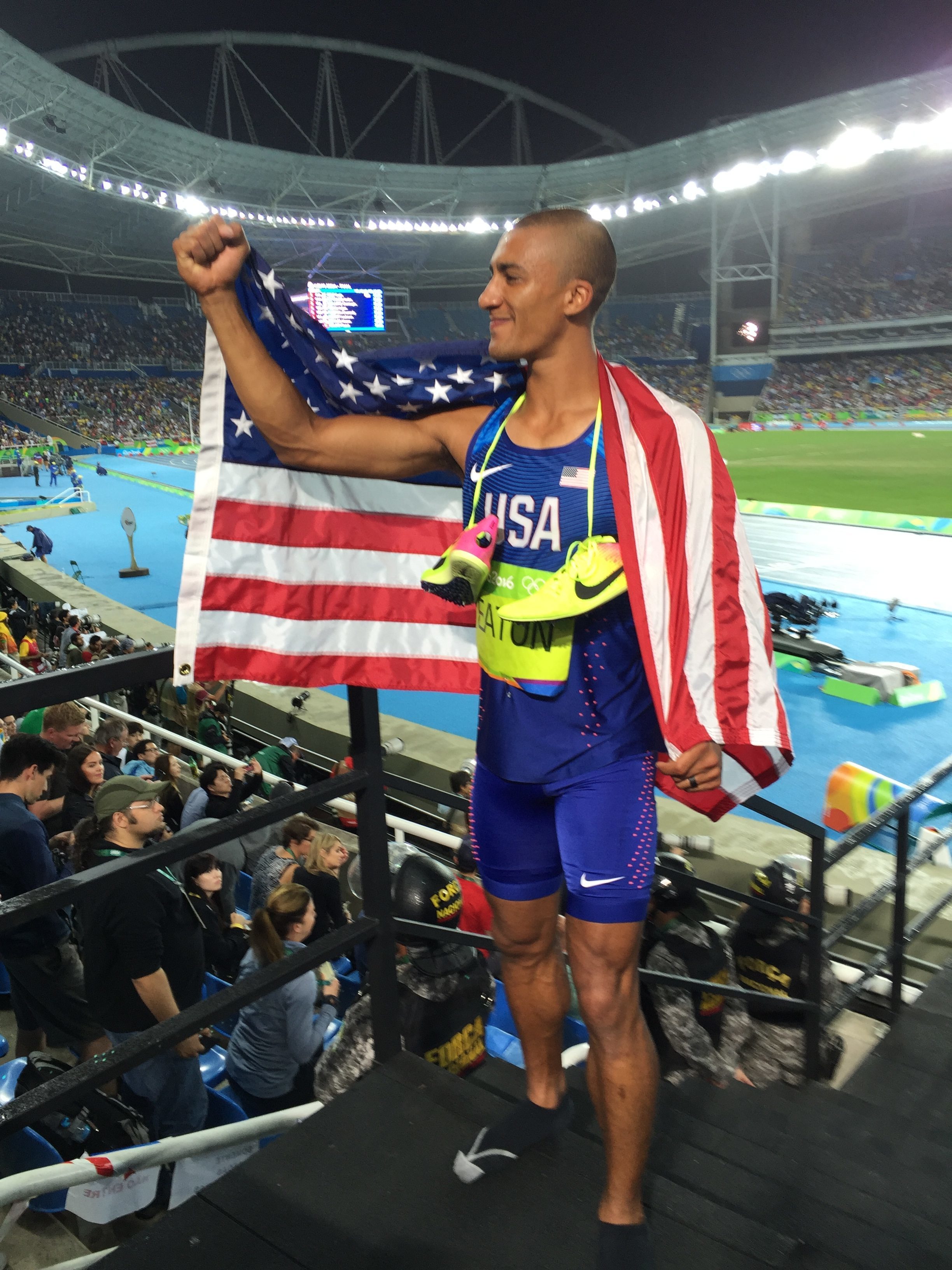
RIO de JANEIRO — Ashton Eaton is, again, the world's greatest all-around athlete.

And so, so much more.

Ashton Eaton after the decathlon

To fully appreciate the gold medal that Ashton won Thursday night after 10 events in the decathlon means to wholly appreciate as well the bronze medal that his wife, Brianne Theisen-Eaton, who competes for Canada, won last Saturday in the heptathlon.

Ashton and Brianne are husband and wife. And way more.

They are a team. One’s success is the other’s.

To read the rest of this column, please click through to NBCOlympics: http://bit.ly/2b2ZP6v


Weird, easy, fun: a one-off relay run-off

GettyImages-591900272.jpg

RIO de JANEIRO — Some people love, in their lives, to create drama. Allyson Felix is not one of these people. She is calm, steady, composed, even-keeled. Pretty much all the time.

Some mysterious karma, however, seemingly delights in connecting the Olympic experience and Allyson Felix with weird mega-drama.

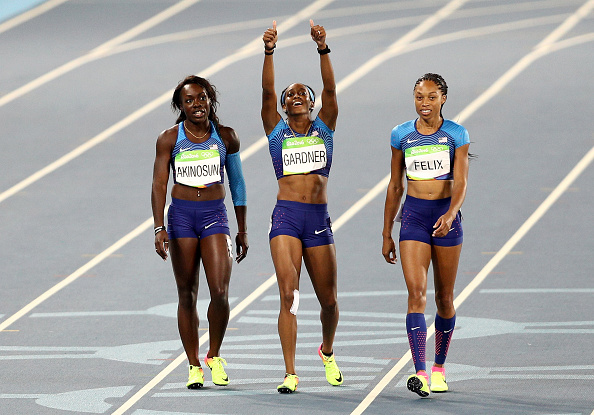
Morolake Akinosun, English Gardner and Allyson Felix after qualifying in the re-run // Getty Images

“Why me?” Felix said Thursday evening with a smile.

Referring to her brother and manager, Wes, she said, “I was laughing with my brother about it. Sometimes you just have to laugh. Yeah … it’s just very, very strange.”

In what is widely believed to be an unprecedented Olympic relay do-over, the U.S. women’s 4x100m team — with Felix pulling the second leg — ran Thursday morning in a tangled mess, then got the chance Thursday evening to run again, in a time trial, to try to qualify for the relay final back here Friday night at Olympic Stadium.

To read the rest of this column, please click through to NBCOlympics.com: http://bit.ly/2bMU9xs

First time ever: U.S. women 1-2-3 at Olympic track event

GettyImages-591631314.jpg

RIO de JANEIRO — In tribute to everyone’s favorite guessing game Wednesday at the 2016 Olympics, herewith this twist on the Where’s Waldo game:

Where’s Ryan Lochte? Back in the United States! After first making a stop at Olympic Village!

Where are the gold, silver and bronze medals in the women’s 100m hurdles? Just like Ryan Lochte — same!

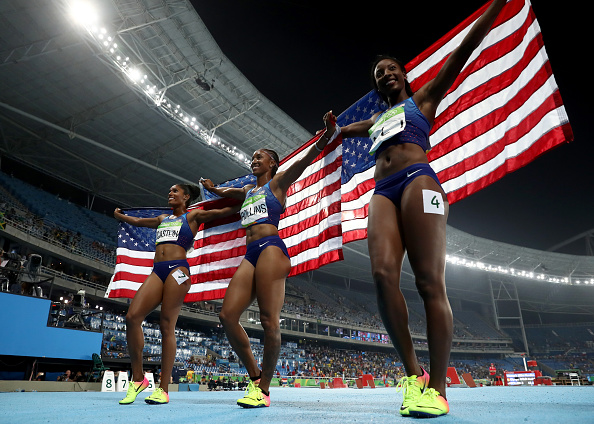
Left to right, Kristi Castlin, Brianna Rollins, Nia Ali // Getty Images

In the final event on a busy track and field calendar Wednesday at Olympic Stadium, Americans Brianna Rollins, Nia Ali and Kristi Castlin swept the women’s 100m hurdles, Rollins winning in 12.48 seconds.

The sweep by the U.S. women marked a significant first in Olympic history.

To read the rest of this column, please click through to NBCOlympics.com: http://bit.ly/2bojZrh

Rio 2016 track meet: world-class buzzkill

IMG_6252.jpg

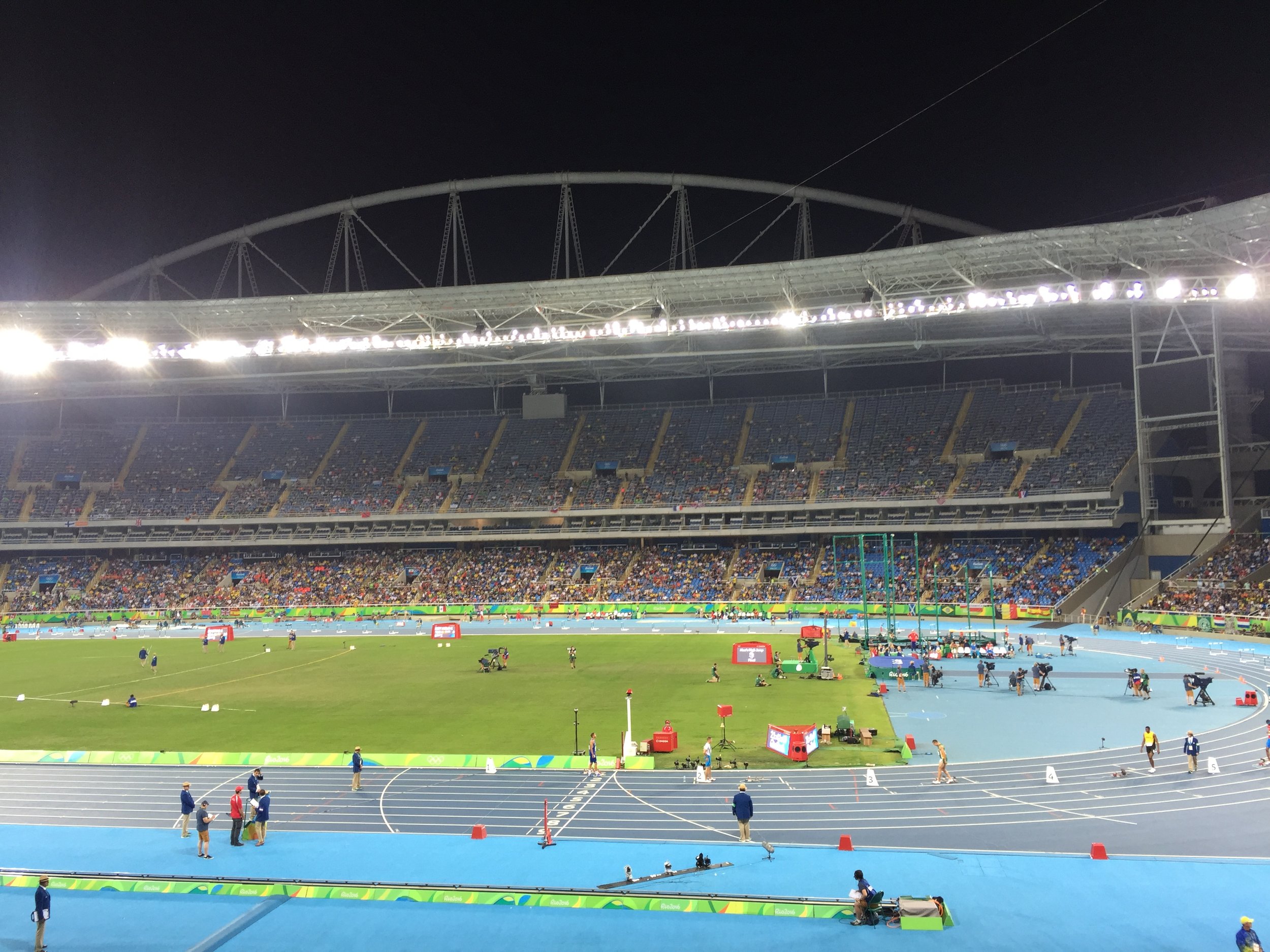
RIO de JANEIRO — In a shining example of why track and field has such problems, many of the sport’s own making, the men’s 200m prelims got underway Tuesday afternoon — before a nearly-empty house — with its biggest star, Usain Bolt, running at 12:46 p.m. in the ninth of 10 heats. Justin Gatlin ran about a half-hour before, four heats prior.

Under what theory of marketing, salesmanship, promotion — more, relevance — are the No. 1 and No. 2 names in track and field slogging it out in the dog day afternoon?

The 'crowd' in the stadium with just the women's 200 semifinals, women's 1500 final and men's 110 hurdle final to go

It’s halfway through the Rio 2016 Olympic meet. Track and field should be seizing its moments in the once-every-four-years spotlight.

Instead, what we have is world-class buzzkill.

The 2016 world indoor championships, in Portland, Oregon, in March, went off before a full house, a show full of music, lights and world-class competition.

The 2012 Olympics in London were marked by full, rowdy crowds, day and night.

Here: not so much.

At the outset: it’s no fun to assert that the track and field competition has serious issues, especially amid what should be an Olympic celebration. But if not now, when?

By now, it’s well known that track’s worldwide governing body is confronting a range of extraordinary issues, among them a purported corruption scheme involving the former president tied to allegations of state-sponsored doping in Russia.

If there ever should be a week when all of the sport’s big-picture issues could be brushed aside, this ought to be it — the Olympics.

Track and field, for all its challenges, and there are many, holds enormous potential. It has long been the king of the modern Olympics and maybe still should be — the one sport that anyone anywhere can, and pretty much does, do, at least in some form. Run, jump, throw. Basic.

Instead, this Rio meet finds itself bedeviled by a bevy of logistics, location, pricing and scheduling challenges, all of which surely have contributed to the sparse crowds. And then there remains the sport’s underlying presentation problem: doping. As in: can you believe what you see? 

All of that was encapsulated in Tuesday’s women’s long jump qualifying. The lone Russian allowed to compete here, Darya Klishina, jumped away. She was part of a field of 38, two groups of 19, that got cut to 12. Eighth, she passed  through to the final.

Why in the world go through such a ridiculous exercise — cutting 38 to 12? Same with the men’s high jump qualfiying on Sunday night — 44, two fields of 22, to 15, an event that Canada’s Derek Drouin won Tuesday night at 2.38 meters, or 7-9 3/4.

All sports, especially Olympic sports, depend on stars and on stories. 

Swimming and gymnastics, which dominate the first week of the Games, have thrown off stars who have become household names: Michael Phelps, Katie Ledecky and Simone Biles, among them, Biles on Tuesday winning her fourth Rio gold medal, in the women’s floor exercise.

Track and field, at these Olympics, seems determined to sabotage virtually every great story there might be.

Christian Taylor is a threat to break the world record every time he competes in the triple jump. He and Will Claye went 1-2 in London, and on Tuesday they went 1-2 again.

In a competition that started at 9:50 in the morning.

Seriously — 9:50 in the morning. To say that the stadium was not full would be — generous.

Afterward, Claye proposed to his girlfriend, the 2008 Olympian and hurdler Queen Harrison. 

Who saw any of this?

In the heats Tuesday morning of the women’s 5000m, American Abbey D’Agostino and New Zealand's Nikki Hamblin tangled together, then fell. In a lovely moment of sportsmanship, D’Agostino then helped Hamblin up, and — painfully — each finished the race.

As the Indianapolis Star would report, the moment drew attention from international journalists — reporters from eight countries waiting to talk to the athletes afterward.

Eight.

There are roughly 200 nations here in Rio.

The men’s pole vault provided high drama: Brazil’s Thiago Braz da Silva won in an Olympic-record 6.03, or 19-9 1/4. Competition started Monday evening and ended after the clock said Tuesday morning.

Granted, it rained Monday, hard, and there was a delay. Even so, if one of the key drivers of the Olympic movement is to draw young fans, how exactly does crowing a champion after midnight come anywhere near achieving that goal? 

Moreover, the American Sam Kendricks took bronze, behind da Silva and the great French champion, Renaud Lavillenie. Kendricks went to Ole Miss and is a U.S. Army reservist; that medal is the first for an American male in the Olympic pole vault in 12 years.

The news conference following that pole vault competition? It started after 2 a.m.

When what happened to Ryan Lochte is in the forefront of way too many minds and the bus schedule at night is irregular, at best: how many logically thinking reporters or news crews want to stick around for a bus that’s supposed to be there at the top of the hour, meaning 3 or 4 a.m. but, you know, may or may not be?

The aftermath of the pole vault further illustrates the disconnect.

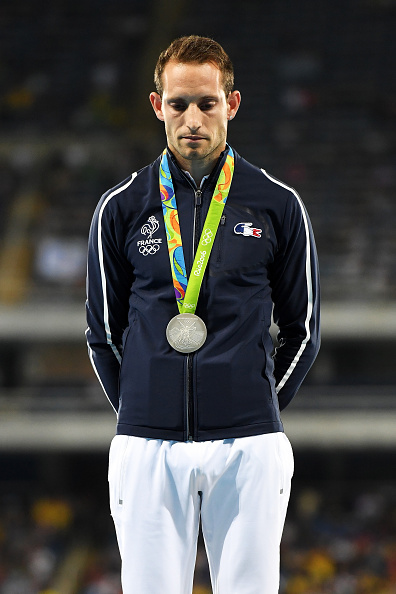
Pole vault silver medalist Renaud Lavillenie on the medals stand // Getty Images

The sparse crowd still left in the stadium had cheered boisterously for da Silva. After, Lavillenie said, "If this is a nation where they only want Brazil and they spit on others, then you should not organize the Olympics," he said. He also made a comparison to Hitler's 1936 Berlin Games -- which he then retracted and apologized.

Even so, at Tuesday night's medal ceremony, Lavillenie got hit with a barrage of boos. It moved him to tears.

This was too much for a great many people, among them the International Olympic Committee president, Thomas Bach, who called the boos "shocking," adding it was "unacceptable at the Olympics."

Similarly, Seb Coe, the IAAF president, put out this tweet:

https://twitter.com/sebcoe/status/765728647953219586

Sunday night proved the one night the stadium was full — because of Bolt, of course. And it had the added electricity of a world record in the men’s 400m, from South Africa’s Wayde van Niekerk, who ran 43.03, taking down Michael Johnson’s 17-year-old mark, 43.18.

But Sunday night also highlights the complexities that have made this meet so — unsettling.

Even that men’s 100m final proved problematic. The two semifinals were run at 9 and 9:07 p.m., the final at 10:25. Both Bolt and Gatlin complained later that the time in between was just not enough.

Part of the challenge here has centered on weather -- for instance, Monday’s rain.

Part with location. At prior editions of the Games, track and field and the ceremonies, opening and closing, shared a stadium. Here, ceremonies are at Maracanã. Track and field is taking place at Engenhao. Think Wrigley Field or Fenway Park in the middle of a dense urban neighborhood. Unlike those two baseball parks, however, Engenhao is super-difficult to get to and from — 90 minutes, typically, from Copacabana.

Part, price. Tickets for Tuesday’s prelims ranged from $100 to $350, for the evening finals from $260 to $900. 

Part of the challenge, too, is simple scheduling. 

This Olympic meet runs for nine days.

The U.S. nationals go for four.  

Six would be more than enough.

There are lots of reasons - hello, ticket sales — to slice and dice the track and field schedule into this many days. But that isn’t happening. Outside of Sunday night, the crowds have been thin, at best.

IAAF spokesman Chris Turner, asked about the thin crowds, said:

”The IAAF's original timetable of April 2014 had evening sessions earlier and qualifications during the morning session. This was changed following requests from the local organizing committee Rio 2016 and broadcasting to have finals in the morning sessions and a later start in the evening for a combination of broadcast reasons and to help with ticket sales.  We always want to work with organizers to produce schedules which meet their requirements and broadcast to reach global audiences. This is what we have tried to achieve in this case."

With this kind of result:

The Tuesday morning session ran to 25 — 25! — events. The list: that men’s triple jump final, the women’s discus throw final (won by Croatia’s Sandra Perkovic), rounds for the women’s pole vault and heats of the women’s 5,000m, men’s 1500, men’s 200 and women’s 100 hurdles.

The Tuesday evening affair included 19 different events, building toward the two key race finals, the women’s 1500m and the men’s 110m hurdles.

Compare: last Thursday evening at the pool, when Phelps won the 200m individual medley and Simone Manuel the women’s 100m freestyle, there were all of 10 races, four of which were finals. 

As for the women’s 1500: 

The men’s 100m is often called the “dirtiest race in track.” This appellation goes back to at least 1988 and Ben Johnson. 

Truth:

The women’s 1500 has historically proven way worse.

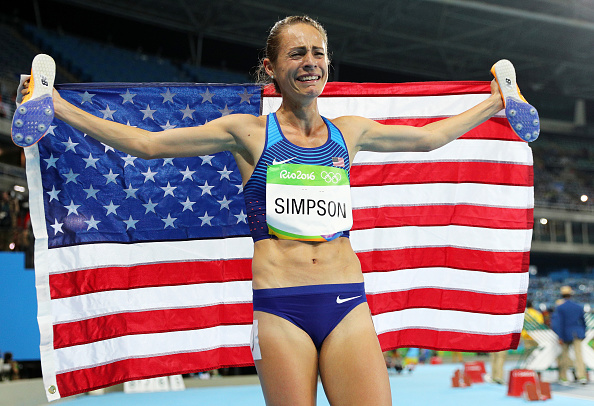
Jenny Simpson after taking third in the women's 1500, the first American ever to medal in the event // Getty Images

In the London 2012 women’s 1500m final, for instance, six of the top nine have been linked to performance-enhancing drugs. 

After Sunday’s women’s 1500m semifinal, American Jenny Simpson spoke out about Ethiopia’s Genzebe Dibaba, the world record holder in the event. Dibaba’s manager, the Somali Jama Aden, was arrested two months ago in Spain on suspicion of possessing doping products. Authorities have not accused Dibaba of any wrongdoing and after the Tuesday final she declared, through a translator, that she was "completely and crystal clean from doping."

Simpson had said after semifinals, “I think that you know a tree by the fruit that it bears. And if a tree bears sour frut, then the fruit around it are likely infected. And so I live my life that way in every way, not just through doping.”

In a reference to the World Anti-Doping Agency, she added, “And so I think that if WADA is on the case, they’ll find what they need to find. I hope so.”

Simpson finished third Tuesday night, in 4:10.53. She is the first American woman to medal in the 1500.

“The 1500m is unbelievably hard,” Simpson said late Tuesday. “And I’ve chosen to take on a challenge that I didn’t know if I could do it. There are moments where I thought, ‘Why am I here? Running 1500m is so hard.’ To take a piece of history — I don’t know, I sat down with my coaches … in 2013, and I told them I wanted to leave a mark on this sport that everyone in America could be proud of.

“I wanted to race as hard as I could, and be clean, and be someone that people could really be proud to cheer for.”

Dibaba took second, 4:10.27.

Kenya’s 22-year-old Faith Kipyegon, silver medalist behind Dibaba at last year’s world championships, won the race, in 4:08.92.

The stadium was maybe one-quarter full.

Allyson Felix on being just shy: 'It's just painful'

GettyImages-589986820.jpg

RIO de JANEIRO — What a tropical scene there was Monday noon time here at the 2016 Olympic Games. At Copacabana, for instance, the smell of coconut milk mixed with hot-out-of-the-oil-fries, the background to a visual tableau featuring the dental flossiest of bikinis and the waves lapping gently on the sugary sand.

Then, as the knowing Brazilians called it, the sudoeste blew in, a cold wind — from, well, the southeast — bearing the mean grey line of clouds signaling a major frente fria, a cold front with maybe days of rain. This is the Southern Hemisphere winter tropical version of what Americans on the East Coast would know as a nor’easter.

At Olympic Park, seven people, including two children, were injured when an overhead television camera tied to overhead cables crashed to the ground.

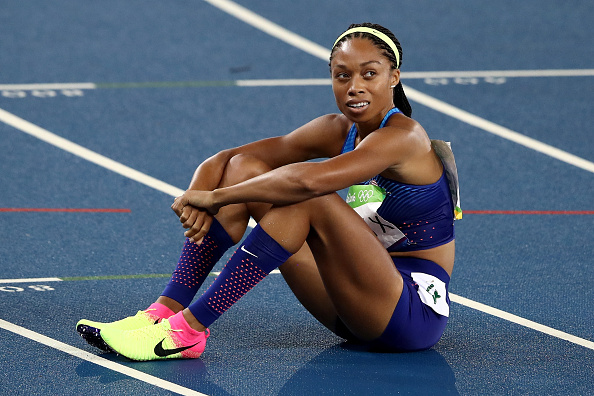
Allyson Felix after the women's 400 // Getty Images

At Olympic Stadium, the wind — estimated by officials at between 60 and 90 kilometers per hour, 37 to 55 mph — toppled railings, tore at banners and more. About 50 minutes before the fourth night of the Rio 2016 track and field program got underway, the rain started coming down in sheets, straight down, then sideways. The men’s pole vault and women’s discus competitions: thanks but another day.

For those who believe in portents: all of this was maybe a sign of the storm clouds on the horizon for the American star Allyson Felix in the last race of the night, the women’s 400.

To read the rest of this column, please click through to NBCOlympics.com: http://bit.ly/2bak5jy

Giving Justin Gatlin what he's due: respect

GettyImages-589529174.jpg

RIO de JANEIRO — Life can be complicated. To try to make sense of it, all people tell each other stories. For Americans, the story of redemption is arguably the national narrative — the manifest destiny to overcome and make a difference in our world. Think of a jillion episodes of Oprah or Dr. Phil. Or even presidential campaigning: George W. Bush on the campaign trail a few years back, declaring he had been “born again” after years of drinking.

Justin Gatlin, silver medalist in the 100 // Getty Images

Usain Bolt won the men’s 100m on Sunday night.

But Justin Gatlin — give the man his due. He deserves recognition and respect.

To read the rest of this column, click through to NBCOlympics.com: http://bit.ly/2aTscOo