
In any given year, the top leaders of the International Olympic Committee meet on a regular basis. The get-together in the winter of 2001 was in Dakar, Senegal.
While there, some number of IOC members, among them Anita DeFrantz of the United States, then the first vice president, went to Ile de Gorée, a volcanic island off the Dakar harbor. Here was the point of no return for thousands – maybe millions – bound into slavery and headed for the New World.
For a long moment on that island, Anita – whose forebears include Africans, native Americans and Europeans – stood where the rough stone dropped to the sea. A few minutes later, tears welled in her eyes. “What they did to children was unthinkable,” she would later say.
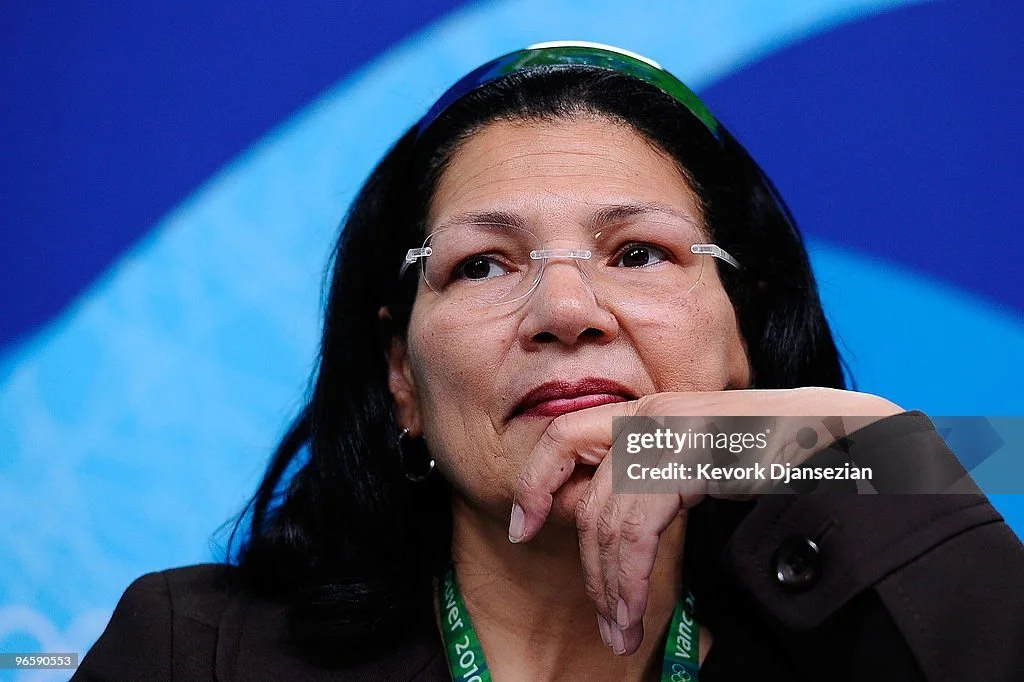
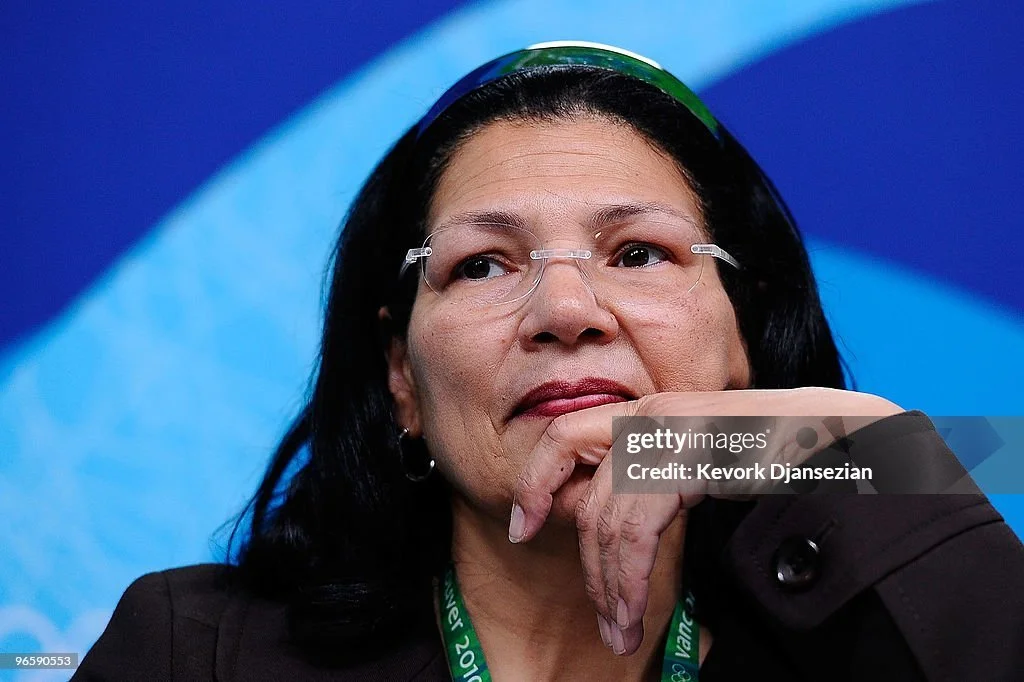
Anita DeFrantz at the 2010 Vancouver Games // Getty images / Kevork Djansezian
Two songs danced in her mind. One: “Before I be a slave I be buried in my grave,” from the hymn “We Shall Overcome.” The other, from Bob Marley’s “Redemption Song”: “All I [ever had] is songs of freedom.”
Anita DeFrantz died Wednesday in Santa Monica, California. She was 74. Her life stands as a tribute to overcoming and so much more – quiet grace and profound humility in service of her lifelong touchstone, inclusion.
Anita was a true believer in the aspirational ideals of the Olympics – that, even if unlikely to reach an Olympic podium the way she did, each of us can reach for a measure of genuine excellence in our own lives and that together we are better than alone.
Let there be no mistake: grace and humility always, but Anita would not be denied in pushing, and forcefully, for opportunity, equality and decency.
For inclusion.
Rooted in the notion of a common humanity.
“Nobody believed it more than Anita,” Gene Skyes, chair of the U.S. Olympic & Paralympic Committee, said Wednesday, “and nobody lived it more than Anita.”
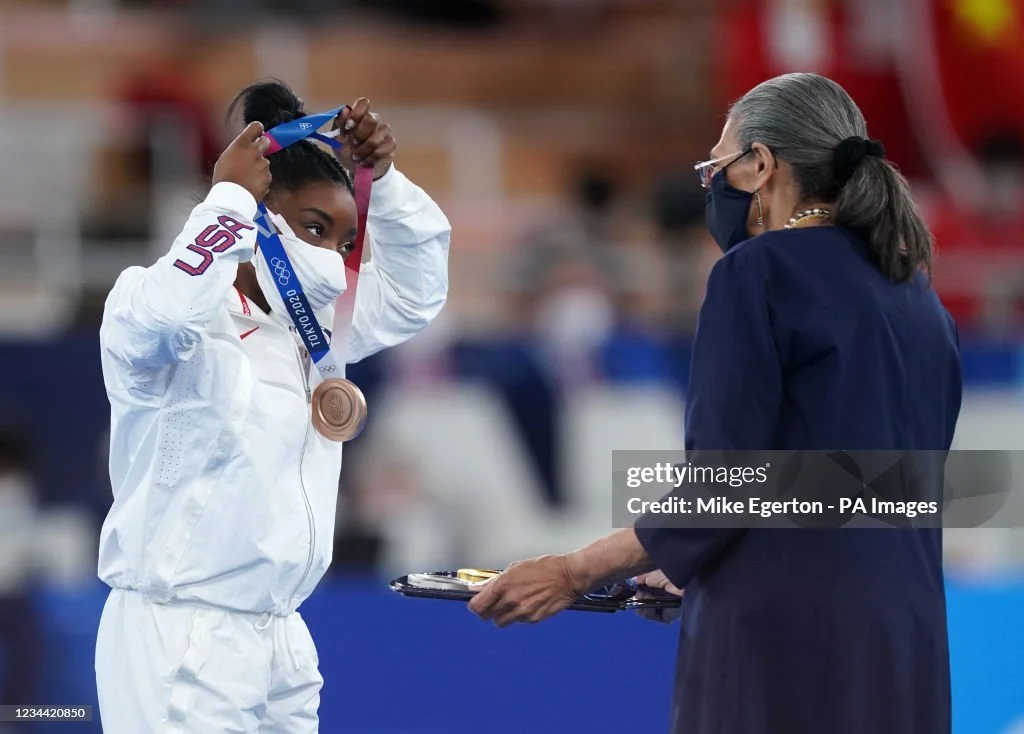
Presenting the bronze medal for women’s balance beam at the Tokyo 2020 Games to Simone Biles / Mike Egerton/PA Images via Getty Images
Anita’s push for inclusion can be traced in part to the way she grew up – in Indianapolis, then one of the most racist cities in the United States, where she knew discrimination first-hand but was enveloped and supported by family that made plain to her, a girl with three brothers, that she could do anything they could.
When Anita was 8 or 9, as she would tell the story, she asked her grandmother why she – grandma – didn’t have a better job.
"Well, sweetheart, I wanted to be a nurse so I could help people. But when I was little, colored girls didn’t do that. Things have changed now. You can do whatever you want to do. You just have to be very good in school and continue your education. You promise me that you will do whatever you want.”
Anita said, “Yes, ma’am, I will.”
Anita went to Connecticut College. Then law school at Penn.
In law school, training for the Olympics in what she would always call the “noblest sport,” rowing, Anita and her teammates took sharp note of the facilities that men had – and women did not.
She said, “We do the same thing they do. We sweat. We work hard. We ought to have the same opportunity they do.”
In her memoir, written some years ago, she said:
“I see the Olympic movement, both at home and around the world, as being inclusive of different races, cultures and religions. The strength of the Olympic movement relies on its inclusion — not on singling out any one individual’s accomplishments, while recognizing excellence and appreciating effort.”
Anita’s death, and with it the sure recognition worldwide of her excellence, marks nothing less than a turning point in the history of the Olympic movement.
And, as well, the story of Southern California.
Anita organized and managed the 1984 Olympic Village at the University of Southern California. From 1987 through 2015, she served as president of what is now called LA84, the legacy foundation created with Southern California’s share of the $232.5 million 1984 Games surplus. During Anita’s presidency, the foundation gave out grants to thousands of youth sports organization benefitting millions of young people.
Anita was one of the last still with us from the 1984 core: Paul Ziffren, John Argue, Harry Usher, Joel Rubenstein, Rafer Johnson, Mayor Tom Bradley and more are gone. Peter Ueberroth, who led the Games, is in decline.
In closing the 1984 Games, Ueberroth said, “If we have somehow brought this world a little bit closer, then we have indeed successfully staged an Olympic Games, and in a small way, perhaps we have secured a better future for all the children of the world."
Anita once called her work at LA84 “the best job in the world.”
She explained: “I got paid to change the lives of so many girls and boys. Guys always had team sports. But girls did not. There were a lot of girls with team sports. And boys, too – to recognize and respect the girls.”
There was, of course, the hope Anita would make it to 2028. It is not to be.
“She was a mentor and a friend to me, and LA28 would not exist without her,” Casey Wasserman, chair of the LA28 organizing committee, said Wednesday. “We will honor her in 2028 by delivering Games worthy of the standard she set."
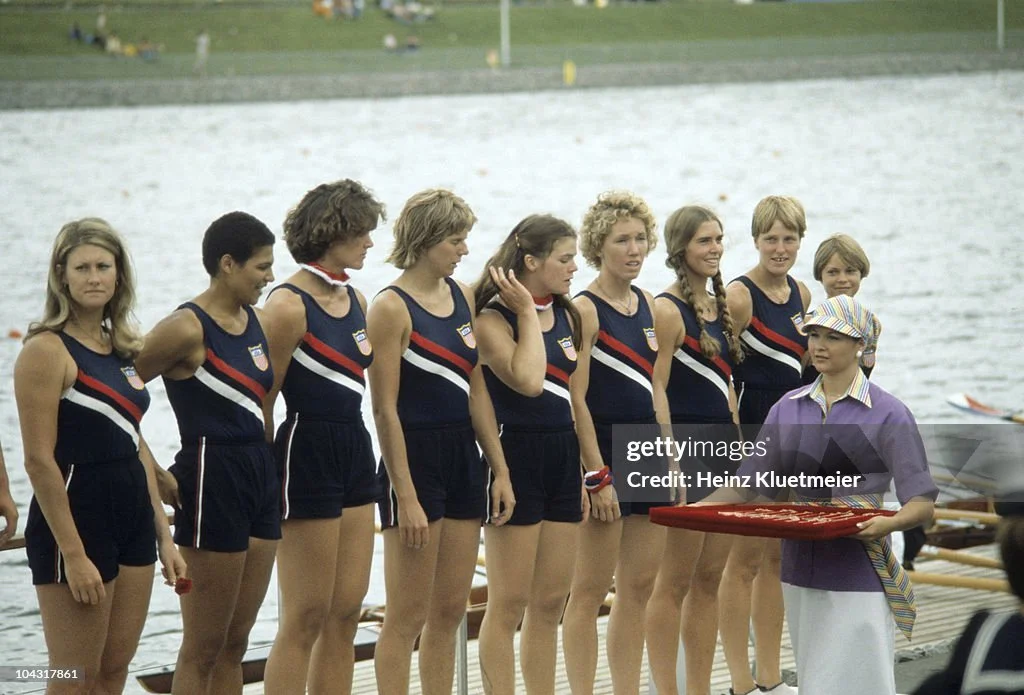
On the medals podium in Montreal in 1976 // Getty Images / Heinz Kluetmeier
Anita is the first Black woman to earn an Olympic medal in rowing, captain of the American women’s eight that won bronze in Montreal in 1976. She led the fight against the 1980 U.S. boycott of the Moscow Games – a Black woman daring to take on Jimmy Carter, president of the United States.
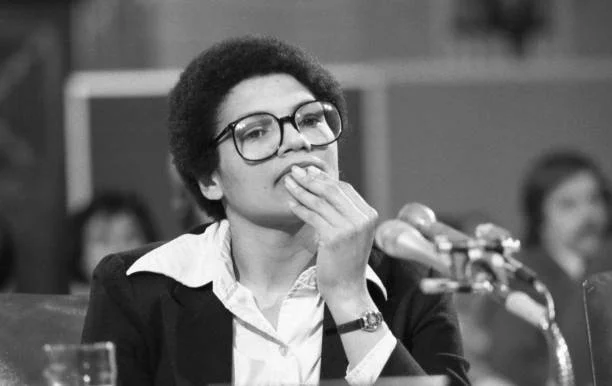
Testifying before Congress while challenging the 1980 U.S. boycott of the Moscow Games // Getty Images
John Coates, arguably the most important Olympic figure in the history of Australia, recalled Wednesday that he first met Anita in 1975, at the rowing world championship in Nottingham, England. Coates, a key leader in the Sydney 2000 Olympics, would also go on to serve as an IOC vice president and – like Anita – in senior positions in the international rowing federation.
“Her fight against Jimmy Carter was an inspiration,” he said.
Anita liked to say, “There was not a penny of federal, state or local money supporting us. We were funded individually. My famous quote was after we said,” meaning the U.S. government, “we will not be sending you, what do you mean – we?
“When I was out freezing my butt off, training!”
In 1986, she became the first African American elected to the IOC. In 1997, she became its first female vice president; she served another four-year term as vice president from 2017 to 2021. For 20 years, 1995-2014, she chaired the IOC’s Women and Sport Commission. She served in senior leadership roles at the international rowing federation and at the USOPC.
The Salt Lake City scandal, which erupted in 1998, ended with 10 IOC members forced to resign or expel amid allegations of more than $1 million in gifts and other inducements. It speaks to Anita’s integrity that there was never, not even remotely, a chance she would have been involved in any misconduct. She said many times that if someone wanted no matter what to give a gift, she just, you know, left it unopened in her hotel room.
When elected 40 years ago, Anita was the IOC’s fifth-ever female member. In 2026, she was third on the list of longest serving. It is a measure of how the IOC has changed since 1986 that the only two who have been members longer are both royals – Princess Nora of Lichtenstein and Prince Albert of Monaco. No. 4 is also a royal, Princess Anne of Great Britain.
In 2001, Anita ran unsuccessfully for the IOC presidency, a race Jacques Rogge would win. She announced she would be running after the trip to Gorée. “I believed,” she said in one of our innumerable conversations, “that it was important for the IOC to have a woman president.”
Now the IOC president is indeed a woman, Kirsty Coventry of Zimbabwe, and nearly half the IOC members female; at the Paris 2024 Games, the IOC – for the first time in its history – allocated quota places equally between men and women.
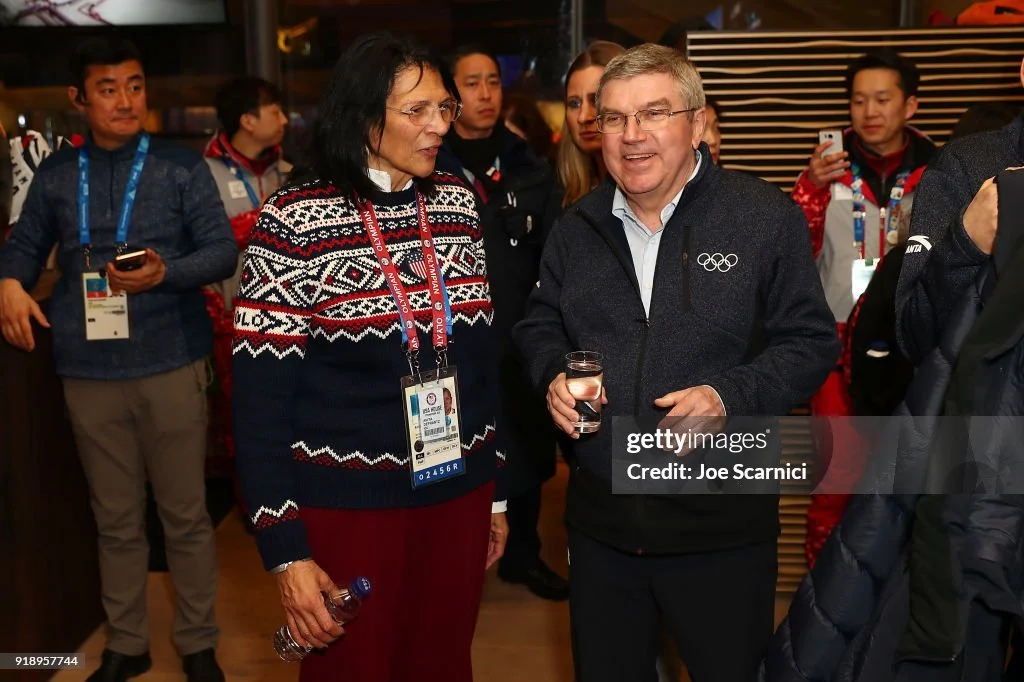
With Thomas Bach, then the IOC president, at the 2018 Winter Games in PyeongChang, South Korea // Getty Images / Joe Scarnici
Anita and Thomas Bach, the IOC president after Rogge, were particularly close. Last year, when she was in a rehab facility here in LA, a spray of flowers in a vase held a position of honor on a windowsill. Bach sent them. He also called to inquire after her.
In a statement posted Thursday by the IOC, Bach said he felt the loss of a “longstanding and wonderful friend. Our friendship started at the beginning of the 1980s, when we both stood up against the boycott of the Olympic Games Moscow 1980, and both lost this fight. It showed how much we were thinking alike; and this brought us very close together.”
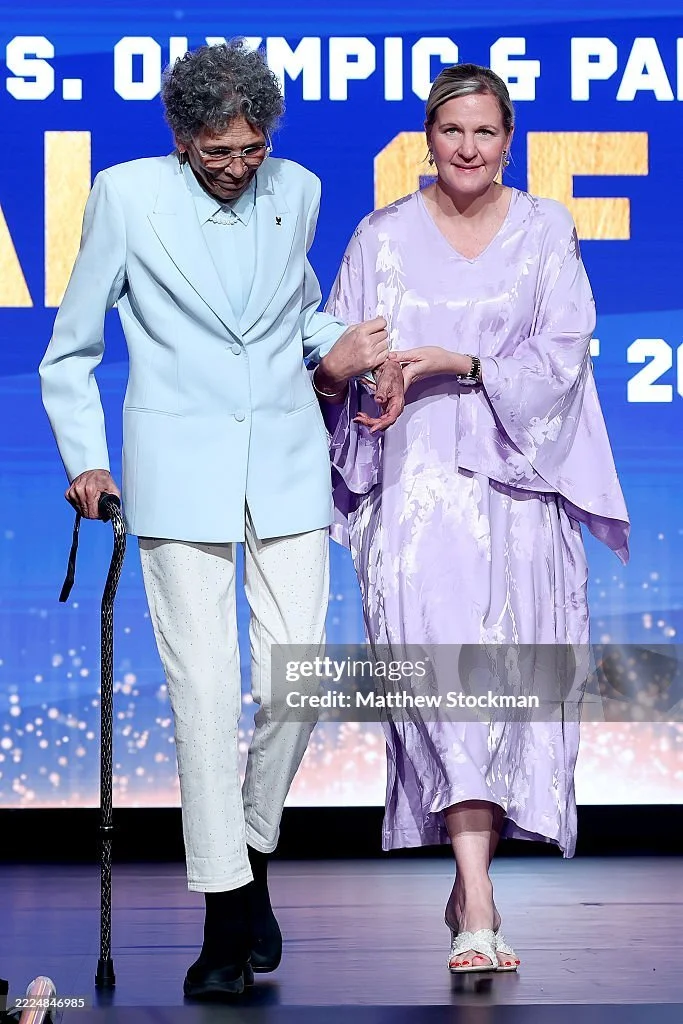
With IOC president Kirsty Coventry at the U.S. Olympic & Paralympic Committee Hall of Fame induction ceremony in 2025 // Getty Images / Matthew Stockman
Bach pushed for Coventry to succeed him. Despite the toll that cancer, multiple sclerosis and some number of grim falls took in her later years, Anita gutted out a trip in March 2025 to Greece to cast a vote to help push Coventry across the line.
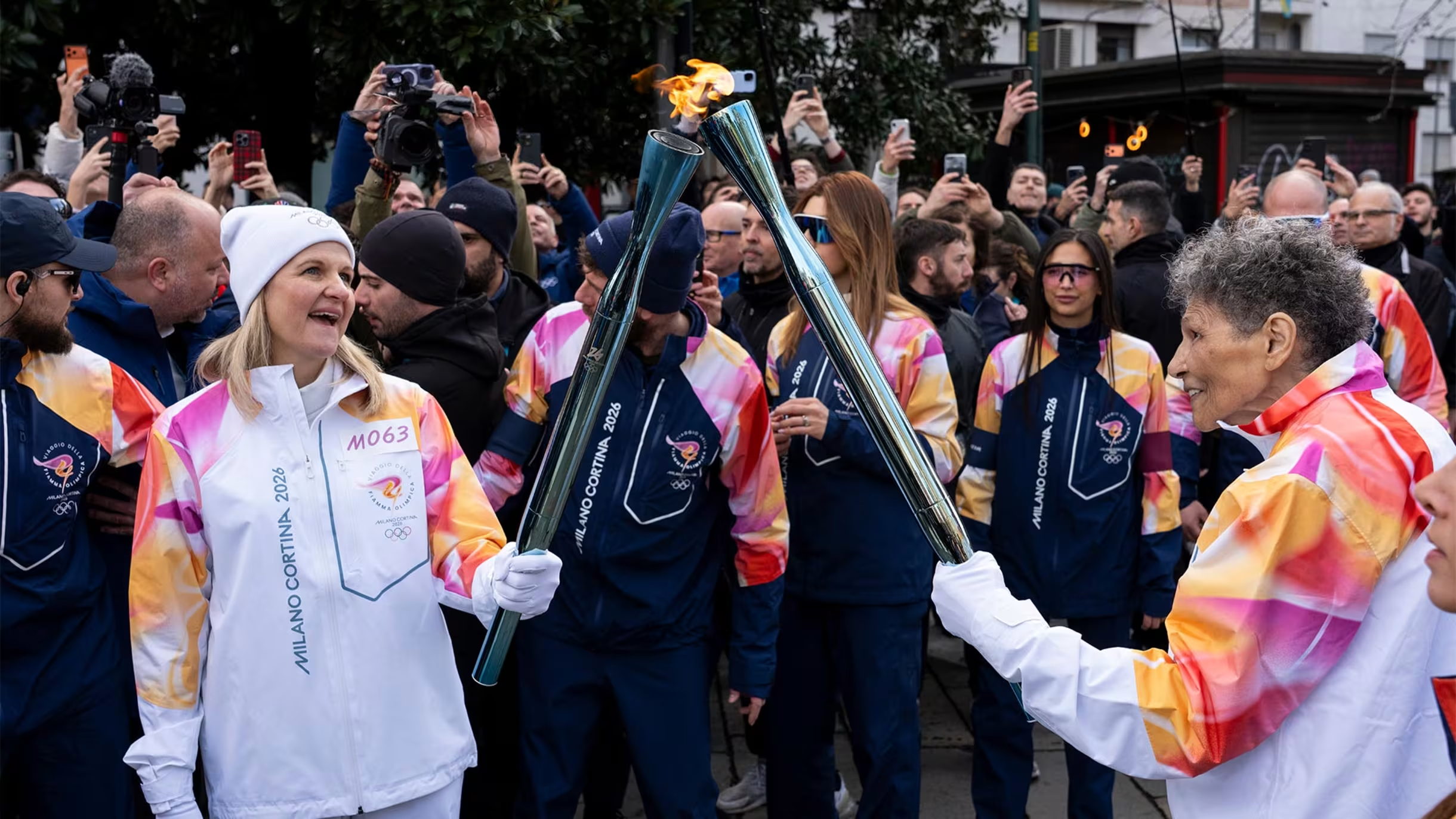
The Milano-Cortina 2026 flame relay, Coventry saying Thursday, “Receiving the Olympic flame from Anita was a moment full of emotions. She really led the way for female leaders in sport globally” // Getty Images / Andreas Rentz
She said of the nearly 40 years from when she was made an IOC member to Coventry’s election: “It should have been shorter.”
After the vote, Anita said she told Coventry, “One, don’t give up. No matter what you hear. Do not give up. Two, don’t let yourself be overwhelmed.”
Anita laughed in telling this story: “I thought it was hilarious the juxtaposition – a Black woman from America supporting a white woman from Africa.”
Coventry, in that IOC statement Thursday, said, “Anita was a mentor, a friend and a true inspiration to me, and to so many others around the world. From my earliest days in the Olympic movement, she showed me what courageous leadership looked like, and what was possible for women in sport.”
Sykes said, referring to Anita, “Getting to understand the quality of her relationship with Kirsty was something I didn’t recognize until the moment came for Kirsty to be the center of the presidential process. I could tell that Anita shared Thomas’ view of how distinctive Kirsty is and why she deserves support. But what I didn’t understand until then is how Kirsty grew up in the movement and how much she depended on Anita as a role model for herself – and her priorities, always,” meaning Anita’s and by extension Coventry’s, “about celebrating and protecting the quality of the Games that she found most meaningful.”
Coates said, “Despite her failing health, one of her proudest moments was to be present when Kirsty Coventry was elected as the first woman and the first African president of the IOC. Anita was an amazing woman; I loved her and she will always have a place in my heart.”
It is common journalistic practice for a piece like this to refer to the person being written about by, in this instance, her last name. In meetings at the IOC, Anita was always “Mademoiselle De Frantz.” It would be misleading and inappropriate for me to refer to Anita as anything but Anita. We knew each other here in Los Angeles for more than 30 years. Atlanta-based George HIrthler, one of the Olympic scene’s great storytellers, is racing to finish a movie about Anita; I was interviewed for it. In 2001 in Moscow, I sat next to Anita in the back of the bus on the way to the announcement that Rogge had won and she had not. She was in tears. “That was such a heavy burden to be putting your name out there, with zero financial backing,” she said many years later. “I couldn’t stop crying. It was so embarrassing.” Back in SoCal, Anita welcomed me to her home in Santa Monica, which she affectionately called Two Palms. I came to know one of her brothers, James, who these last years carried so much of the load. “An amazing sister. An amazing friend. An inspiration to each and every one of us in the family. She doesn’t know it,” James said, “but I’ve been a fan boy for a very long time.” I helped, in a slight way that Anita and I laughed about, when she was ill – taking her, an ardent anti-doping advocate, to a medical marijuana store (in Venice, California, where else) to buy weed for her pain. It helped.
She had a circle of extremely close friends. They helped way more.
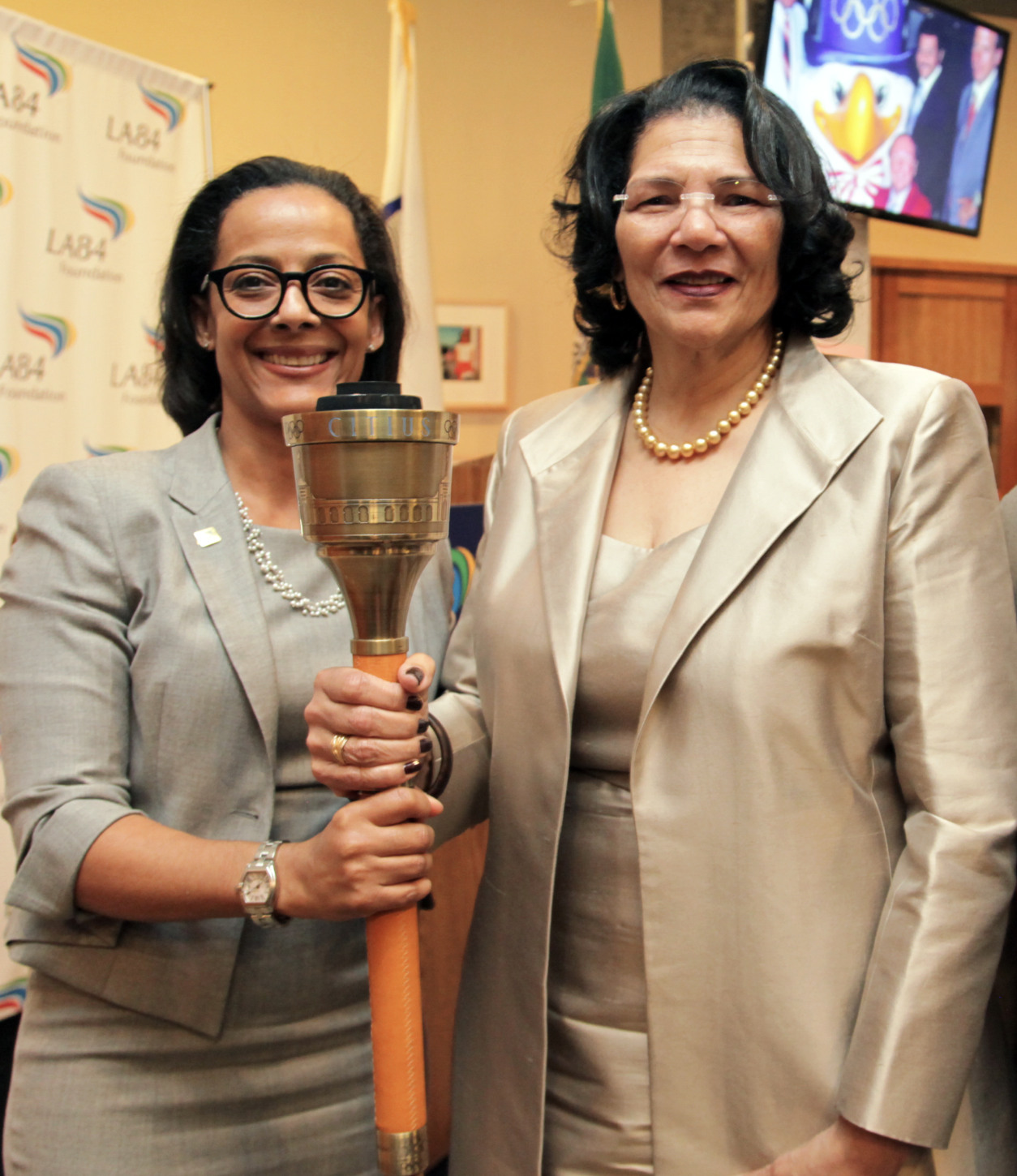
Passing of the torch, 2016, at the LA84 Foundation, with Renata Simril // LA84
"I lost my teammate and friend of 50 years. Rowing and the Olympics brought us together,” said Jan Palchikoff, her 1976 teammate, “but it is the non-Olympic moments rooted in the gift of deep friendship, sharing simple life moments, that will stay with me.
“Her generosity, warmth, kindness and sense of humor were ever present, even when facing her biggest challenges. She was fiercely committed to her vision of building a more peaceful and harmonious world through sport. Anita's commitment to fighting for her ideals inspired me and everyone around her to be better human beings."
In one of our last conversations, I asked Anita if she had any regrets. “Yeah,” she said, “I wish, one thing, I wish I had slowed down enough to meet a partner and create a family.”
Was that, I asked, wistful or more? “I don’t know,” she said. “Wistful. It’s the truth.”
Late last week, Renata Simril, who succeeded Anita at LA84 and has in so many ways elevated the foundation of what Anita built, went to visit.
“I know I’m loved,” Anita said.
“You did good,” Renata told her.
Anita said, “We did good.”