A really good guy, back on the podium

GettyImages-588325754.jpg

RIO de JANEIRO — If you had a son, you would want him to be just like Nathan Adrian.

The guy is smart, funny, respectful and humble. He is quiet, steady, a genuine leader.

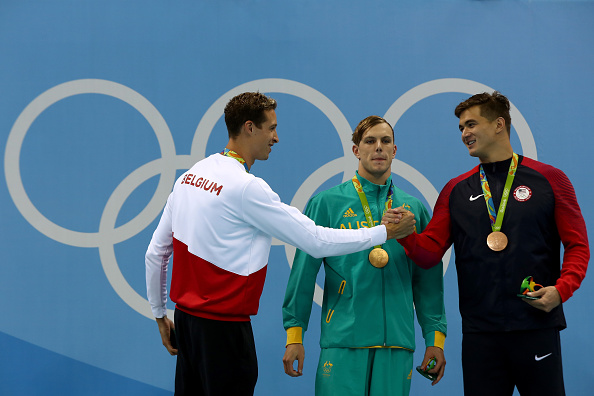
After the men's 100 free: silver medalist Pieter Timmers, left, congratulates bronze medalist Nathan Adrian with winner Kyle Chalmers in the middle // Getty Images

Oh, he’s tall and handsome, too, the very picture of America’s best pluralistic and tolerant tendencies. His dad, James, is a retired nuclear engineer; his mom, Cecilia, who comes from Hong Kong, is a nurse.

Oh yeah — Nathan Adrian is an incredible athlete.

To read the rest of this column, please click through to NBCOlympics.com: http://bit.ly/2b9FSdv

Phelps is the GOAT - don't poke the bear

587861060.jpg

RIO de JANEIRO — When, oh when, will everyone learn to stop riling up Michael Phelps?

As the U.S. swim star Natalie Coughlin put it Tuesday night on Twitter, “Don’t poke the bear.”

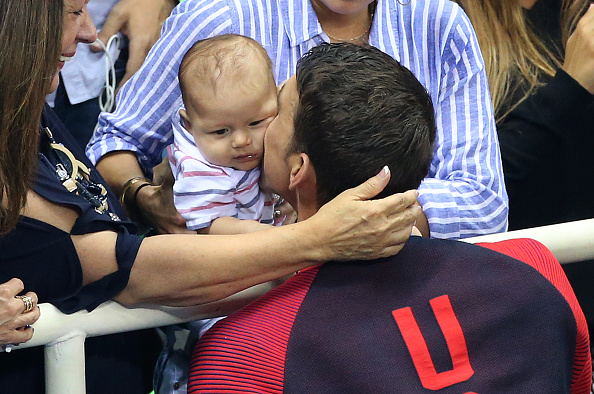
Gold medalist Michael Phelps kisses 3-month- old son Boomer after the 200 fly medal ceremony // Getty Images

In the latest chapter in a long-running story of what happens when you poke the bear, Phelps, obviously fired up by South African star Chad le Clos’ antics Monday in the ready room, won his 20th Olympic gold medal in the event that has seemingly forever meant the most to him and his family, the 200m butterfly.

To read the rest of this column, please click through to NBCOlympics.com: http://bit.ly/2b7fpO2

From the tatami: lessons in respect

B37I1473-másolat.jpg

RIO de JANEIRO — This is a story about Olympic dreams, though it is not just about that. This is a story about families of all sorts, though it is not just about that.

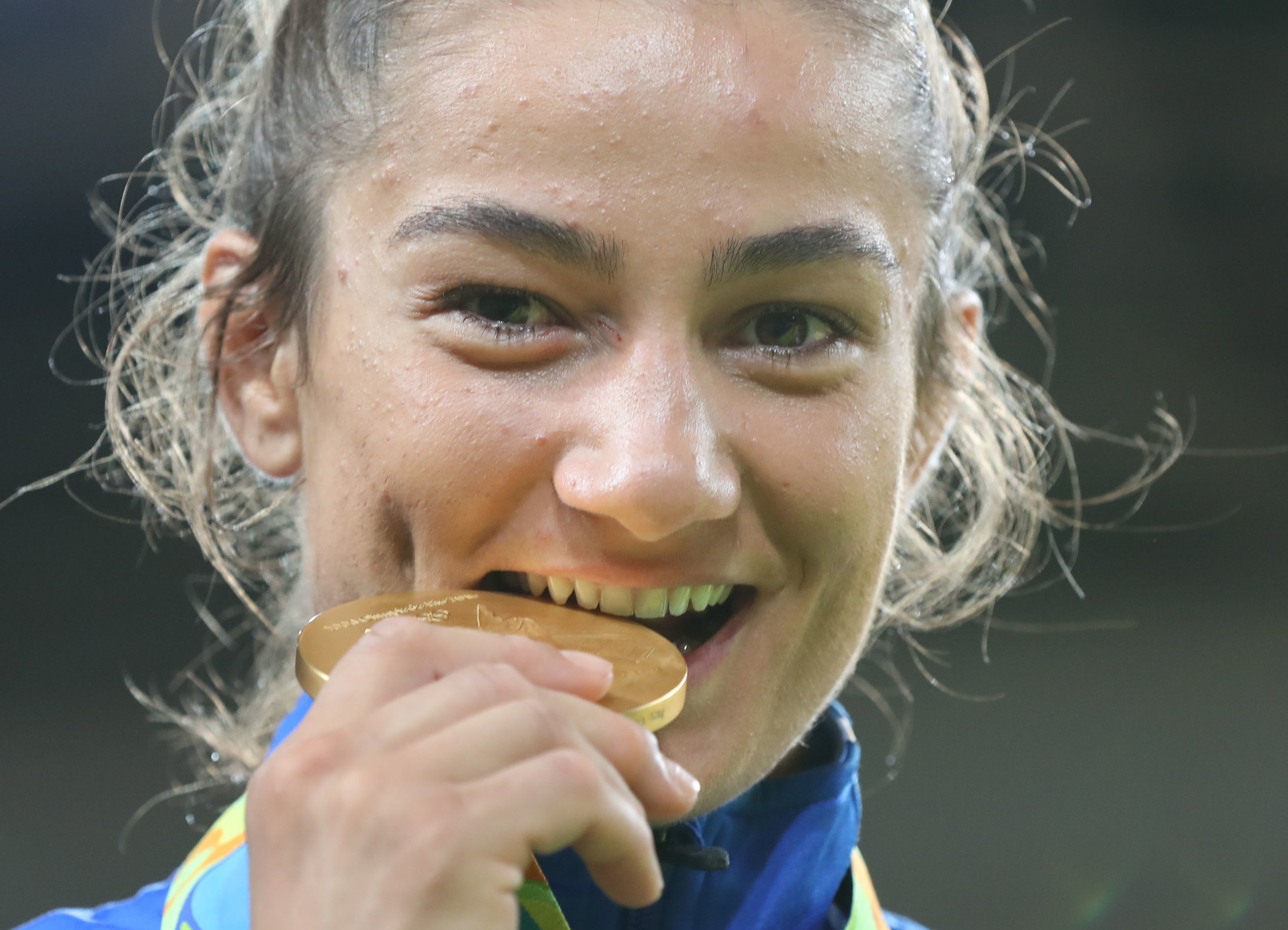
Kosovo's first-ever gold medalist, judoka Majlinda Kelmendi // photo IJF

This is a story about fairy tales, and how sometimes at the Olympic Games, in particular within the extended judo family — and it really is a family — fairy tales really can come true.

Last Friday, at the Opening Ceremony of the Rio 2016 Olympics, judoka Majlinda Kelmendi carried the flag for Kosovo. It wasn’t until 2014 that the International Olympic Committee had even recognized Kosovo as a separate country — a process that had started in the sports world when the International Judo Federation became the first to say Kosovo was real, in 2012.

On Sunday, in the women’s 52-kilogram (114 pounds) category, Kelmendi won gold.

To read the rest of this column, please click through to NBCOlympics.com: bit.ly/2aKEko8

Doping and the problem of cheap, easy narratives

GettyImages-587560684.jpg

RIO de JANEIRO -- Lilly King is a great swimmer. But a good sport? One who lives — in her gold-medal moment — the key Olympic values: friendship, excellence and respect?

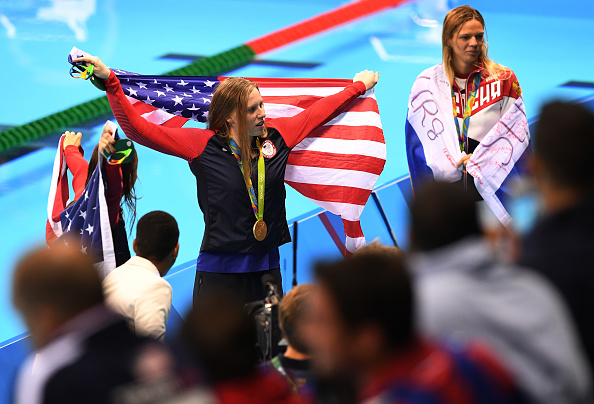
Gold medalist Lilly King, with silver medalist Yulia Efimova to her left, posing for the cameras // Getty Images

Much of the English-speaking media proved all too eager Monday evening to latch on to an easy — and false — narrative that abruptly cast King as a virtuous American hero, striking a blow for drug-free sport in winning the women’s 100m breaststroke while slaying the notorious Russian, the sudden villain Yulia Efimova.

To read the rest of this column, please click through to NBCOlympics: bit.ly/2aNToSB


The relay magic is back

GettyImages-587151594.jpg

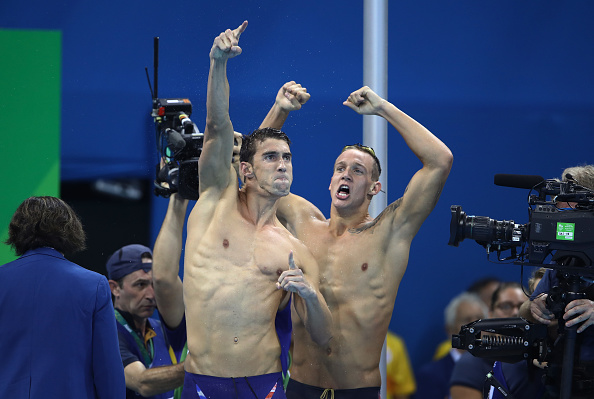
RIO de JANEIRO — Of all the images from Michael Phelps’ storied career, perhaps none is as visceral — as open and truthfully honest — as the shot from the finish of the men’s 4x100 freestyle relay at the 2008 Beijing Olympics, a portrait of Phelps screaming to the heavens in raw, primal, triumphant victory.  

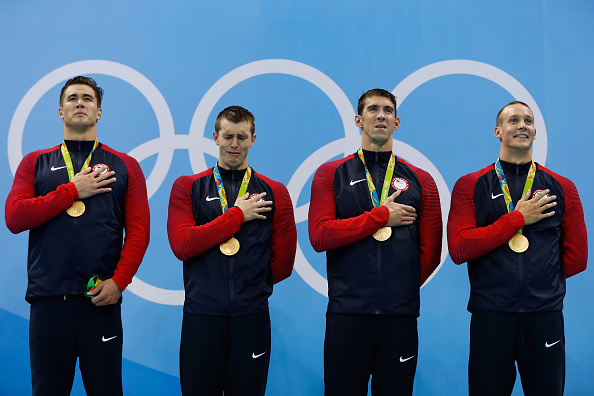
From left, Nathan Adrian, Ryan Held, Michael Phelps and Caeleb Dressel on the medals stand // Getty Images

The 2016 version of the 2008 Phelps victory roar, with Caeleb Dressel making like Garrett Weber-Gale // Getty Images

This was the race in which Jason Lezak somehow willed his way past France’s Alain Bernard. Lezak was behind when he dove in. He was behind at the turn. He was behind until the very end, when he out-touched Bernard in a moment that instantly became an Olympic classic.

Right there on the deck, Phelps, who had set the Americans to the lead in the first leg, roared. Right behind him, Garrett Weber-Gale, who had pulled the second leg in the relay, fists clenched, leaned back and screamed in jubilation. Both guys were in their star-spangled LZR suits.

This is the red, white and blue moment the U.S. swim team lives for.

--

To read the rest, please click through to NBCOlympics.com: bit.ly/2aFzUin

Back in the spotlight

GettyImages-586857500.jpg

RIO de JANEIRO — If, like most people, you last paid serious attention to Olympic-caliber swimming in London, when that Michael Phelps dude announced he was retiring, welcome back to the pool for your every-four-years dip, and just in time to catch the one and only race at these Games at which Katie Ledecky was always likely to take second instead of first.  

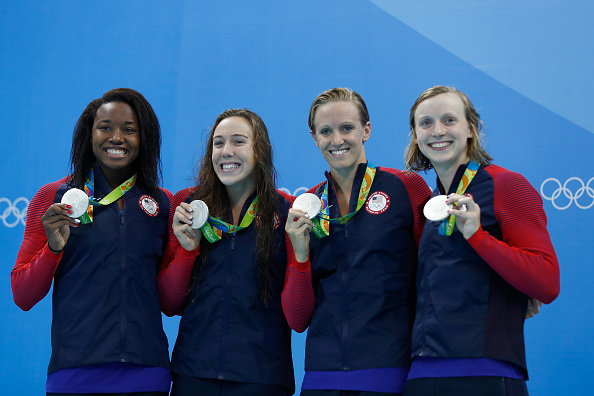
Katie Ledecky, right, with, from left, Simone Manuel, Abbey Weitzeil, Dana Vollmer after Sunday's women's 4x100 freestyle relay // Getty Images

In the final swim of the final event of the first day of swimming’s nine-day run here at the Rio 2016 Games, Ledecky anchored an American-record 3:31.89 in the women’s 4x100 meter freestyle. It took a world record 3:30.65 from the Australians, who were heavily favored, to win.

Even in second place, the legend of Katie Ledecky just keeps getting better and better. This was the first time Ledecky had ever — ever — raced the 4x100 relay for Team USA at an international level. The last time she swam in a 4x1 was in high school, she said afterward with a laugh.

Please click through to NBCOlympics.com for the rest of this column: bit.ly/2bbuwSA


Let's get this festa started

GettyImages-586220522.jpg

RIO de JANEIRO — If ever there was a Games that cried out for the glow of a lit cauldron, these are those Games.

If ever there was a Games that presented to so many the deep fear of the unknown, these are those Games: the first-ever Olympics in South America, Rio and Brazil depicted far and wide as danger writ large.

Finally, the familiar symbols of the Olympic movement took hold Friday night and with them, perhaps, a reprieve. If tradition holds, the next 17 days promise more — way more — of a focus on the inspirational ideal that the best in each of us makes all of us better.

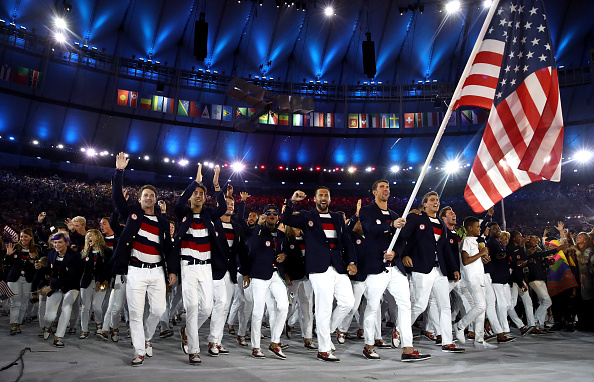
The greatest Olympic athlete of all time in Friday's parade of nations // Getty Images

For the rest of this column, please click through to NBCOlympics.com: bit.ly/2aPmqjU

An open letter: the White House delegation to Rio

GettyImages-91343307.jpg

President Barack Obama

1600 Pennsylvania Avenue NW

Washington, DC 20500

August 2, 2016

Dear Mr. President:

Coming up on three years ago, I wrote you an “open letter” critical of your decision to send to the Sochi 2014 Winter Games an official White House delegation that did not include yourself, the First Lady, the vice president nor, indeed, any member of your cabinet.

On Tuesday, the White House announced that Secretary of State John Kerry will head the White House delegation to the Rio 2016 Summer Games.

Mr. President, I cannot emphasize strongly enough how much I respect you personally as well as the office you hold. I voted for you twice. If I could, I would vote for you again this November. I believe history will treat you kindly — that, with time, you will come to be seen as what you truly are and have been, one of our greatest presidents in more than 200 years.

With all that said, sir:

Please permit me the opportunity to address you in another “open letter,” mindful that I am grateful to call home a country where I may give voice to criticisms and that, as well, any such criticisms relate solely to matters of policy. In no way are they personal.

Time shows how we all change over seven years: President Obama in 2009 addressing the IOC on behalf of Chicago's 2016 bid // Getty Images

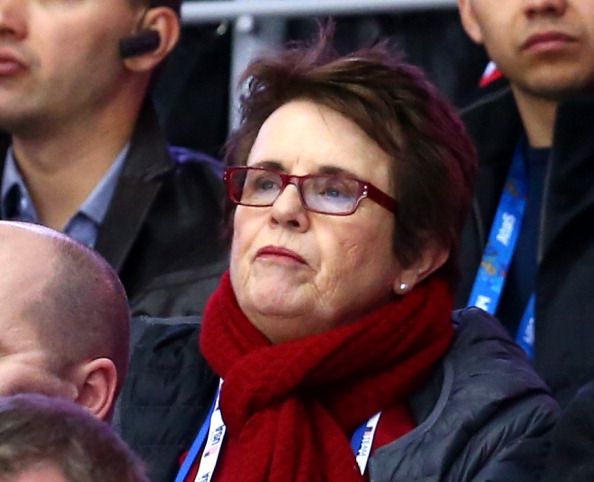
The tennis star Billie Jean King at the Sochi 2014 men's ice-hockey bronze medal game //

The announcement that Secretary Kerry will lead the 2016 delegation underscores the futility and hypocrisy inherent in what the White House tried to do — with, at best, limited impact — in connection with the Sochi Games.

Can we — you, me, all of us — acknowledge now the truth of the matter?

That what the White House sought in 2014 was to leverage the spotlight of the Olympic Games to exploit the American position in dealing with the Russians, in particular Mr. Putin, while simultaneously expressing considered frustration, if not more, with the International Olympic Committee?

And to what purpose?

The record is plain.

In October 2009, you and the First Lady went to Copenhagen to lobby the IOC for Chicago’s 2016 Summer Games bid.

In retrospect, we can perhaps observe it might be all to the good that Chicago did not win. Imagine, Mr. President, the worldwide media uproar in anticipation of a 2016 Chicago Games over the murder rate in Chicago and, by extension, American gun-control policies. Not to mention the national embarrassment that is Mr. Trump, whom you appropriately described on Tuesday as “unfit” and “woefully unprepared” for the presidency.

At any rate, you went to Copenhagen — the first sitting president, ever, to lobby the IOC in such a fashion.

The members not only awarded the 2016 Games to Rio de Janeiro, they booted Chicago in the very first round. Tales still circulate within Olympic circles of the IOC members idling on buses while waiting for your security detail to give the all-good to come in to the convention hall.

Since then, the White House’s — by extension, the federal government’s — relationship with the global Olympic movement and, more broadly, international sport, has deteriorated to the point of dreadful, and that is being generous.

Maybe you have forgiven if not forgotten. But it’s something of an open secret that your trusted advisers may hardly have done so.

Who brought the indictments against FIFA? The U.S. Justice Department, headed by Ms. Loretta Lynch. Assuredly, the Attorney General wields considerable latitude in her prosecutorial choices. At the same time, who does the Attorney General report to? That would be you.

Before you named her Attorney General, Ms. Lynch served as U.S. Attorney in Brooklyn, for five years heading the office for the Eastern District of New York. This past May, it was the Eastern District that opened an inquiry into allegations of state-sponsored Russian doping — as if a Russian matter should, on some theory, be a matter for American law enforcement.

Imagine, sir, if the tables were turned. The American court system, indeed the federal courts with their limited jurisdiction, are filled with allegations of wrongdoing each and every day. Are the Russians weighing in to impart their view of justice on our behalf? Are they mounting a campaign to convince Americans and others around the world that, for instance, the death penalty, legal in several U.S. states, is illegal it not immoral?

Perhaps there is this: at least you didn’t try to stick it further to the Olympic scene by naming Ms. Lynch to the 2016 delegation. Just Secretary Kerry; the U.S. ambassador to Brazil; three other federal officials, and the swim legend Mark Spitz.

The disregard with which your administration views the Olympic scene could hardly have been more apparent when, last October, the Association of National Olympic Committees held its annual meeting in Washington, just blocks from the White House.

Since becoming the IOC president in 2013, Thomas Bach has met with more than 100 heads of government or state. But, notably, not you.

Indeed, at the Sochi opening ceremony, Mr. Bach, obviously if indirectly referring to you, said the Olympics should not be “used as a stage for political dissent or for trying to score points in internal or external political contests.”

Mr. Bach also said in opening the Sochi Games, “Have the courage to address your disagreements in a peaceful, direct political dialogue and not on the backs of the athletes.”
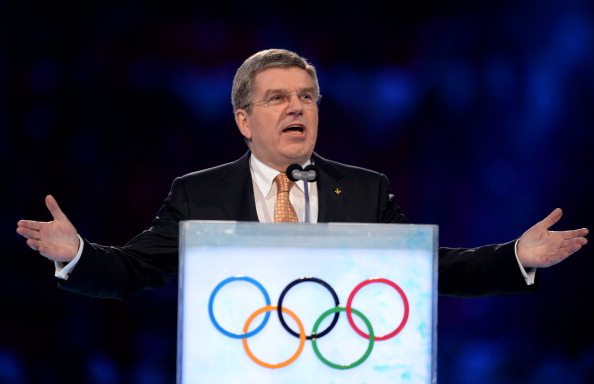
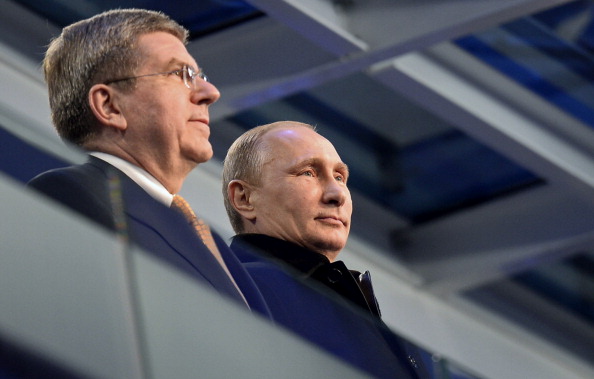
The IOC president, Thomas Bach, at the Sochi 2014 opening ceremony // Getty Images

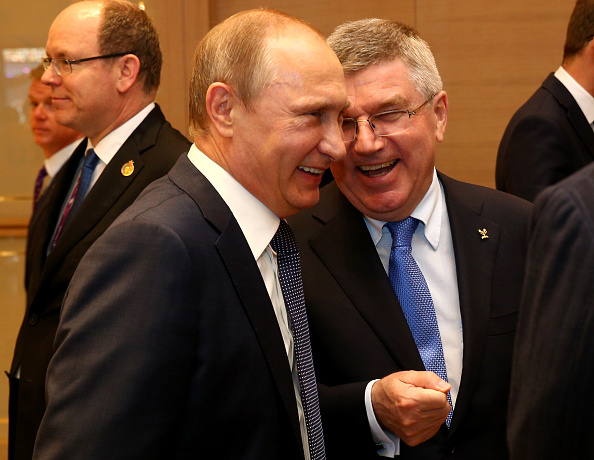
Bach with Russian president Vladimir Putin at the Sochi Games

Vice president Biden at last October's ANOC meeting // Getty Images

At the ANOC event, no senior U.S. official had the courage to show until several days into the event when — your White House obviously alerted that this show of American defiance might not reflect well on a Los Angeles bid for the 2024 Summer Games — Vice President Biden appeared from behind the curtain.

Mr. Biden stayed for all of seven minutes.

As for LA, and its 2024 contest with Paris, Rome and Budapest: the heads of state or government of France, Italy and Hungary have all said they are coming to Rio for the Games opening ceremony.

But not you.

“It is absolutely normal that participating countries at major events such as the Olympic Games, being organized every four years, are represented by high-level state leaders,” the Hungarian release, issued Tuesday, said. “This is especially true for countries that have bid to host the Olympic Games.”

It’s in this full, indeed rich, context that one has to view the 2014 Sochi White House delegation — as one of a series, since that 2009 Chicago defeat, of provocations.

Perhaps it is the case that the dots don’t connect. But it plainly looks like they do. And we both know this truism: in politics, perception is as important than reality, if not more so.

To be honest, of course, in our popular culture, the Russians make for excellent villains. Think only of Ivan Drago in "Rocky IV," or the bad guys in James Bond movies, or even Boris and Natasha from “The Rocky and Bullwinkle Show.”

Mr. Putin, right or wrong, fair or not, plays the role for many of the arch-villain of our time.

How easy was it to tap into all that sentiment while amplifying a disregard for the Olympic scene?

The White House said in 2014 that your schedule simply didn’t allow you to travel to Sochi.

This, Mr. President, begs credulity.

The central issue was the controversy that you latched onto sparked by the Russian anti-gay propaganda law. A couple months before the Games, you remarked, “Nobody is more offended than me by some of the anti-gay and lesbian legislation that you’ve been seeing in Russia.”

For the opening ceremony, you named two openly gay athletes: Billie Jean King, the tennis star, and skating gold medalist Brian Boitano.

A tennis player — at the Winter Olympics?

For the closing, you threw a little more gas on the fire by naming Caitlin Cahow, winner of Olympic silver and bronze medals in ice hockey, another gay athlete, to the closing ceremony delegation.

You might remember that Ms. King ended up going to the closing ceremony; her mother passed away the day of the opening ceremony. Ms. Cahow took part in the opening ceremony.

You might recall, too, that in a commentary for CNN published a few weeks before the 2014 Games, Ms. King had said, in part:

“Is our nation making a statement on Russia’s anti-gay propaganda law by sending gay men and women to represent us in Sochi? Perhaps we are.”

Perhaps?

The right answer to Ms. King’s rhetorical question: obviously.

In that same piece, she also said:

“… I hope these Olympics will be a watershed moment for the universal acceptance of all people.”

That for sure has not happened. We all have a long way to go. Yes, the U.S. Supreme Court has since made same-sex marriage the law of our land. But that has hardly triggered a rush in other countries to follow our lead.

Ms. King also said in her piece:

“I have a saying that 98 percent of winning is showing up. So we will show up in Russia. We will support our athletes and cheer them as loudly as possible. And we will keep the equality conversation alive.”

When she got home from her White House-sanctioned Sochi-related activism, Ms. King, in an Associated Press feature, said she would like the IOC to add sexual orientation to the list of protections in its charter and to consider the issue when deciding host countries for future Olympics.

The IOC did add sexual orientation to its list of protections, as part of its Agenda 2020 “reforms” enacted in December 2014. But it would have done so regardless of Ms. King. Or anyone from the United States.

As for the second point: not so much. The IOC competition for the 2022 Winter Games got down to Kazakhstan and China. Neither can boast about its human-rights record. In 2015, the IOC went for Beijing.

And if it were the “equality conversation” that was the true impetus for the composition of the Sochi delegation, Mr. President, that imperative would hold even more validity in connection with Rio and 2016.

As the New York Times reported on July 5, Brazil is arguably the world’s deadliest place for lesbians, gays, bisexuals and transgender people.

Over the past four-plus years, the newspaper reported, citing Grupo Gay de Bahia, an advocacy group, nearly 1,600 people have died in hate-motivated attacks. That means a gay or transgender person is killed almost daily in Brazil.

The Times story quotes the advocacy group’s manager as saying that the numbers represent “only the tip of the iceberg of violence and bloodshed,” since police here often, as the paper reported, “omit anti-gay animus when compiling homicide reports.” An Amnesty International Brazil official, the paper further reported, said, “Homophobic violence has hit crisis levels, and it’s getting worse.”

So much outrage over a Russian propaganda law in the run-up to Sochi 2014 but, in comparison, comparative silence in these weeks and months before Rio 2016 about horrific violence in Brazil?

Mr. President, you proved eloquent, as usual, in decrying the June massacre that took 49 lives at a gay nightclub in Orlando, Florida. Yet nothing about the slow, steady and awful rate of homicides in Brazil?

The Olympics are assuredly imperfect. But there is no other institution in our fragile world that offers the very notion you have spent much of your time in office promoting — we are all better when we stand, in peace, together.

With that in mind, please allow me to close with an unsolicited suggestion.

Next year, at an assembly in Lima, Peru, the IOC will decide the 2024 Summer Games site.

By then, you will be out of office. We can all hope that Ms. Clinton — an avid public supporter of the Olympic notion — is your successor. At any rate, if you were to appear in Lima, and once again address the IOC on behalf of an American candidate city, it might be therapeutic all around.

It also could be awesome.

You could even start by saying something like, “Sorry about that last time. I for sure didn’t mean to make you sit around for a few minutes just on my account.” Take it from there, sir. There’s a powerful argument that the world needs what Los Angeles, what California and what our great country can — in service and humility — offer.

As you have proven repeatedly, such humility, as well as considered doses of humor and empathy, can often achieve great things, particularly in the pursuit of pluralism and tolerance. Being strident rarely gets us anywhere.

Thank you, sir, for your attention and consideration. And for your years of leadership. Godspeed.

Sincerely,

Alan Abrahamson

3 Wire Sports

Los Angeles, California

Einstein's very definition of insanity

GettyImages-584828890.jpg

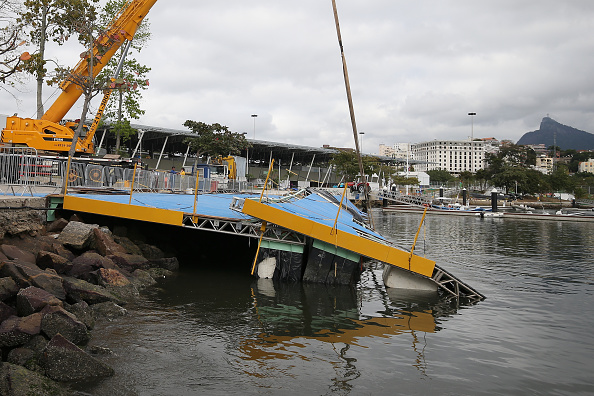
RIO DE JANEIRO — Amid the seemingly imminent apocalypse about to erupt with holy fire all over everything connected with the 2016 Summer Games, one might think that the collapse of a boat ramp over the weekend at the sailing venue would be comparatively insignificant.

It’s not.

The ramp collapse is profoundly symptomatic and symbolic.

It underscores the lack of controls — and control — that has dogged preparations for the 2016 Games since the get-go, a long seven years ago.

Of course such a collapse is unacceptable.

Of course it needs to get fixed, and immediately, and a Rio 2016 spokesman says the repairs will take just days.

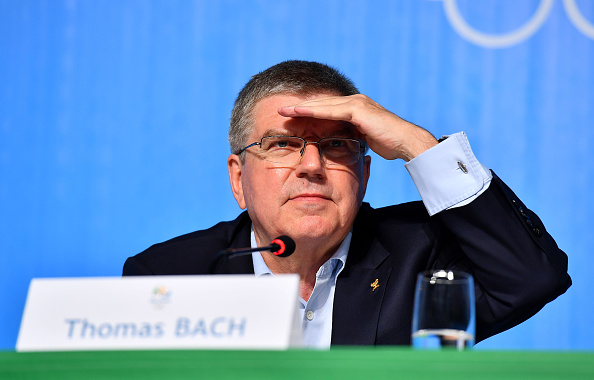
The IOC president. Thomas Bach, at Sunday's news conference and, snark aside, he is looking out through the lights to try to see who is asking him what // Getty Images

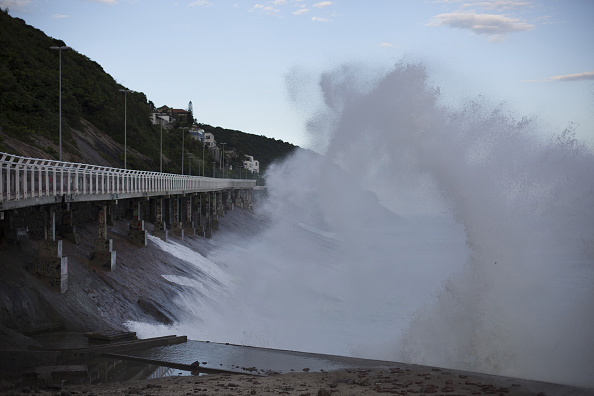
The boat ramp fail follows the buckling of a seaside bike path here in April.  No one was hurt over the weekend at the sailing venue. Two people died when the bike path fell, pulverized by a huge wave. The timing: just hours after the lighting of the Olympic flame in Greece.

Together, these two incidents spotlight the need for a thorough and fundamental review of the very way the International Olympic Committee delegates, assigns and joins with local organizers in getting ready for a Games.

This is way beyond Rio, though Rio should be the catalyst for the wide-ranging discussion that needs to be held about how to bring the organization and operation of a Games into the 21st century.

After Rio, the IOC should convene an “innovation group” — or whatever it wants to call it — made up of forward-thinkers from anywhere. The mandate: new and creative solutions in accord with a reconsideration and reallocation of local and IOC roles and responsibilities. If there are 10 ideas, and nine suck, so what? There needs to be freedom to think out of the box about how to make this, you know, actually work, and without so much drama.

Olympic veterans might recall that during the 2009 bid phase for 2016, Rio didn't even make the initial technical grade but was nonetheless passed through for, um, other reasons. Given that, who can be all that surprised now?

Here is the starting premise for discussion:

The Olympic Games are a multibillion-dollar enterprise.

With that in mind, it is insanity to keep turning over the organization of the IOC’s franchise to newbies, and expect things to run in a world-class manner.

What business does that? Nobody. Well, no one except the IOC.

As Albert Einstein reportedly said, the very definition of insanity is doing the same thing over and over again but expecting different results.

This, though, is exactly what the IOC does. Seven years beforehand, It awards some place a Games. Then it sits back and holds twice- or three-times-per-year inspections — in Olympic jargon, “coordination commissions” — while allowing the locals to run things as the locals see fit.

Typically, this means senior-level management shuffles and re-shuffles and, as well, political or government interference that, to put it gently, is not helpful. Look at Rio. Or the next Games, in Korea in 2018. Or Tokyo, in 2020.

Sometimes, as was the case in Korea, the IOC lucks out and gets someone like Y.H. Cho, the Korean Air chief who ran the winning Korean bid and knew how to maneuver between east and west as well as the elements in Korea itself — business, government, politics.

His case is fully instructive, however: a few months ago, the Koreans opted to go in a different direction. Who was the most surprised when it happened? The IOC.

It doesn’t take Einstein to figure out a fix.

Start with the FIFA approach.

In some IOC circles, the idea that it could learn from FIFA might be considered heresy.

For sure, there are many, many, many things one could observe about FIFA that would not be positive.

But it must be said that FIFA knows how to run its soccer tournaments.

Why?

Because that is what it’s in the business of doing. It runs the show, thank you.

Same idea for the IOC, and the Olympics.

The IOC should have a Games team — or teams, Winter and Summer — who go from locale to locale. How many people? Unclear. Six? Ten? Twenty? Whatever.

All of this can be imagined in a way that actually jibes with Agenda 2020, the IOC's self-proclaimed 2014 reform plan, and easily. Agenda 2020 can be the blueprint, in the same way that the U.S. Congress passes laws that then need rules and regulation -- back to the Olympic context, whatever the "innovation group" comes up with -- to implement.

Will there be conflict with the locals? Undoubtedly. Might the locals resent the IOC influence? Probably. Are these kinds of things capable of solution? Absolutely, and this is why the rights and responsibilities should be examined anew, now.

Indeed, in other areas, the IOC has already recognized the issue, and done what needs doing, what is elegantly obvious — assign a cadre of professional experts to run things.

The Olympic Broadcasting Service, which supplies the video and more for each edition of the Games? They are maybe the best in the world, based in Madrid under the uber-competent Yiannis Exarchos, in charge of the host feed and more from Games to Games.

On a smaller scale — and this is something of inside baseball but the point is the same — each Games features a service for the media called Olympic News Service. In London four years ago, ONS ran to more than 500 people. Here, after a thorough review (disclaimer: I was invited to be part of the working group involved in that review), more like 50, all professionals.

What does this save? Time, resource and, crucially, money.

Let’s be totally frank:

You know the old saying about stuff flowing downhill?

Which entity, more than any, is the one at the bottom of that proverbial Olympic hill? The local organizing committee, which has a temporary lifespan? Or the IOC, which endures and thus makes itself the fat, easy target?

Since that is so clearly the case, why wouldn’t the IOC take proactive steps to ensure the ongoing integrity, vitality and relevance of its brand — instead of being subjected every two years to the predictable sky-is-falling reportage?

The IOC actually has a great story to tell: no other institution in the world brings thousands of people together in a celebration intended to promote the best of each and all of us.

Far too often, however, that message gets obscured by, or lost in, too much of the stuff running downhill.

When you think of Sochi, as a for instance, what are the two things that come immediately to mind for most people? Well, now three, given allegations of state-sanctioned Russian doping — one, the hotels not being done when multitudes of reporters arrived and, two, the $51 billion overall cost associated with those Games, right?

The scene at the sailing venue // Getty Images

Waves battering the incline near the collapsed bike path // Getty Images

It’s now five short days before the 2016 opening ceremony. This week the bulk of roughly 15,000 media people are going to descend upon Rio.

You can believe that there is still painting, wiring, hanging, building all over the place.

Reports from the press already here of imminent disaster are now so widespread that there has developed in recent days a Reddit subgroup called apocalympics2016.

Truth:

Fire, hail, locusts, frogs, cattle disease — these and the other plagues from the Biblical Exodus— are nowhere in evidence in Rio. As the sages teach, this is welcome news indeed for those of us who are first-born males.

As for bugs: now that Zika is in Florida, it might even be asked if there is quite another reason so many of the top male golfers aren’t here. Like: drug testing, maybe?

There is one overriding problem in Rio, and one problem only:

There is not — and has not been — enough money.

The problem is both overall budget, and cash flow.

The organizing committee’s operating budget figures out at about $2.3 billion.

The shortfall, now, is reportedly about $70 million.

Amid a severe economic depression, that kind of money literally isn’t here to be had in Brazil.

But it’s got to come from somewhere.

This is why the IOC president Thomas Bach, at a news conference Sunday marking the end of the policy-making executive board’s pre-Games get-together, announced the IOC would be stepping in to help — though he did not detail by how much, instead saying the IOC "is helping the organizing committee to make sure that these Games will be the success we all want it to be.”

The back story of these Games is that the IOC recognized the enormity and complexity of the Rio challenge in 2014, when it assigned the-then Games executive director, Gilbert Felli, to work more or less full time on 2016 preparations.

Thus it has been running on either — choose your perspective — an ad hoc or emergency basis the very solution that must present itself looking ahead to Pyeongchang 2018, Tokyo 2020 and beyond.

Let's face it: chronic triage is a bad way to go through life.

An imperfect compromise: IOC mostly gets it right

GettyImages-577916582.jpg

When history writes the story of the drama that enveloped the question of what to do about the Russians for the 2016 Rio Games, the imperfect compromise issued Sunday by the International Olympic Committee will come to be seen for what it truly is: a marker for the ongoing vitality and relevance of the Olympic movement in every corner of the world. Make no mistake. The IOC made — mostly — the right call in seeking to balance individual rights against collective responsibility.

If this decision had gone the other way, if the IOC had imposed a wide-ranging ban on the Russians, there very well may have erupted an existential threat to the Olympic movement.

This is not to layer exaggeration or extra intrigue onto a situation that already has generated enormous controversy.

Rather, the mob that has largely looked past the precious value of individual justice in calling for collective responsibility failed, and hugely, to account for the peril inherent in such a decision for the present and the future of the Olympic enterprise.

Russian president Vladimir Putin and IOC president Thomas Bach at the opening last June of the European Games in Azerbaijan // Getty Images

The Russians, however, keenly understood. And they kept saying so — no matter the smugly furious, self-righteous echo chamber banging for wide-ranging sanction.

The IOC listened. It understood, and keenly.

To emphasize:

There is nothing wrong with that. Indeed, there is a lot that is right.

In ruling that the international sports federations hold the responsibility to decide whether the Russians could come for each of the roughly two dozen sports on the Olympic program, the IOC underscored not only the place of each and every person in the world but, as well, the possibilities inherent in empowering humanity to effect one-to-one change.

When everything else is stripped away, that is what the Olympics are all about. That is why the modern Olympic movement, a project born in the late 19th century, can still matter in our 21st-century lives.

“Every human being is entitled to individual justice,” IOC president Thomas Bach said after Sunday’s meeting of its policy-making executive board.

Almost immediately, the tennis and equestrian federations released announcements saying to the Russians, see you soon in Brazil. The judo federation put out numbers that made plaln a rigorous testing program aimed at each and every one of the 389 athletes from 136 countries who have qualified for Rio 2016.

Sheikh Ahmad al-Fahad al-Sabah, head of the Assn. of National Olympic Committees, said the  organization “commends the IOC for favoring individual justice over collective responsibility and giving international federations responsibility to ensure clean competitions in their sports at Rio 2016.”

Life is not binary. It is not black and white, yes or no, a collection of 1s and 0s. Life is made up of shades of grey, and nuance, and compromise — especially in the pursuit of both a practical reality and a noble ideal.

Life is better when we — the collective we — are not implementing blanket action against a group of people. This is a basic of history. And the Olympic movement is, at its essence and at its best, not about being moralistic or sanctimonious. It appeals to our better selves.

As Anita DeFrantz, the long-serving IOC representative to the United States who sits on the executive board, said Sunday afternoon, “It takes courage to do the right thing.”

Even if it is imperfect.

Life is imperfect, you know? The Olympic scene is an imperfect vessel for our hopes and dreams.

The important part: the IOC action likely paves the way for most Russian athletes to march behind the Russian flag at the opening ceremony on August 5.

At the same time:

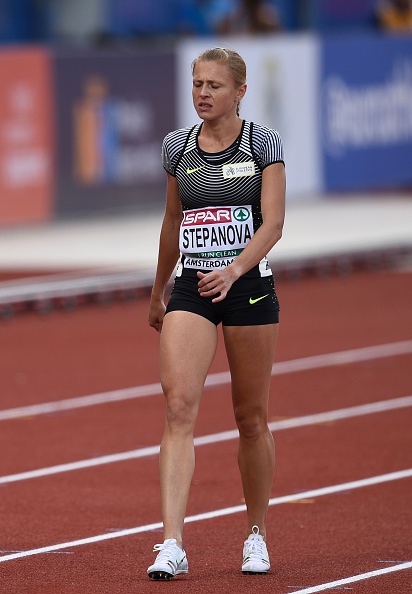
The IOC said the whistleblower Yulia Stepanova —  a middle-distance runner who along with her husband, Vitaly Stepanov, sparked the controversy by alleging state ties to doping — is not eligible to run in Rio. There simply isn’t a vehicle to permit a “neutral” athlete to take part, the IOC said, and that’s true. It’s a fundamental that athletes compete as national representatives at a Games.

Except that there will be a “refugee team” in Rio made up of athletes from different countries.

And, perhaps more important, the symbolism of having Stepanova on the Rio track would have gone far in promoting the notion that anyone and everyone has to speak up when something might be amiss; overcoming the culture of keeping silent has proven a significant challenge in the anti-doping campaign.

Yulia Stepanova at the European championships earlier in July // Getty Images

Also, the IOC said that any Russian athlete who has ever done time for doping is ineligible for Rio. This misplaced notion is the 2016 version of what in Olympic jargon is called the “Osaka rule,” a notion advanced by none other than Bach nine years ago, when he was IOC vice president. It sought to ban a doper from the next edition of the Games on top of however many years he or she got in sanction.

The Swiss-based Court of Arbitration for Sport said, no dice — the Osaka rule amounted to double punishment.

The IOC, and the president, know all of this. A recent reminder: the case of South Korean swimmer Park Tae Hwan, a 2008 and 2012 medalist who tested positive in 2014 for testosterone and got 18 months. The Korean Olympic committee tried to tack on another three years. No go.

The Osaka rule could have been incorporated in the version of the World Anti-Doping Code that took effect this past January 1. But no. Instead, the code now calls for a standard doping ban of four years instead of two.

It’s now up to an individual Russian, if he or she wants, to go to CAS to challenge the IOC move regarding eligibility after a prior ban. There should be a rush to the proverbial courthouse steps; any such case would be a slam-dunk winner; all the IOC is trying to do is effect an end-around a play that already has been shut down.

More: the assertion that no already-served Russians can go — even though athletes from other countries who have served doping bans can, and will, be in Rio — cuts directly against the very thing the IOC sought Sunday to preserve: in Bach’s words, “individual justice.”

The remaining problematic element is the ban imposed on Russia’s track and field team by the IAAF, track’s governing body. It stands.

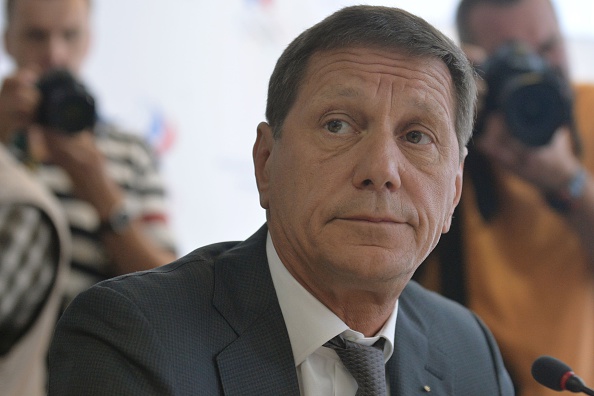
As Alexander Zhukov, the president of the Russian Olympic Committee, noted as part of a lengthy presentation Sunday to the IOC board:

“… We can never accept a decision that allows any international federation to legally force athletes to move from their native country in order to train abroad, so they can participate in international competitions. This contradicts basic human rights and essential freedoms. And it strays very far from the real anti-doping fight.”

Russia'Olympic committee president Alexander Zhukov at a meeting last week in Moscow // Getty Images

This will be part of the historical legacy. And it won’t be pretty.

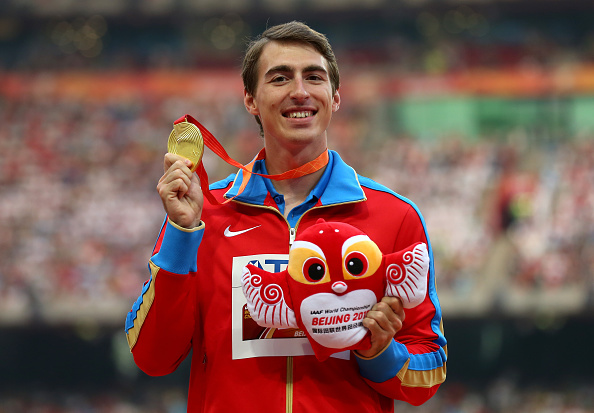
Sergey Shubenkov, the Russian champion in the 110-meter hurdles at last year’s world championships — “an absolutely clean one,” Zhukov asserted — can’t run in Rio. His mother, heptathlete Natalya Shubenkova, missed the 1984 Los Angeles Games because of the Soviet-led boycott, reprisal for the U.S.-led action against the 1980 Moscow Games.

“Now his dream is ruined and this ruin is dismissed,” Zhukov said, “simply as an ‘unfortunate consequence.’ ”

Hurdles gold medal-winner Sergey Shubenkov at last year's track world championships in Beijing // Getty Images

This, of course, is a  reference to the answer given last Monday by Canadian law professor Richard McLaren when, in making public his World Anti-Doping Agency-commissioned inquiry into accusation of state-sanctioned doping in Russia, he was asked about guilt by association.

In 1980, the Australian IOC member R. Kevan Gosper supported the U.S.-led Moscow boycott. He says now he “wouldn’t have made that decision.” A silver medalist in track and field, Gosper served as an IOC member from 1977 to 2013 and retains considerable influence.

The McLaren Report allegations, Gosper said, make for a “very, very serious problem.” Even so, given the IOC’s turbulent history, in partiular the 1980 and 1984 Los Angeles Games boycotts, Gosper said, “To take a collective decision against Russia in a world that is very uncertain, I think, would be very wrong.”

This is what the Russians kept saying.

The president of Russia, Vladimir Putin himself, in a statement released last week by the Kremlin:

“Today, we see a dangerous return to this policy of letting politics interfere with sport. Yes, this intervention takes different forms today, but the essence remains the same; to make sport an instrument for geopolitical pressure and use it to form a negative image of countries and peoples. The Olympic movement, which is a tremendous force for uniting humanity, once again could find itself on the brink of division.”

The former Russian leader, Mikhail Gorbachev, who wrote a letter last week to Bach that said, in part:

“The principle of collective punishment is unacceptable for me. I am convinced that it contradicts the very culture of the Olympic movement based on universal values, humanism and principles of law.”

Zhukov’s presentation to the IOC board cautioned against what he called a “rush to judgment.” He said:

“Please allow me to begin by saying that I understand you will make today a fateful decision, which will determine the fate of not only Russian sport, but also of the international Olympic movement, of our Olympic family.

“The recent events have caused a significant split to open in the world of sport. We must remain united in our efforts to ensure integrity, united against the pressures that aim to replace constructive unity with destructive confrontation.”

Nearing the close of his remarks, he said:

“I urge you to consider this case independently of the mounting pressure from certain nations to issue a collective ban in relation to Olympic Team Russia.

“The calls for Russia to be banned from Rio 2016, before the McLaren Report was even published, clearly demonstrate that this goes beyond sport.

“I therefore urge you not to fall victim to geopolitical pressure.

“You can all be confident that Russia will change for the better and Russian sport will emerge cleaner.

“But that can only happen through engagement.”

Precisely.

Not through a far-reaching ban.

In noting “certain nations,” make no mistake about which nations those might be.

The calls for a ban, spun up by the U.S. Anti-Doping Agency in particular, beg fundamental questions about its role: Is USADA supposed to engage in such lobbying? Or Is it merely a provider of services — if you will, a contractor?

Too, the hypocrisy of certain political leaders in reacting to the IOC’s decision Sunday could not be more evident. The U.K. sports minister, Tracey Couch, said the “scale of the evidence arguably pointed to the need for stronger sanctions.”

This makes for empty rhetoric if not unintentional comedy — coming from a country where the government announced earlier this year it was cutting its 2016-17 contribution to WADA by roughly $725,000.

As for no-question irresponsibility — the Daily Mail reported late Saturday that the entire Russian team would be banned.

For a while, that Daily Mail story was the No. 1 story sweeping Reddit.

Oops.

And then there was the New York Times, in its reporting Sunday, saying the IOC move “tarnished the reputations and performance of all Russian Olympic athletes” while serving as a “strong affirmation” that Russia had cheated “under government orders.”

History will tell if that’s anything more than journalistic bravado — if ever the allegations delivered by Mr. McLaren lead to testimony under oath and thorough cross-examination of all the principal actors.

In the meantime:

No matter the circumstance, and especially in this one, groupthink can prove very, very dangerous. Turning toward reason and away from emotion, the way the IOC did Sunday, is almost always a way better option.

As Bach put it, “An athlete should not suffer and should not be sanctioned for a system in which he was not implicated,” adding, “This is not about expectations. This is about doing justice to clean athletes all over the world.”

Even if justice is, as history teaches, often imperfect.